
Line Side vs Load Side: Differences for Solar Systems
Choosing between a line side vs load side connection is one of the most consequential decisions in a solar installation. Homeowners and installers frequently discover that an older electrical panel cannot accept the desired PV breaker under the NEC 120% rule, triggering expensive panel or service upgrades that can add thousands of dollars and delay projects. Understanding the difference, and knowing when a properly executed line-side approach avoids those costs, helps keep systems code-compliant, safe, and cost-effective.
What is the difference between line side and load side?
Every home's electrical system has two sides: the line side and the load side. The main breaker or the utility meter marks the line between them.
Line side (also called the supply side) is the utility side of the main service disconnect. Power flows from the utility transformer through the meter and toward the main breaker. A line-side connection taps the service-entrance conductors between the meter and the main breaker.
Load side (the customer side) is everything downstream of the main service disconnect. This includes the panel busbars, branch circuit breakers, and all the loads in the home or building. A load-side connection lands the solar inverter output on a dedicated breaker inside the main panel or a subpanel.
The distinction matters for solar installations because the National Electrical Code applies different rules to each location. Load-side interconnections are limited by the panel's busbar rating and the 120% rule. Line-side (supply-side) connections are sized to the full service ampacity and are not constrained by that busbar calculation. Choosing the correct side determines system size, permitting requirements, installation complexity, and whether an existing panel can remain in place.
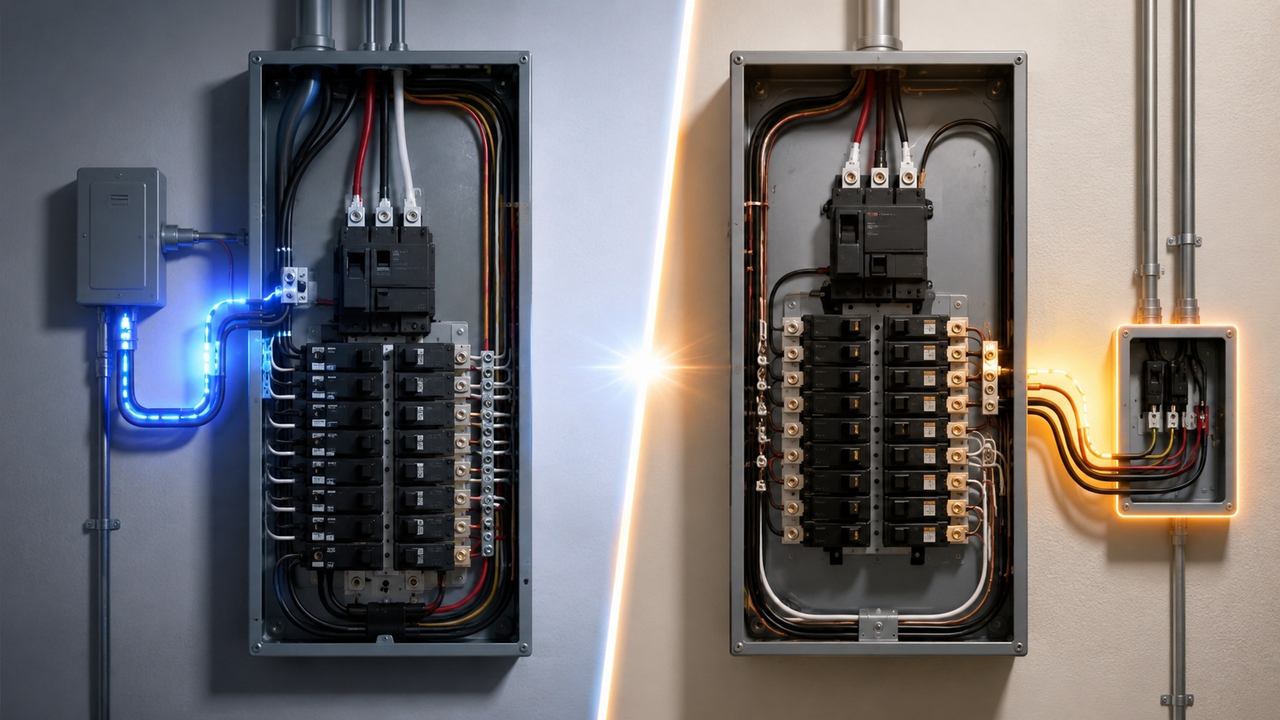
Load side vs Line side: Quick comparison
Here is a clear side-by-side comparison of line-side and load-side solar interconnections to help you choose the right method.
Aspect | Load Side | Line Side (Supply Side) |
|---|---|---|
Connection point | Busbar / breaker inside panel (after main) | Service conductors between meter and main breaker |
NEC requirements | 705.12(B) busbar rules (incl. 120% rule) | 705.11 / supply-side rules; sized to service |
Installation complexity | Lower; main breaker de-energizes work area | Higher; often needs meter pull / utility coordination |
Panel limitations | Strictly limited by busbar & 120% rule | Not limited by busbar rating |
Safety considerations | Easier to de-energize; familiar to most electricians | Work on service conductors; OCPD must be close to tap |
Best applications | Residential & small commercial within busbar limits | Large systems, full panels, battery/whole-home backup |
Upgrade requirements | Often triggers panel upgrade or main derate | Avoids busbar-driven panel upgrade |
Typical relative costs | Lower when compliant | Higher labor/coordination; still often cheaper than full service upgrade |
Load side tap: How it works, pros & cons
A load side tap wires your solar inverter directly into a breaker on your main panel's busbar. Excess power flows from that breaker through the busbars, out through the main breaker, past the meter, and onto the grid.
How it works:
The inverter connects to a dedicated circuit breaker on the panel's busbar
Power flows in the same direction it would from any other circuit
The connection sits fully inside the panel, on the load side of the main breaker
Pros:
Easiest and safest tap to install. Flip the main breaker off and everything downstream is de-energized before your electrician touches a wire
No utility coordination or meter pull needed
Lower labor cost and faster installation time
The standard choice for most residential and smaller commercial systems
Cons:
Capped by the panel's busbar rating, not by your actual solar output
Subject to the NEC 120% rule, which limits how much solar breaker capacity a panel can safely carry
Older or smaller panels often can't fit a solar breaker large enough for the system you want
Line side tap: How it works, pros & cons
A line side tap, also called a supply side connection, wires the inverter in ahead of the main breaker. The connection point sits in a junction box between the utility meter and the main panel.
How it works:
The inverter connects to a PV-fused AC disconnect, which then ties into a junction box between the meter and the main breaker
Larger systems with multiple inverters typically add a dedicated PV panel alongside the fused disconnect, as required by code
Because the connection is ahead of the main breaker, it's sized to the full ampacity of your electrical service, not the busbar rating inside the panel
Pros:
Not limited by the 120% rule, since the tap happens before the panel's busbars
Can support a larger solar array than a load side tap on the same service
Often the only workable option when the existing panel has no spare capacity
Cons:
Requires a utility meter pull or a temporary service shutdown to safely de-energize the line side before work begins
More complex install, which usually means a longer timeline and higher labor cost
Requires closer coordination with the utility and the local inspector
The NEC 120% rule: Why it forces panel upgrades
The National Electrical Code's 120% rule sets the ceiling for how much solar breaker capacity a load side tap can safely add to a panel. The rule says the sum of the main breaker rating and the solar breaker rating can't exceed 120% of the panel's busbar rating.
Here's the math for a standard 200A panel:
Busbar rating: 200A
120% busbar rating: 200 x 1.2 = 240A
Room left for the solar breaker: 240A - 200A = 40A
That leaves just 40A for the solar breaker in this example. That's fine for a small residential array, but it falls short for many larger systems or homes trying to add battery backup on top of solar.
Older homes are hit hardest. Many were built with 100A or 125A panels, and by the time the main breaker is factored in, there's little to no room left for a solar breaker at all. When a homeowner exceeds the 120% rule, the utility and the inspector won't sign off on the connection.
Traditionally, installers have two ways to fix this:
Downsize the main breaker: This frees up room for a larger solar breaker, but only works if the home's actual peak load stays under the new, smaller main breaker rating. Push past it, and you'll start tripping breakers.
Upgrade the panel: According to the guide from DIYProjects, a straightforward panel swap for a 200A residential service typically runs $1,200 to $2,000. But a full solar-driven upgrade, say going from 200A to 400A service, runs $5,000 to $12,000. Commercial projects or jobs that need utility-coordinated service upgrades can run $30,000 or more.
For a lot of homeowners, that upgrade cost eats a meaningful chunk of the money they expected to save with solar in the first place.
When a line side tap is the better (or only) option
A line side tap isn't always necessary, but it's the right call in a few common situations:
Panels with no room left: If the busbar is maxed out or there's no open slot for a solar breaker, a line side tap for solar sidesteps the 120% rule, giving installers a legal path to interconnect without downsizing anything.
Homes wanting battery backup or generator compatibility: Adding battery storage or a whole-home generator on top of solar often pushes breaker capacity past what a load side connection can handle. That's when a line-side tap for solar earns its higher cost.
Commercial systems with large inverter output: Commercial arrays draw more current than a load side tap can safely carry, making a line side tap the practical choice from the start, not a fallback added once panel space runs out.
Avoiding unnecessary panel upgrades: A smarter line-side solution
Homeowners whose panels fail the NEC 120% rule are often told their only choices are to downsize the main breaker or pay for a full panel or service upgrade. Those upgrades commonly range from $5,000–$12,000 for a typical residential capacity increase and can climb to $30,000 or more for complex or utility-coordinated work. This added cost and delay frequently shrink system size or kill the project entirely on older homes.
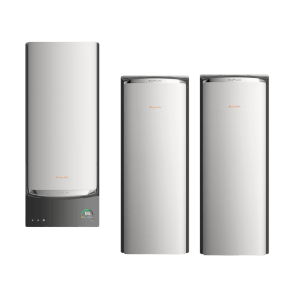
A modern alternative pairs the EcoFlow Ocean Pro battery system with the EcoFlow Smart Electrical Panel. Ocean Pro delivers up to 24 kW continuous output, supports expandable storage from 10 kWh to 80 kWh per system (cascadable to 160 kWh), and integrates solar, grid, and generator sources for whole-home backup.
The Smart Electrical Panel 40 enables a compliant interconnection sized to full service ampacity rather than the existing busbar limit, so the original service panel does not need to be replaced. Beyond avoiding the upgrade, the panel provides circuit-level monitoring and control for up to 40 circuits, automatic backup switchover in under 10 ms, and smart load scheduling and prioritization.

Conclusion
Line-side and load-side connections differ in location, code limits, complexity, and cost. Load-side is simpler when the panel has capacity under the 120% rule. When it does not, a properly designed line-side approach keeps the project viable without a full panel upgrade. For homes constrained by older or fully loaded panels, the EcoFlow Ocean Pro paired with the Smart Electrical Panel 40 offers a practical solution that supports compliant interconnection, whole-home backup, and intelligent load management. Ready to explore the right option for your project? Schedule a free consultation with an EcoFlow energy consultant today.
Get Your Free Home Energy Consultation!
Which energy solution are you interested in?

FAQs
What is the difference between line side and load side?
The line side is the part of the electrical system between the utility meter and the main breaker, where power comes straight from the utility. The load side is everything after the main breaker, where your home's circuits use that power.
What is the NEC 120% rule?
The NEC 120% rule limits the combined rating of a panel's main breaker and solar backfeed breaker to 120% of the busbar rating. If this limit is exceeded, installers may need to reduce system size, downsize the main breaker, or use a line-side connection.
Is a line-side tap the same as a supply-side connection?
Yes. Line-side tap and supply-side connection describe the same interconnection method: wiring the solar inverter ahead of the main breaker, inside a junction box that sits between the utility meter and the panel.
How much does a line-side tap cost compared with a panel upgrade?
A line-side tap generally costs less than replacing or upgrading an electrical service panel, although pricing varies by service size, utility requirements, and local labor rates. It can often help homeowners avoid panel upgrades that may cost several thousand dollars.

