
How to stop climate change? Causes, Solutions, and Home Actions
How to stop climate change matters as global temperatures keep rising and extreme weather grows more disruptive. You need to understand the causes before choosing effective solutions for your home. Knowing where emissions come from helps you make smarter energy, transport, and consumption choices. This guide explains major climate drivers, global solutions, and practical household actions. You'll also discover how solar energy and battery storage can lower climate change/grid dependence. In this regard, you will discover the indispensable role of the solar power battery system in reducing your footprint on climate change.
What is climate change?
Climate change refers to changes in temperature and weather patterns over a long period of time, which are mostly due to human actions in several parts of the world. The combustion of coal, oil, and gas produces greenhouse gases that contribute to global warming and climate change. Its impacts are evident in extreme weather, sea level rise, loss of biodiversity, and exposure of vulnerable communities. These are the main sources that contribute directly to emissions: electricity generation, transportation, industry, agriculture and livestock, deforestation, and buildings. The Paris Agreement of 2015 aims to keep warming below 1.5–2°C, and coordinated climate action is crucial on a global scale.
How to help stop climate change? - 7 major actions
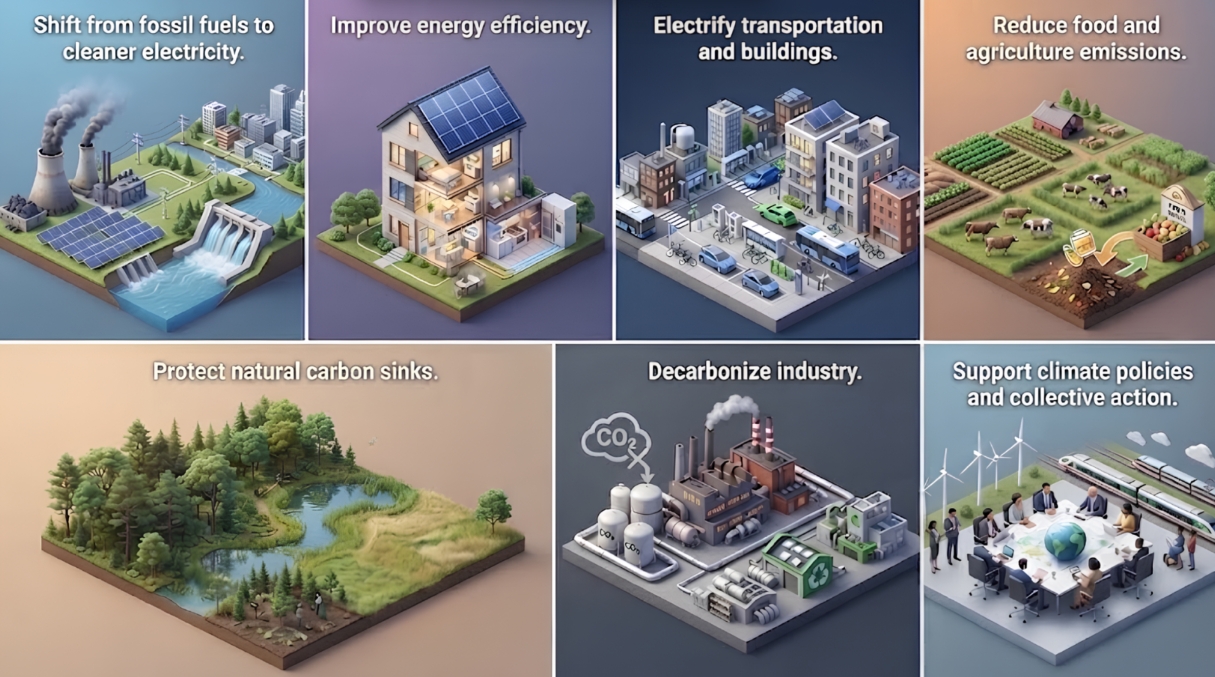
In response to how to stop global climate change, there are 7 key major actions that are discussed below:
Shift from fossil fuels to cleaner electricity: Switch from coal, oil, and gas to low-carbon electricity from solar, wind, hydropower, and other sources. Increased clean generation can lower emissions throughout the broader energy system.
Improve energy efficiency: Improve energy efficiency through the use of energy-efficient appliances, industrial equipment, buildings, and energy systems to reduce energy use. The option exists to reduce energy demand with improved insulation, energy-efficient lighting, and intelligent energy management.
Electrify transportation and buildings: Switch to electric vehicles and equipment as appropriate. You can minimize fossil fuel consumption in buildings with heat pumps and electric heating.
Reduce food and agriculture emissions: Optimize farming practices and minimize food losses and waste throughout the food system. You can reduce agriculture emissions further through lower-emission fertilizers, improved livestock management, and sustainable diets.
Protect natural carbon sinks: Forests, wetlands, grasslands, and healthy soils absorb and store carbon dioxide. Conservation supports the retention of current carbon storage, and restoration can enhance the removal of carbon in the future.
Decarbonize industry: Reduce the carbon intensity of heavy industries by introducing clean energy, efficient processes, and low-carbon materials. You can cope with difficult emissions with technologies like green hydrogen, electrification, recycling, and carbon capture.
Support climate policies and collective action: Climate policy can incentivize the adoption of less polluting technologies and disincentivize the production of high-emission activities. Coordinated climate action by governments, businesses, communities, and individuals can speed up progress.
How to stop climate change at home?
You can reduce climate change drastically by following these tips:
Improve home energy efficiency
Replace bulbs with LEDs and choose efficient appliances. Improve insulation, use heat pumps, or install smart thermostats. EcoFlow OCEAN Pro can support solar-plus-storage for greater household energy flexibility.
Choose lower-carbon transport
Use public transport, cycle or walk if possible. Carpooling can also help to cut down on emissions from everyday travel. Consider an EV when replacing your vehicle. By stopping car use, the average person can reduce their CO₂ by about 1.5 to 2 tonnes a year, depending on how much they used to drive.
Consume more mindfully
Purchase less and opt for more durable products with a longer lifespan. Repair, rather than replace, damaged items. Use items twice and think about buying second-hand items. Steer clear of fast fashion and opt for those made from sustainable materials and with responsible manufacturing practices.
How do solar and battery storage fit into a lower-carbon home?
A lower-carbon home can make better use of renewable electricity by combining solar generation with battery storage. Instead of sending all daytime solar production to the grid, storage can retain some electricity for later household use. Here is how solar and battery storage fit into a lower-carbon home:
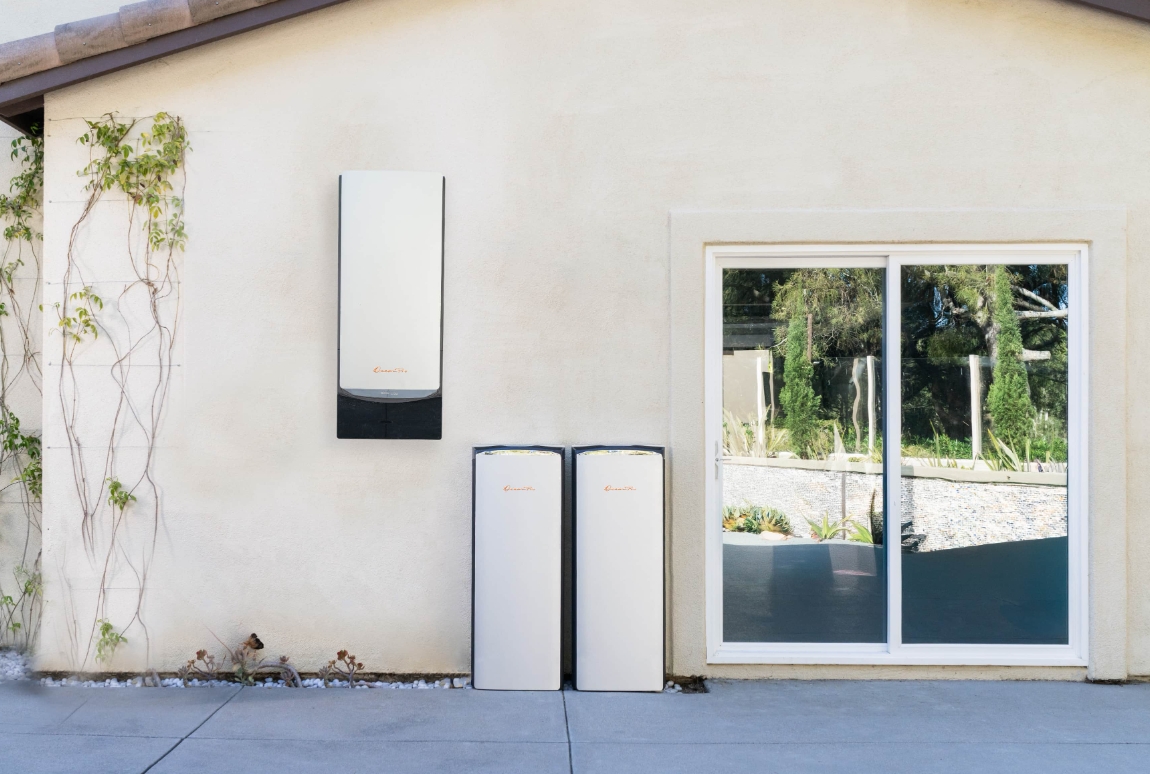
Store renewable energy: Try storing renewable energy for later use. The EcoFlow OCEAN Pro Solar Battery System stores solar electricity for later household use. Its battery capacity can scale from 10kWh to 80kWh.
Increase solar use: Solar panels tend to produce a lot of power during the day when the sun is out. Battery storage supports the ability to move some generation to the evening, coinciding with household demand. This can lead to higher direct consumption of renewables.
Improve energy resilience: In the event of a power outage, the EcoFlow OCEAN Pro solar battery system can serve as a backup power source. It has a continuous output of 24kW, which can provide a large household load. System configuration and installation affect backup performance.
Manage home energy: Smart controls can manage solar energy, batteries, the grid, backup power, and eventually lower the impact on climate change. EcoFlow OCEAN Pro comes with intelligent energy management via the EcoFlow app. Permanent home storage requires professional installation and electrical planning.
Get Your Free Home Energy Consultation!
Which energy solution are you interested in?

Conclusion
There is a need to work together as individuals, businesses, and governments to address climate change. By lowering fossil fuel use, increasing energy efficiency, protecting natural ecosystems, and shifting to cleaner transportation, you can lower greenhouse gas emissions. Efficient appliances, conscious consumption, less plastic, and renewable energy are all ways to make a difference at home. When you combine solar panels with battery storage, you can indirectly boost the overall use of renewable energy while enhancing energy resilience. EcoFlow OCEAN Pro is a viable solution for solar power storage and domestic energy consumption. Schedule a free consultation to explore a backup solution tailored to stop climate change.
FAQs
How can I help to stop climate change?
There are ways to help slow climate change by cutting emissions from vehicles, your house, food, and daily consumption. Take advantage of walking, cycling, public transport, and efficient vehicles when possible, particularly for shorter trips. Use renewable energy at home with the EcoFlow Ocean Pro Solar Power Battery System, explore solar energy, avoid food waste, reuse materials, and advocate climate-friendly policies in your community.
Can renewable energy help stop climate change?
Yes, renewable energy can reduce warming by substituting fossil fuels with solar, wind, hydro, and geothermal electricity. The EcoFlow Ocean Pro Solar Power Battery System stores solar power for later household use, when needed most. These sources cut down on greenhouse gas emissions and air pollution when producing electricity, which decreases the impact of fossil-fuel power.
What are the top 10 solutions to climate change?
Ten major climate solutions include:
Renewable energy (solar and wind power)
Energy efficiency improvements
Electric vehicles and clean transportation
Reforestation and afforestation
Sustainable agriculture practices
Carbon capture and storage
Reducing methane emissions
Circular economy and waste reduction
Protecting and restoring ecosystems
Policy and carbon pricing mechanisms

