
How to Prepare Your House for a Hurricane
Preparing your house for a hurricane is one of the most effective ways to protect your family, property, and peace of mind. Start early: review your insurance now, reinforce your roof and windows in the weeks before, secure everything loose in the final 48 hours, and have a power backup plan for outages that can last days. A whole-home battery backup is worth setting up before the season starts, not after your first outage. Learn how to prepare your house for a hurricane in this guide:
How to Prepare Your Home Months Before Hurricane Season
The best hurricane preparation happens before a storm is in the forecast. Taking care of structural repairs, insurance, drainage, supplies, and backup power early gives you more options when severe weather approaches.
Review insurance and flood coverage
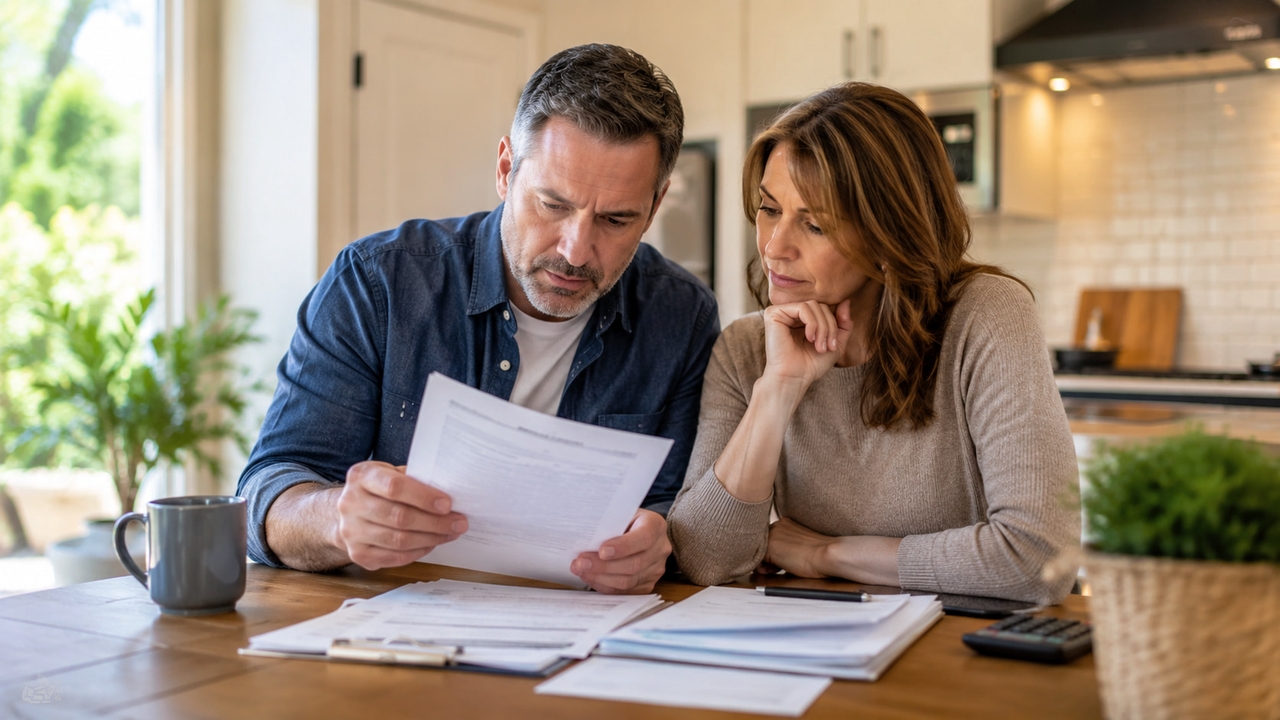
Pull out your homeowner's policy and check the hurricane deductible. It's often a separate percentage-based deductible, not your standard one. Standard home insurance doesn't cover flooding, so if you're in a flood-prone area, look into a separate flood policy. Most policies take about 30 days to take effect, so this isn't something to handle the week a storm forms.
Inspect and reinforce the structure
Have your roof, foundation, and roof-to-wall connections inspected before hurricane season starts. Repair foundation cracks right away. Add straps or clips where the roof meets the walls if you don't have them yet. These connections matter most in high winds. Trim trees near the house and clear dead branches.
Check drainage systems
Test your sump pump and drains before hurricane season, not during a flood warning. Run the pump to confirm it actually kicks on. Check that drains aren't clogged with debris, leaves, or dirt. A sump pump that hasn't run in a year isn't one you can trust when water starts rising. If it fails the test, replace or repair it now, while you still have time and options.
Prepare power and emergency supplies
Buy or service a generator and plan for safe outdoor operation and fuel storage. Better yet, consider a long-term solution such as a whole-home battery backup. Build a hurricane supply kit with at least several days' worth of water (one gallon per person per day), non-perishable food, first-aid supplies, medications, batteries, flashlights, a battery-powered or hand-crank NOAA weather radio, hygiene items, and pet supplies. Store important documents in waterproof containers or digitally back them up.
What to Do When a Hurricane Is Approaching
When preparing your home for a hurricane in the final 24–48 hours, focus on securing the property, protecting openings, and ensuring emergency readiness before conditions worsen.
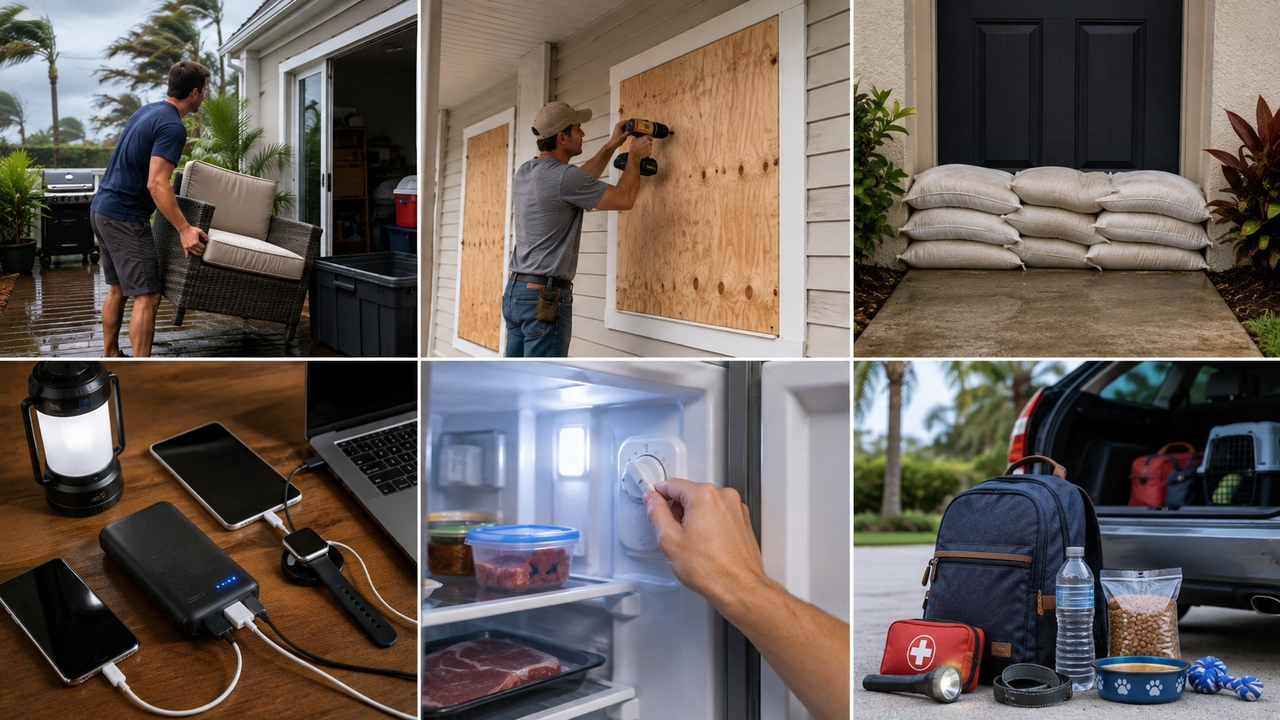
Bring in loose outdoor items: Move patio furniture, grills, planters, trash cans, toys, and tools indoors or secure them.
Protect windows and doors: Install storm shutters or pre-cut plywood over vulnerable openings.
Protect low entry points from shallow flooding: Use appropriate flood barriers where needed.
Charge devices: Fully charge phones, power banks, laptops, and backup batteries.
Lower refrigerator and freezer temperatures: Keep doors closed as much as possible if power fails.
Prepare to evacuate: Fuel vehicles and pack medications, documents, water, clothes, and pet supplies.
How to Prepare for a Hurricane Power Outage
Hurricane outages don't run on the same clock as a normal storm. Downed lines, flooded substations, and crews working through debris can keep power off for days, sometimes over a week, not the few hours people plan around.
Traditional portable gas generators can help with critical loads, but they require continuous fuel (which often becomes scarce), must be run outdoors away from windows to avoid carbon monoxide poisoning, and need regular maintenance and safe storage of fuel.
A whole-home battery backup avoids both problems. No fuel to store, no exhaust to manage, and it can sit indoors.
EcoFlow OCEAN Pro Solar Battery System: Whole-home backup built for hurricane season
The EcoFlow OCEAN Pro Solar Battery System is a whole-home solar-plus-battery system built for extreme weather. It puts out up to 24 kW continuously, enough to run major loads like your HVAC system, and starts at 10 kWh of storage, with room to expand as your needs grow.
The unit is rated to handle flooding, heavy water exposure, and extreme temperatures, conditions a standard generator isn't built for. It also monitors weather forecasts and pre-charges automatically ahead of an incoming storm, so the switchover when the grid goes down is fast, without you needing to flip anything manually.
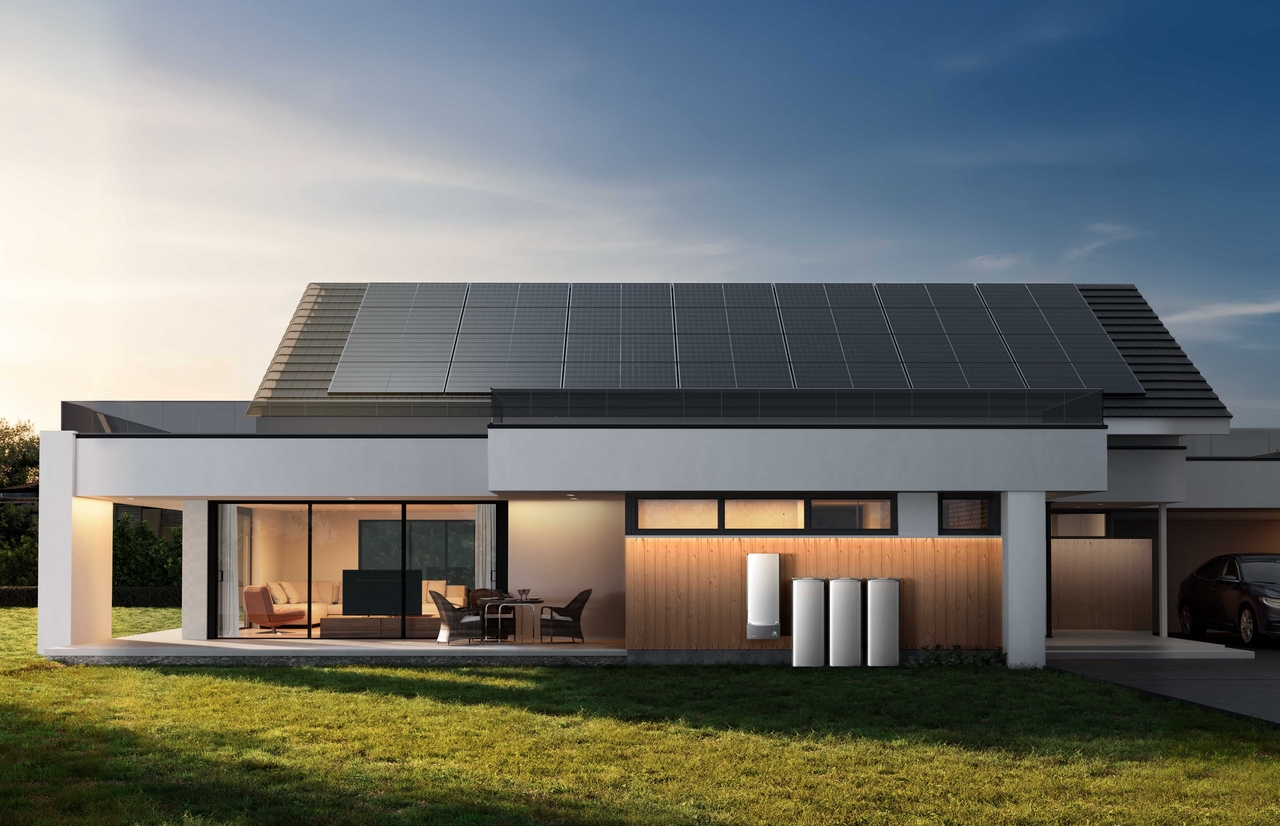
During and after a hurricane, that means your fridge, lights, medical devices, and communications equipment keep running while the grid is out. For anyone in a hurricane-prone area, a system like this is worth planning for as a long-term investment, not something you scramble to buy once a storm is already forecast.
Get Your Free Home Energy Consultation!
Which energy solution are you interested in?

What to do during a hurricane
Once the storm actually arrives, preparing your house for a hurricane comes down to staying safe indoors and reacting quickly if conditions suddenly worsen outside.
Stay indoors and shelter in a windowless interior room, away from windows and glass doors.
Continuously monitor official alerts on a battery-powered NOAA weather radio, local news, or Wireless Emergency Alerts.
Follow evacuation orders immediately if local authorities issue them for your area.
Avoid using candles or open flames because of fire risk; rely only on flashlights and battery-powered lights.
Never run a generator indoors or in a garage, even with the door open.
What to do after a hurricane
The danger does not necessarily end when the winds weaken. Floodwater, unstable structures, debris, and electrical hazards can remain after the storm passes.
Stay clear of downed power lines and floodwater (which can hide hazards and be contaminated).
Document all damage thoroughly with photos and video before beginning cleanup; this helps with insurance claims.
If using a generator or battery system, follow all safety guidelines (proper ventilation for generators, correct connections).
Only re-enter damaged areas when authorities say it is safe.
Conclusion
Preparing your home early is one of the best ways to reduce hurricane risks and avoid last-minute decisions. Review your insurance, strengthen vulnerable areas, organize emergency supplies, and plan for extended power outages. For greater resilience, consider reliable backup power such as the EcoFlow OCEAN Pro, which offers whole-home energy storage and storm-ready features. Schedule a free consultation to explore a backup solution tailored to your home's energy needs.
FAQs
How do you prepare windows and doors for a hurricane?
Install storm shutters or have plywood pre-cut for every window and door. Reinforce the garage door too, since it's a common failure point. Do this weeks before landfall, not once a storm warning is issued.
How long do power outages last after a hurricane?
Outages often last days, sometimes over a week, since crews must repair downed lines and flooded substations. A whole-home battery system like the EcoFlow OCEAN Pro can keep your fridge, lights, and devices running throughout.
What should you stock up on before a hurricane?
Stock water, non-perishable food, first aid supplies, batteries, and flashlights. Fuel your vehicles and any generator. For longer outages, a battery backup covers essentials without needing fuel at all.

