
How to Open Garage Door Without Electricity: Step-by-Step Guide
Power outages can strike unexpectedly, leaving your car trapped inside the garage and disrupting your day. Many homeowners panic when their electric garage door refuses to budge, wondering how to open garage door without electricity safely. The good news is that most garage doors rely on mechanical components like springs and tracks, allowing manual operation even without power. This guide walks you through simple, safe methods for both inside and outside access. While manual operation works in a pinch, consider a home battery backup for seamless power continuity during extended outages.
Understanding garage door types and how they operate

Before diving into manual operation, it helps to understand what you're working with. Garage doors come in several styles, each with slightly different mechanics:
Sectional garage doors are the most common type in residential homes. They consist of horizontal panels connected by hinges that roll up along ceiling-mounted tracks as the door opens. This is what most people picture when they think of a garage door.
Roll-up doors coil into a drum above the opening. They're more common in commercial settings but do appear in some homes, particularly those with limited headroom.
Swing-out (carriage-style) doors open outward like a pair of French doors. They're primarily decorative and less common in modern homes.
Side-sliding doors move horizontally along the wall rather than overhead. These are a niche option suited to garages with low or obstructed ceilings.
Tilt-up (one-piece) doors pivot outward at the bottom and slide up as a single solid panel. Older homes occasionally have these.
Despite using electricity for convenience, a garage door is not a fully electric system. It mainly consists of a mechanical door, tension springs, tracks, cables, and an electric opener. The springs carry most of the door’s weight, allowing the door to be lifted manually when necessary. This means the door is perfectly capable of being opened manually during a power outage once it is disconnected from the motorized track.
However, keep in mind that modern smart garage systems—including Wi-Fi connectivity, smartphone apps, and remote entry pads—will completely cease to function the moment the electricity cuts out.
How to open a garage door without electricity: Step-by-step
If you're wondering how to open an electric garage door without power, you aren't alone. While opening a garage door manually is usually straightforward, safety should always come first. Follow these steps carefully to avoid injury or damage to your system.
Step 1: Make sure the garage door is fully closed
Before you do anything else, confirm the door is in the fully closed position. Disconnecting the opener while the door is open or partially open can cause it to drop suddenly, posing a serious injury risk. If the door is already closed, you're ready to proceed.
Step 2: Turn off the garage door opener
Unplug the automatic garage door opener from its power outlet if you can reach it safely. This prevents the motor from suddenly activating and snapping the mechanism back into place when the electrical power returns.
Step 3: Locate the emergency release cord
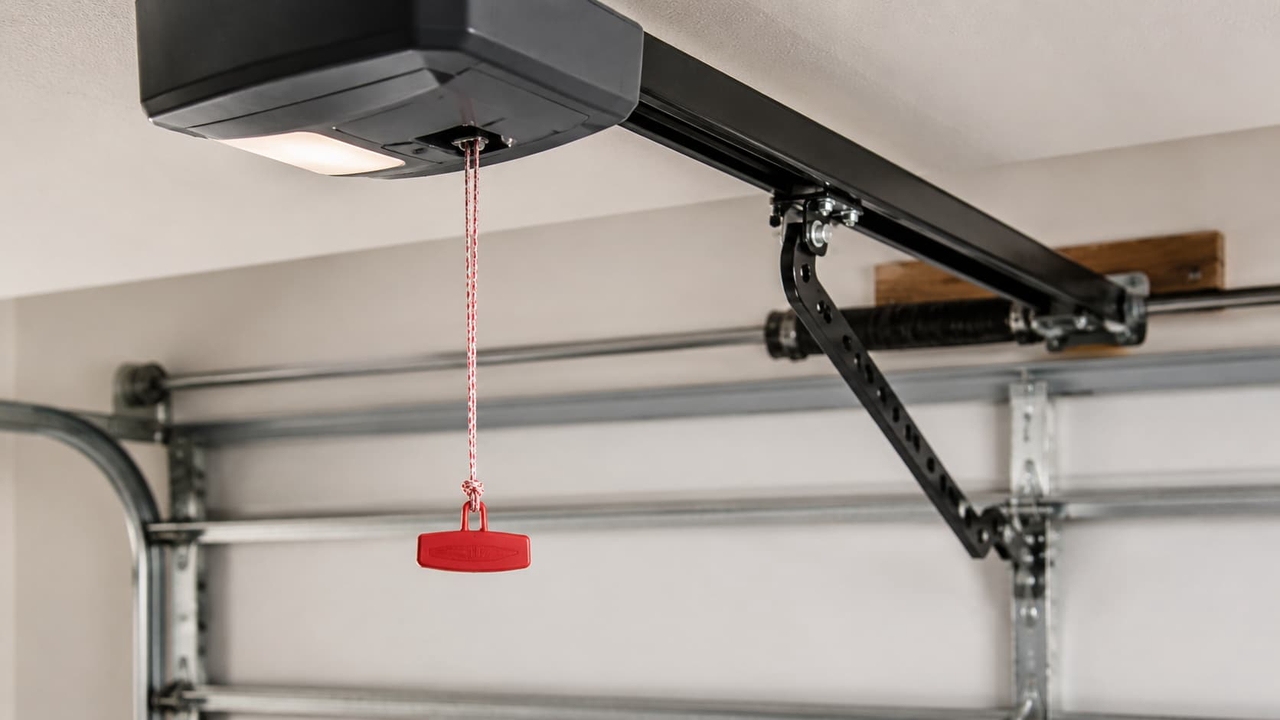
Look up toward the ceiling of your garage. You'll see a bright red handle hanging from a short rope attached to the opener's rail (the horizontal track that runs from the motor unit to above the door). This is the emergency release cord, and it's specifically designed for situations like power outages.
Step 4: Pull the emergency release cord
Grip the red handle and pull it firmly downward. You should hear or feel a click — that sound means the trolley (the sliding carriage that connects the door to the opener mechanism) has disengaged. The door is now free from the automatic opener and can be moved manually.
Step 5: Lift the garage door manually
Grip the bottom of the door evenly with both hands. Lift steadily upward, keeping the motion smooth and controlled. The door should glide along its tracks with moderate effort. Most properly maintained garage doors are counterbalanced by their springs, so they shouldn't require extreme force.
Note: If the door feels unusually heavy, difficult to lift, or jerks unexpectedly, stop immediately. This can indicate a broken or damaged spring. Do not attempt to force a door with a compromised spring system — it is a serious safety hazard.
Step 6: Secure the door in the open position
Once the door is fully open, make sure it stays there before you walk or drive underneath it. Most sectional doors with functional springs will hold themselves open, but if yours feels unstable, use locking pliers or a C-clamp on the track just below one of the door's rollers. This prevents the door from sliding down unexpectedly.
Step 7: Close the door carefully
When you're ready to close the door, grip it with both hands and guide it down slowly. Never let the door drop or slam — this can damage the panels, tracks, and springs. Lower it until it contacts the ground and sits flush with the door frame.
How to open an electric garage door without electricity from outside
If the power outage occurs while you are outside and the garage is your only entry point, you may still be able to access it using the emergency release lock.
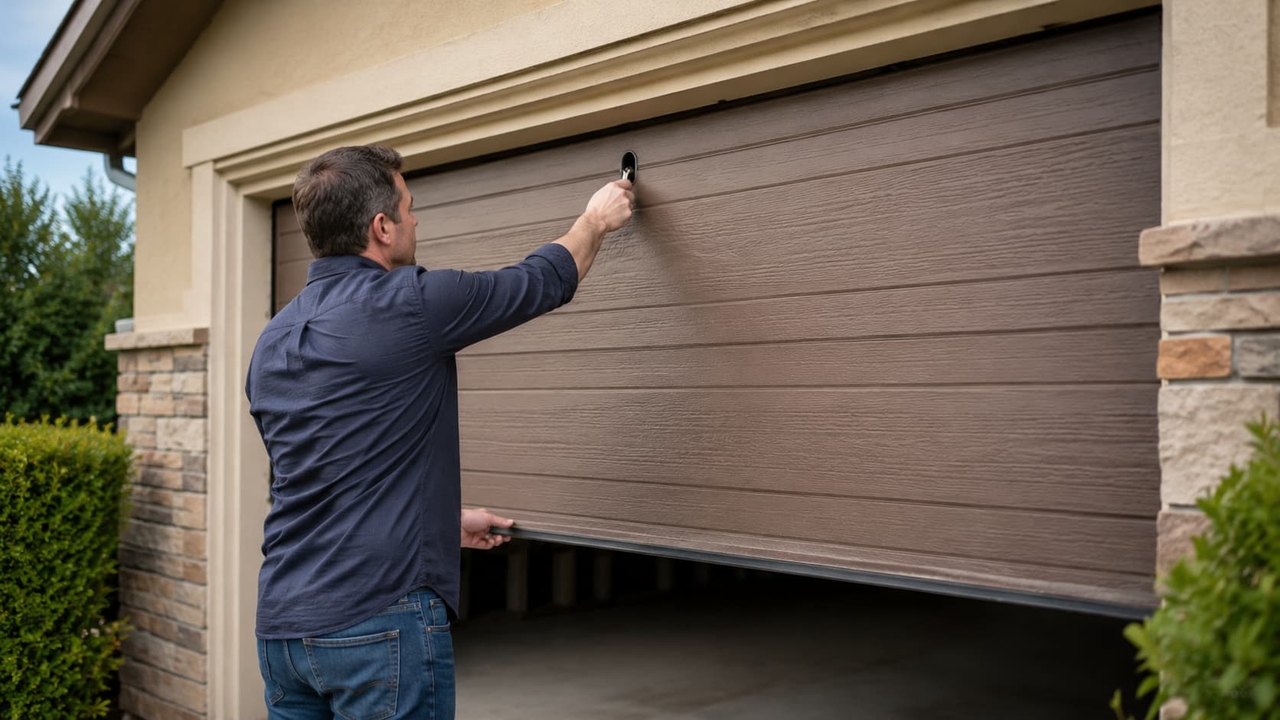
Locate the keyhole: Look for a small keyhole embedded near the top center of your garage door panel. This is the emergency release key lock.
Unlock and pull: Insert the corresponding key into the lock and turn it. Pull the entire tumbler mechanism out of the door. This will pull an internal release cable attached to the automatic opener trolley inside.
Lift manually: Once the cable disengages the motor, grip the handles at the bottom of the door and lift it upward manually from the outside.
Re-engaging the automatic opener after power returns
Once the power grid is back online, you will want to hook your garage door back up to its motorized traveler.
To re-engage the system, pull the red emergency release cord down and toward the garage door (away from the motor). This moves the lever into the re-engage position. From there, simply press your standard wall button or keychain remote. The trolley will slide along the rail until it automatically snaps back into the open carriage, restoring motorized control.
Preventive measures for future power outages
Preparing ahead of time can save you significant stress during the next blackout. Here are practical steps to minimize issues with your garage door when electricity is unavailable.
Basic maintenance and preparation
Regular lubrication and inspection: Lubricate the door tracks, rollers, and hinges every 6 months with garage-door-specific lubricant. Check cables, springs, and tracks for wear or damage.
Test the manual release: Pull the emergency release cord every few months to ensure it works smoothly. This also helps you stay familiar with the process.
Balance check: Lift the door manually (with the opener disconnected) — it should stay in place when stopped halfway. If it drifts up or down, the springs need professional adjustment.
Emergency readiness: Keep a working flashlight near the garage, store a spare key in an accessible location, and ensure the red release handle is easy to reach and not tangled.
Whole-home backup solutions (Optional upgrade)
For a complete solution that goes beyond manual operation, investing in a home battery backup system is one of the smartest upgrades. These systems automatically detect power outages and provide seamless electricity to your garage door opener, lights, and other essential appliances.
For households seeking reliable power continuity beyond manual methods, systems like the EcoFlow Ocean Pro offer a robust option. With up to 24kW continuous output, expandable storage up to 80kWh, and 40kW solar input, it can power essential appliances and your garage door opener during extended outages, reducing reliance on manual operation while supporting broader home energy needs.

Get Your Free Home Energy Consultation!
Which energy solution are you interested in?

Common mistakes to avoid during manual garage door operation
Manually operating your garage door is generally safe, but small mistakes can lead to serious injury or expensive damage. Here are the most common errors to avoid.
Pulling the release cord while the door is open: Disconnecting the opener while the door is fully open can cause the door to slam shut unexpectedly if the springs are weak or damaged.
Forcing a heavy door upward: A properly balanced garage door should lift with moderate effort. Excessive weight may indicate broken torsion springs or cable issues.
Ignoring unusual noises or resistance: Grinding sounds, jerky movement, or resistance can signal track misalignment or failing hardware that requires inspection.
Attempting repairs on springs without professional help: Garage door springs are under extreme tension and can cause serious injury if handled improperly. Spring repairs should always be left to trained technicians.
When to call a professional garage door technician
While many garage door issues can be handled with basic maintenance, some problems are too dangerous or complex to fix yourself. Attempting DIY repairs on high-tension components can result in serious injury or further damage.
Some garage door problems go beyond what any homeowner should attempt to fix. Call a professional immediately if you encounter any of the following:
Broken or worn torsion springs: These are under extreme tension. A broken spring can cause the door to slam down suddenly or become extremely heavy to lift.
Snapped cables: High-tension cables balance the door. Frayed or broken cables can cause the door to crash down or jam sideways in the tracks.
Off-track doors: If the door has come off its tracks, forcing it back can damage the panels, tracks, or springs.
Repeated opener failures: If the opener keeps failing even after resetting or replacing batteries, there may be a deeper mechanical or electrical issue.
Unusual noises: Grinding, squealing, or popping sounds often indicate failing springs, rollers, or misaligned tracks.
Safety concerns: Any time the door feels unbalanced, doesn’t stay in place when partially open, or shows signs of instability.
Conclusion
Mastering how to open a garage door without electricity ensures you are never trapped during an unexpected blackout. By prioritizing safety and using the red emergency release cord, you can seamlessly transition to manual operation. However, the best way to handle an outage is to prevent the hassle entirely. Regular maintenance keeps your door easy to lift, while a reliable backup power source keeps your home running smoothly.
Ready to eliminate blackout disruptions completely? Consider scheduling a free consultation with an EcoFlow expert today and enjoy uninterrupted access, even during power outages.
FAQs
How do I manually open my electric garage door from the outside?
Locate the exterior keyhole near the top center of the door. Insert the key, turn it to unlock, and pull the release cable. Once disconnected, grip the bottom of the door and lift it manually. Practice this occasionally for emergencies.
How to bypass an electric garage door opener?
Ensure the door is fully closed, then locate the red emergency release cord hanging from the overhead opener rail. Pull the red handle firmly straight down to disengage the door carriage from the automated trolley system for manual use.
Is it safe to open a garage door manually?
Yes, when done correctly. Always start with the door fully closed. If it feels unusually heavy or makes strange noises, stop immediately — this signals a spring or cable issue requiring professional attention.
What should I do if the emergency release cord doesn’t work?
If the cord is jammed or fails to release the trolley, do not pull it with excessive force. The mechanism may be under intense tension or damaged. Keep the door closed and contact a professional technician to safely bypass the opener.
Are there better long-term solutions than manual operation during outages?
Yes. Integrating a whole-home backup ecosystem like the EcoFlow Ocean Pro keeps your electric opener fully powered. This eliminates the need for manual lifting entirely, allowing your garage to open normally even during a blackout.

