
How Much to Charge an Electric Car? 2026 Cost Breakdown
As electric vehicles become mainstream in 2026, many drivers are focused on one key question: how much it costs to charge an electric car. With fluctuating electricity rates and rising energy bills, understanding home charging expenses has never been more important. Home charging remains the most affordable and convenient choice, with costs often 60-70% lower than those of traditional gasoline vehicles.
This guide breaks down real 2026 costs, smart optimization tricks, and practical ways to keep your expenses low. For best results, pairing a powerful home EV charger with energy storage can help you achieve maximum savings.
The simple formula: How much does it cost to charge an electric car at home?
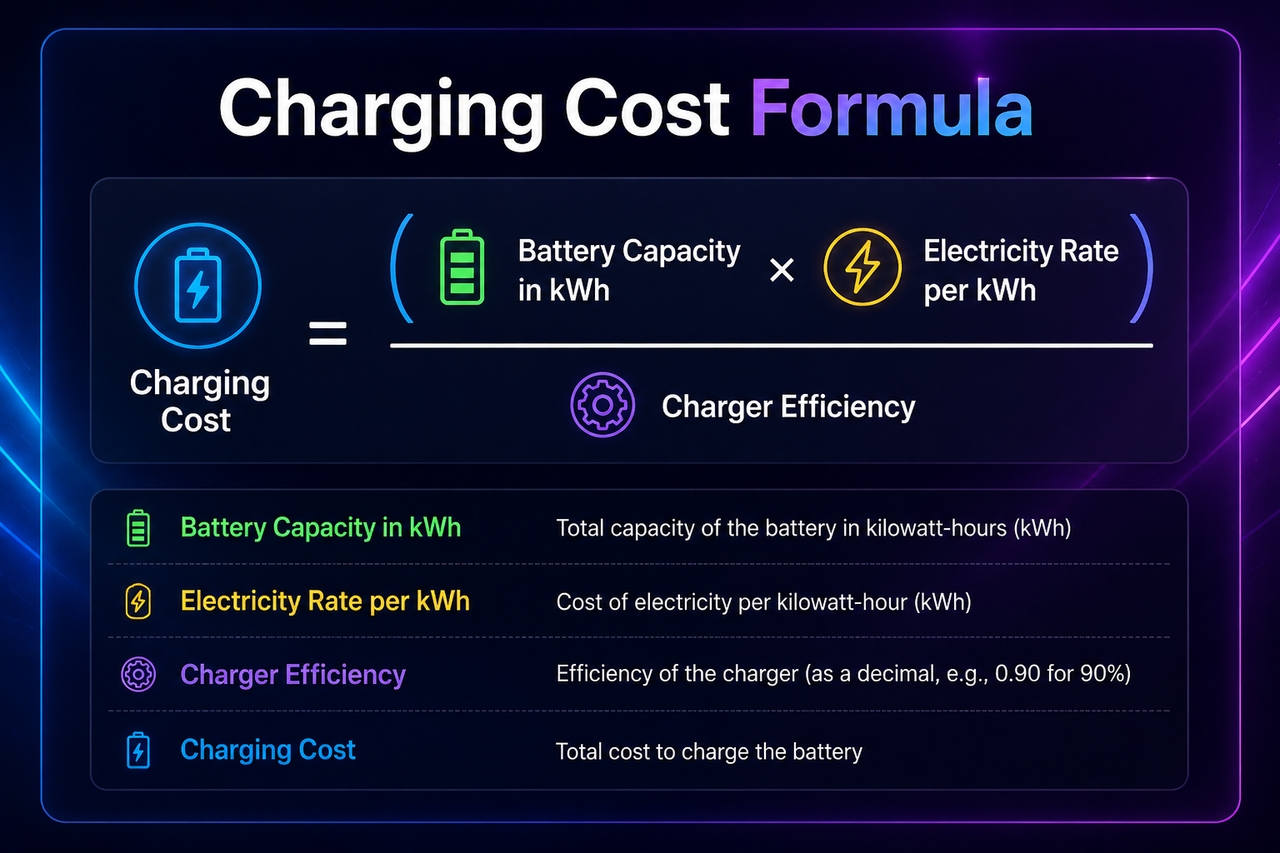
Calculating your average cost to charge an electric car is easier than most people think. The core engineering formula relies on your vehicle's hardware and your local energy pricing:
Charging Cost = (Battery Capacity in kWh x Electricity Rate per kWh) / Charger Efficiency
To understand what it costs to charge an electric car, it helps to break down how each component plays a role:
Battery capacity (kWh): Measured in kilowatt-hours, this represents the total size of your electric fuel tank.
Electricity rate: This is the precise amount your utility provider charges you per kilowatt-hour of energy consumed. Across the United States, the 2026 national average electricity rate sits at approximately $0.14 to $0.17 per kWh.
Charger efficiency: Not all electricity drawn from the wall reaches your vehicle's battery. Some energy is lost during the charging process due to heat and power conversion (typically 88-92% for Level 2, 70-85% for Level 1).
Assuming a baseline utility rate of $0.15 per kWh, let's look at what a full 0 to 100% charging session costs for two highly distinct vehicles:
Hyundai Ioniq 6 (77.4 kWh Battery):
$$(77.4 \times 0.15) \div 0.90 = \$12.90$$
Tesla Cybertruck (123 kWh Battery):
$$(123 \times 0.15) \div 0.90 = \$20.50$$
Note: Most drivers do not charge from 0 to 100% daily. Most only top up 20 to 80% based on their commute, keeping daily costs much lower, often between $4 and $9 depending on miles driven.
EV home charging cost by state
Electricity prices differ widely depending on where you live. The same vehicle can cost nearly twice as much to charge in one state compared to another.
The following table estimates the cost of fully charging a Ford F-150 Lightning Extended Range battery (131 kWh).
State | Avg. Electricity Rate (¢/kWh) | Cost Per Full Charge |
|---|---|---|
Hawaii | 39.36¢ | $51.56 |
California | 32.58¢ | $42.68 |
Massachusetts | 30.07¢ | $39.39 |
Maine | 27.98¢ | $36.65 |
Connecticut | 27.64¢ | $36.21 |
New York | 26.18¢ | $34.30 |
New Jersey | 25.31¢ | $33.16 |
North Dakota | 13.27¢ | $17.38 |
Arkansas | 13.23¢ | $17.33 |
Louisiana | 13.02¢ | $17.06 |
Nebraska | 12.87¢ | $16.86 |
Nevada | 12.35¢ | $16.18 |
Idaho | 12.28¢ | $16.09 |
Level 1 vs. Level 2 home charging — What's the real cost difference?
The equipment you plug your vehicle into changes more than just your charging speed. It directly alters your home's energy efficiency and your monthly utility statement.
Level 1 charging (120V standard outlet)
Level 1 charging uses a standard household outlet and requires no additional electrical work, making it the simplest way to charge an electric car at home.
Efficiency: 80-85%
Energy loss: 15-20% (lost mainly as heat during slow charging)
Typical cost impact: Higher effective cost per charge due to lower efficiency
For example, charging a standard KIA EV6 (77.4 kWh battery) from empty at a standard utility rate of $0.14 per kWh with a baseline 75% efficiency rate costs:
(77.4×0.14)÷0.75= $14.45
Level 2 charging (240V dedicated circuit)
Level 2 charging uses a 240V circuit and delivers significantly more power to the vehicle. Faster charging times and improved efficiency make it the preferred option for most EV owners.
Efficiency: 90-95%
Energy Loss: 5-10%
Typical cost impact: Lower effective cost per charge thanks to higher efficiency
Charging that exact same KIA EV6 (77.4 kWh battery) at $0.14 per kWh on a Level 2 setup operating at 90% efficiency costs:
(77.4×0.14)÷0.90=$12.04
Is Level 2 worth the upgrade?
For most EV owners, upgrading to a Level 2 charger is worth the investment. While the upfront installation cost is higher, the combination of improved charging efficiency, faster charging speeds, and access to off-peak electricity rates can lead to meaningful savings over time.
Charger Type | Speed | Efficiency | Cost per Charge (80 kWh) | Best For |
|---|---|---|---|---|
Level 1 (120V) | 3 to 5 miles per hour | 75% to 80% | $14.45 | Plug-in hybrids or low daily mileage drivers |
Level 2 (240V) | 25 to 45 miles per hour | 88% to 92% | $12.04 | All battery EVs, daily commuters, and dynamic rate savings |
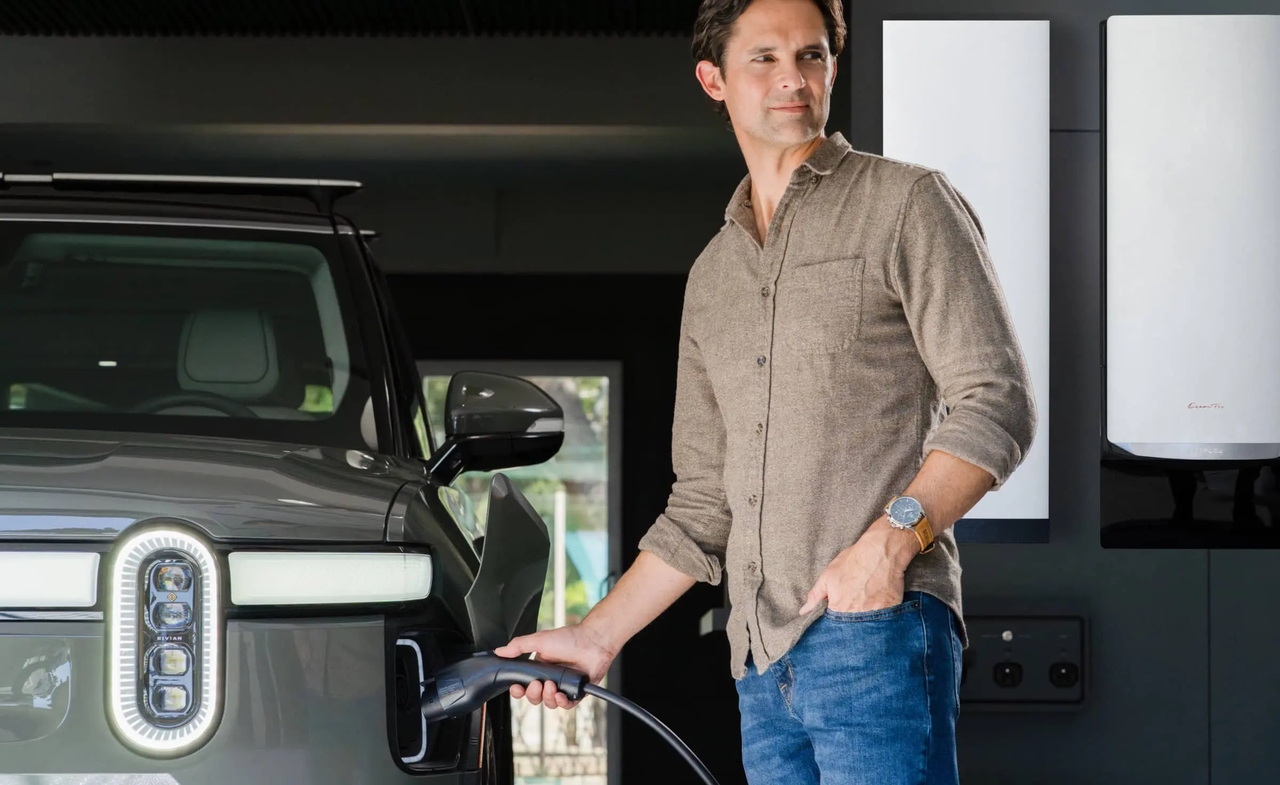
Based on a 77.4 kWh KIA EV6 and an electricity rate of $0.14/kWh. For homeowners looking for a future-ready charging solution, the EcoFlow OCEAN EV Charger delivers up to 11.5 kW of Level 2 charging power, adding approximately 30-40 miles of range per hour. Integrated with the EcoFlow Ocean Pro home energy ecosystem, it helps maximize charging efficiency, take advantage of lower TOU rates, and utilize stored solar energy without requiring a separate charging setup.
How Time-of-Use (TOU) rates can lower EV charging costs
For many EV owners, when you charge can be just as important as how you charge. Utilities across the United States increasingly use Time-of-Use pricing plans that charge different electricity rates throughout the day. By charging during lower-cost periods and avoiding peak demand hours, EV drivers can significantly reduce their average cost to charge an electric car each year.
What are TOU electricity rates?
Time-of-Use (TOU) rates are a pricing structure offered by many utilities where the cost of electricity changes based on the time of day. Electricity is more expensive during peak demand hours (usually afternoons and evenings when usage is high) and cheaper during off-peak hours (typically late night and early morning).
For example, peak rates can reach $0.25-$0.40/kWh or higher, while off-peak rates often drop to $0.08-$0.12/kWh. This structure encourages users to shift energy consumption to lower-cost times.
Best time to charge your EV
The best time to charge your EV is during off-peak hours, especially overnight from 9 PM to 6 AM. Charging during these windows can reduce your electricity costs by 30-50% compared to peak hours.
Smart EV chargers and mobile apps make this easy by allowing you to schedule charging sessions automatically. You simply set your preferred start time, and the charger handles the rest while your vehicle charges at the lowest possible rate.
Using smart energy storage to optimize charging
Smart battery storage significantly reduces peak-hour charging costs by storing electricity purchased during cheap off-peak hours (or generated from solar) and releasing it when rates are highest. This lets you avoid expensive peak pricing entirely while still charging your EV on demand.
It also makes excellent use of stored solar energy. Excess power from your rooftop panels that would otherwise be sent to the grid at low rates can be stored and used later for EV charging, maximizing your solar investment.
The EcoFlow Ocean Pro home solar battery is an outstanding solution for TOU optimization and energy management. The system offers up to 80 kWh of battery storage capacity, 24 kW continuous output, and up to 40 kW solar input, enabling homeowners to store low-cost grid electricity or excess solar production for later use. When paired with the companion EcoFlow OCEAN EV Charger, the system utilizes AI driven scheduling via the EcoFlow app. Instead of manually tracking utility schedules, you simply input your departure time or daily mileage goals.

Get Your Free Home Energy Consultation!
Which energy solution are you interested in?

Hidden costs and additional factors
When estimating your long-term electric vehicle budget, your raw electricity rate is only one part of the puzzle. There are several external variables and one-time expenses that do not show up on your car's dashboard but will impact your total cost of ownership.
What is not included in standard calculations?
Simply multiplying your battery size by your electricity rate will usually understate your actual utility statement.
Fixed delivery and distribution fees: Most utility companies charge volumetric or flat rate delivery fees to maintain the local grid infrastructure. These fees mean that every kilowatt hour of energy you draw for your vehicle carries a minor premium on top of the baseline supply rate.
Tiered tariff slabs: If your home is on a traditional tiered rate plan, adding an EV can push your total monthly household energy consumption into a higher tier or "slab." When this happens, your baseline cost per kWh rises for the entire household, not just the vehicle.
Variables that affect your bill
Your actual charging costs will fluctuate month to month based on operational and environmental factors.
Regional rate divergence: Local regulations and regional energy mixes create massive baseline cost differences. A driver in a state with abundant hydro power might pay a fraction of the cost per charge compared to a driver in a region reliant on imported natural gas or complex grid infrastructure.
Driving habits and efficiency: Just like a gas car, aggressive acceleration, high highway speeds, and heavy payload utilization drain an EV battery faster. If you consume more watt-hours per mile driven, you will find yourself plugging in more frequently, driving up your monthly bill.
Weather and temperature: Batteries are chemical storage devices that are highly sensitive to thermal extremes. In severe winter cold, an EV must divert a significant portion of its charging energy toward internal heaters to warm up the battery cells before it can safely accept a charge, which temporarily lowers your charging efficiency and increases energy consumption.
One-time costs: Hardware and installation
Moving away from a standard wall outlet requires an upfront investment to futureproof your home electrical system.
Charger hardware: A dedicated, smart Level 2 home charging station typically ranges from $350 to $750, depending on its maximum amperage, weatherproofing, and smart connectivity features.
Professional installation: Hiring a licensed electrician to mount the charger and run a heavy-duty 240V circuit typically runs between $500 and $1,500.
Conclusion
For most EV owners, home charging remains the most affordable and convenient way to power an electric vehicle. While the exact cost depends on your battery size, local electricity rates, charger efficiency, and driving habits, charging at home is typically far less expensive than relying on public fast chargers or gasoline. The key to maximizing savings is understanding your utility rate plan and scheduling charging during lower-cost off-peak hours whenever possible.
For homeowners looking to reduce charging expenses over the long term, combining a fast Level 2 EV charger with a home battery system can deliver even greater savings. Solutions like the EcoFlow Ocean Pro allow you to store low-cost grid electricity or excess solar energy and use it when rates are highest, helping optimize energy usage, lower charging costs, and increase energy independence.
Ready to lower your long-term energy costs? Schedule a free consultation today and get a personalized quote to discover the best energy solution for your home.
FAQs
What is the cost of fully charging an electric car?
The cost of a full charge depends on battery size, electricity rates, and charger efficiency. Most EVs cost between $8 and $25 to charge at home, while larger vehicles with bigger batteries may cost slightly more.
How much does it cost to drive 100 miles in an electric car?
Most EVs use 25 to 35 kWh of electricity per 100 miles. At an average residential rate of $0.15 per kWh, driving 100 miles typically costs between $3.75 and $5.25, making EVs cheaper to operate than gas vehicles.
How much should it cost to charge an electric car?
For most drivers, home charging costs range from $10 to $20 for a full battery charge. Daily charging expenses are often much lower because drivers usually recharge only the energy used during their commute.
Can I charge my electric car for free?
Yes. Many hotels, shopping centers, and workplaces offer free Level 2 charging to attract customers or employees.
How much energy is lost during the EV charging process?
Typically, 10% to 25% of grid energy is lost as heat. Standard Level 1 wall outlets experience the highest loss at roughly 20% to 25%, while Level 2 home charging systems improve efficiency, limiting energy waste to just 8% to 12%.

