
Gigawatt to Kilowatt: The Simple Guide to Power Conversion
Gigawatt to kilowatt conversion trips people up more than it should. The gigawatt sounds like something out of a science fiction film. The kilowatt is just a line on a monthly electricity bill. But these two units sit on the same scale, just very far apart on it. Once the relationship clicks, comparing grid-scale power to home energy use starts making real sense. This guide walks through math simply, explains why it matters practically, and shows how understanding these numbers helps homeowners make smarter decisions around electricity costs and Time-of-Use (TOU) pricing.
Electricity basics: What are Gigawatts and Kilowatts?
Power and energy get confused a lot. Power is the rate at which electricity flows at any given moment. Energy is how much of that flow accumulates over time. Gigawatts and kilowatts both measure power. Kilowatt-hours and gigawatt-hours measure energy. That distinction matters when reading specs or comparing systems.
What is a kilowatt (kW)?
A kilowatt is simply 1,000 watts. It is the unit that shows up on appliance labels, home energy monitors, and electricity bills. Most people interact with kilowatts every single day without thinking about it. Is that air conditioner humming in the background? Probably drawing 3 to 5 kW. The clothes dryer? Around 5 kW. An electric water heater? Roughly 4.5 kW. When the electricity bill lists kilowatt-hours (kWh), it is just those kilowatt-hours multiplied by how many hours the appliances run.
What is a gigawatt (GW)?
A gigawatt is one billion watts. No home appliance gets anywhere near this territory. Gigawatts are the unit of national infrastructure: large power stations, wind farms that stretch across hundreds of acres, and the total capacity figures that utility companies publish. A single large nuclear reactor typically outputs around 1 GW. The entire US grid has roughly 1,189 GW of total utility-scale generating capacity, according to EIA data.
The power scale
The step-up pattern between units is always 1,000:
Unit | Equals |
1 Kilowatt (kW) | 1,000 Watts |
1 Megawatt (MW) | 1,000 Kilowatts |
1 Gigawatt (GW) | 1,000 Megawatts |
1 Gigawatt (GW) | 1,000,000 Kilowatts |
Individual devices run on watts. Homes run on kilowatts. Neighborhoods and small plants run on megawatts. Cities, regions, and national grids run on gigawatts.
How to convert Gigawatts to Kilowatts (and Vice Versa)
The math here is straightforward. There is no complex formula to memorize.
The core formula: Gigawatts to Kilowatts
To convert gigawatts to kilowatts, multiply by 1,000,000.
GW x 1,000,000 = kW
So 1 GW = 1,000,000 kW. Two gigawatts equals 2,000,000 kW. Half a gigawatt equals 500,000 kW. The multiplication is the only step needed.
The reverse formula: Kilowatts to Gigawatts
To go the other direction, divide by 1,000,000.
kW / 1,000,000 = GW
A home drawing 10 kW of power at any moment is consuming 0.00001 GW. Put that way, it is easy to see why utility grids work in gigawatts and homes work in kilowatts. The scale difference is enormous.
Quick reference conversion table
Gigawatts (GW) | Kilowatts (kW) |
1 GW | 1,000,000 kW |
0.5 GW | 500,000 kW |
0.1 GW | 100,000 kW |
0.01 GW | 10,000 kW |
0.001 GW | 1,000 kW |
Why understanding power units matters for energy management
The conversion math is the easy part. The harder question is what to do with that knowledge once you have it.
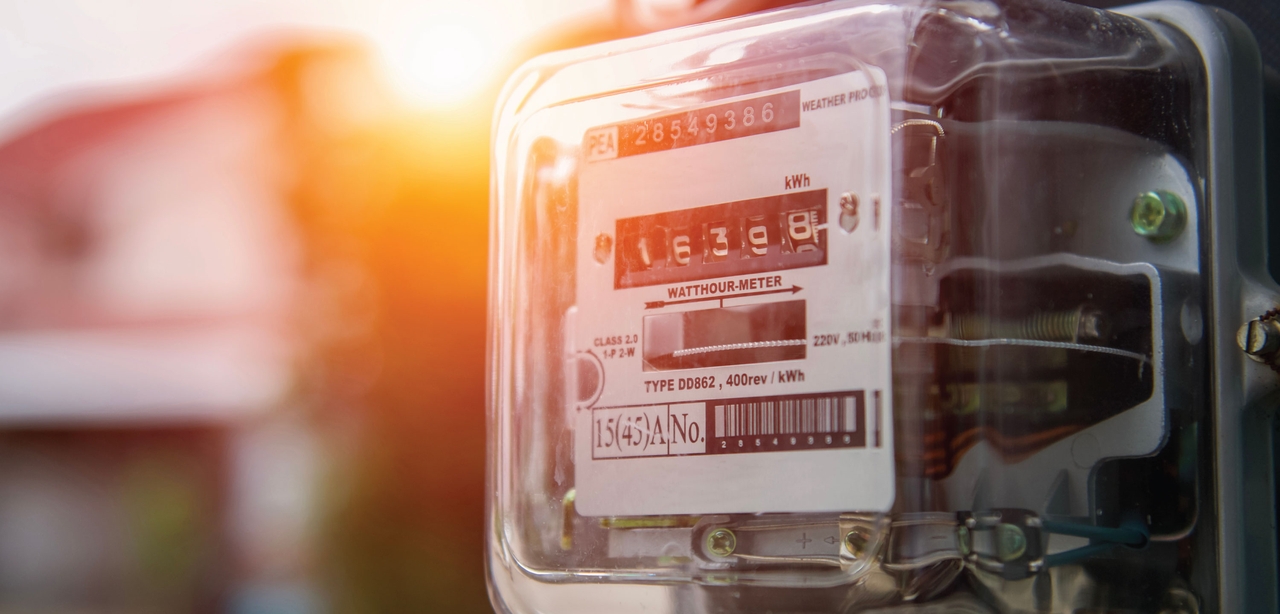
Electricity consumption awareness: Most homeowners genuinely do not know how many kilowatts their home draws at any given moment. Run the numbers once and it gets clearer fast. A typical HVAC unit, water heater, and dryer running simultaneously can bring total simultaneous demand significantly higher.
Demand management: Commercial customers often get billed on peak demand as well as total consumption. Residential customers are mostly insulated from this for now, but that is changing. Understanding when the home draws the most power is already useful for identifying hours worth avoiding.
Peak-hour energy costs: The grid does not charge a flat rate in most modern utility territories. Demand spikes in the mornings and evenings, and electricity costs reflect that. Those are the hours when running heavy appliances costs the most. Knowing the home's kW draw during those windows is the starting point for actually reducing what ends up on the bill.
Time-of-Use (TOU) pricing: Many US utilities have already moved to TOU rate structures, where the price per kWh changes by hour. Overnight and midday rates tend to be cheap. Early morning and evening rates are noticeably higher. Households that charge batteries or run major appliances during the cheap windows and avoid the grid during expensive ones can cut monthly costs meaningfully without changing how they live.
Smarter energy decisions: When a homeowner is evaluating a solar system, a home battery, or a new heat pump, the specs on those products are all in kilowatts and kilowatt-hours. Understanding what those numbers mean in practice, not just on paper, is what separates a well-sized system from one that falls short when it actually matters.
Scaling down the grid: Managing your home's Kilowatts
The average US home draws roughly 1.2 kW continuously throughout the day, which works out to about 10,500 kWh per year according to EIA data. That seems small compared to a gigawatt grid. But at peak hours, when multiple heavy appliances run at once, a single home can spike to 15 kW or more.
This is exactly the gap that home battery storage fills. A home battery captures cheap off-peak electricity, either from the grid at low overnight rates or directly from rooftop solar during peak generation hours, and deploys it during expensive peak windows. The result is a household that draws less from the grid precisely when grid power costs the most.
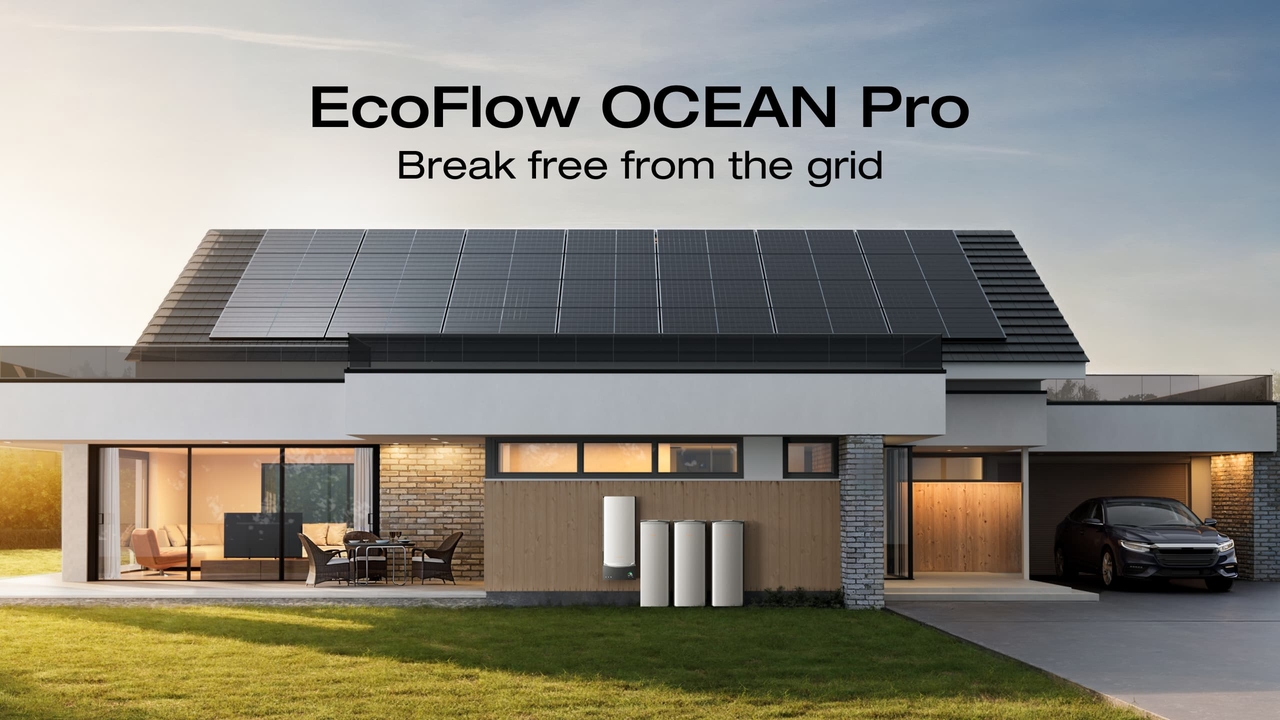
For homeowners who want to take this seriously, the EcoFlow OCEAN Pro Solar Battery System handles it at a whole-home scale. It puts out up to 24kW continuously, enough to run all major appliances at once without pulling from the grid. Storage scales from 10kWh up to 80kWh, giving a home enough capacity to cover hours of peak-rate evening usage from energy stored during cheaper midday windows.
The built-in Intelligent Mode takes this further. It monitors TOU pricing automatically and shifts household energy use to off-peak hours without any manual scheduling.
Real-world applications of Gigawatts and Kilowatts
Gigawatts in large-scale power generation
Zoom out to the national level and everything is measured in gigawatts.
National grids are the clearest example. The US power grid has over 1,190 GW of total utility-scale electricity-generation capacity, balancing supply from thousands of generation sources against demand from millions of homes, businesses, and industrial facilities all running simultaneously.
Utility-scale solar farms have started hitting the gigawatt threshold regularly. In 2025, the US solar industry added over 43 GW of new capacity in a single year, according to SEIA. A 1 GW solar farm, running at a typical US capacity factor of around 20–25%, generates enough electricity annually to power approximately 150,000 to 200,000 average American homes.
Conventional power stations sit mostly in the 0.5 to 4 GW range. The Palo Verde Nuclear Generating Station in Arizona leads the pack in the US, with three reactors totaling nearly 4 GW of installed capacity.
Kilowatts in everyday life
Drop back down to the household level, and kilowatts take over entirely.
Home appliances all draw power in the kilowatt range. A central air conditioner pulls 3 to 6 kW when running. An electric oven running on bake draws 2 to 5 kW. A refrigerator sits around 0.15 to 0.4 kW continuously. Stacking several of these at once during an evening cooking and cooling session is how homes reach 10 to 15 kW of simultaneous demand.
EV charging adds a substantial load. A Level 2 home charger delivers 7 to 11 kW, which means plugging in after a long commute can push the home's total draw well past what many people expect. This is one reason home battery sizing gets more important as EV adoption grows.
Residential solar systems are rated in kilowatts, too. Most US rooftop installations run between 6 and 12 kW of installed capacity. At peak midday production, a 10 kW system generates 10 kW of power in real time. Store that in a home battery, and it becomes usable energy for the evening, right when grid rates tend to peak.
Conclusion
The conversion from gigawatt to kilowatt is a simple multiplication by 1,000,000. The bigger picture is what makes understanding these units valuable. Grid-scale power is measured in gigawatts. Home energy use happens in kilowatts. The gap between the two is enormous, but it is also where modern home energy management tools have their most practical impact.
Monitoring kilowatt consumption at home, understanding TOU pricing windows, and storing cheap energy for expensive peak hours are the three levers that actually move the needle on monthly electricity bills. A battery system that handles all three automatically takes the complexity out of the process entirely.
Ready to take control of home energy costs? Request a consultation with an EcoFlow energy advisor to find the right whole-home storage configuration for real TOU savings, and explore the full home battery backup options available today.
Get Your Free Home Energy Consultation!
Which energy solution are you interested in?

FAQs
How many kilowatts are in 1 gigawatt?
There are exactly 1,000,000 kilowatts in 1 gigawatt. To convert, multiply any GW value by 1,000,000. So 2 GW equals 2,000,000 kW, and 0.5 GW equals 500,000 kW.
What is the difference between a gigawatt and a gigawatt-hour?
A gigawatt (GW) measures power, the rate of energy flow at a specific moment. A gigawatt-hour (GWh) measures energy, the total amount of power consumed or produced over one hour at that rate. Power tells how fast; energy tells how much total was used.
How many homes can 1 gigawatt power?
At peak nameplate capacity, 1 GW could theoretically supply around 1,000,000 homes simultaneously. But accounting for typical solar capacity factors of 20–25%, a 1 GW solar farm realistically generates enough annual electricity for approximately 150,000 to 200,000 average US homes. The exact figure varies by region, climate, and appliance efficiency. For intermittent sources like solar, the effective number is lower due to capacity factors.
How do you convert kilowatts to gigawatts?
Divide the kilowatt value by 1,000,000. For example, 500,000 kW divided by 1,000,000 equals 0.5 GW. A typical home drawing 10 kW equals 0.00001 GW, which illustrates just how much larger grid-scale power is compared to residential consumption.
How many solar panels are needed to create 1 gigawatt of power?
Roughly 2 to 3.3 million standard residential solar panels, depending on individual panel wattage. A 400-watt panel at peak output contributes 0.4 kW. Scaling to 1 GW (1,000,000 kW) requires approximately 2.5 million of those panels running simultaneously under ideal conditions.

