
Finishing Basement Tips: An Ultimate Guide to Basement Makeover
Struggling with a dark, unused lower level? These finishing basement tips will help you turn that space into something functional and inviting. Many homeowners face issues such as poor lighting, moisture, and limited layout options when starting a basement makeover. The good news is that with the right planning, you can overcome these challenges and add serious value to your home.
Don't forget to consider installing a smart home energy system, as it not only improves efficiency but also acts as a reliable backup for custom features like bars, theaters, and bathrooms. Scroll down the guide and learn basic basement finishing tips and key cost factors to get started.
How to plan a basement makeover
Transforming a dark, underutilized basement into a functional part of your home is an ambitious project that requires more than just a fresh coat of paint. It demands a strategic approach that balances your creative vision with technical feasibility and local regulations:
Define purpose & layout
Think about what you need. Do you want a home theatre, a guest bedroom, a gym, an office, or a rental unit? Every choice you make, from lighting to the flooring, will be based on your goal. Make separate areas in the basement for different uses, such as entertainment, storage, and work. Ensure there's enough space to move around easily between rooms, and that the furniture doesn't block doors or pathways.
Check structural & legal requirements
You usually need a permit to make changes to your basement, especially if you're adding wiring, plumbing, or changing the walls. Failing to obtain permits can lead to problems or fines when you sell your house. Make sure your basement meets the minimum safety and ceiling-height codes. This is very important if you want to add a bedroom, which may also need the right egress windows for emergency exits.
Budget planning
Set clear goals from the start. Basic upgrades might include new paint and flooring, while high-end remodels might include custom cabinets, bathrooms, or smart systems. Allocate budgets for material labor, and unexpected repairs when finishing a basement. This is the time to plan carefully so that you don't run into any expensive surprises and your basement makeover goes smoothly from start to finish.
How much does it cost to finish a basement
The cost of finishing a basement can vary widely depending on the level of renovation, materials used, and complexity of the project. Whether you're aiming for a simple upgrade or a luxury transformation, understanding the cost ranges helps you plan more effectively.
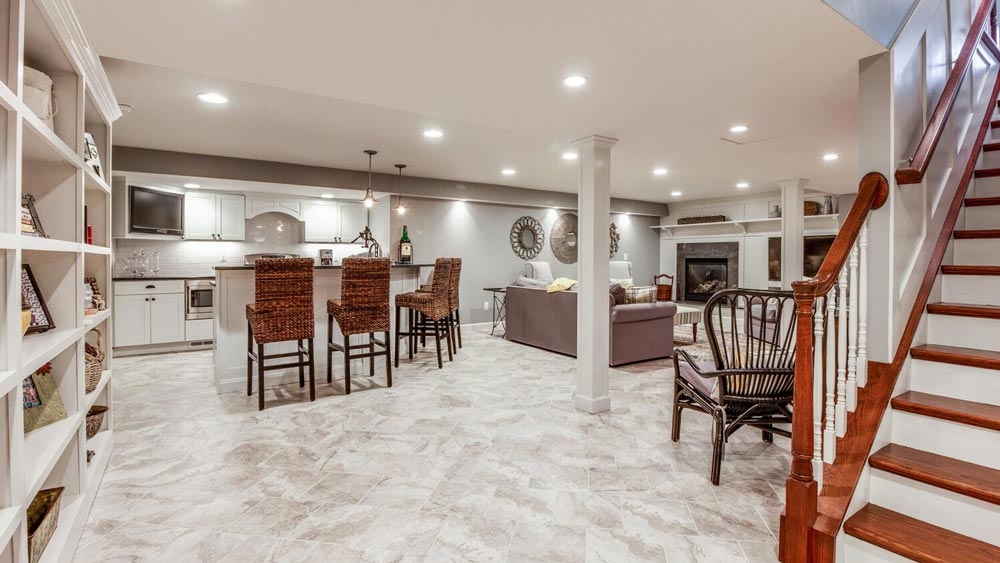
Average cost breakdown
Basic finish: $7,000 – $15,000
Great for simple improvements like painting walls, putting in basic flooring, adding lights, and small fixtures. Best for homeowners who want to update their space without spending a lot of money.
Mid-range remodel: $15,000 – $35,000
Includes higher-quality materials, better lighting, partial room divisions, and maybe adding things like a small office or entertainment area.
High-end renovation: $35,000 – $75,000+
Includes high-end finishes, custom designs, and major additions such as a bathroom, wet bar, or home theatre. For this level, you usually need professional design and skilled workers.
Key cost factors
Basement size
The larger your basement, the more you'll spend on materials like drywall, flooring, insulation, and paint. Labor costs also increase since contractors need more time to complete the job. Even small additions in square footage can significantly impact the final bill.
Material quality
The kind and quality of materials you choose are very important when it comes to costs. Laminate or vinyl flooring is a good choice for people on a budget because it is affordable. Mid-range materials are a good choice because they are both durable and look good. High-end finishes like hardwood floors, custom cabinets, and designer fixtures can make things much more expensive, but they also make them look better and last longer.
Labor costs
The cost of labor is often one of the biggest parts of a basement renovation budget. The costs depend on how skilled the professionals you hire are, how hard the project is, and how much workers in your area charge. It may cost more to hire skilled contractors, electricians, and plumbers, but they make sure the work is done safely, quickly, and up to code, which can save you money in the long run.
Plumbing and electrical additions
Adding plumbing or electrical systems can significantly increase your renovation costs. If you want to add things like bathrooms, sinks, or wet bars, you'll need to install new plumbing, including pipes and drains, and maybe even adjust the water pressure. In the same way, new outlets, lighting fixtures, or circuit panels are often needed to make the building safer and more useful for modern use.
Custom features (home theater, bar, bathroom)
Custom additions can transform your basement into a highly functional and enjoyable space, but they come at a premium. Features like a home theater may require soundproofing and specialized wiring, while a bar or kitchenette involves cabinetry, countertops, and appliances. Bathrooms are particularly expensive due to plumbing, waterproofing, and fixtures, making them one of the biggest cost drivers.
A step-by-step guide to the basement finishing process
Framing & insulation
Building the wall frame and adding insulation are the first steps to finishing a basement. Framing gives rooms their shape and defines how the space is laid out. To keep mould and dampness from growing in your basement, you need to use moisture-resistant insulation. Properly anchoring to the concrete foundation ensures it stays stable and lasts a long time.
Electrical & lighting setup
After the structure is up, the next step is to put in the electrical systems. This includes putting in outlets, switches, and separate circuits for appliances or entertainment systems. It's important to plan your lighting layout in advance because basements don't get much natural light. A good mix of ambient, task, and accent lighting can make the space feel brighter and more welcoming.
Plumbing installation
You need to install plumbing at this point if your basement design includes a bathroom, wet bar, or laundry room. This includes putting in water supply lines, drainage pipes, and maybe even a sump pump or ejector pump. Planning ahead ensures that water flows smoothly and helps you avoid expensive changes later.
Drywall & wall finishing
When the electrical and plumbing work is done, drywall is put up to make the walls look finished. To keep moisture from getting into the drywall and causing damage over time, it's important to leave a small space between the drywall and the floor. After they are put up, the walls are taped, mudded, and sanded to make them smooth, ready for painting or other finishes.
Ceiling installation
Choosing the right ceiling type is key for both aesthetics and functionality. A drop ceiling is practical because it allows easy access to pipes and wiring, while a drywall ceiling offers a cleaner, more polished look. This step also helps conceal ductwork, pipes, and electrical lines, giving the basement a finished appearance.
Flooring installation
The final step is installing flooring that can withstand the conditions in the basement. Moisture-resistant options are highly recommended, such as vinyl plank, tile, or carpet tiles. These materials are durable, easy to maintain, and less likely to be damaged by humidity or minor water exposure, making them ideal for below-ground spaces.
Tips for finishing a basement for maximum impact
Get necessary permits & inspections
Make sure you obtain all necessary permits and schedule inspections before you start any work in the basement. This includes obtaining permission for changes to the plumbing, electrical, and structural systems. Following local building codes not only makes your renovation legal, but it also keeps people safe and makes it easier to sell your home later.
Brighten the space
Because there isn't much natural light, basements often feel dark and cramped. Use a mix of recessed lighting, wall sconces, and light-colored paint to reflect light and fix this. Putting mirrors and lights in the right places can make the space feel more open, warm, and welcoming.
Optimize layout
One of the best finishing basement tips is to make sure the layout is as clear as possible to avoid problems later. A well-thought-out layout can completely change how your basement works. Make clear areas for entertainment, work, or storage, and keep traffic moving smoothly. Using furniture that serves multiple purposes and open layouts can make basements more useful, especially if they are small.
Improve comfort & insulation
When making a basement into a living space, comfort is very important. Proper insulation helps keep the temperature stable, keeps noise down, and stops moisture from building up. To make your home cozy and energy-efficient, consider adding soft flooring, rugs, and a good ventilation system.
Choose a strong home backup
A reliable power backup system is essential for any finished basement, especially for high-demand features like home theaters or kitchenettes. Unexpected power outages shouldn't disrupt your comfort or functionality.
Installing a professional system like the EcoFlow Ocean Pro provides a seamless solution. With a 24kW continuous output and 205A LRA surge power, it easily handles heavy loads such as HVAC systems and luxury appliances.
This setup ensures a 10ms switchover during outages, maintaining uninterrupted power. Its modular design allows you to scale from 10kWh to 80kWh, while Intelligent Mode optimizes energy usage to reduce costs. By integrating up to 40kW of solar input, the Ocean Pro offers a high-performance, sustainable energy foundation for your basement project.
Get Your Free Home Energy Consultation!
Which energy solution are you interested in?


Conclusion
Finishing a basement is a rewarding project when approached with the right plan. From defining your layout and setting a realistic budget to carefully executing each stage of construction, every step plays a crucial role in achieving the desired outcome. Ultimately, the goal is to create a basement that is not only functional but also stylish and energy-efficient. With thoughtful decisions and quality improvements, your basement can become a valuable extension of your home that meets both practical needs and modern lifestyle expectations.
Ready to make your basement a functional space? Request a consultation with us to ensure a reliable power backup and enjoy uninterrupted service.
FAQs
What is the proper way to finish a basement?
Planning and inspecting come first, then controlling moisture and getting the structure ready come next. After that, put up the framing, insulation, electrical and plumbing systems, drywall, ceiling, and finally the flooring in that order. Building codes should be followed at every stage, and durability should be the top priority, especially in areas where moisture is common.
What not to do when finishing a basement?
Don't ignore moisture problems, as they can cause mould and long-term damage. Never skip permits or inspections, and don't skimp on insulation or ventilation. Using materials that don't resist moisture, poor lighting, or a crowded layout are other common mistakes that can make things less comfortable and less useful.
Do I need a permit to finish my basement?
Yes, you will almost always need permits, especially if your project involves plumbing, electrical work, or structural changes. Getting permits ensures that your renovation complies with safety rules and local building codes. They can also help you avoid legal problems or problems when you sell the house later.
What is the most important step before finishing a basement?
Addressing moisture and structural issues is the most important thing to do. Check for leaks, dampness, or foundation problems before you start any finishing work, and fix them properly. For renovation to go well and last, the basement needs to be dry and stable.
What type of flooring is best for basements?
The best type of flooring for basements is one that doesn't get wet. Vinyl plank, tile, and carpet tiles are all good choices because they can handle humidity and small amounts of water. These materials are strong, easy to care for, and perfect for spaces below ground.

