
Decode Your Electricity Facts Label to Slash Monthly Utility Bills
Comparing utility plans often feels overwhelming. Unexpected fees have a habit of inflating monthly expenses, leaving many families frustrated when the bill arrives. Learning how to properly review the fine print of a contract is the very first step toward reclaiming control over household power costs.
Whether moving into an average home of 2,000 sq ft (185.8 sq m) or simply trying to optimize a current setup, understanding the exact rate structure is highly beneficial. In this detailed breakdown, we will demystify the core components of utility pricing. This knowledge helps consumers confidently secure the best rates available. We will also explore how adding a comprehensive home energy setup can further protect a household from constantly rising grid costs.
What Is an Electricity Facts Label?
An Electricity Facts Label acts very much like a nutrition label on a box of cereal, but it applies to a home’s energy plan. Retail electricity providers supply this standardized document to outline the true, unfiltered cost of a utility contract.

Utility companies often use flashy marketing language to attract new customers. This document strips away that confusing jargon to display the exact cents per kilowatt-hour (kWh) a resident will pay. By reviewing this standard sheet, consumers can easily compare different providers on a level playing field. Taking the time to read it helps homeowners avoid hidden rate spikes that are often associated with specific usage thresholds.
Understanding these costs is just part of the modern energy equation. Homeowners looking to achieve greater energy resilience often explore solar power for the home to completely transform how they source and consume everyday energy. Combining a great utility rate with modern energy generation creates the ultimate strategy for household savings.
Core Components of the Label
Understanding the math behind a monthly bill requires breaking down the individual charges listed on this document. The final amount due is rarely a simple calculation, as it blends several different fees together.
The Base Charge
This is a fixed monthly fee applied simply for having an active account. It applies whether a house consumes zero energy during a month-long vacation or runs major appliances non-stop. Think of it as a basic membership fee that keeps the meter running and the account in good standing.
The Energy Charge
This section represents the actual cost of the power consumed by the household. Providers typically present this rate across three standard usage tiers: 500 kWh, 1,000 kWh, and 2,000 kWh. If household consumption fluctuates between these specific tiers throughout the year, the effective rate per kWh may change drastically. For instance, an apartment might use 500 kWh in the spring but jump to 1,500 kWh during peak summer months.
TDU Delivery Charges
Transmission and Distribution Utility (TDU) charges cover the actual cost of maintaining power lines and delivering electricity from the plant to a residential meter. These specific fees are regulated by local authorities and passed down directly to the consumer. They usually consist of both a flat monthly fee and a variable per-kWh rate. No matter which retail energy provider someone chooses, these delivery charges remain the same because they are tied to the local physical infrastructure.
How to Read an Electricity Facts Label
Understanding how to read EFL documents does not require a degree in finance or specialized training. By breaking it down into a simple process, anyone can verify exactly what they are signing up for. Checking these details before finalizing a contract is crucial. Specific resources, such as the EIA's report on electricity prices, the official state marketplace Power to Choose, and the Public Utility Commission, encourage all consumers to scrutinize utility agreements. This helps residents understand exactly how regional factors influence their final energy rate.
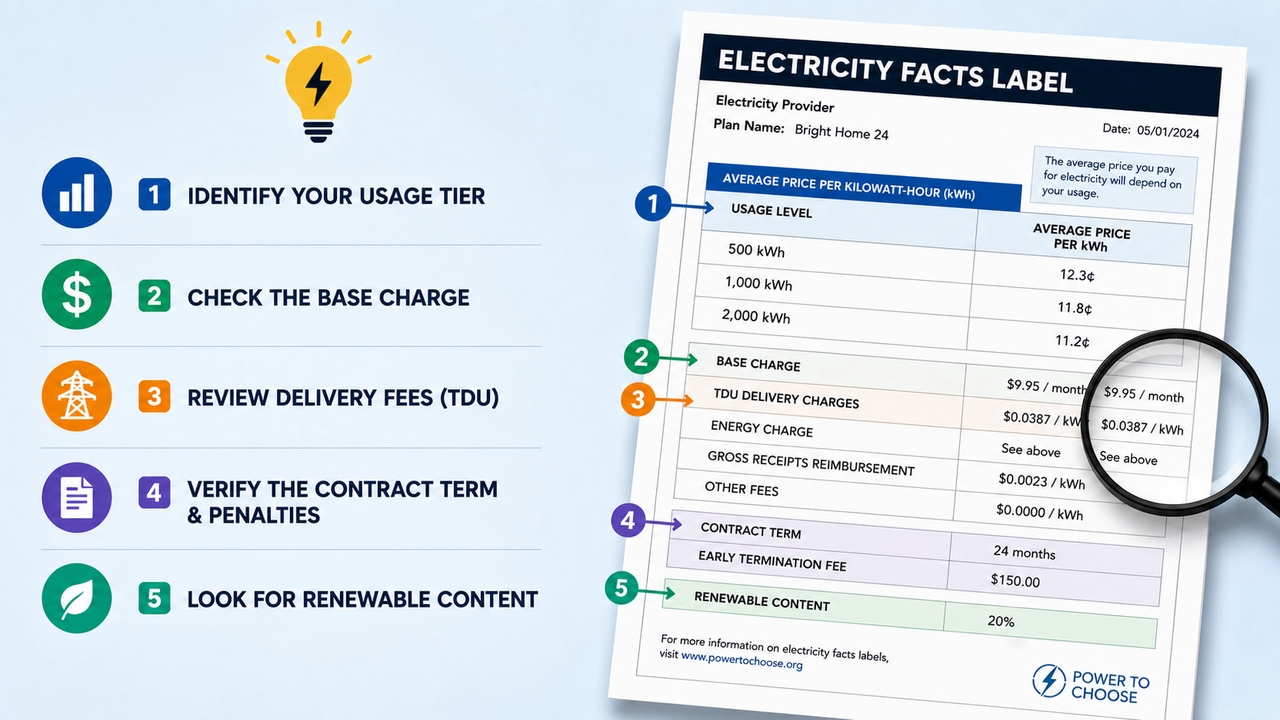
Step 1: Identify Your Usage Tier
Providers display average rates based on three primary usage levels: 500 kWh, 1,000 kWh, and 2,000 kWh. Reviewing past bills helps determine which tier a household consistently falls into. Only evaluate the price for that specific tier. A rate that looks incredibly cheap at 2,000 kWh might actually be quite expensive for a smaller home that only uses 800 kWh.
Step 2: Check the Base Charge
Look closely for the flat monthly fee the provider charges just to keep the account active. This fee applies regardless of how much power the house actually uses. A high base charge can severely dilute the benefits of a low per-kWh rate, especially for smaller households.
Step 3: Review Delivery Fees (TDU)
Locate the Transmission and Distribution Utility fees. These are non-negotiable pass-through costs that pay for grid maintenance and local power lines. They are clearly listed separately from the energy charge.
Step 4: Verify the Contract Term and Penalties
Check exactly how many months the contract lasts. Typical lengths are 12, 24, or 36 months. Also, locate the exact dollar amount of the early termination fee. If a move or a provider switch happens before the contract ends, this fee becomes active.
Step 5: Look for Renewable Content
Check the percentage of energy coming from solar or wind sources. This section reveals how environmentally friendly the plan actually is. Comparing this number against the state average helps consumers make eco-conscious decisions.
Fixed, Variable, and Indexed Rates
The document will explicitly state the type of contract being offered. Knowing the difference between these structures prevents unwanted billing surprises when market conditions shift.
Fixed-Rate Plans:
These contracts lock in the energy rate for the entire duration of the agreement (e.g., 12 or 24 months). This approach provides excellent budget stability for families on a strict budget. Though TDU delivery fees may still fluctuate slightly based on seasonal regulations, the core energy cost remains untouched.
Variable-Rate Plans:
Under this structure, the cost per kWh changes based on current market conditions. While residents avoid long-term commitments and early cancellation fees, they take on significant financial risk. Price spikes often occur during extreme weather events or high-demand seasons.
Indexed Plans:
These specific rates are tied directly to a publicly traded commodity or financial index. They require constant, close monitoring. Because they fluctuate wildly based on complex external factors, they are generally not recommended for the average residential consumer.
Strategies for Managing High Energy Rates
Once the rate structure makes sense, a household can implement practical strategies to actively lower monthly expenses. Avoiding peak pricing penalties is much easier when there is a solid plan in place. Upgrading a property into a complete Home Energy Ecosystem offers incredible long-term financial defense.
Integrating Smart Home Storage Solutions
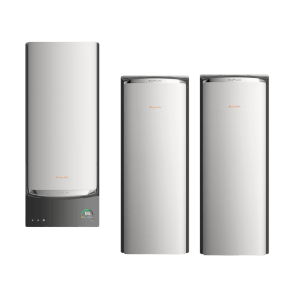
Relying strictly on the traditional utility grid leaves a home totally vulnerable to Time-of-Use (TOU) spikes and sudden rate changes. By integrating a highly capable and scalable solution like the EcoFlow OCEAN Pro Solar Battery System into a residence, a homeowner can actively manage when they draw power from the utility company. This technology shifts heavy electrical loads to cheaper, off-peak hours effortlessly.

The system features Intelligent Mode management that automatically shifts a portion of your home energy consumption to lower-cost hours to help reduce electricity bills. During periods of peak demand, it delivers a massive 24kW continuous output, which ensures large appliances like a 5-ton HVAC unit keep running smoothly even when grid prices are at their absolute highest. Furthermore, the multi-source reliability guarantees that the system seamlessly transitions to backup power in less than 10 milliseconds during grid failures, keeping the entire house running without a flicker.
Shifting energy consumption away from peak periods drastically reduces long-term utility expenses. By running major cooling systems off stored battery power during hot summer afternoons, homeowners can completely bypass premium grid rates. Because installing these high-voltage panels and batteries involves complex electrical work, professional installation by a certified electrician is required for safety and code compliance.
Get Your Free Home Energy Consultation!
Which energy solution are you interested in?

Are you ready to resolve your uncertainty about home battery backups and take control of your energy bills? We can help you protect your property from rising utility costs. Request a consultation today to find the perfect energy solution tailored to your home.
Common Mistakes When Reviewing Energy Contracts
Failing to read the fine print leads to expensive, frustrating surprises down the road. Many consumers rush through the sign-up process, completely missing details that ultimately dictate their monthly costs.
Ignoring Early Termination Fees
Life is unpredictable. Moving out of state or finding a drastically cheaper promotion might prompt an early cancellation. Getting penalized financially for breaking a fixed-term contract before it naturally ends is a common headache. These fees can range anywhere from fifty dollars to several hundred dollars, wiping out any potential savings gained from switching providers.
Miscalculating Usage Tiers
This is perhaps the most frequent error. Paying a much higher average rate happens when actual monthly consumption drops into a different volumetric tier than the one originally estimated. For example, a plan might offer an amazing rate at exactly 1,000 kWh. If the house only uses 850 kWh, a minimum usage penalty might apply, causing the effective rate to skyrocket.
Overlooking Contract Expiration Dates
Getting automatically rolled over onto an expensive, uncompetitive variable-rate plan is a trap many fall into. This occurs because the fixed-term contract ended without a formal renewal. Providers are not always proactive about warning customers before this transition happens. Keeping track of the exact expiration month on a calendar prevents this costly rollover.
Conclusion
Taking the time to dissect the details of an energy contract removes the anxiety from monthly utility bills. Navigating base charges, delivery fees, and usage tiers creates a clear picture of what a household is actually paying for. Armed with this knowledge, comparing different providers becomes a simple, logical process rather than a guessing game. Combining a well-researched energy plan with modern storage technology guarantees a more resilient, cost-effective home environment for years to come.
FAQs
What is a tariff information label?
It is a standardized document used in specific regions to display the exact terms, rates, and hidden fees of an energy plan. Similar to an EFL, it helps consumers compare utility offers clearly without misleading marketing terms.
How to interpret EFL?
Start by matching household usage to the listed tiers (500, 1000, or 2000 kWh). Then, add the flat base fee and the local delivery charges to find the true cost. Integrating an EcoFlow Ocean Pro can further reduce costs by shifting usage away from peak rates.
What happens if I use more electricity than estimated?
Bumping into a higher usage tier often triggers a different rate per kilowatt-hour. Depending on the specific contract structure, this shift can either lower the average rate or significantly increase the overall monthly bill.
Do energy plans charge early termination fees?
Yes, most fixed-rate plans include early termination fees. Canceling the service before the agreed-upon contract length ends usually results in a flat penalty charge, which is clearly listed on the initial agreement.

