
Electrical Wire Color Code Guide for Safe Home Wiring
Understanding the electrical wire color code is essential for anyone planning home repairs, renovations, or electrical upgrades. Misidentifying wires can lead to electric shocks, damaged equipment, or even fire hazards. Whether you're replacing a switch, adding new circuits, or installing backup power systems, knowing what each wire color represents helps ensure safer and more efficient electrical work. This guide explains standard US wiring colors and their role in modern residential electrical systems.
Why do electrical wire colors matter?
Electrical wire colors play a critical role in ensuring the safety, efficiency, and reliability of any electrical system. By following established electrical wire color code standards, electricians and homeowners can quickly identify the purpose of each conductor, reducing confusion during installation, maintenance, and troubleshooting.
Color coding helps improve safety by distinguishing live, neutral, and ground wires at a glance. Proper identification minimizes the risk of accidental contact with energized conductors and helps prevent wiring mistakes that could lead to electrical shock, short circuits, equipment damage, or even fire hazards.
In addition to safety, wire colors make electrical systems easier to organize and service. When circuits are clearly identified, repairs and future upgrades can be completed more efficiently, saving both time and cost.
It's important to note that in the United States, the National Electrical Code (NEC) provides guidance for residential wiring practices. While certain colors are reserved for specific functions, not all electrical color codes for wires are strictly mandated by the NEC. Many wiring color conventions are widely accepted industry standards that licensed electricians follow to ensure consistency and safety across installations.
The core wire types you need to know
Before learning individual colors, it's important to understand the three basic conductor types found in most residential electrical systems.
Live (Hot) wire: The live or hot wire carries electrical current from the power source to outlets, switches, lights, and appliances. It delivers the energy needed for devices to operate and should always be treated as potentially energized.
Neutral wire: The neutral wire returns current from the device back to the panel, completing the circuit. Under normal conditions, it carries current but remains at or near zero voltage relative to ground.
Ground (Earth) wire: Acts as a critical safety pathway. In the event of a fault (such as a short circuit or insulation failure), it routes dangerous current safely into the earth, tripping breakers or fuses to prevent electric shock and reduce fire risk.
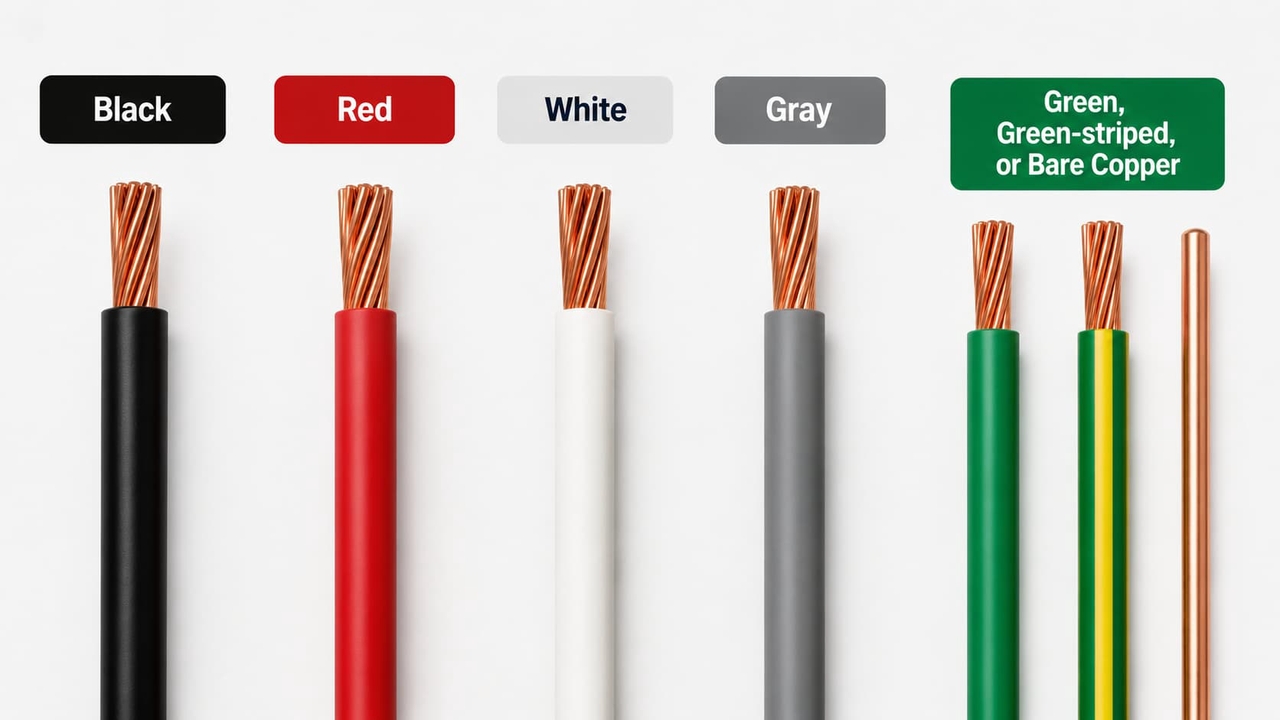
The standard US electrical wire color code (Residential AC)
Navigating a residential electrical system becomes straightforward once you learn to recognize the standard color conventions used across the United States. These specific colors quickly signal each wire's unique safety role and electrical behavior to prevent dangerous installation errors.
Black wires: Black wires are hot conductors that carry electrical power from the service panel to outlets, switches, lighting fixtures, and appliances. They are typically energized and should always be treated with caution during installation or maintenance work.
Red wires: Red wires function as secondary hot conductors and are commonly used in 240V split-phase circuits. They also appear in certain wiring configurations, including three-way switches, interconnected smoke alarms, and other applications requiring additional hot conductors.
White and gray wires: White and gray wires are generally designated as neutral conductors. Their primary role is to return electrical current from connected devices back to the electrical panel, completing the circuit and supporting normal system operation. White is the most common, while gray serves as an alternative neutral.
Green, green-striped, or bare copper wires: These wires serve as grounding conductors. They provide a safe path for fault current to travel to the grounding system, helping prevent electric shock, equipment damage, and potential fire hazards. They are a critical part of every home's electrical safety system.
DC wire color codes in the US
Direct current (DC) systems use different color conventions than standard residential AC wiring. These color codes are commonly found in battery banks, solar energy systems, backup power installations, and other low-voltage DC applications.
Red wires: Red wires typically indicate the positive (+) conductor in a DC electrical system. They carry current from the power source to connected devices or equipment.
Black wires: Black wires generally represent the negative (−) conductor. They provide the return path for current and complete the DC circuit.
White wires: In DC wiring conventions, white typically designates the negative (−) conductor, providing the return current path in the circuit. Where a ground conductor is required in a DC system, green wires follow the same grounding convention as AC systems.
Wire color considerations in modern home electrical upgrades
Accurate wire identification is critical during modern home renovations to protect sensitive electronics and plan for future energy loads. Integrating battery-backed systems adds complex, multi-conductor configurations that manage complex pathways between your solar array, main panel, and critical backup loads. Because missteps risk major damage, working with a licensed electrician is essential to safely integrate these systems and properly map out your infrastructure during an upgrade.
Home battery backup during renovation
Installing a home battery system while upgrading your electrical wiring offers significant long-term advantages. It minimizes future disruption, ensures proper circuit integration, and maximizes energy resilience during outages. Key benefits include lower utility bills through solar self-consumption and time-of-use optimization, protection against power outages, and increased home value.
When designing a backup power system, homeowners should consider available installation space, electrical panel capacity, critical load requirements, and future expansion plans. Proper planning allows the system to support additional circuits, solar panels, or battery capacity as household energy needs evolve.
Integrating modular systems like EcoFlow Ocean Pro during your renovation provides scalable whole-home backup with up to 80 kWh of expandable storage and 24 kW of power output. Its smart panel and modular design seamlessly connect to your upgraded electrical system while supporting future additions such as more batteries, solar panels, or backup circuits.

Common mistakes when identifying electrical wires
Many homeowners and DIYers make critical errors when working with wires, often leading to dangerous situations. Avoiding these common mistakes is essential for safety and code compliance.
Assuming color always indicates function: Relying solely on wire color without testing is risky. In modified or older systems, colors may not match the standard electrical wire color code. Always use a voltage tester or multimeter to verify before touching any conductor.
Ignoring older wiring systems: Homes built before the early 1970s may use outdated color codes, ungrounded systems, or deteriorated cloth insulation. Applying modern color rules to these legacy systems will cause dangerous installation errors.
Overlooking re-identified conductors: Electricians may re-identify conductors for specific applications, for example, marking a white wire with black tape to indicate it is being used as a hot conductor in a switch leg. Failing to check for markings or tape can lead to mixing live and neutral wires, causing shorts or shocks
DIY safety risks: Electrical work performed without adequate knowledge can lead to shock hazards, damaged equipment, code violations, or fire risks. Consult licensed professionals when uncertain.
Conclusion
Understanding the electrical wire color code is essential for safe and reliable home wiring. In standard US residential systems, black and red wires typically serve as hot conductors, white and gray wires function as neutrals, and green or bare copper wires provide grounding protection. Proper wire identification helps prevent electrical hazards, simplifies maintenance, and ensures code-compliant installations.
If your renovation plans include an electrical upgrade or energy storage installation, get it right from the start. Plan your circuits, work with a licensed electrician, and choose a battery system built to grow with your home. Explore the EcoFlow Ocean Pro and speak with an energy consultant to find the right setup for your needs.
Get Your Free Home Energy Consultation!
Which energy solution are you interested in?


FAQS
What are the three electrical wires and their colors?
The three main electrical wires are hot, neutral, and ground. In US residential wiring, hot wires are typically black or red, neutral wires are white or gray, and ground wires are green, green-striped, or bare copper.
Is it safe to identify a wire solely by its color?
No. Color indicates intended function, but re-identified conductors and non-standard installations exist. Always verify with a non-contact voltage tester before touching any wire, regardless of its color.
Is the electrical wire color code the same worldwide?
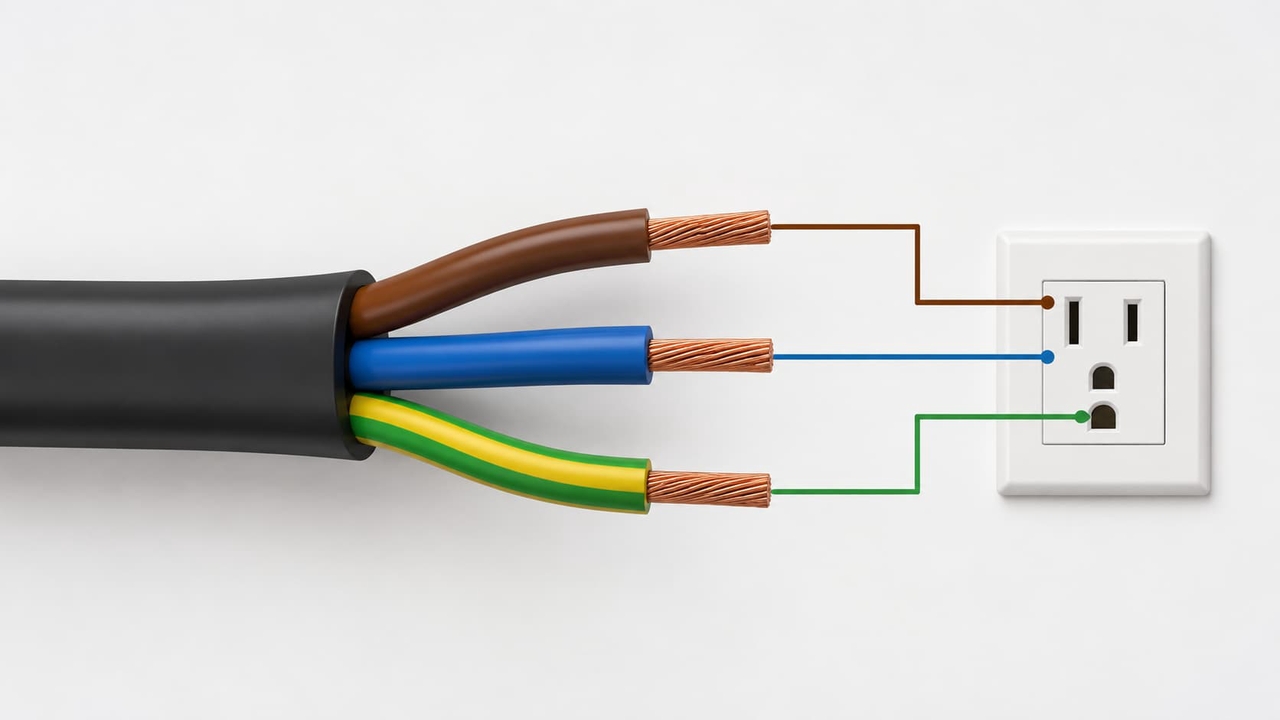
No, color standards vary significantly by region. For example, while the US uses black for hot and white for neutral, international standards like those in Europe and the UK use brown for live/hot and blue for neutral lines.
Can different wire colors ever be used interchangeably?
Generally, no. Wire colors are assigned specific functions for safety and consistency. In some cases, conductors may be re-identified with colored markings, but this should only be done according to electrical code requirements.
What happens if I mix up live and neutral?
This creates a dangerous condition known as reverse polarity. While an appliance or light bulb might still appear to work, the socket or internal parts remain energized even when turned off, posing a severe electric shock hazard to anyone.

