
Electric Car Charging Cost Calculator: How Much Will It Cost?
Switching to an electric vehicle promises massive savings on fuel, but calculating your new fueling bills can feel confusing when electricity rates change by the hour. An electric car charging cost calculator cuts through guesswork by estimating exactly what you will spend at home versus public stations. This guide explains how EV charging cost calculators work, what factors affect charging prices, how to calculate your real charging costs, and practical ways to save money with smart home charging solutions like EV chargers. Understanding your real charging costs is the key to maximizing EV savings over time.
What is an electric car charging cost calculator?
An electric car charging cost calculator is a tool that estimates how much it costs to charge an EV based on several variables. These calculators help drivers compare charging options, predict monthly energy costs, and make smarter charging decisions.
Most calculators use the following inputs:
Battery capacity (kWh)
Electricity price per kWh
Charger speed
Vehicle efficiency
Charging losses
For example, if your EV has a 75kWh battery and electricity costs $0.16/kWh, a full charge may cost around:
75×0.16= 12
That means approximately $12 for a full charge before accounting for charging inefficiencies.
Home vs. Public charging estimates
Home charging calculators use your local residential electricity rate, which is typically much lower than what public networks charge. Public charging calculators, on the other hand, factor in per-kWh or per-minute fees set by charging networks like Electrify America, ChargePoint, or Tesla Supercharger — which can be significantly higher.
Tracking charging costs regularly helps EV owners:
Budget monthly transportation expenses
Compare home vs. public charging
Optimize charging schedules
Reduce energy waste
Identify opportunities for solar integration
5 factors affect the cost of charging an electric car
Before you run any numbers, it's worth understanding the variables that actually drive your charging costs.
Local electricity rates
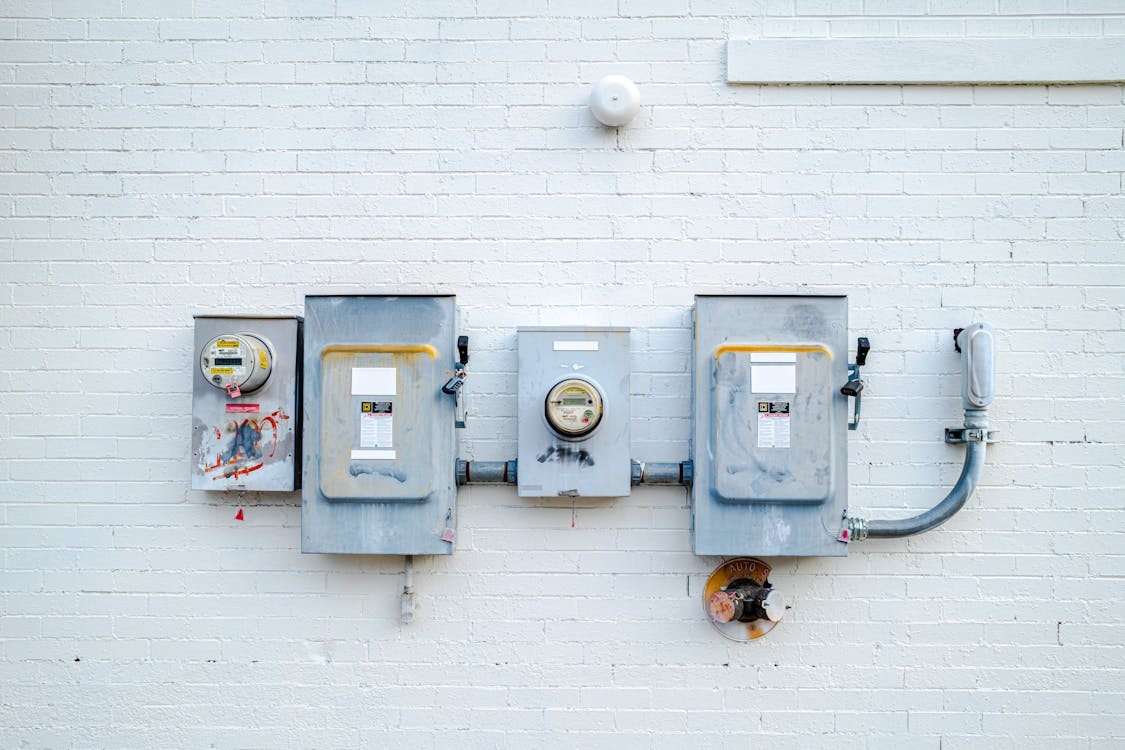
Your baseline cost is determined by where you plug in. Residential electricity rates in the United States average roughly $0.16/kWh, offering a highly affordable fueling baseline. On the flip side, commercial public DC fast chargers carry a heavy premium, usually running anywhere from $0.36 to $0.63/kWh due to convenience fees and commercial demand charges.
Charging level
There are three levels of EV charging, and each has a different cost profile:
Level 1 (120V outlet): The slowest option: adds roughly 3–5 miles of range per hour. Almost free to use if you already have a standard outlet, but very slow for daily driving needs.
Level 2 (240V home charger): The gold standard for home charging. Adds 20–50+ miles of range per hour, depending on the charger and vehicle. Requires professional installation.
DC fast charging (public): Adds 100–200+ miles in 20–30 minutes, but comes at a premium price.
Battery size and vehicle efficiency
Larger vehicles require more raw energy to move. Filling a massive 100 kWh electric truck battery costs significantly more than replenishing a compact 60 kWh sedan, and a less efficient vehicle will drain that stored energy faster, requiring more frequent charging sessions.
Time-of-use (TOU) pricing
Time-of-Use (TOU) pricing means electricity costs vary by time of day: Power is usually cheaper at night (off-peak) and more expensive during peak hours (busy evening hours). EV owners can save significantly by scheduling charging overnight instead of during peak demand periods.
For EV owners, this creates a real opportunity: charging overnight rather than during peak hours can reduce per-charge costs by 30–50% in many utility markets.
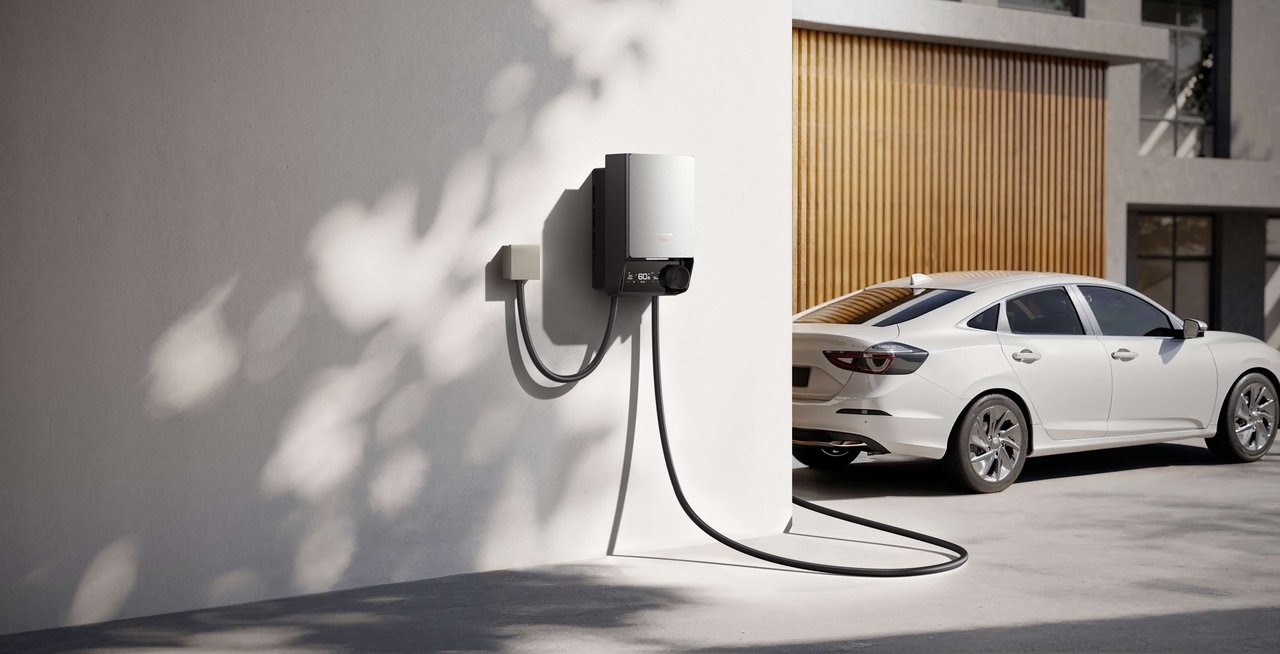
This is exactly where smart charging hardware makes a difference. The EcoFlow OCEAN EV Charger is built to automatically take advantage of TOU pricing. With its 11.5kW / 48A output, it can add up to 46 miles per hour, and its Smart Charge mode and departure-time scheduling let you set it and forget it. The charger handles the timing, automatically shifting your charging sessions to off-peak windows, so you're always paying the lowest available rate.
Home vs. Public charging cost difference
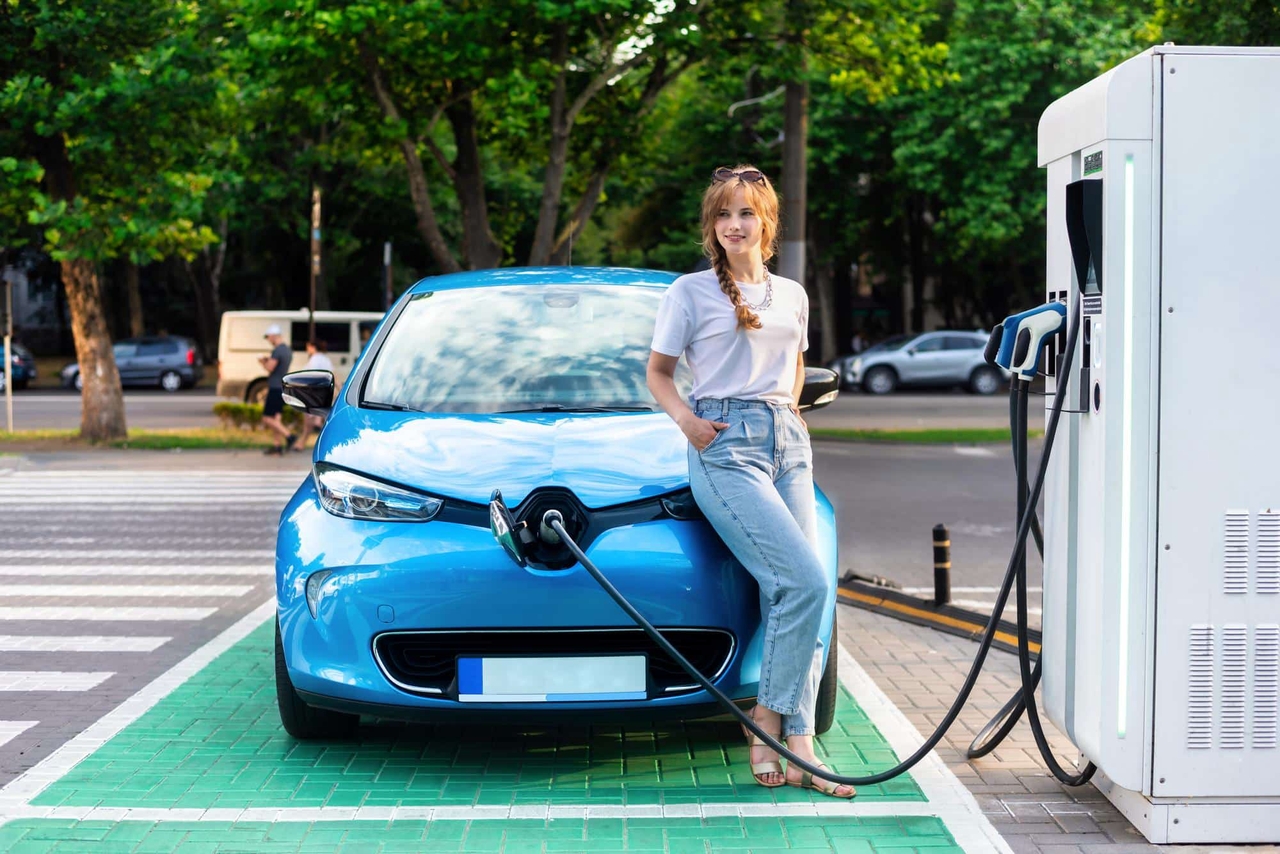
Home charging is almost universally cheaper than public charging. At $0.16/kWh at home versus $0.40/kWh at a public fast charger, you pay 3x more per kWh every time you rely on a public station. For drivers who commute regularly, this difference compounds quickly.
Home charging vs. Public charging: Which costs less?
When comparing costs side by side, home charging is almost always cheaper than public charging. Public charging networks face high commercial real estate costs, equipment maintenance overhead, and peak grid-demand penalties, all of which are passed directly to drivers.
Charging Method | Rate | Cost to Full Charge | Cost Per Mile |
|---|---|---|---|
Level 1 (120V home) | $0.16/kWh | ~$12.00 | ~$0.046 |
Level 2 (home charger) | $0.16/kWh | ~$12.00 | ~$0.046 |
DC Fast Charger (public) | $0.45/kWh | ~$33.75 | ~$0.129 |
The electricity cost per charge is identical for Level 1 and Level 2 home charging — the difference is speed, not cost. But the jump to public DC fast charging is dramatic: nearly three times more expensive per mile.
If you drive 1,200 miles per month and rely exclusively on public fast charging at $0.45/kWh, you'd spend roughly $155/month on charging. The same mileage at home would cost approximately $55/month — a $100/month savings, or $1,200 per year.
This is why having a dependable home charger isn't just about convenience — it's a direct financial decision. Drivers who invest in a quality Level 2 home charger recoup the cost relatively quickly through the savings on public charging fees.
How to calculate the cost of charging an electric car
Calculating EV charging costs is relatively straightforward. While using a digital electric car charge cost calculator is the fastest way to get an estimate, doing math manually can help you deeply understand your monthly energy bills.
Find your battery capacity (kWh)
Check your vehicle's manual or manufacturer's website. Common examples:
Tesla Model 3 Standard Range: 57.5 kWh
Nissan Leaf (40 kWh version): 40 kWh
Ford F-150 Lightning (standard): 98 kWh
Check your electricity rate (from your utility bill)
Find your rate on your utility bill or log into your utility's online portal. Look for the "energy charge" line — it'll be listed in $/kWh. If you're on a TOU plan, note both your peak and off-peak rates.
Apply the formula
Charging Cost = Battery Capacity (kWh) × Electricity Rate ($/kWh)
For example: 75 kWh × $0.16/kWh = $12.00 to charge from empty to full.
Factor in charging efficiency losses (~10–15%)
Real-world charging isn't 100% efficient. Some energy is lost as heat during the charging process. A realistic efficiency factor is 10–15% loss, meaning you'll pull more power from the grid than actually ends up in your battery.
Adjusted Cost = Battery Capacity × Electricity Rate ÷ Charging Efficiency
Using 88% efficiency: 75 kWh × $0.16 ÷ 0.88 = $13.64 per full charge
Multiply by the monthly mileage for a monthly estimate
To estimate your monthly EV charging cost, calculate how many full charges you use each month based on your driving distance.
Monthly Charging Cost = Number of Full Charges per Month × Cost per Full Charge
Number of Full Charges per Month = Monthly Miles ÷ Range per Charge
Example:
Monthly driving: 1,200 miles
Vehicle range: 300 miles per full charge
Cost per full charge: $13.64
1,200 ÷ 300 = 4 full charges per month
Monthly Charging Cost = 4 × $13.64 = $54.56/month
Example calculations for common EV battery sizes
Vehicle | Battery Size | Home Rate ($0.16/kWh) | With 12% Loss |
|---|---|---|---|
Nissan Leaf (40 kWh) | 40 kWh | $6.40 | $7.17 |
Tesla Model 3 (57.5 kWh) | 57.5 kWh | $9.20 | $10.35 |
Ford Mustang Mach-E (91 kWh) | 91 kWh | $14.56 | $16.35 |
Rivian R1T (135 kWh) | 135 kWh | $21.60 | $24.19 |
How to reduce your EV charging costs at home
Lowering your EV charging expenses doesn't require drastic changes — just smarter habits and the right equipment. Here are the most effective ways to cut costs significantly:
To squeeze the maximum efficiency out of every kilowatt-hour, implement these proven cost-cutting practices:
Commit to overnight charging: Avoid plugging your car in immediately after your evening commute. Shifting your main charging block to midnight hours ensures you utilize the grid when regional demand drops off entirely.
Enroll in utility TOU plans: Contact your local power provider and explicitly ask to switch to a Time-of-Use structure. Many utility networks offer highly discounted "EV specific" rates designed specifically to reward drivers who charge during late-night windows.
Track real-time metrics via app: Tracking charging history and electricity usage helps homeowners understand exactly where energy costs are coming from. Smart charging apps can identify inefficient charging habits and help optimize schedules around utility pricing.
For homeowners with solar panels, there's a significantly bigger opportunity. The EcoFlow OCEAN Pro Solar Battery system pairs directly with the OCEAN EV Charger to create a fully integrated home energy setup. During the day, your solar panels generate electricity, more often than your home needs in real time. Instead of that surplus energy going back to the grid at a low feed-in rate, the OCEAN Pro stores it in its battery system, which starts at 10 kWh and can be expanded up to 80 kWh depending on your household's needs.
When it comes to saving money, the EcoFlow app's Intelligent Mode lets you enable smart energy management with a single tap, automatically reducing your bills without manual scheduling or guesswork.

Get Your Free Home Energy Consultation!
Which energy solution are you interested in?
Common mistakes when calculating electric car charging costs
Even with a good formula, it's easy to underestimate your true charging costs. Watch out for these common errors:
Ignoring charging losses: Many people calculate costs based on battery capacity alone, without accounting for the 10–15% energy lost during charging. This systematically underestimates your actual electricity draw and bill.
Using the wrong electricity rate: If you're on a TOU plan, your bill shows multiple rates. Using your peak rate for overnight charging, or vice versa, will throw off every calculation you make. Always use the rate that applies to when you actually charge.
Only calculating the cost to fully charge: Most EV drivers don't charge from 0% to 100% every day. They top up from whatever state they're at — often 30–40% — to around 80–90%. Calculate based on your actual charging patterns, not a theoretical full charge.
Not considering seasonal usage changes: Cold weather reduces EV range and charging efficiency. In winter, you may be charging more frequently and drawing more power per mile than your summer baseline suggests. Build a seasonal buffer into your annual estimates.
Forgetting public charging sessions: Many EV owners track their home charging but don't account for occasional public charging stops. These higher-rate sessions can significantly inflate your actual average cost per mile if they're not factored in.
Conclusion
Calculating the cost of charging your electric car doesn't have to be complicated. With your battery size, your electricity rate, and a simple formula, you can estimate both per-charge and monthly costs in minutes — and start making decisions that actually reduce what you spend.
The clearest opportunity for most EV owners is home charging. It's consistently cheaper than public charging, and the gap only widens the more you drive. For the best results, smart hardware makes all the difference. The EcoFlow OCEAN EV Charger delivers fast, reliable Level 2 charging with intelligent scheduling, and when paired with the OCEAN Pro home battery backup, lets you store solar energy and charge your EV with near-zero-cost electricity.
Ready to upgrade your home's energy independence and break free from rising grid prices? Book a free energy consultation with EcoFlow today to design your custom home ecosystem.
FAQs
How to calculate the cost of charging an electric car?
Multiply your EV battery size (kWh) by your electricity rate per kWh, then add around 10–15% for charging losses. This gives a realistic estimate of how much a full charge costs at home or at a public charging station.
How much does 1 km cost in an electric car?
At an average U.S. home rate of $0.16/kWh, an efficient EV driving 6 km per kWh costs roughly $0.03 per kilometer ($0.04/mile). Public DC fast charging raises this to about $0.06–$0.10 per km due to premium commercial network markups.
Is it cheaper to charge an electric car at home or at a public station?
Home charging is significantly cheaper. Residential power averages $0.16/kWh, while public DC fast chargers cost $0.36 to $0.63/kWh. You can drop your grid costs to zero by storing free daylight solar with the EcoFlow OCEAN Pro battery system.
Are EV charging calculators accurate?
EV charging calculators are generally accurate when users enter the correct battery size, electricity rate, and charging efficiency values. Actual costs may vary slightly based on weather, driving habits, and charging losses.
How long does it take to charge an electric car?
Charging time depends on the battery size and charger type. Level 1 charging can take 40–60 hours, Level 2 chargers usually take 4–10 hours, while DC fast chargers can add significant range within 20–45 minutes.

