
How Distributed Energy Resources Are Transforming Modern Power Grids
Picture electricity the way it worked for most of the last century. A massive power plant burns fuel somewhere far away, sends electricity racing down hundreds of miles of wire, and by the time it reaches a home, a chunk of that energy is already gone. Nobody at the receiving end gets a say in the process. The bill arrives, and that is more or less the whole relationship.
That setup is cracking. Not slowly, either. Solar panels are going up on rooftops across the country, home batteries are filling garages and utility rooms, and software systems are quietly managing energy flows that used to require a team of grid engineers. The shift is happening fast, and it is being driven by a broad category of technology called distributed energy resources.
For homeowners thinking about home battery backup options, or for anyone trying to make sense of where the power grid is actually heading, understanding DERs is a good place to start.
What Are Distributed Energy Resources?
When people ask, "What is distributed energy resources?" they are looking at the future of the electrical grid. The traditional model of relying on massive, centralized power stations is shifting. Today, distributed energy resources (DERs)—small-scale, localized power generation and storage technologies—are transforming passive consumers into active grid participants.
Defining Decentralized Power Generation
Unlike traditional models, DERs (such as rooftop solar arrays or home batteries) sit entirely behind the meter, close to the end-user. This decentralized approach changes the grid in 4 fundamental ways:
Proximity to the Consumer: Power is generated and stored directly at or near the point of consumption, such as a local home or business, rather than at a distant plant.
Eliminating Transmission Losses: Transporting electricity over miles of high-voltage lines naturally wastes energy. By generating power locally, DERs bypass the traditional transmission network, maximizing efficiency.
Behind-the-Meter Operation: DERs supply power directly to the home's electrical panel first. Only excess energy or additional demand interacts with the broader utility grid, drastically reducing local grid strain during peak hours.
Neighborhood-Level Impact: Because power is generated locally, a high density of DERs in one area acts as a micro-support system, providing direct, localized energy stability to the immediate neighborhood without relying on distant utility infrastructure.
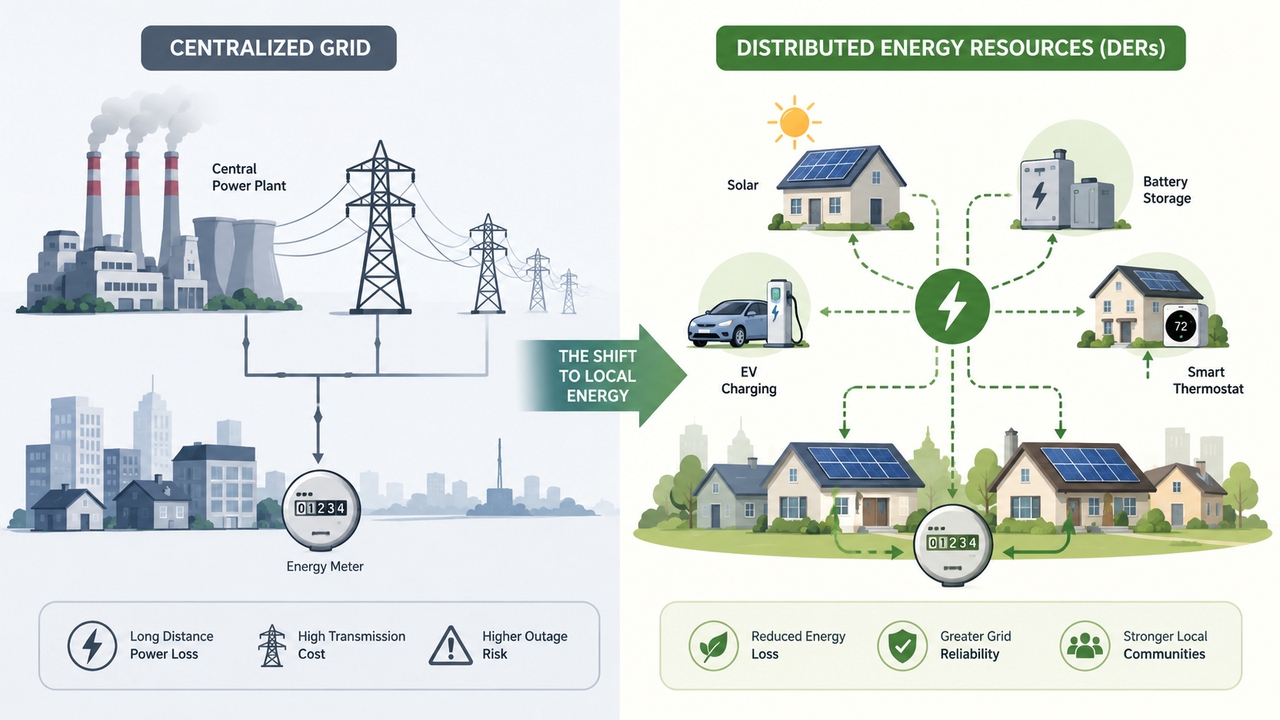
The Shift from Centralized to Local Grids
Big power plants are not going away anytime soon. They still handle the heavy lifting for industrial demand and overnight baseload. But the role of the average home on the grid is genuinely changing.
A decade ago, while residential solar was already gaining ground, the idea of millions of homes coordinating together as active grid participants through virtual power plants and smart management platforms was still largely aspirational. That picture has changed dramatically.
Today it is routine in many parts of the country. Homes with solar and storage generate surplus power, trade it back to utilities, and participate in programs that help stabilize the broader grid. The passive electricity customer is quietly becoming something more like an active participant in the energy system.
Core Components of a Modern Distributed Energy System
A modern distributed energy system is a coordinated ecosystem designed to generate, store, and manage power locally, allowing homes and businesses to operate as self-sustaining micro-utilities. To achieve this level of independence and grid resilience, the setup relies on 2 foundational pillars:
Renewable Energy Generation
Rooftop solar is the most visible piece of the puzzle. Photovoltaic panels convert sunlight into direct current electricity, inverters flip that to alternating current, and the home runs on it. Whatever is left over either goes into a battery or heads back to the grid.
Small wind turbines show up in rural settings where there is consistent airflow, but in most residential scenarios, solar is the workhorse. The catch with both technologies is the same: They only produce when conditions are right. Clouds roll in, the sun sets, and generation drops. That intermittency is why storage matters so much.
Energy Storage Solutions
A battery system is what turns solar from a daytime convenience into a round-the-clock resource. Excess generation during the day gets captured and held. When evening comes, or when a storm knocks out the grid, that stored energy is there.
Most modern home battery systems use lithium iron phosphate (LFP) chemistry. It has a solid safety record, handles heat well, and lasts through a lot of charge cycles without degrading badly. Pair a battery like this with a solar array and a capable inverter, and a home has something genuinely self-sufficient: Generation, storage, and local distribution working as a single unit.
Key Benefits of Distributed Energy Resources for Modern Power Grids
Shifting to a distributed energy model provides critical advantages that strengthen the overall grid, reduce environmental impact, and give consumers greater control over their costs.
Enhancing Grid Stability and Resilience
Unlike centralized grids where a single failure can quickly cascade into regional outages, a distributed network is much more resilient because it lacks a single point of failure. The California Energy Commission has tracked how increased DER deployment directly reduces the peak demand stress responsible for summer rolling blackouts. Ultimately, when thousands of individual homes can absorb or release electricity based on real-time grid conditions, the entire system becomes far better equipped to handle sudden shocks.
Accelerating Decarbonization and Lowering Emissions
Gas-fired "peaker" plants are expensive to run and spend most of the year sitting idle, waiting for those hot August afternoons when demand spikes. They also emit significant carbon. As more homes generate their own clean electricity and store the excess, fewer of those peaker hours get called. The emissions reduction is not dramatic on a house-by-house basis, but it adds up fast across neighborhoods and cities.
Empowering Consumer Energy Independence
Electricity bills have been rising steadily in most parts of the US. For households entirely dependent on the grid, that is a cost they have no real leverage over. A home generating and storing its own power has options that a purely grid-dependent household simply does not.This shift provides homeowners with tangible financial predictability and independence from grid-only price fluctuations.
Deferring Costly Utility Infrastructure Upgrades
Grid infrastructure is old and getting more expensive to maintain. Upgrading substations, replacing aging transformers, and building new transmission capacity costs utilities and ratepayers billions. When DERs reduce local peak demand, that work gets deferred. In areas with high DER penetration, utilities have used this argument successfully to push back major infrastructure projects by years, savings that eventually trickle through to customers.
Integrating Residential Technology Into the Local Energy Infrastructure
Connecting residential energy systems to the broader grid transforms individual homes from passive consumers into active utility participants.
The Role of Virtual Power Plants (VPPs) and Demand Response
One home battery is useful. Ten thousand of them, coordinated together, is the idea behind a virtual power plant. A distributed energy resource management system aggregates residential installations and treats them as a single, dispatchable energy asset. When the grid needs capacity, the system draws from those batteries simultaneously. For homeowners enrolled in qualifying utility VPP programs, available in states like California, Massachusetts, and Texas through select providers, a battery system can earn credits or direct compensation by exporting stored power to help stabilize the grid during peak demand windows.
Navigating Bidirectional Energy Flow and Net Metering
Getting a home system connected to the utility grid requires an administrative interconnection application and a grid-tied inverter that handles power flowing in both directions. Once connected, net metering policies in many US states let homeowners receive bill credits when surplus electricity flows back to the grid. Some markets go further with feed-in tariffs that pay cash for exported power. In most cases, this arrangement meaningfully improves the economics of a residential investment.
Circuit-Level Management and Automated Load Shifting
Circuit-level energy monitoring shows exactly which appliances are drawing how much power at any given moment. Armed with that data, a household can stop running the dryer or the EV charger during peak-rate hours without anyone having to watch the clock. Automated load shifting takes this further, handling the decisions without human input at all. The system reads electricity pricing signals, checks battery charge levels, and adjusts appliance schedules on its own. Bills go down, and the home draws less from the grid largely in the background.
Scaling Whole-Home Solutions
Scaling a residential DER system to handle everything in a real home, not just a few lights and a phone charger, is where things get demanding. HVAC systems, kitchen appliances, EV chargers, and home offices all run at the same time. A system that cannot keep up with simultaneous heavy loads is not really whole-home backup.
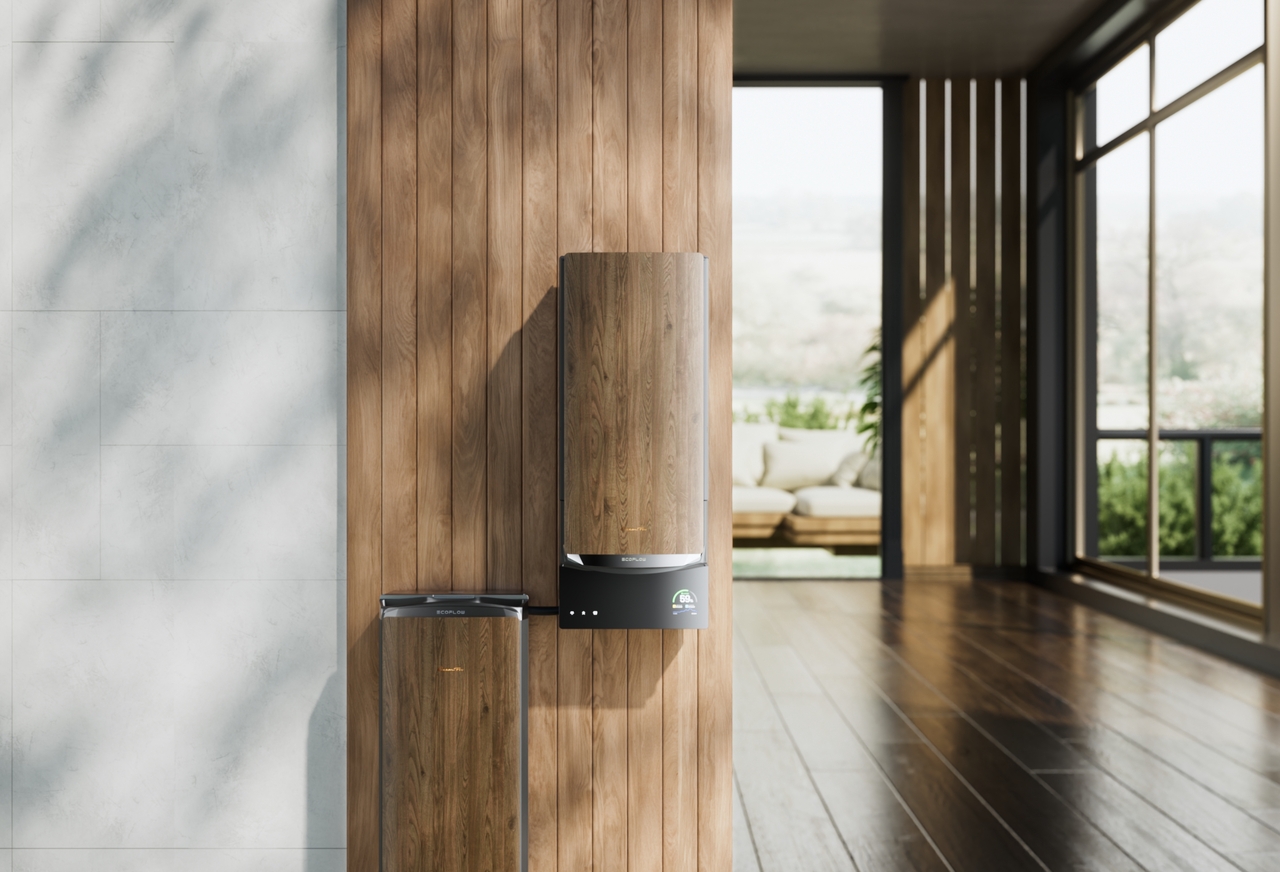
For instance, the EcoFlow OCEAN Pro Solar Battery System is built for exactly this kind of load profile. With 40kW of solar input capacity spread across 8 independent MPPT channels, it harvests more renewable generation than most residential systems can manage, including from panels on different roof faces or orientations. Storage starts at 10kWh and scales up to 80kWh, so the capacity can grow alongside actual household needs. When the grid goes down, it delivers 24kW of continuous output with 205A LRA surge capability, enough to keep HVAC, kitchen appliances, and EV charging all running without sacrificing one for another.
Beyond straight backup, the built-in Intelligent Mode handles daily optimization automatically: Off-peak charging, solar-timed discharge, storm pre-loading. The system manages all of it without manual input. For households enrolled in a VPP program, that kind of consistent optimization matters: It keeps the battery available when grid operators need it and maximizes the passive income potential of the setup.
Get Your Free Home Energy Consultation!
Which energy solution are you interested in?

Every home has a different energy profile, different solar potential, and different local utility rules. Getting the configuration right takes more than a product page. Request a consultation with an EcoFlow energy advisor and get a clear read on what actually makes sense for a specific property and energy situation.
Regulatory and Grid Challenges Facing Modern Energy Systems
Transitioning to a decentralized power model is exposing the limits of legacy grids, forcing the utility sector to fundamentally overhaul how electricity is managed, transmitted, and regulated.
Upgrading Legacy Infrastructure
The grid was not built for this. For decades, utilities designed their infrastructure around the assumption that electricity moved in one direction. Transformers and switching equipment were simply not designed to handle power flowing back and forth from millions of residential sources. Layering high DER penetration onto aging neighborhood equipment creates real engineering problems, including voltage fluctuations and overheating. Grid modernization needs to keep pace with DER adoption, but in many regions, the timeline is already under pressure.
Interoperability and Standardization
A utility management platform needs to talk to thousands of different devices from dozens of different manufacturers. The problem is that those devices do not all speak the same language, relying instead on different communication protocols and data formats. Standardization efforts like IEEE 2030.5 and OpenADR are making genuine progress, but the gap between where things are and where they need to be is still significant. Until a common standard takes hold across the industry, integrating residential systems requires workarounds that add cost and complexity.
Conclusion
The transition toward distributed energy resources is already underway through rooftop solar, residential batteries, and virtual power plants. While challenges like aging infrastructure and regulatory gaps remain, the benefits are undeniable. This shift promises a more resilient grid, lower emissions, and reduced infrastructure costs. For homeowners, investing in localized generation and storage offers genuine energy independence. It cuts monthly bills, provides backup power during outages, and can even generate income, marking a meaningful evolution in how households interact with the grid.
FAQs
What is a distributed energy resource?
A distributed energy resource (DER) is a small-scale power generation or storage system located close to where the energy is used, like rooftop solar, a home battery, or a vehicle-to-grid-enabled EV, operating at or behind the utility meter.
How do distributed energy resources impact the grid?
DERs ease peak demand pressure, stabilize local voltage, and reduce the risk of cascading outages. Aggregated through a DERMS, they work as a virtual power plant, giving grid operators flexible capacity without building new infrastructure.
What is an example of a distributed energy resource?
A home solar array paired with a battery system is one of the most common setups. The EcoFlow OCEAN Pro, for example, stores up to 80kWh and delivers 24kW of continuous output, giving a home the ability to run independently from the grid when needed.
Are electric vehicles considered distributed energy resources?
Yes, when plugged in and equipped with vehicle-to-grid (V2G) technology. A parked EV can discharge stored energy back into the home or the grid during peak demand, turning an idle car into a flexible energy asset.
Why is energy storage important for DERs?
Solar and wind only generate when conditions allow. Storage captures that energy and holds it for when it is actually needed, evenings, cloudy days, or outages. Without storage, a solar system is useful but limited. With it, the whole DER setup becomes genuinely reliable.

