
California Climate Credit 2026: Amounts, Dates and Eligibility
California Climate Credit can help lower energy bills, but shifts in credit and payment due dates can confuse. California Climate Credit rules help households know if they are eligible, when, and how to get household bill support. This guide provides information on the 2026 credit, eligibility, payment dates, and tips for energy cost management. Readers will also discover how battery storage can help you plan for energy and resilience, and use electricity efficiently. The EcoFlow OCEAN Pro solar power battery system can support these objectives with whole-home backup and energy management.
What is the California climate credit?
California climate credit might seem like a mystery if you don't know what it is. It is an automatic bill credit that offsets some of your energy costs at home. California is financing this credit through its Cap-and-Invest Program, which was previously called cap-and-trade. This system provides a statewide cap on greenhouse gas emissions, with major emitters having to buy permits. A portion of this revenue is returned to electricity ratepayers as dividends. The program is administered by CPUC and CARB, under the Global Warming Solutions Act of 2006 (AB 32). The credit is automatically applied by your utility, such as PG&E, SCE, or SDG&E, without registration or applications.
Who qualifies for the California energy credit refund?
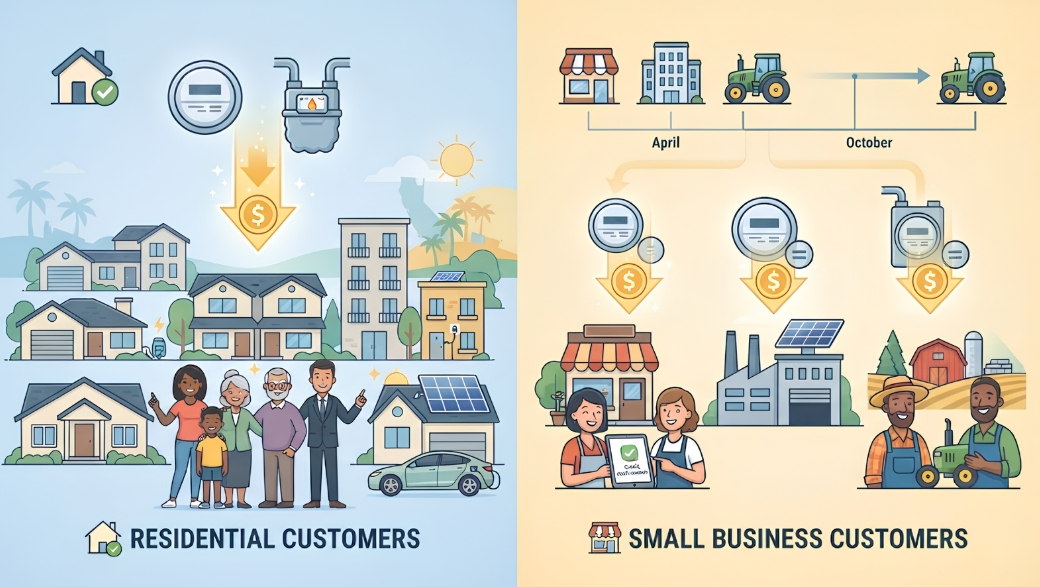
Residential customers
Typically, all California residential customers of participating utilities are eligible, regardless of income or usage. The flat credit is the same for each house, irrespective of their electricity consumption/bill size within their utility territory. Electric timing shifted for many utilities in 2026, with gas credits following various timelines and changes.
Small business customers
Small business eligibility includes non-residential commercial, industrial, and agricultural accounts that qualify for the utility's usage requirements. In the majority of cases, accounts need to be under 20 kW for nine of the last 12 months. Unlike older rules, the small-business credit isn't based on energy usage; it's flat and comes in April and October.
How much is the California climate credit in 2026?
The California Climate Credit is not income-based — every eligible residential household on a given utility gets the same flat amount, funded by California's Cap-and-Invest program, which charges large polluters for carbon emissions and returns a portion of that money to utility customers. The amount varies by utility: for 2026, the electric credit is $36.18 (PG&E), $36.00 (SCE), $49.36 (SDG&E), $17.52 (Bear Valley), and $111.83 (Pacific Power), while PG&E's April 2026 natural gas credit was $46.26. Timing has also shifted — large utilities now deliver the electric credit in August/September instead of April/October, while smaller utilities get theirs in April/November — so check your bill or utility directly to confirm your exact amount and date.
When will you receive the climate credit from the state of California in 2026?
On April 30, 2026, the CPUC approved shifting the residential electric Climate Credit's payout months. PG&E, SCE, and SDG&E customers now receive electric credits in August and September. This timing change is cost-neutral, since the total credit amount stays exactly the same. Natural gas customers received their 2026 credit in April, as usual. Starting in 2027, natural gas credits will shift to February for winter relief. Small Business Climate Credit timing depends on the utility and generally follows that utility's residential electric Climate Credit schedule.
Using solar and battery storage for long-term energy management
Utility bill credits can be complemented by battery storage, which can store solar energy for use in the home when necessary. The EcoFlow OCEAN Pro Solar Battery System offers professionally installed, grid-tied whole-home backup, not off-grid power. Solar generation, battery storage, and time-of-use management can help you plan electricity consumption around prices throughout your billing cycle. This strategy can help save money in the long run and decrease dependence on grid electricity during peak periods as time goes on. When power goes out, stored energy can enhance resilience and provide for longer term energy requirements.
Conclusion
Overall, the California Climate Credit helps you keep track of eligibility, payment timing, and bill support. As there can be differences in credit amounts and schedules, make sure to review your utility's latest information before budgeting expenses. Solar generation and battery storage may also be options for longer term energy management and outage preparedness. The EcoFlow OCEAN Pro provides whole-home backup and energy management to complement these efforts. Check out your choices and book your complimentary consultation today.
FAQs
Why did I receive a California Climate Credit?
The California Climate Credit was awarded as a result of the practice of returning pollution-permit revenues via utility bill credits. Participating utilities credit eligible residential and small-business customers without application. California's Cap-and-Invest Program provides support for household energy costs through the California Climate Credit.
Who qualifies for the California Climate Credit?
Households in California who have a current account with a participating electric or natural-gas provider are typically eligible for automatic enrollment. This includes electricity from PG&E, SCE, SDG&E, SoCalGas, Southwest Gas, PacifiCorp, Liberty Utilities, and Bear Valley.
What is the California Climate Credit amount for 2026?
The credit is paid twice a year, not monthly. For electric customers, PG&E receives $36.18, SCE receives $36.00, and SDG&E receives $49.36 — each amount applied once in August and again in September 2026 to offset peak summer bills. Natural gas customers get a separate one-time credit in April 2026: $46.26 for PG&E and $32.58 for SDG&E.

