
What is a Battery Control Module? A Complete Guide

The rapid expansion of residential energy storage has introduced sophisticated hardware designed to manage power flow and ensure safety. At the center of these systems is the battery control module (BCM). While the lithium-ion cells store energy, the control module acts as the "brain," governing every electrical and chemical process within the stack. Understanding how this component functions is essential for homeowners and professionals looking to optimize a Whole-Home Backup strategy.
What is a Battery Control Module?
When homeowners ask, "what is a battery control module?" They typically refer to the high-level management layer of a Battery Energy Storage System (BESS). It is the interface between the raw energy stored in the battery cells and the hybrid inverter that distributes power to the home.
A battery control module is an integrated electronic assembly that monitors, regulates, and protects a battery bank. Unlike basic battery management systems (BMS) found in small electronics, a residential BCM is designed to handle high-voltage DC currents and coordinate multiple battery modules simultaneously. It ensures that the charging and discharging rates remain within safe thermal and electrical limits, thereby extending the life of the hardware and preventing catastrophic failures.

What Does the Battery Control Module Do?
To understand the value of this hardware, one must ask: "what does the battery control module do on a daily basis?" Its primary responsibilities can be categorized into three pillars: safety management, electrical regulation, and system optimization.
Multi-Layered Electrical Protection
The BCM is the first line of defense against electrical hazards. It continuously scans the system for anomalies that could lead to fire or equipment damage.
Built-in AFCI (Arc Fault Protection): The module detects electrical arc faults caused by issues such as damaged wires or loose connections. When an arc fault is identified, the BCM automatically disconnects power to improve system safety.
GFCI (Ground Fault Protection): This feature detects if current is leaking to the ground, which poses a severe shock hazard. The BCM interrupts the circuit if a ground fault is identified.
One-Touch Emergency Power-Off: For immediate manual intervention, a physical or digital "kill switch" allows the homeowner or service professional to de-energize the entire system instantly.
Safety Protocols for Maintenance
Safety also extends to physical interaction with the system. Many advanced modules include Door Open Detection. This sensor ensures that if a service panel is opened, the system enters a safe mode or disconnects high-voltage lines to protect the technician. This "service safety" design is a hallmark of professional-grade energy storage.
Decoupled Energy Management
In traditional battery stacks, if one module fails, the entire system often goes offline. A modern battery control module utilizes a decoupled design. This allows for independent charge and discharge management per battery module. If one battery unit encounters an error, the BCM isolates that specific unit while allowing the rest of the system to continue powering the home. This leads to a "zero downtime" environment, which is critical during extended grid outages.
Key Components of a Professional Battery Control Module
The architecture of a battery control module is complex, involving both hardware sensors and software algorithms. Each component serves a specific role in maintaining the health of the All-in-One Home Energy Ecosystem.
Get Your Free Home Energy Consultation!
Which energy solution are you interested in?

Real-Time BMS Monitoring
The Battery Management System (BMS) is often integrated into the BCM. It monitors the voltage, current, and temperature of every cell group. By keeping these variables within a narrow range, the battery control module prevents "thermal runaway," a condition where a battery enters an uncontrollable self-heating cycle.
Predictive Maintenance
Modern modules have moved beyond reactive safety into predictive safety.
30-Day Advance Alarm: Through continuous data analysis, the system can identify subtle trends that indicate a potential component failure. It can provide a warning up to 30 days before a critical fault occurs, allowing for proactive maintenance.
Dynamic Optimization: The system adjusts charging profiles based on environmental factors and usage, improving the overall system reliability and reducing failure rates by more than 50%. This optimization ensures that the system consistently operates at peak efficiency.
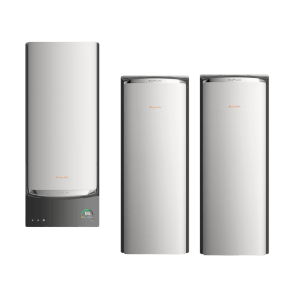
The EcoFlow OCEAN Pro Solar Battery System utilizes an advanced battery control module within its high-efficiency X-BUS architecture, ensuring that every kilowatt-hour is managed with professional-grade precision and safety.
The Importance of Fault Tolerance and Zero Downtime
For a Whole-Home Backup system, reliability is the most important metric. If the grid fails during a storm, the homeowner depends entirely on their storage.
Avoiding System-Wide Shutdowns
In older battery architectures, batteries were often connected in a way that made them dependent on one another. A failure in the "master" battery would cripple the "slave" units.
When considering what does the battery control module do to improve reliability, the answer lies in its ability to manage parallel circuits. By treating each battery module as an independent entity, the BCM ensures that a single point of failure does not result in a total blackout for the residence.
Service Safety and Decoupling
You can service or replace individual parts without shutting off the entire house. This is because the battery control module is designed for safety decoupling. It redirects power away from the service area and continues to power the essential house loads.
Efficiency and Grid Compatibility
A battery control module also manages how the system interacts with external power sources, including solar arrays and the local utility grid.
Voltage Fluctuation Compatibility
The grid is not always stable. Voltage spikes or drops can damage sensitive home electronics. A high-quality BCM can handle voltage fluctuations (sometimes up to 290V), acting as a buffer that delivers a clean, steady sine wave to the home's electrical panel.

Smart Energy Modes
The BCM is responsible for executing "Smart Energy Modes":
Time-of-Use (TOU): The module automatically charges when electricity is cheap and discharges when it is expensive.
Self-Powered Mode: The BCM prioritizes the use of solar energy to charge the batteries, only drawing from the grid when all other sources are exhausted.
The Heart of Home Energy Security
The battery control module is not just a switch. It is a sophisticated device designed to ensure your home battery is safe, efficient, and lasts a long time. With features such as AFCI protection, module decoupling, and alarm prediction, a battery control module is the key to transforming a battery box into a powerful All-in-One Home Energy System.
For your home energy security needs, look for a battery system that is equipped with a high-quality battery control module. A recommended option is the EcoFlow OCEAN Pro Solar Battery System. This is a Whole Home Backup System designed for your home energy security needs. [Get a Quote]
FAQs
Q1: What are the symptoms of a bad battery control module?
The signs of a bad battery control module include signs of unbalanced power, the wrong battery level reading, or the system failing to charge the battery. It may also be characterized by frequent error messages from the system indicating an arc fault (AFCI) or ground faults (GFCI). This may cause the system to shut down and cease providing backup power.
Q2: How to check if the BMS is bad?
You may tell that the BMS is bad by checking the system's app for communication errors. It may also be characterized by unbalanced cell voltage readings or the inverter failing to start. In professional systems like EcoFlow OCEAN Pro, the system's monitoring may show you the exact error codes.
Q3: Is a BCM expensive to replace?
Replacing the battery control module is not expensive; the cost of replacing the battery is much higher. Although the cost of a high-performance battery control module is higher, you may be able to replace it individually. Most professional systems have long warranties that may take care of the cost of replacing the battery control module.
Q4: Can a BCM be reset?
A battery control module may be reset by restarting the system's software. A reset may be done by restarting the system's power. A reset may solve the problem of communication. However, you may seek the services of a professional if the system is still showing AFCI or thermal faults.
Q5: How to wake up battery bms?
You may wake up the battery management system by using an external charging source after a deep discharge. Most systems have a wake-up button. Modern battery control modules are designed to prevent the battery from being deeply discharged.

