
AGM Battery: Everything You Need to Know
An AGM battery is a popular choice for modern vehicles and backup power systems, but many drivers still don’t understand how it works. If your car battery fails frequently or struggles with heavy electronics, the problem might be the battery type. AGM batteries provide higher performance, faster charging, and maintenance-free operation compared to traditional batteries. In this guide, we explain the AGM battery meaning, advantages, and how it compares to newer lithium options.
What is an AGM battery?
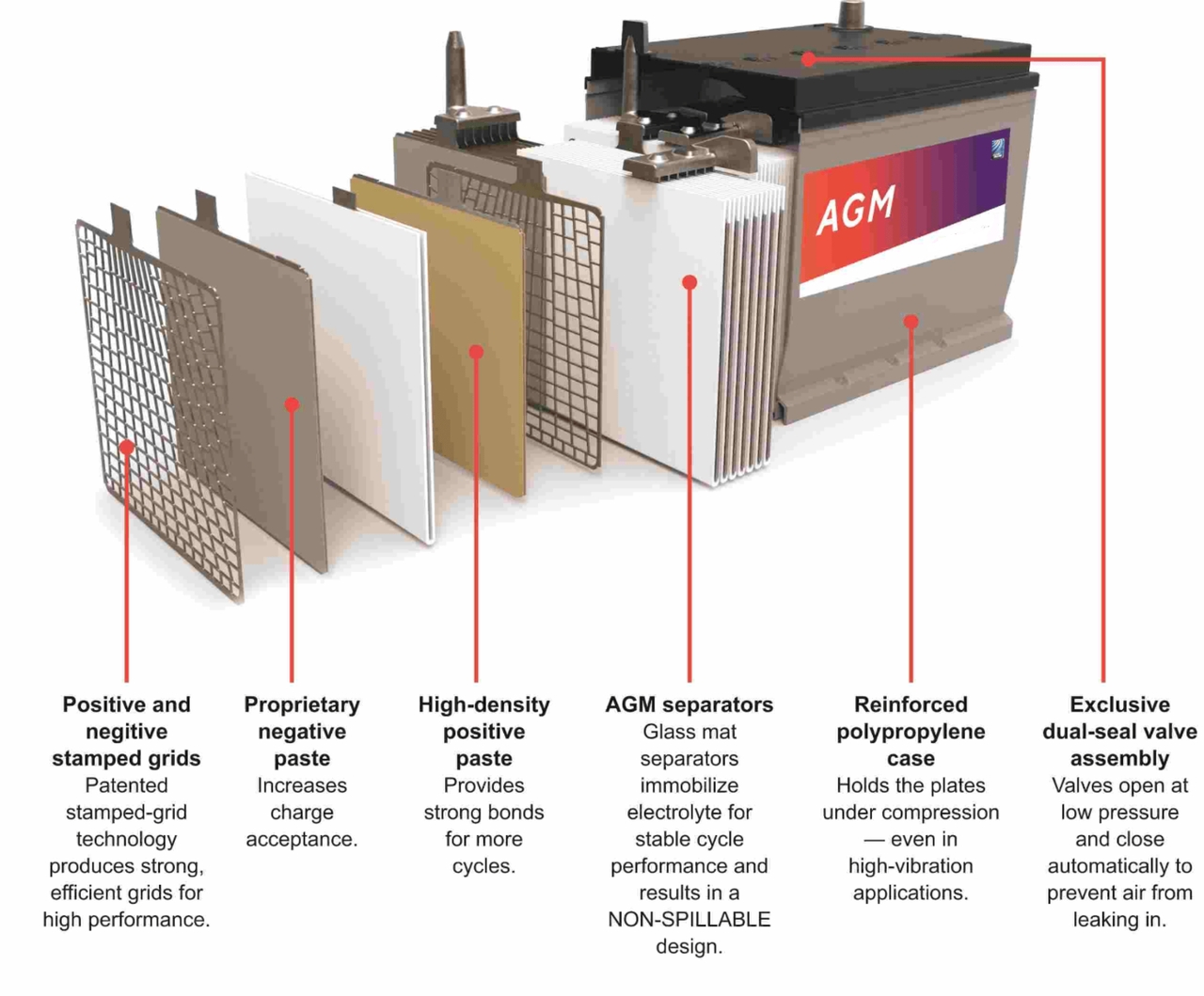
An AGM battery is a type of sealed, valve-regulated lead-acid (VRLA) battery designed for high performance and reliability. AGM stands for Absorbent Glass Mat, referring to the key technology that sets it apart: fine fiberglass mats sandwiched between the lead plates that fully absorb and immobilize the sulfuric acid electrolyte.
Unlike traditional flooded lead-acid batteries, which contain free-flowing liquid electrolyte that requires periodic water additions, venting to release gases, and careful upright mounting to prevent spills, AGM batteries hold the electrolyte completely within the porous glass mats. This design eliminates the need for maintenance, makes them spill-proof and leak-resistant, and allows installation in any orientation—even on their side.
The absorbed electrolyte also reduces internal resistance, enabling faster charging, higher power output, and better efficiency. Additionally, the tight packing of ultra-thin plates and mat cushioning provides superior vibration resistance and gas recombination, minimizing water loss. Overall, AGM batteries offer a safer, more versatile upgrade over conventional flooded designs while retaining lead-acid chemistry.
How AGM batteries work
AGM batteries operate using the same basic electrochemical reaction as traditional lead-acid batteries, but their internal structure is designed to improve efficiency and reliability. Inside an AGM battery are positive (made of lead dioxide) and negative lead plates (made of spongy lead), which store and release electrical energy during charging and discharging cycles. These plates are immersed in an electrolyte solution of sulfuric acid (H₂SO₄) mixed with water, which enables the chemical reaction that produces electricity.
The key component that makes AGM batteries different is the Absorbent Glass Mat separator. These are thin fiberglass mats placed tightly between the lead plates. Instead of allowing the electrolyte to flow freely like in conventional batteries, the mats absorb and hold the sulfuric acid electrolyte, keeping it evenly distributed across the plate surfaces.
These glass mat separators perform two important roles. First, they keep the electrolyte in constant contact with the battery plates, which improves the efficiency of the chemical reaction. Second, they hold the plates firmly in place, reducing movement and protecting the battery from damage caused by vibration.
Because the electrolyte is absorbed rather than free-flowing, AGM batteries become spill-proof and sealed, making them safer and easier to install in different orientations. This design also lowers internal resistance, allowing the battery to deliver higher power output, faster charging, and better performance in demanding applications such as modern vehicles, backup power systems, and renewable energy setups.
Key advantages of AGM batteries
AGM batteries offer several practical benefits that make them popular in vehicles, backup systems, and demanding environments. Their design improves durability, safety, and performance compared to traditional flooded batteries.
Vibration resistance
AGM batteries are built with tightly packed lead plates and absorbent glass mats that hold components firmly in place. This structure reduces internal movement and protects the plates from vibration damage. Because of this durability, AGM batteries are ideal for off-road vehicles, heavy machinery, marine equipment, and applications exposed to constant shocks or rough terrain.
Maintenance-free
One of the biggest draws of the AGM design is its "set it and forget it" nature. These batteries are completely sealed and use a recombination process to turn gases back into liquid internally. This means you never have to check water levels, refill electrolytes, or deal with messy acid leaks and terminal corrosion common with standard flooded lead-acid batteries.
Cold weather performance
AGM batteries excel in extreme climates due to their low internal resistance. This allows them to deliver superior Cold Cranking Amps (CCA), providing the high-voltage burst needed to start an engine in freezing temperatures. Because the electrolyte is absorbed in mats rather than sitting as a liquid, the battery is also much less likely to freeze or crack in the cold.
Mounting versatility
Because the electrolyte is absorbed rather than free-flowing, AGM batteries are spill-proof and can be installed in multiple orientations. They can be mounted on their side or in tight spaces without leakage risks. This flexibility makes them suitable for compact installations in cars, RVs, boats, and specialized equipment.
The modern alternative: lithium battery
While AGM batteries are reliable, lithium batteries have become the modern alternative for high-performance energy storage, especially in solar, off-grid, and backup applications.
Pros of lithium batteries
Extreme longevity: Lasts 10+ years with 3,000+ cycles, outperforming AGM’s 500-cycle limit by a massive margin.
Lightweight design: Weighs up to 50% less than lead-acid, improving fuel efficiency for RVs and marine setups.
Full power delivery: Provides 100% usable capacity without voltage drops, unlike AGM's 50% discharge limit.
Rapid charging: Accepts higher current to charge up to four times faster than traditional AGM batteries.
Cons of lithium batteries
Higher initial cost: The upfront price is significantly higher, though it offers better long-term value per cycle.
Cold charge sensitivity: Cannot be safely charged in sub-freezing temperatures without integrated heating systems.
Complex management: Requires a Battery Management System (BMS) to prevent overcharging or cell imbalance.
Incompatibility: May require specialized chargers or DC-to-DC converters to work with older vehicle alternators.
Real-life examples
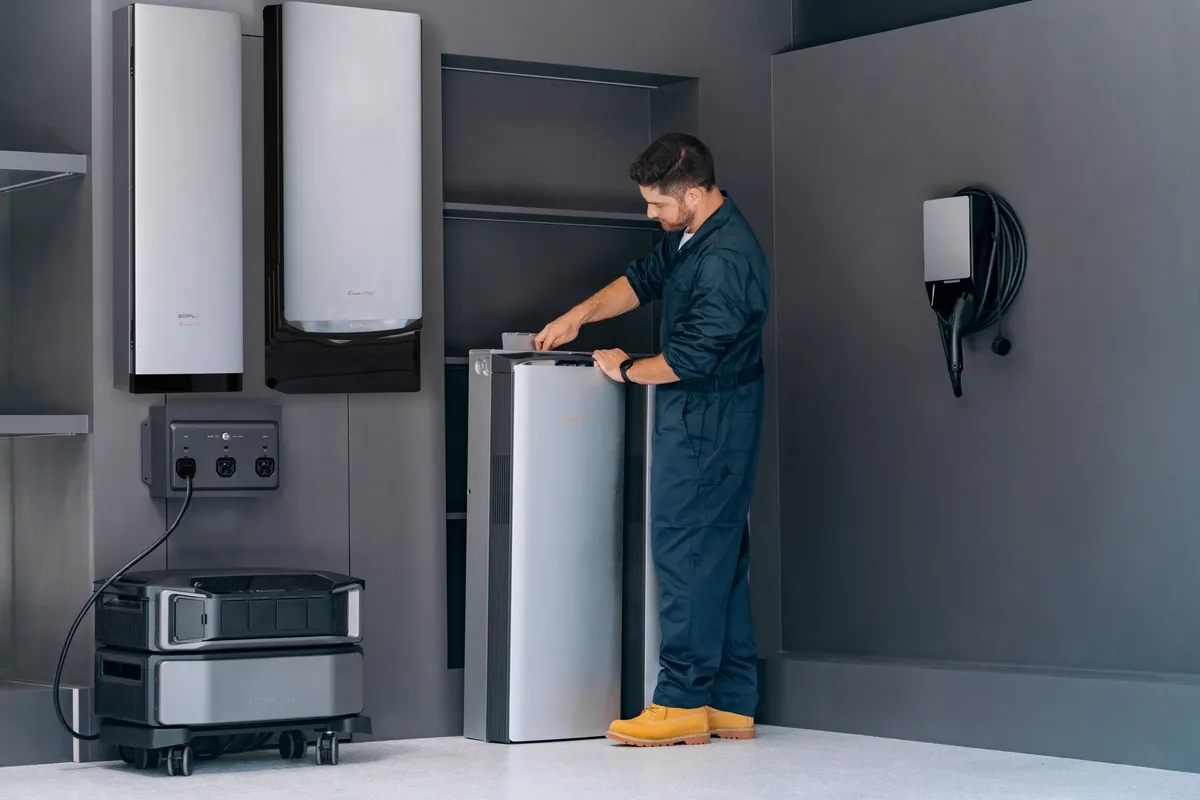
RV and camper power systems: Many long-term travelers now use lithium battery setups to run appliances, lights, and electronics while on the road. Advanced systems, like those from EcoFlow OCEAN Pro, provide thousands of recharge cycles, fast charging, and smart energy management, allowing campers to rely on solar power without worrying about battery degradation.
Home backup and solar storage: Lithium batteries are increasingly used in residential solar systems to store energy for overnight use or outages. With systems that incorporate LiFePO₄ technology, homeowners get long-lasting, efficient energy storage that far outperforms traditional AGM batteries in both lifespan and performance.
Common applications of AGM batteries
Because of their unique combination of durability and high power output, AGM batteries are found in several specialized environments where standard batteries often fail. Here are some of the most common applications you'll come across:
AGM car batteries in start-stop vehicles
Modern vehicles with start-stop technology require batteries that can handle frequent engine restarts and high electrical loads. AGM car batteries are designed for this purpose because they recharge quickly and provide strong bursts of power, making them ideal for vehicles equipped with advanced electronics and fuel-saving start-stop systems.
UPS and backup power systems
AGM batteries are commonly used in Uninterruptible Power Supply (UPS) systems for computers, servers, and communication equipment. Their sealed and maintenance-free design allows safe indoor installation while providing dependable backup power during outages.
Solar and renewable energy systems
In smaller solar setups and off-grid systems, AGM batteries are often used for storing energy generated by solar panels. They offer better cycle performance and reliability compared to traditional flooded lead-acid batteries.
Marine and RV batteries
Boats and RVs subject batteries to constant pounding and extreme tilting. AGM batteries are favored in the marine and RV worlds because they are non-spillable and highly vibration-resistant. Whether they are powering a trolling motor or providing "house power" for appliances, they offer reliable deep-cycle performance in harsh conditions.
Conclusion
The AGM battery is a significant innovation for modern vehicles and backup systems, offering durability, fast charging, and a maintenance-free, spill-proof design that eliminates constant upkeep. It remains a reliable choice for rugged, high-vibration environments. However, for those seeking peak performance and long-term value—especially in solar — the EcoFlow Ocean Pro is the superior alternative. Utilizing LiFePO₄ technology, it provides up to 10 years of daily use, faster recharging, and smarter energy management, ensuring your power system is as efficient and future-proof as possible. Ready to upgrade your energy setup? Book a free consultation with an EcoFlow specialist today to explore how the OCEAN Pro can meet your specific needs for solar integration, home backup, or off-grid living.
Get Your Free Home Energy Consultation!
Which energy solution are you interested in?

FAQs
1. How long does an AGM battery typically last?
In automotive applications, an AGM battery typically lasts 4 to 7 years. When used for deep-cycle solar storage, they generally last 3 to 5 years, or roughly 500 cycles, depending on how frequently and deeply they are discharged. For those needing more longevity, EcoFlow lithium systems offer a massive 3,000+ cycle life, lasting over a decade.
2. Can I replace a normal car battery with an AGM battery?
Yes, you can usually upgrade to an AGM battery for better performance. However, because they require specific charging voltages, you should verify that your vehicle’s alternator is compatible to avoid undercharging or damaging the new unit.
3. What are the disadvantages of AGM batteries?
The main drawbacks are a higher upfront cost compared to standard lead-acid and a sensitivity to overcharging, which can shorten their lifespan. They also provide less usable energy and a shorter cycle life than modern lithium alternatives.
4. Can I use an AGM battery inside my car or cabin?
Yes. Because AGM batteries are sealed and do not release hazardous gases under normal operating conditions, they are safe for use in enclosed spaces like a vehicle's trunk, under a seat, or inside a living cabin without special venting.
5. Are AGM and Gel batteries the same?
No. Both are sealed, but AGM batteries use fiberglass mats to soak up liquid acid, making them better for high-current bursts. Gel batteries use a silica additive to turn the acid into a thick paste, making them better for slow, deep discharge.

