
AC Coupling: Changing the Future of Solar Energy Systems
Struggling with inefficient setups or limited upgrade options for your solar energy systems? Harness the power of AC coupling and step into the future of solar energy setup. It is an innovative approach to solar energy systems that allows solar panels and battery storage to work together more flexibly through the AC side of the system. It is especially useful for homeowners who already have solar installations and want to add energy storage without redesigning their entire setup. This guide outlines everything about this advanced approach and how smart energy systems like EcoFlow Ocean Pro leverage it to deliver a smarter, more adaptable, and reliable energy system.
The basics: Understanding the concept of AC coupling
AC coupling in photovoltaic systems refers to a design in which solar panels and battery storage are connected to the home’s AC electrical network rather than directly linked on the DC side. Since solar panels naturally generate DC electricity, this energy is first converted into AC by a solar inverter. The battery system then connects to this AC supply through its own inverter, allowing both systems to operate independently while still exchanging energy efficiently through the home’s electrical system.
Key characteristics
Works on the AC side of the system In an AC-coupled photovoltaic setup, solar panels generate DC electricity that is immediately converted into AC by a solar inverter. This AC electricity is then used to power the home first, and any excess energy can be directed to the battery system through the AC wiring.
Uses inverters instead of direct DC connections The solar array uses a standard solar inverter, while the battery uses its own battery inverter. These inverters manage the conversion between AC and DC as needed.
Enables flexible system design AC coupling allows solar panels and batteries to be added or upgraded without major changes to existing infrastructure.
Supports retrofitting It is ideal for adding battery storage to existing solar setups, making it a popular choice for system upgrades.
Get Your Free Home Energy Consultation!
Which energy solution are you interested in?
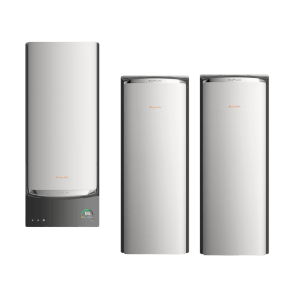
How the AC-coupled battery actually works
An AC-coupled battery system is designed to integrate seamlessly with solar panels by managing energy on the AC side of your home’s electrical system. Here's how it works.
Solar panels generate electricity (DC)
When sunlight reaches the solar panels, the photovoltaic (PV) cells begin converting that light into direct current (DC) electricity. This is the raw form of energy produced by the system, and its output depends on factors such as sunlight intensity, panel orientation, and weather conditions
Solar inverter converts DC to AC
To make the electricity usable, the solar inverter immediately converts the DC power generated by the panels into AC electricity. This conversion is essential because all standard home appliances and electrical systems are designed to run on AC power.
Power is supplied to your home first
Once converted into AC, the electricity flows directly into your home’s electrical panel, where it is distributed to power your appliances and devices in real time. The system prioritizes meeting your home’s energy demand first, which helps reduce reliance on grid electricity and lowers energy costs.
The battery inverter converts AC back to DC for storage
Before excess energy can be stored, it must be converted back into DC, as batteries store energy in this form. The battery inverter handles this process by converting the incoming AC electricity into DC. This converted energy is then stored safely within the battery.
Knowing the difference: AC vs DC coupling
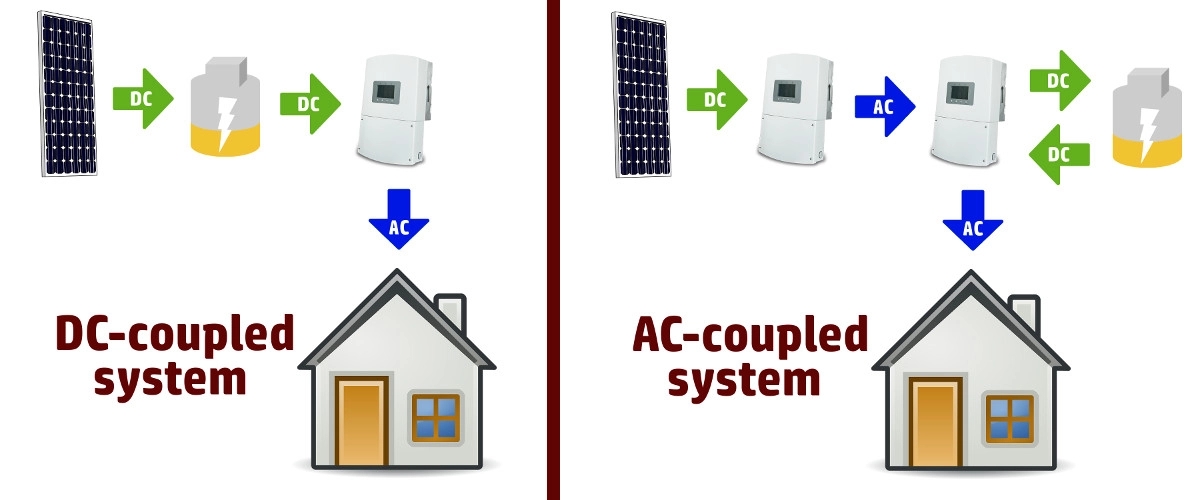
AC Coupling
Solar and battery systems operate independently The solar panel system and battery system each have their own inverter, allowing them to function separately while still working together through the AC network. This independence makes the system easier to manage and expand.
Ideal for adding batteries to existing solar setups AC coupling is especially useful for homeowners who already have solar panels installed. Since everything connects on the AC side, you can add a battery without changing the original solar installation.
Flexible and upgrade-friendly design Because components are not tightly integrated on the DC side, it’s easier to upgrade inverters, expand storage capacity, or modify the system over time without major rewiring.
DC Coupling
Fully integrated system design DC-coupled systems are usually designed as a complete package from the start. The solar panels, battery, and inverter are tightly integrated, which can optimize performance but reduce flexibility.
Best suited for new installations Because of the integrated design, DC coupling is often preferred when installing a brand-new solar-plus-storage system rather than upgrading an existing one.
Comparison Table
Here's a quick rundown of AC coupling vs DC coupling.
No. | Feature | AC Coupling | DC Coupling |
1 | Connection point | AC side (after solar inverter) | DC side (before inverter) |
2 | Conversion steps | DC → AC → DC → AC | DC → DC → AC |
3 | System design | Separate inverters (solar + battery) | Single hybrid inverter |
4 | Best use case | Upgrading existing solar systems | New solar + battery installations |
5 | Flexibility | High (easy to expand or retrofit) | Lower (more integrated system) |
6 | Efficiency | Slightly lower due to extra conversions | Higher due to fewer conversions |
The best-known advantages of AC coupling
Integrates with existing solar panel setup
AC coupling allows home energy systems to integrate with existing solar panel setups without requiring major modifications. This makes it ideal for retrofitting battery storage into systems that were not originally designed for it. With AC coupling, solar panels and batteries operate more independently, connected through the AC side via inverters. This flexibility allows the system to adapt to different system configurations and energy needs.
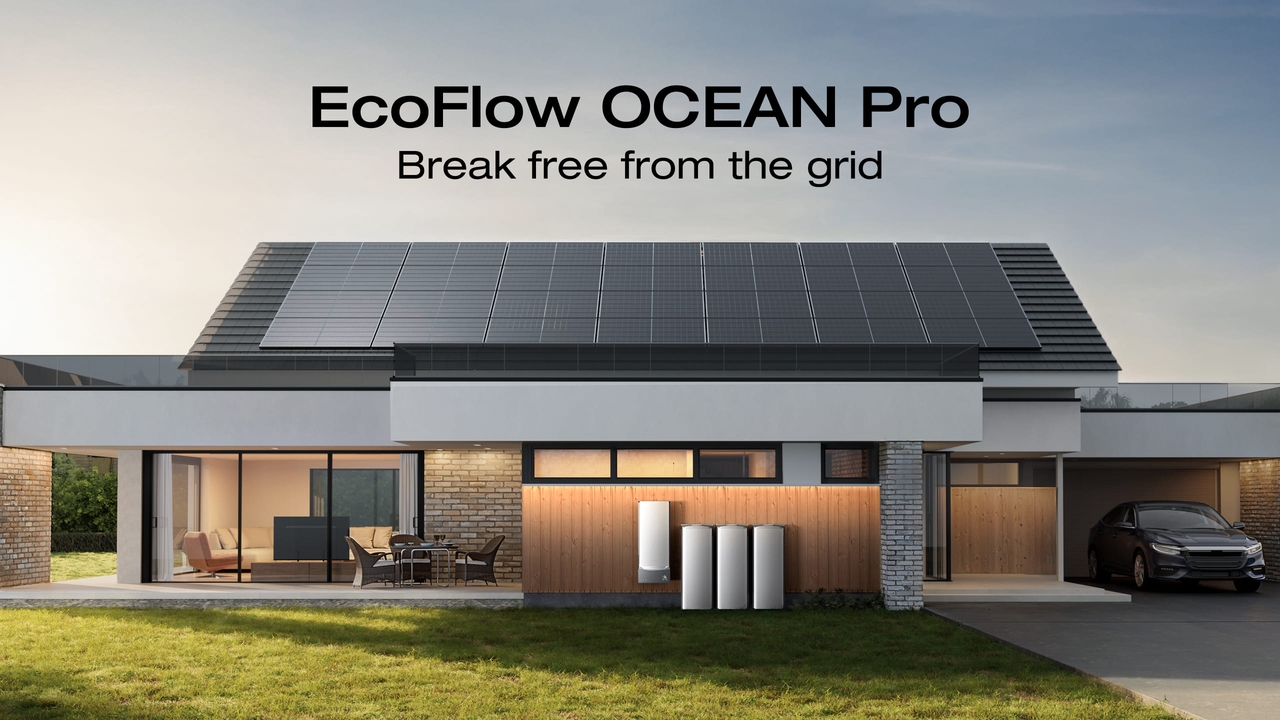
The real-life example of AC coupling is EcoFlow Ocean Pro. It is a modern, comprehensive home energy system that works with solar, the grid, and generators. It utilizes more rooftop solar to store extra energy, cut bills, and power your home longer. Built for today’s energy needs, it allows homeowners to store, monitor, and optimize electricity usage in real time. The system starts at 10kWh and can expand up to 80kWh, making it suitable for both small homes and large energy demands. You can easily install solar energy systems to support flexible storage integration.
Greater flexibility and scalability Because solar and battery systems operate independently, you can expand your system over time. For example, you can increase battery capacity or upgrade components without disrupting the entire system.
Reliable performance and redundancy Having separate inverters for solar panels and batteries can improve system reliability. If one component needs maintenance, the other can often continue operating, ensuring partial system functionality.
Supports backup power and smart energy use AC-coupled systems are well-suited for backup power applications. They can supply stored energy during outages and intelligently manage when to store or use energy, helping maximize self-consumption and energy independence.
Conclusion
AC coupling enables solar panels, batteries, and the grid to work together efficiently through the AC side of the system. This approach improves flexibility, simplifies upgrades, and makes it easier to add energy storage to existing solar setups. EcoFlow Ocean Pro demonstrates how AC coupling can be applied in real-world energy solutions. By using AC coupling, Ocean Pro can seamlessly connect with solar power systems, manage energy flow between the grid and battery storage, and provide reliable backup during outages.
Are you ready to upgrade your home? Request a consultation today and achieve a more flexible, future-ready power system.
FAQs
Why is AC coupling important?
AC coupling is important in solar panel systems because it enables flexible integration between solar panels, battery storage, and the grid without requiring a complete redesign of the system. Instead of dealing with raw DC electricity directly, energy is converted into AC and shared across the home’s electrical network.
What is the difference between AC coupling and DC coupling?
AC coupling connects everything on the AC side, meaning solar panels first convert energy to AC through a solar inverter, and the battery uses its own inverter to store and supply energy, while DC coupling connects the battery directly to the solar panels on the DC side, typically using a single hybrid inverter to manage both generation and storage.
Why use AC coupling?
AC coupling is used in solar systems primarily because it simplifies adding battery storage to existing solar panel installations. Homeowners don’t need to replace their current inverter or reconfigure their panels, which saves time and cost. It also allows each component to operate independently.
Does AC coupling reduce efficiency?
Yes, AC coupling can introduce slight efficiency losses because energy is converted multiple times, first from DC to AC by the solar inverter, then from AC back to DC for battery storage, and again to AC when used. These extra steps can lead to minor energy losses.
Why is AC coupling useful in solar energy systems?
AC coupling is highly useful in solar energy systems because it allows easy integration of battery storage with existing solar installations. It enables the independent operation of solar panels and batteries while optimizing energy distribution. Systems like EcoFlow Ocean Pro take advantage of AC coupling to deliver smart energy management, improved efficiency, and scalable home energy solutions.

