
400 Amp Panel: Do You Really Need One for Your Home?
Upgrading to a 400 Amp panel is a major decision. It can power luxury homes with multiple HVAC systems, EV chargers, and high-end appliances. But is it always necessary, or just overkill? While a 400 Amp panel offers ample capacity, it comes with high installation costs and utility upgrade fees. In many cases, the smarter path isn't a larger panel; it's smarter energy management.
What is a 400 amp service panel?
Amps measure how much electricity your home can draw at once. Think of it as the size of the pipe bringing power from the utility. A bigger pipe lets more current flow safely at the same time.
A 400 amp panel or 400 amp service panel provides substantially more capacity than the 100 amp services found in many older homes and the 200 amp service that is common in modern residential construction.
However, there's an important detail: a residential "400 amp service" does not always mean one enormous panel with a single 400 amp breaker. Many installations use two 200-amp panels or service disconnects to provide the equivalent overall service capacity.
You may also see equipment described as 320A continuous service equipment in a 400A-rated installation. The terminology can vary depending on the meter base, service equipment, and utility requirements, so the nameplate ratings should be checked rather than assuming every "400 amp" setup is electrically identical.
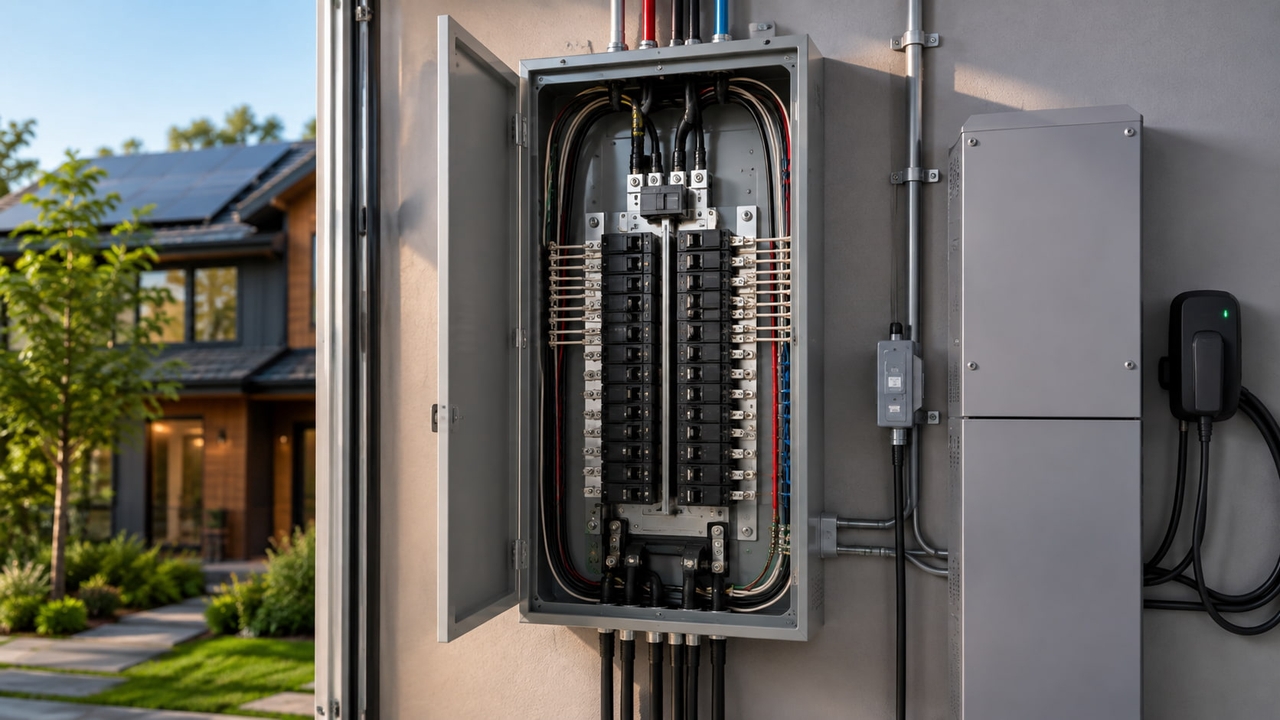
Does your house actually need a 400 amp panel?
For most homeowners, the answer is no. A 200 amp service is sufficient for many modern residences.
The deciding factor should be your home's calculated demand. An electrician can do a service load calculation using the proper requirements of NEC article 220 and considering things like heating, cooling, cooking equipment, water heating, EV charging, motors, and other large loads.
A common rule of thumb is to pay close attention when a home's expected demand approaches the practical capacity of a 200-amp service. But you shouldn't treat 160 amps as a universal NEC trigger that automatically requires 400 amps. The actual calculation, equipment ratings, continuous loads, local code requirements, and utility rules determine whether an upgrade is necessary.
Signs that a 400-amp service may make sense
You may want an electrician to evaluate a 400 amp service if:
Your calculated electrical demand is unusually high.
You're building or renovating a very large home.
Several major electric loads are expected to run simultaneously.
You're replacing gas appliances with electric alternatives.
You're installing multiple high-power EV chargers.
You're adding several HVAC systems or heat pumps.
You're planning a pool, spa, sauna, workshop, or other high-demand amenities.
You're adding an ADU or guest house with substantial electrical loads.
Your utility has specific requirements for your planned equipment.
You're experiencing capacity problems that can't be addressed through circuit or load management.
Frequent breaker trips can be a sign of trouble, but are not necessarily a sign that you need a 400-amp service. An overloaded individual circuit, faulty equipment, poor load distribution, or another electrical problem could be responsible.
Likewise, a panel that looks crowded isn't necessarily overloaded. Breaker-space limitations can sometimes be solved by replacing the panel with a larger 200 amp panel or using an approved subpanel rather than increasing the home's service capacity.
400-amp service installation cost & considerations
A 400 amp service installation cost can vary dramatically depending on the home, utility infrastructure, location, equipment, trenching requirements, permits, and how much of the existing electrical system must be replaced.
A rough project range is $3,000 to $20,000 or more, but complex installations can exceed that range. Current real-world examples show why the utility side can have a major impact: one 2026 utility pricing schedule, for example, lists substantially different charges depending on transformer, metering, and service-construction requirements.
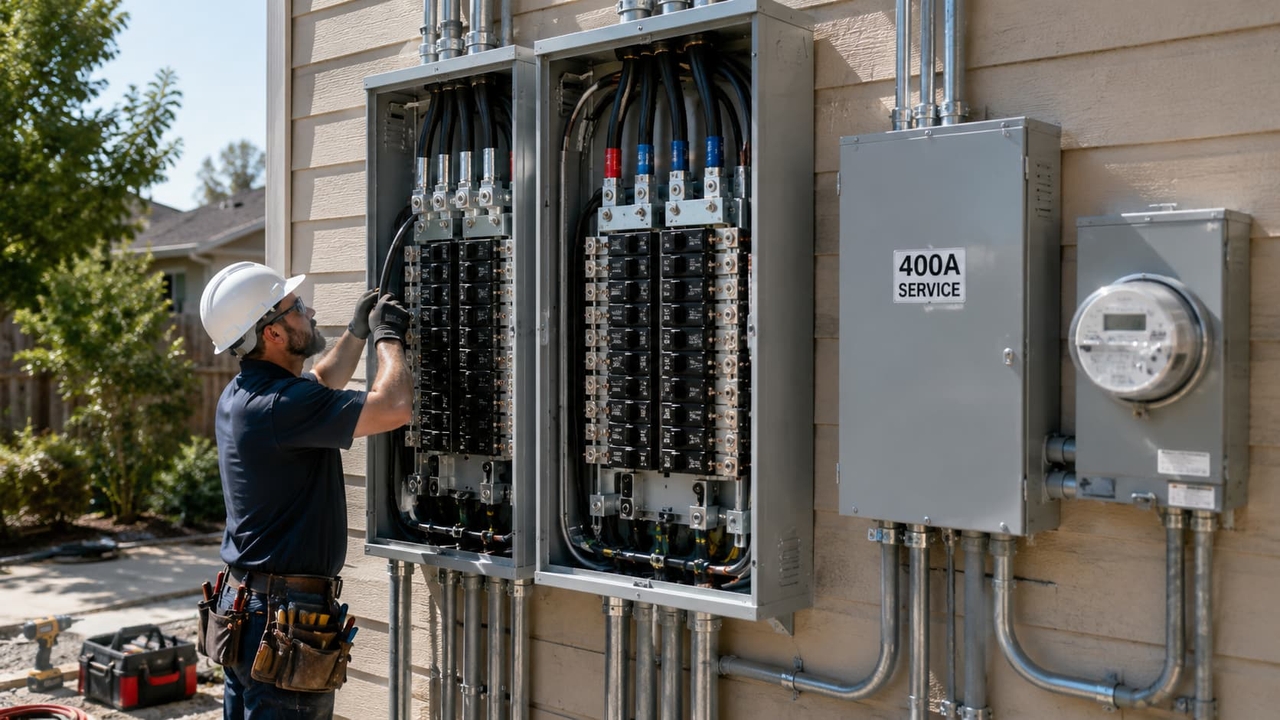
The final price can include much more than the panel itself.
Panel and service equipment
A 400 amp installation may require larger service equipment, disconnects, meter equipment, conductors, conduit, and related hardware.
If the existing equipment isn't compatible with the new service, more components may need to be replaced.
Utility coordination
Your local utility may need to approve the service upgrade and determine whether its transformer, meter, service conductors, or other infrastructure can support the increased capacity.
In some cases, the utility may need to upgrade equipment before the homeowner can receive the requested service.
Permits and inspections
For a service upgrade, you will probably need permits and electrical inspections. Requirements differ depending on the jurisdiction, so the electrician should check the local electrical code and utility requirements that apply to the job before beginning work.
Existing wiring and equipment
A larger service doesn't mean every existing component automatically becomes suitable for higher capacity. The service entrance, grounding and bonding, meter equipment, disconnects, distribution equipment, and conductors all need to be evaluated as part of the project.
That's why a 400 amp service upgrade is much more involved than simply replacing a breaker panel.
The smarter alternative: Load management and battery storage
You do not always have to increase utility capacity. Intelligent load management plus battery storage can keep a 200 amp service viable by controlling when high loads run, prioritizing critical circuits, and using stored energy to cover peaks. For many homes, this delivers the practical capacity of a 400-amp setup with better visibility and control.
EcoFlow OCEAN Smart Electrical Panel 40
A dual 200A configuration remains the most practical way to achieve 400-amp residential capacity. You can achieve this with two EcoFlow OCEAN Smart Electrical Panel 40 units. Each panel is rated for a 200A main breaker at 160A continuous current and offers up to 40 smart circuits with real-time monitoring and individual control, integration with OCEAN Pro for automatic load shedding, prioritization, and backup power, and backup switchover in under 10 milliseconds, plus generator compatibility.
Together, the two panels function as a modern dual-panel 400A solution while adding circuit-level intelligence that traditional breaker panels lack. You get visibility into every circuit, the ability to set priorities during outages or high demand, and automatic coordination with the battery system.
EcoFlow OCEAN Pro Solar Battery System
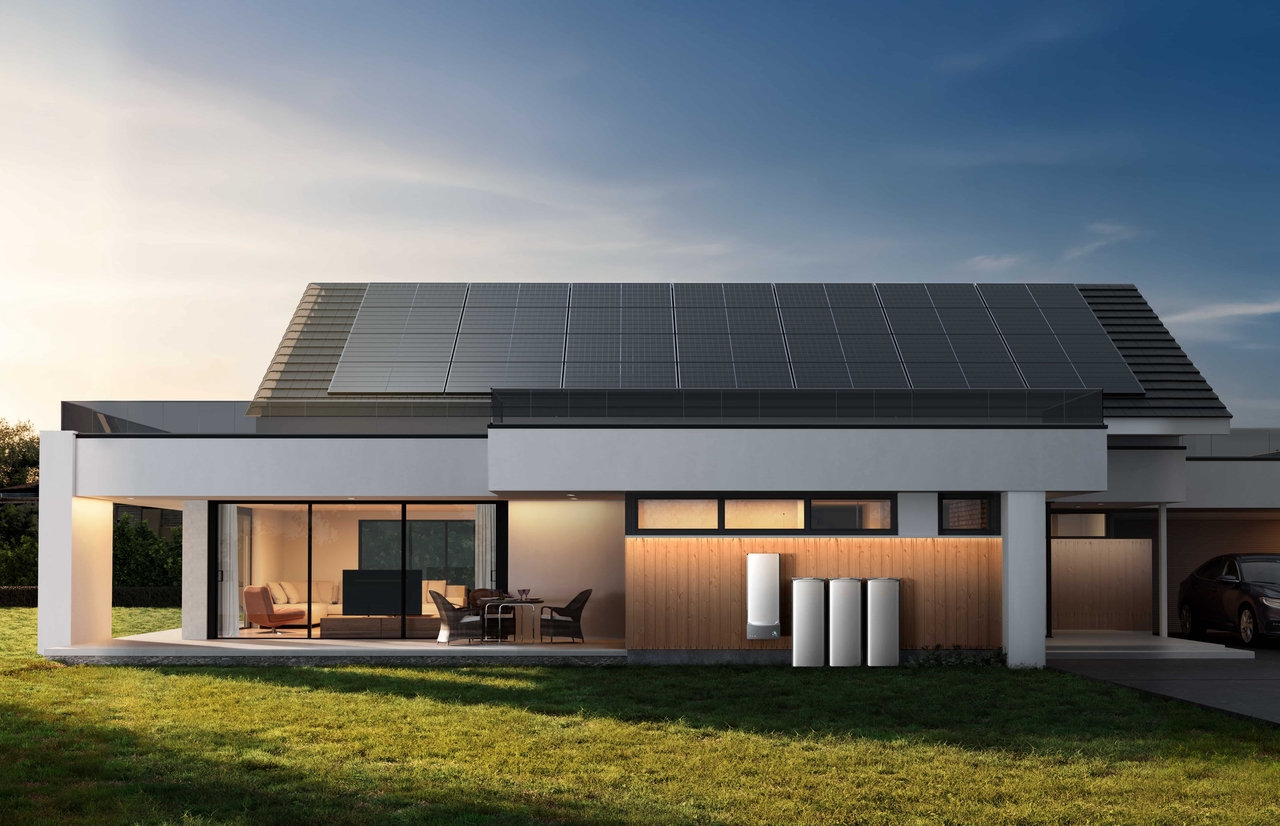
The EcoFlow OCEAN Pro Solar Battery System is designed for high-demand whole-home energy applications. It provides up to 24 kW of continuous output, supports up to 40 kW of solar input, and can scale from 10 kWh to 80 kWh of battery storage.
That combination makes it relevant for larger homes with substantial electrical loads. Instead of relying exclusively on utility power during every peak-demand period, the system can combine battery, solar, grid, and generator power. OCEAN Pro can also support multiple units in a system, giving larger installations additional flexibility.
For a high-load home, the benefit isn't simply having more stored energy. The larger advantage is being able to coordinate energy production, storage, and consumption as part of one system.
Conclusion
A 400 amp electrical panel makes the most sense for large luxury homes with exceptionally high electrical demand, while dual 200A configurations remain a practical approach for many residential setups. For homeowners who want more flexibility, the EcoFlow OCEAN Pro Solar Battery System with Smart Electrical Panel 40 offers intelligent energy management, backup power, and scalable storage. Review your current and future loads at your home, and contact our energy expert for a free consultation to find the best solution for your needs.
Get Your Free Home Energy Consultation!
Which energy solution are you interested in?

FAQs
How much does a 400 amp service upgrade cost?
A 400 amp service upgrade typically costs $3,000 to $20,000 or more, depending on equipment, labor, permits, utility requirements, transformer upgrades, trenching, and the condition of your existing electrical system.
What are the differences between a 200 amp panel and a 400 amp panel?
A 400 amp service provides roughly twice the capacity of a 200 amp service, supporting more simultaneous high-demand loads. It suits large, highly electrified homes, while 200 amp service meets most residential needs.
Will a 400 amp panel upgrade lower my monthly electric bill?
No. Upgrading to 400 amp service alone won't lower your electricity bill. Your costs depend on energy consumption and utility rates. Adding solar and battery storage, such as the OCEAN Pro system, can help reduce grid reliance and lower utility costs over time.

