
100 Amp vs 200 Amp Panel: Which Is Best for Your Home?
If you're comparing a 100 amp vs 200 amp panel, you're probably wondering whether your home's electrical system can safely support your current and future power needs. Choosing the wrong panel size can lead to overloaded circuits, frequent breaker trips, and expensive upgrades later. Understanding the differences between these two service sizes helps you make a smart investment that supports your lifestyle, appliances, and future home improvements.
What is an electrical panel?
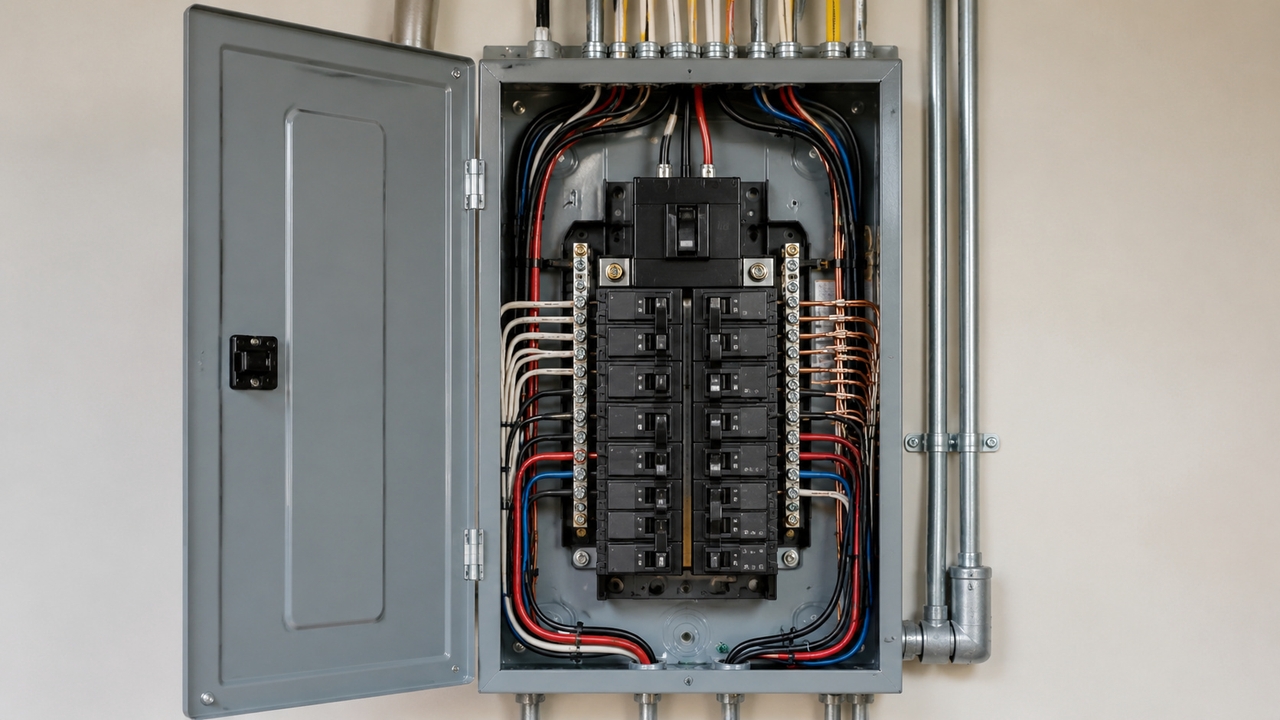
An electrical panel (also called a breaker box or service panel) is the central hub that receives power from the utility and distributes it safely to every circuit in your home through individual circuit breakers. It protects your wiring and appliances by shutting off power when a circuit overloads or short-circuits.
It's important to distinguish service size from the breaker panel itself. Service size refers to the total amperage the utility delivers to your home (the main breaker rating and service entrance conductors). The panel is the physical enclosure that houses the main breaker and branch-circuit breakers. A 200-amp service typically uses a 200-amp-rated panel with more spaces for breakers.
Panel capacity determines how many high-demand appliances your home can safely run at the same time without tripping the main breaker or causing voltage drops. If total power demand exceeds your service capacity, conductors overheat, breakers trip, and sensitive electronics can suffer from inadequate voltage delivery.
100 amp panel: What it can handle
A 100-amp panel delivers up to 24,000 watts at 240 volts. It remains adequate for many smaller or older homes (typically under 1,500–2,000 sq ft) that rely heavily on gas appliances and have modest electrical demand.
Realistic appliance load example for a 100-amp panel:
Central air conditioner (3-ton): ~20–30 amps
Electric water heater: ~20–30 amps
Refrigerator: ~3–6 amps
Washer + electric dryer: ~20–30 amps combined
Lighting circuits: 15–20 amps total
Dishwasher, microwave, small appliances: ~20–30 amps combined
This leaves limited headroom. The panel starts to strain when you add a Level 2 EV charger (30–50 amps), an electric furnace or heat pump (often 40–80 amps), a tankless electric water heater, or multiple heavy appliances running simultaneously. Continuous loads are limited by the NEC 80% rule, giving roughly 80 amps of usable continuous capacity.
200 amp panel: What it can handle
A 200 amp panel roughly doubles that capacity, delivering about 48,000 watts. It's the standard choice for larger homes, all-electric households, homes with an EV charger, or anyone planning a renovation that adds electrical load.
Realistic appliance load example including modern demands:
Central air conditioner (3–5 tons): 30–50 amps
Electric range/oven: 30–50 amps
Electric dryer: 20–30 amps
Level 2 EV charger: 30–50 amps
Electric water heater or heat-pump water heater: 20–30 amps
Refrigerator, dishwasher, microwave, lighting, and general circuits: remaining capacity
The extra headroom supports concurrent use of major appliances, future remodels, whole-home generators, solar systems, and battery storage without constant load management. It also typically offers 30–42 breaker spaces versus the 16–24 common on 100-amp panels.
100 amp vs 200 amp panel: Quick comparison
Feature | 100 Amp Panel | 200 Amp Panel |
|---|---|---|
Capacity | Up to 24,000 W (80 A continuous usable) | Up to 48,000 W (160 A continuous usable) |
Number of circuits | Typically 16–24 spaces | Typically 30–42 spaces |
Home size | Best for <1,500–2,000 sq ft | Standard for 1,500–4,000+ sq ft |
Appliance support | Basic + limited large appliances | Full modern electric appliance load |
EV charging compatibility | Rarely (often needs load management) | Yes – comfortable for Level 2 |
HVAC compatibility | Marginal for larger AC or electric heat | Excellent for central AC + heat pumps |
Solar readiness | Limited; may require upgrade | Strongly preferred by most utilities |
Upgrade potential | Low –limited future headroom | High – future-proof for most needs |
Typical installation cost | $1,000–$2,500 (like-for-like) | $1,500–$4,500+ (full 100A→200A upgrade) |
Is a 100 amp service enough for your home?
100-amp service can still be adequate in the right situation, but it is no longer the default for most modern households. Whether it works for you depends on your home’s size, the types of appliances you use, and how much power you draw at the same time.
When a 100-amp panel works
A 100-amp panel is typically sufficient for:
Smaller homes, generally under 1,500–2,000 square feet
Homes that rely primarily on gas appliances (gas range, gas water heater, gas dryer, and gas furnace)
Households with modest electronics and no high-draw electric heating or cooling systems running simultaneously
Properties with no plans for Level 2 EV charging, heat pumps, tankless electric water heaters, or major renovations that add significant electrical load
In these situations, the electrical load is usually spread across fewer circuits, allowing the panel to operate safely without being overloaded.
Watch for warning signs that your panel is already overloaded: lights dimming when a large appliance kicks on, breakers tripping more than occasionally, or a panel that feels warm to the touch. Any of these means your electrical demand is bumping up against the panel's limit, and it's worth having an electrician take a look.
Typical power draw breakdown for high-demand household appliances
The following table shows how quickly high-powered appliances can consume the available capacity of a 100 amp electrical service.
Appliance | Typical Power Draw | Approximate Amps (240V unless noted) |
|---|---|---|
Central air conditioner | 3,000–5,000 W | 13–21 A |
Electric range | 8,000–12,000 W | 33–50 A |
Electric dryer | 4,000–5,500 W | 17–23 A |
Electric water heater | 4,500 W | 19 A |
Heat pump | 3,000–6,000 W | 13–25 A |
Electric furnace | 10,000–20,000 W | 42–83 A |
Level 2 EV charger | 7,200–11,500 W | 30–48 A |
Tankless electric water heater | 18,000–36,000 W | 75–150 A |
Under the National Electrical Code's 80% continuous-load rule, a 100-amp panel effectively provides about 80 amps of usable continuous capacity. Adding even one or two of the higher-draw items above (especially an EV charger or electric heating) quickly pushes the system past safe limits when other household loads are also running.
If your current setup matches the "when it works" profile and shows none of the warning signs, a 100-amp service may still serve you well. Otherwise, upgrading to 200 amps (or a smart load-management panel) is usually the more practical and future-ready choice.
Signs you should upgrade a 200 Amp panel
Some situations make a 200 amp panel necessary rather than optional:
Installing a Level 2 EV charger, especially if you plan to charge two vehicles
Adding electric heat, a heat pump, or a tankless electric water heater
Running central AC alongside an electric range and electric dryer
Finishing a basement or adding a room with its own kitchen or bathroom
Installing a whole-home standby generator
Adding solar panels to battery storage
Wanting to future-proof your home for appliances you haven't bought yet
Electricians confirm the exact number you need with a load calculation under NEC Article 220. It factors in your home's square footage (3 watts per square foot for general lighting and receptacles), fixed appliance loads at their nameplate ratings, and demand factors that account for the fact that not everything runs at full power at once. If an electrician can't show you the math behind a recommended upgrade, ask for a second opinion.
Beyond traditional panels: Smarter load management for modern homes
Traditional electrical panels do one job well: they distribute power and trip breakers when something goes wrong. For homeowners adding solar, an EV charger, a heat pump, or simply wanting better control and resilience, that basic "dumb" panel often falls short. A smarter alternative is available.
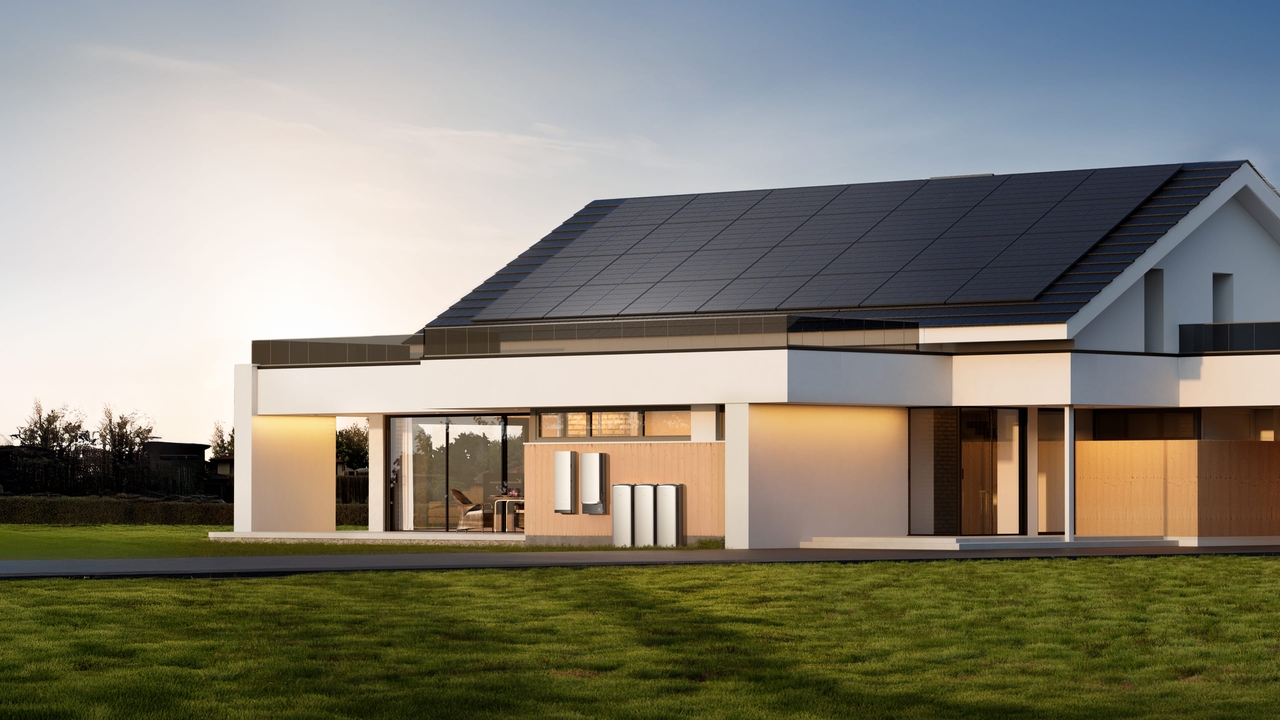
The EcoFlow OCEAN Smart Electrical Panel 40 is designed to replace a conventional 200-amp service panel while delivering whole-home energy intelligence. Instead of just protecting circuits, it actively manages them. It features up to 40 smart circuits with real-time energy monitoring and individual circuit control, ≤10 ms backup switchover, seamless integration with EcoFlow OCEAN Pro solar and battery systems, smart scheduling to lower bills, Storm Guard protection, and full app-based whole-home management.
Thinking about upgrading your home's electrical capacity? Schedule a free consultation to find out whether the EcoFlow Smart Electrical Panel 40 makes sense for your home.
Final verdict: Which panel should you choose?
Choosing between a 100 amp panel vs 200 amp panel comes down to your home's current electrical demand, future plans, and budget. Use this checklist to determine which option best fits your needs.
Choose a 100 amp panel if:
Your home is under 1,500 square feet.
You use natural gas for heating, cooking, and water heating.
Your electrical usage is relatively low.
You don't own an EV or plan to install a Level 2 charger.
You have no major renovations or additions planned.
Your existing panel still has available circuit capacity and operates without issues.
Choose a 200 Amp panel if:
Your home is larger or newly built.
You rely on electric heating, cooling, or major appliances.
You're installing a Level 2 EV charger.
You plan to add solar panels or battery storage.
You're remodeling, adding living space, or upgrading appliances.
You want extra capacity for future electrical needs and improved home value.
Before making a final decision, consult a licensed electrician to perform a professional load calculation. They will evaluate your home's square footage, existing and future appliances, HVAC equipment, and electrical usage to determine the right panel size for safe, reliable, and code-compliant operation. This ensures your investment meets both your current needs and future energy goals.
Get Your Free Home Energy Consultation!
Which energy solution are you interested in?

FAQs
Do I need a 100 or 200 amp panel?
A 200 amp panel is best for modern homes with electric heating, central air, or EV chargers. A 100 amp panel works if your home is under 1,500 sq. ft., uses gas for heating and water, and lacks heavy electrical demands.
How much does it cost to upgrade 100amp to 200amp?
A 100 to 200 amp panel upgrade typically costs $1,500 to $4,500, depending on your location, whether you need a new meter socket or service mast, and local utility coordination requirements.
How do I know if my electrical panel is 100 amps or 200 amps?
Check the main breaker at the top of your panel. It's usually labeled with the amperage. You can also check your utility meter or the service entrance cable size, though the main breaker label is the most reliable way to confirm it yourself.
Is a 100 amp service enough for a house?
Yes, for smaller, gas-dominant homes. It safely powers lighting, electronics, standard kitchen appliances, and basic air conditioning. However, it will struggle if you add an EV charger, heat pump, or electric tankless water heater.

