
Who Qualifies for a Boiler Grant? UK Eligibility Rules and Requirements
Across Great Britain (England, Scotland, and Wales), financial support for heating upgrades depends on the specific scheme, location, and system type. Northern Ireland operates separate devolved initiatives, such as the Affordable Warmth Scheme. ECO4 may help some low-income households improve their heating, while the Boiler Upgrade Scheme supports eligible heat pump and biomass installations in England and Wales. Both schemes have specific requirements, and ECO4 is currently scheduled to end on 31 December 2026.
Key Takeaway
ECO4: May fully or partly fund heating and insulation improvements for eligible households. What gets offered depends on the household and property assessment. The scheme is currently scheduled to end on 31 December 2026.
ECO4 Flex: Some local authorities can refer households that meet local eligibility criteria. Income limits and other requirements vary, so check with your council.
Boiler Upgrade Scheme: Provides grants towards eligible heat pump or biomass installations in England and Wales. The property and installation must meet the scheme’s requirements.
If you do not qualify: Check local support and compare practical ways to reduce heating costs, such as improving heating controls or insulation.
What Boiler Grant Schemes Are Available in the UK?
Several schemes offer financial support for heating upgrades in the UK. ECO4 focuses on low-income households, while the Boiler Upgrade Scheme helps property owners switch to low-carbon heating. Additional support may be available through local councils and regional programmes.
ECO4 Support for Eligible Households
The Energy Company Obligation (ECO4) requires obligated energy suppliers to support eligible households with energy-efficiency improvements. Depending on the household and property assessment, recommended work may include heating upgrades and insulation. Boiler replacement is not guaranteed as a standalone measure, and the available support may cover some or all of the recommended work. ECO4 is currently scheduled to end on 31 December 2026; contact an energy supplier or local authority to check whether applications are still being accepted and funding remains available.
Boiler Upgrade Scheme for Low-Carbon Heating
The Boiler Upgrade Scheme (BUS) offers grants towards eligible low-carbon heating systems in England and Wales, including heat pumps and, in some cases, biomass boilers. It is not means-tested, but that does not mean every homeowner, property or installation qualifies. The property and proposed system must meet the scheme’s current requirements, and an MCS-certified installer must apply for the grant on the customer’s behalf. Check the latest GOV.UK guidance before choosing an installer or agreeing to work. Our guide answers the question: how do heat pumps work? Use it to discuss heating and hot-water needs with your installer.
Local Authority and Regional Heating Support
Beyond nationwide initiatives, regional funding pools offer crucial lifelines:
ECO4 Flex (Local Authority Flexibility): Councils can widen ECO4 eligibility so residents who don’t claim benefits, but live on a low household income, or whose chronic health conditions are made worse by a cold home, can still apply.
Home Energy Scotland: Eligible owner-occupiers in Scotland can apply for grants and optional interest-free loans for approved improvements, subject to scheme conditions and available funding.
Welsh Government Warm Homes (Nyth): Eligible Welsh homeowners and private tenants can receive assessed improvements, including low-carbon heating, insulation and solar upgrades, subject to Nest’s income, property and health criteria.
Who Is Eligible for a Boiler Grant in the UK?
Boiler grant eligibility varies by scheme. ECO4 generally considers household income, qualifying benefits, and property energy efficiency, while the Boiler Upgrade Scheme has different requirements for property owners. The table below compares the main eligibility criteria.
| Scheme | Who it may help | Means-tested? | What it may support |
|---|---|---|---|
| ECO4 | Eligible low-income or vulnerable households, subject to assessment | Eligibility routes include qualifying benefits and other approved routes | Heating and insulation improvements recommended after assessment; a boiler replacement is not guaranteed |
| Boiler Upgrade Scheme (BUS) | Applicants with an eligible property and qualifying low-carbon heating installation in England or Wales | No | A grant towards an eligible heat pump or biomass installation |
| ECO4 Flex | Households referred through a participating local authority under an approved eligibility route | Criteria vary by route and local assessment | Measures recommended following the household and property assessment |
Eligibility varies significantly across the UK nations: ECO4 covers England, Scotland, and Wales, whereas the Boiler Upgrade Scheme (BUS) is limited to England and Wales only. Always check local availability before applying.
Homeowners, Landlords and Private Tenants
Homeowners must meet the relevant household and property criteria; ownership alone does not guarantee funding. For private tenants, qualification is entirely possible under ECO4, through a qualifying-benefits or other approved route, with your landlord’s permission for the works. Social housing has a separate ECO4 eligibility route, with restrictions on the measures available by EPC band; tenants should contact their landlord.
Households Receiving Qualifying Benefits
Under the ECO4 qualifying-benefits route, an occupant must receive an eligible benefit and meet any applicable income conditions. Other approved routes also exist. Qualifying benefits include:
Universal Credit
Pension Credit (Guarantee Credit and Savings Credit)
Income-based Jobseeker’s Allowance (JSA)
Income-related Employment and Support Allowance (ESA)
Income Support
Child Benefit (subject to household income limits)
Housing Benefit
Note: Following the transition into ECO4, standard disability benefits (such as PIP and DLA) alone no longer automatically qualify you unless paired with an eligible income-related benefit or routed through your local council’s ECO4 Flex programme.
Low-Income and Fuel-Poor Households
Some households that do not receive a qualifying benefit may still be referred through ECO4 Flex. Local authorities use approved eligibility routes, which can include income or health-related criteria. Requirements differ by council and route, so contact your local authority to find out whether it participates and what evidence it requires.

What Property and Heating Requirements Must You Meet?
Your home’s EPC rating, insulation, and existing heating system can affect which grants are available. Some schemes prioritise poorly insulated properties or inefficient boilers, while others support replacing fossil fuel heating with low-carbon alternatives. If you are also considering solar battery storage, assess its suitability and funding separately from the heating scheme.
Energy Performance Certificate and Insulation Requirements
An EPC can help show where a property is losing energy, but its rating alone does not confirm ECO4 eligibility. The assessment may also consider the existing heating system, the household’s eligibility route and which improvements are suitable for the property. Recommended work can include insulation as well as heating measures. Ask the supplier or installer to explain which measures are available and whether any insulation work is required before a heating upgrade. For practical guidance on insulation and heating upgrades, see how to improve epc rating.
Existing Boiler and Heating System Conditions
The heating system you have now can affect which measures an assessment recommends, but there is no single boiler-age rule that guarantees an ECO4 replacement. The assessor will consider the property, existing heating and applicable scheme criteria. BUS has separate requirements for the property and the proposed low-carbon heating system; having a boiler that runs on gas, oil or LPG does not by itself guarantee eligibility.
Property Type and Location Restrictions
Detached sandstone cottages in rural Cumbria have vastly different requirements from Victorian terraced houses in Birmingham or flats in south London. Listed buildings and conservation areas often face planning restrictions that limit external flues or outdoor heat pump units. Additionally, shared tenement properties often present complex communal heating questions that require bespoke regional grants rather than off-the-shelf domestic vouchers.
How Do You Apply for a Boiler Grant?
The application process depends on the grant scheme. ECO4 applicants typically start by contacting an energy supplier or approved installer, while Boiler Upgrade Scheme applications are handled by registered installers. Here’s how to check eligibility and arrange an assessment.
1. Identify the Scheme That Fits Your Circumstances
Start by pinpointing whether you need a conventional gas replacement via ECO4 or a low-carbon grant via the Boiler Upgrade Scheme. If your household receives qualifying benefits or meets another approved route, ask whether ECO4 can support suitable improvements; a failing boiler alone does not guarantee replacement. If you are a self-funding homeowner planning a greener heating system, focus on BUS.
2. Check Eligibility and Prepare Supporting Information
Gather proof before booking an initial survey:
Recent council tax statements and utility bills.
Benefit evidence meeting the supplier’s current requirements (ECO4 evidence generally needs to fall within the 12 months before completion).
A copy of your property’s EPC (freely retrievable via the Gov.uk online EPC register).
Written permission from your landlord if you are renting.
3. Contact an Approved Installer or Scheme Provider
Never hand over bank details to cold callers offering “free government boilers.” For ECO4, contact major energy suppliers directly or engage TrustMark-registered installers who follow PAS 2035 standards. For the Boiler Upgrade Scheme, your chosen MCS-certified (Microgeneration Certification Scheme) installer will apply for the grant on your behalf and subtract the discount directly from your quote, currently £7,500 for eligible air-to-water or ground-source heat pumps, £2,500 for air-to-air heat pumps, or £5,000 for eligible biomass boilers. Until March 2027, qualifying properties without a mains gas connection that replace oil or LPG heating can receive an extra £1,500 towards an air-to-water or ground-source heat pump. Check the current GOV.UK grant guidance before committing to work.
4. Complete the Property Assessment and Installation
An accredited retrofit assessor will visit your home to inspect room dimensions, pipework, radiator sizes, and insulation levels. Once the survey passes quality control, qualified Gas Safe or MCS engineers will carry out the installation, commission the heating controls, and supply the relevant building compliance certificates. If you are also adding an EcoFlow solar battery, request a separate specification and quote rather than assuming it is covered by the heating scheme.

What Can You Do If You Do Not Qualify for a Boiler Grant?
If you don’t qualify for a boiler grant, you may still be able to reduce heating costs through other local support schemes or home energy improvements. Options include adjusting heating controls, improving insulation, and investing in solar panels or battery storage where suitable.
Explore Other Home Energy Assistance Schemes
Local community energy initiatives, eligible interest-free green loans, and 0% VAT on qualifying energy-saving materials installed in residential accommodation until 31 March 2027 can ease upfront financial pressure. It is always worth checking your local council’s housing portal for seasonal discretionary grants aimed at minor heating repairs or thermal window draught-proofing.
Reduce Unnecessary Household Energy Use
You can cut energy costs without replacing your boiler, too. Lowering the flow temperature on a suitable combi boiler, bleeding radiators and using thermostatic radiator valves (TRVs) all help reduce unnecessary heating.
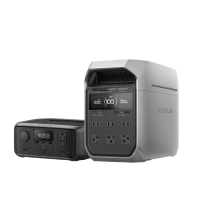
On the electricity side, the EcoFlow PowerInsight 2 shows real-time energy use across compatible home systems. It helps you track daily consumption, spot periods of high electricity use and adjust how you run household appliances to keep costs in check.
Consider Solar Panels and Home Battery Storage
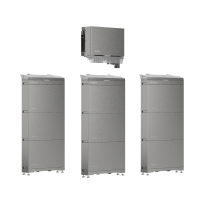
If your roof is suitable and unshaded, and your budget stretches to broader upgrades, generating and storing your own electricity gives you far more long-term resilience against volatile tariff spikes. Pairing a rooftop PV array with a dedicated battery storage system lets you capture surplus free power generated during daylight and redirect it to lighting, appliances and electric water heating once the sun goes down. For households after a robust, integrated setup, the EcoFlow OCEAN 2 Plus Single Phase stands out as a reliable home battery storage solution. Its modular capacity and seamless home integration let you bank low-cost or self-generated power, so you draw from your own reserves during peak evening tariff windows instead of paying premium grid rates.
Schedule Your Free Consultation Today!
What kind of product or solution are you interested in?
Conclusion
Before booking work, check the latest rules with your energy supplier, local council or BUS installer. Ask for a property assessment and a written breakdown of which measures are covered, since eligibility does not guarantee that a particular boiler replacement will be funded. If no grant is available, compare repair and replacement quotes and consider lower-cost heating improvements first.
Disclaimer: This article is for general information only and does not constitute personalised financial or eligibility advice. Scheme rules, grant amounts and funding availability may change and vary by location. Eligibility and the support offered depend on the relevant scheme and an individual household and property assessment. Always confirm the latest requirements with GOV.UK, Ofgem, your local authority or the scheme provider before applying or committing to any work.
FAQs
How Much Does It Cost to Install Solar Panels and Battery Storage?
Costs depend on system size, battery capacity, roof complexity and installation work. Energy Saving Trust estimates around £4,600 for a 5kWh battery system; solar panels and other work add to the total, so compare itemised quotes. Qualifying residential solar and battery installations benefit from 0% VAT until 31 March 2027. A battery can increase solar self-consumption, but its extra cost means a shorter overall payback period is not guaranteed.
Does a New Boiler Help You Save Money on Energy Bills?
Yes. Swapping an old non-condensing boiler (rated G or F) for a modern A-rated condensing model can reduce gas use, but savings depend on the old boiler, heating controls, property and fuel prices; Energy Saving Trust’s estimates vary with these assumptions. Modern condensing boilers run at over 90% thermal efficiency, so far less heat escapes straight up the flue.
Is It Cheaper to Repair an Old Boiler or Replace It Without a Grant?
Repairing is cheaper in the short term only if the fault is minor and parts are easy to get. For an older boiler needing major work, compare a written repair quote with replacement costs, likely efficiency gains and warranty cover; there is no universal £500 threshold that determines the better choice.
Do You Have to Pay Back a Boiler Grant in the UK?
The Boiler Upgrade Scheme provides a grant rather than a loan. ECO4 is supplier-funded support, with the provider deciding what work and funding it offers. Check the written terms for any household contribution; separate loan schemes do require repayment.

