
What Is a Smart Meter? How It Works, Why It Matters, and What It Means for Solar Homes (2026)
The oft-misunderstood gadget in millions of UK households is the humble smart meter. To maximize the use of time-of-use electricity rates, solar exports, and battery storage, it is important to understand what your smart meter is doing and what it is not.
What Is a Smart Meter?
The basic definition, and what makes it "smart"
What is a smart meter? This is a digital energy meter which automatically logs gas or electricity consumption and feeds this into your energy supplier. A smart meter sends information in real time, unlike a conventional meter that only sends information once someone comes to read it, and it will not result in an estimated bill.
The "smart" element is two-way communication. Your meter not only pushes data out, your meter supplier can also push data in as well, such as updating your meter tariff, or changing between prepayment and credit mode without needing to go to your meter.
There is one important note of clarification up front: A smart meter is a meter device placed at the point of connection to the grid by the energy supplier. This is different to an in-home display (IHD), a solar inverter screen or a home energy monitor. The small wireless device provided with the meter, separate from it, is called an IHD. It's important to keep this in mind since it is what the meter will do and not do for you.
How a smart meter differs from a traditional electricity meter
A traditional electricity meter is a passive meter that counts the electricity that has passed. A meter reader comes to take readings at regular intervals, records the reading, and then you receive your bill, usually incorporating some estimates in between. What is a smart meter for electricity compared to this? It takes the place of approximation with accuracy. Readings are sent automatically every 30 minutes, and what you are billed for exactly matches what you have used.
Does a smart meter cover gas too?
Yes. If you have two fuels, you will usually get two smart meters, both sending the data to a second hub which is sited beside the electricity meter. Then, your IHD displays the fuel consumption for both fuels in one location.
How Does a Smart Meter Work?
Reading and recording your energy consumption
Your smart meter continuously records electricity (or gas if applicable) usage into your home. It saves usage in 30-minute increments and creates an in-depth profile of your energy use over the course of your day.
How data is sent to your energy supplier
The meter is plugged into a secure national network, the Smart Metering Wide Area Network, run by the Data Communications Company (DCC). This sends information about your consumption to your supplier automatically (usually every day) through a secure link that can only be accessed by authorised suppliers.
The in-home display (IHD) - real-time usage at a glance
What is a smart meter and how does it work from your perspective at home? The IHD displays current usage in both kilowatts and pounds per hour, daily and weekly usage, and, on some models, carbon figures as well. It is not a steering wheel, it's a dashboard.
SMETS1 vs SMETS2 - which generation do you have?
Please note that your meter may be a first-generation SMETS1 meter if fitted before approximately 2019. These frequently lost their smart properties during the changeover to other household suppliers. The current standard of meters is SMETS2 meters that run on the national DCC network and will fully function with any provider. If your meter is a SMETS1 and it has become "dumb", get your supplier to contact them - many suppliers have been remotely enrolled onto the DCC network.
What Is the Point of a Smart Meter?
Ending estimated bills
What is the point of a smart meter if not to end the frustration of estimated bills? Automatic half-hourly readings eliminate the guesswork on what you used from your supplier-no more overpayments or catch-up bills mid-year.
Helping you spot energy waste in real time
The IHD provides you with real-time consumption input. See the difference with every action, such as boiling a kettle, running the tumble dryer or leaving devices on stand-by. It's often as simple as paying attention that many households can cut back.
Supporting time-of-use tariffs and off-peak charging
Time-of-use (TOU) tariffs, like Octopus Agile and Economy 7, charge power at different rates throughout the day and are built on smart meters. These tariffs are not available without a smart meter – so you can't use them to get the best rates during off-peak hours for charging an electric vehicle or home battery.
Contributing to a smarter national grid
Smart meters provide grid operators with much more visibility of demand patterns. This ensures a balance between supply and demand, more renewable energy integration and reduced total grid cost.
What Happens When a Smart Meter Is Installed?
What happens when a smart meter is installed in your home? The process is straightforward. Your supplier makes an appointment for you - make it online or by phone. On that day, an engineer will come to install the meter for electricity for about 45 minutes to an hour or for two hours if the gas meter is to be changed as well.
The engineer will temporarily disconnect the power to your meter for about 20-30 minutes as he changes the meter. They then configure the IHD and show you how to read it. Once your meter is in place, it automatically starts transmitting readings, so make sure your IHD is showing readings and is accurate in the days that follow.
Are Smart Meters Mandatory in the UK?
The government rollout in 2026
What is a smart meter UK households are being offered? The rollout began in 2011 and suppliers are committing to providing a smart meter for all households. By 2026, the overwhelming majority of eligible homes will have at least one offer to install.
Your right to decline
There's nothing you can do right now to force a smart meter onto the meter supplier; you can opt out of the meter supplier's offer, but they must continue to make the offer. There is no current requirement for domestic customers to install.
Switching supplier after installation
If you use a SMETS2 meter, then the change of supplier does not affect smart functionality - your new supplier is able to pick up the data feed from the DCC network as if nothing had happened.
Smart Meters and Solar Panels - What You Need to Know
Can a smart meter measure solar generation?
A standard smart meter will only measure how much you are importing from the grid - not how much your solar panels are generating. Your generation is dealt with by your inverter separately. Newer SMETS2 installations do now, however, have export measurement capability and track the amount of electricity exported.
Export tariffs and how your meter tracks energy sent to the grid
The Smart Export Guarantee (SEG) guarantees that your supplier will pay you for each unit of solar electricity you export. A smart meter with export metering does this automatically, which means that you're not getting estimates of export – you're getting accurate meters.
Why smart meters alone are not enough for a solar home
A smart meter does not make a decision for you; it simply provides your supplier with information on what you have used and exported. It can't save excess electricity from the sun for export for a few pence a unit. It will not adjust your usage to the lowest half-hour cost of the TOU tariff rate. It cannot command a battery to charge at night and discharge at the peak time of the day. There's something else that would be required for that.
Pairing Smart Meters With Home Battery Storage for Maximum Benefit
The largest inefficiency for most solar homes is the mismatch between the time of energy production and the time of energy use. Household consumption is high in the morning and evening, while solar power generation is high during the day. This surplus in the middle of the day, if not stored, gets sent to the grid at much lower export rates than the later import rates.
How a home battery works alongside your smart meter
Excess solar power is stored in a home battery until you need it. You don't have to export cheap and import expensive; you bank your own generation. The battery unit still measures on-site energy (what is stored in the home), and your smart meter measures off-site energy (what comes in and out of the home).
Using time-of-use tariff data to charge cheaply and discharge at peak times
A tariff such as Octopus Go or Economy 7 might offer electricity overnight prices significantly lower than the peak time rates. During these low-price periods, the well managed battery is charged, and during high-price periods it is discharged. The half-hourly meter readings from your smart meter enable accurate billing under these tariffs.
The difference between monitoring your energy and actually controlling it
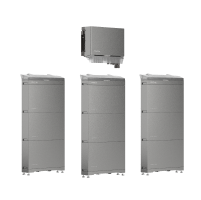
Your smart meter and IHD are monitoring devices. The EcoFlow home battery puts them in motion from simply watching to taking action. It comes in both single-phase and three-phase options and can store 5 to 45 kWh of energy with the long-life lithium ferrite chemistry expected to last about 6,000 charge cycles. It connects seamlessly with your solar panels and can automatically send backup power to your whole home during a power outage. The EcoFlow OCEAN 2 Plus Single-Phase Home Battery can be expanded to 60 kWh of storage with a single inverter, and it accepts up to 24 kW of solar input across three independent MPPTs, making it well-suited to homes with higher energy demands, including EV charging and heat pump loads.

Taking Control With a Home Energy Management System
What a home energy management system does that a smart meter cannot
A HEMS is the layer of intelligence above your meters, inverter, battery and tariff data. It analyses all these parameters at once and decides automatically: when to store, when to discharge, when to import, when to export – it optimises everything for cost.
Automating energy decisions across solar, battery, tariff, and demand
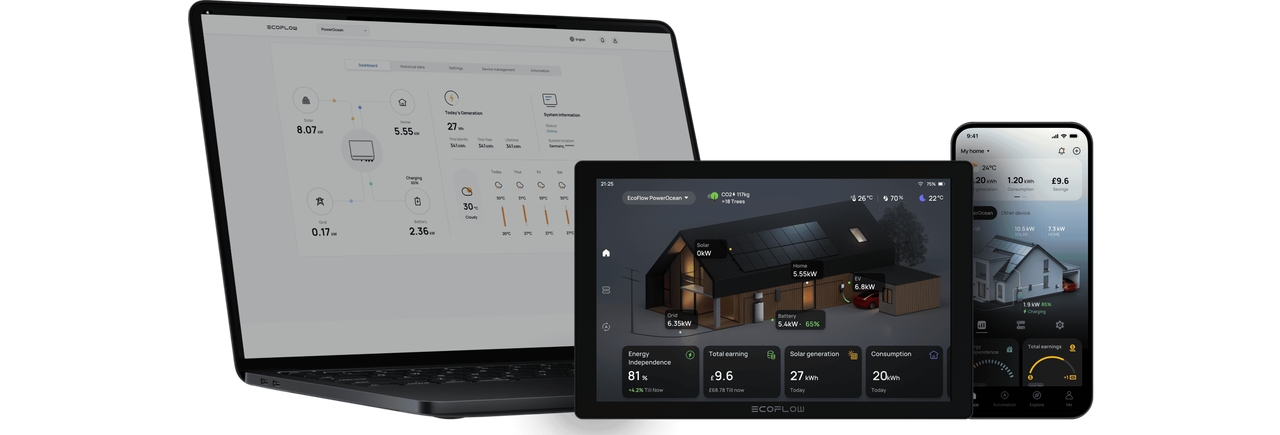
The EcoFlow Intelligent HEMS connects your smart meter data, solar generation, battery state, and live tariff prices into a single automated system. It predicts solar power based on the weather and optimises charging/discharging of solar systems, no human interaction needed.
Real-world savings potential for UK households
This difference is significant when solar, a home battery and a TOU tariff are all being managed by a HEMS. According to EcoFlow, when the system is used properly, it can cut down on your electricity bills by up to 77.6% due to the combined benefits of electricity generation, peak electricity avoidance, and fair export fees, all automated. Explore the full range of home battery storage solutions to find the right configuration for your home.
Conclusion
An intelligent meter is a worthwhile change: it eliminates estimated billing, opens up more of the cost-effective options and provides immediate insight into consumption. However, it is not an energy management instrument. Combined with home battery storage and an intelligent HEMS, this brings a change of approach from “watching” your energy usage to “managing” it, the true savings start here.
Schedule Your Free Consultation Today!
What kind of product or solution are you interested in?

FAQs
What is a smart meter, and how does it work?
What is a smart meter in practical terms? A digital meter which automatically transmits data to your supplier every half hour through a secure national network, recording energy consumption. An IHD showing real-time consumption is also provided.
Will a smart meter save me money on its own?
Not automatically. It eliminates estimated billing and provides visibility of usage, which can lead to behaviour change. Larger savings occur when action is taken on that data; installing a TOU tariff, solar panels, or pairing with a home battery.
What if my smart meter stops working or loses signal?
Contact your energy supplier. The meter will normally display in the same manner as a standard meter – possibly taking manual readings until the issue is cleared up.
Can renters get a smart meter installed?
Yes, though your landlord's permission may be required. Suppliers must provide smart meters to all customers, including tenants and ask the supplier for advice.
What is the point of a smart meter if I already have solar panels?
What is the point of a smart meter in a solar home? It can reliably measure grid imports and solar exports, which is crucial for the correct payments under the Smart Export Guarantee. It also supports TOU tariffs and home batteries to charge up cheaply at night and sell energy during peak times.
Does a smart meter work with a home battery system?
Yes. Your smart meter measures the electricity coming in and out of your home, and your home battery controls the electricity in your home. They make up the backbone of a full home energy solution that can be automated by a HEMS (such as the EcoFlow App) to optimize energy savings.

