
How Long Do Solar Panels Last? Understanding Lifespan and Performance Over Time
Thousands of UK homeowners sink serious money into solar technology—only to quietly worry whether it will still be earning its keep a decade from now. That anxiety is understandable. But the fear of a sudden, catastrophic failure? It's mostly misplaced. The real threat is far less dramatic and far harder to spot: gradual, invisible efficiency loss that silently bleeds your system of power, sometimes for years, before you notice a thing.
Most people assume solar panels behave like lightbulbs—working fine until one day they simply don't. The reality of solar panel lifespan is subtler, and frankly more manageable. This article addresses the UK-specific stressors of persistent dampness, rapid temperature swings, and hidden electrical degradation—and explains exactly how to calculate real-world longevity and protect it.
The Hidden Anxiety Behind a Solar Panel Lifespan
The Difference Between Total Failure and Gradual Degradation
Solar panels rarely burn out. What they do instead is quietly underperform. The industry standard, recognised by bodies such as the International Electrotechnical Commission (IEC), puts the typical degradation rate at roughly 0.5% per year. That sounds trivial—and for the first few years, it is. But run the numbers over 20 years on a UK rooftop system, and you're looking at a panel operating at around 90% of its original output. Still functional. Still generating. Just measurably less efficient.
Why The 25-Year Warranty Is Often Misunderstood
Here's something the industry rarely explains clearly: there are two entirely different warranties attached to most solar panels.
Product warranty that is usually 10-12 years and covers manufacturing defects and physical failures, typically 10–12 year
Performance warranty that is usually 25-30 years that guarantees a minimum power output of 80-85% of rated capacity
The average solar panel lifespan extends well past that 25-year mark. The warranty isn't an expiry date—it's a performance floor. A panel that reaches year 26 doesn't suddenly stop working. It simply continues declining at that same gradual rate.
Micro-Cracks and Hidden Cell Damage You Cannot See
This one catches people off guard. On a British summer afternoon, a dark rooftop panel can reach 60°C. On a January night, that same panel may drop below freezing. That cycle—expand, contract, expand, contract—causes tiny fractures inside the photovoltaic cells. You can't see them with the naked eye. But over years, those micro-cracks widen, and the electrical pathways through the cell begin to break down. Power flow is choked. Output drops. And nothing looks physically wrong.
Environmental Triggers That Cut the Average Lifespan of Solar Panels Short
The Impact of Persistent UK Dampness and Water Ingress
The UK doesn't get the blazing heat that causes rapid silicon degradation in sunnier climates. What it does get—relentlessly—is moisture. When panel seals begin to fail, water vapour finds its way between the glass and the encapsulant layer. The result is delamination: the protective bond separating, allowing moisture to reach the cells directly. Internal corrosion follows. It's a slow process, but once it starts, there's no reversing it. Frame seal quality and the ingress protection rating (IP rating) of a panel are critical selection criteria for any UK installation.
How Extreme Temperature Swings Stress Electrical Junctions Affecting Solar Panel Lifespan
Many people usually believe solar panels love heat and produce a lot of energy when it’s hot. The truth is that hot weather doesn’t automatically guarantee high solar output. Photovoltaic cells within the solar panels are semiconductors. This means that when temperature rises, so does electrical resistance. To put this in perspective, if you have a solar panel operating at 70°C on a hot roof it may lose 10–25% of its rated output purely due to thermal load. And the real damage occurs in the long-term in the form of mechanical stress on internal solder joints. After thousands of thermal cycles, the morning warm-up, noon heat, and evening cool-down, hairline fractures develop in the panels. That is why it's important before you purchase a solar panel you compare the temperature coefficient ratings across different brands.
Wind Shear and Structural Fatigue on Localised Mounting Systems and its Impact on Solar Panel Lifespan
Strong gusts are not a cause for solar panels to snap, they bend. Repeatedly. The glass and the matrix bend slightly against the panel frame whenever the surface of the panel is loaded by the wind. The repetitive mechanical stress is a direct cause of cell degradation and propagation of micro-cracks. This effect is usually experienced in Coastal UK properties and exposed hilltop installations. That’s why many solar panels use heavy-duty aluminium frame construction with high-tensile fixings.
Hidden Technical Threats to the Lifespan of a Solar Panel
Potential Induced Degradation and Voltage Leaks
Potential Induced Degradation (PID) is one of the least-discussed threats to the lifespan of a solar panel—and one of the most damaging. It occurs when stray voltage leaks between the solar cells and the grounded mounting frame, caused by the high system voltages common in large string arrays. In humid conditions—standard in most of the UK—this leakage path becomes even more conductive. PID can slash a panel's performance by up to 30% and, critically, it often isn't immediately visible without specialist testing equipment. Anti-PID system designs and proper earthing go a long way to mitigating this risk.
Light-Induced Degradation Within the First Few Hours of Exposure
Before a panel has generated a single kilowatt-hour for your home, it's already begun to lose efficiency. Light-Induced Degradation (LID) is a well-documented phenomenon in which brand-new crystalline silicon panels—particularly those made from boron-doped Czochralski silicon—experience a performance drop of 1–3% in the very first hours of sunlight exposure. The cause is the formation of boron-oxygen defects within the silicon lattice. This isn't a defect; it's an unavoidable chemistry. The good news is that LID stabilises quickly, and modern PERC (Passivated Emitter and Rear Cell) technology has significantly reduced this effect.
Inverter Failure Masquerading as Dead Solar Cells
Here's something worth knowing before you panic about panel degradation: your solar inverter is almost certainly going to fail before your panels do. Central string inverters have an average service life of just 10–12 years—less than half the functional solar panels lifespan. When an inverter begins to fail, the output drop it causes looks exactly like panel degradation. Before replacing panels, always investigate the inverter first.
What Is the Lifespan of a Solar Panel When Optimised for Maximum Durability?
Choosing Rigid Architectures to Combat Physical Warping
The physical engineering of a panel matters enormously over a multi-decade solar panel lifespan. High-tensile aluminium frames resist the bowing that causes internal cell stress. Toughened, anti-reflective glass with a high hail-impact rating handles the worst of British weather without surface degradation. These aren't premium extras—they're long-term investments in sustained output.
Pairing Long-Lasting Arrays With a Single-Phase Battery System
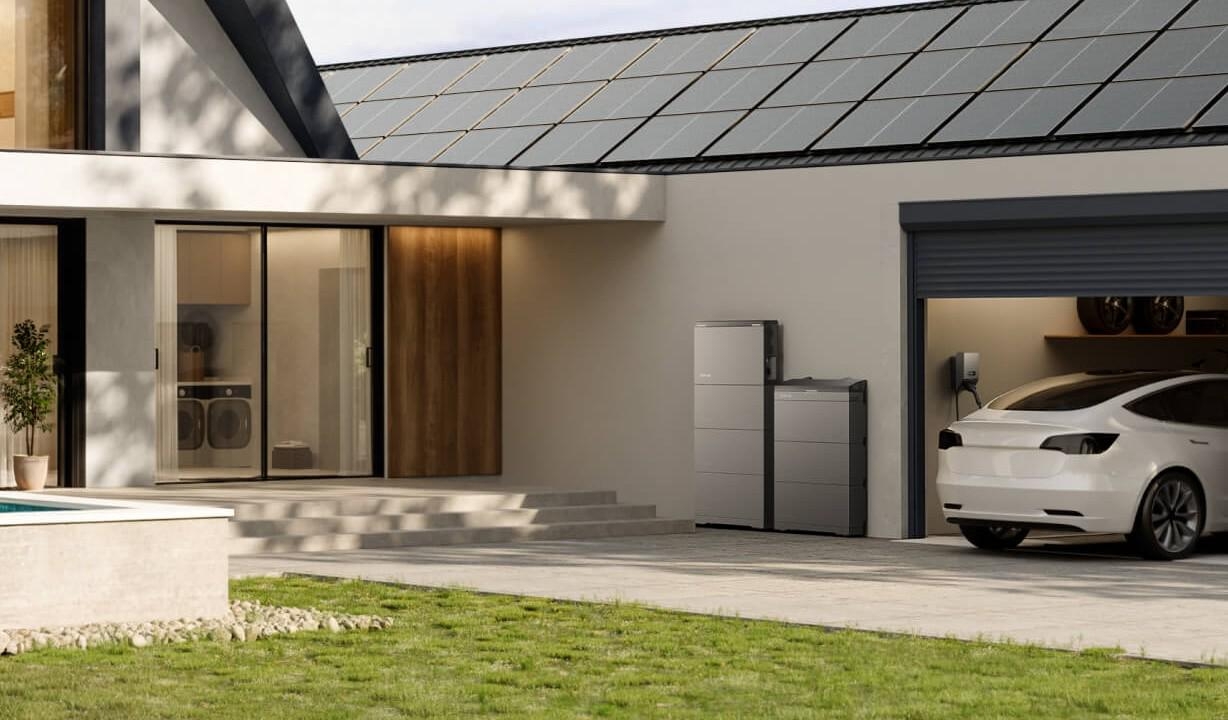
Durable panels are only half of a resilient energy setup. The energy they generate needs to be stored efficiently—especially during extended overcast periods common across the UK. The EcoFlow OCEAN 2 Plus Single-Phase is built with LiFePO4 chemistry, which delivers a significantly longer cycle life than conventional lithium-ion—often , which often exceeds 6,000 charge cycles before meaningful capacity loss. Paired with a high-quality solar array, it's a genuine long-term home energy solution, not a short-term stopgap.
Actively Tracking Gradual Degradation via Smart Monitor
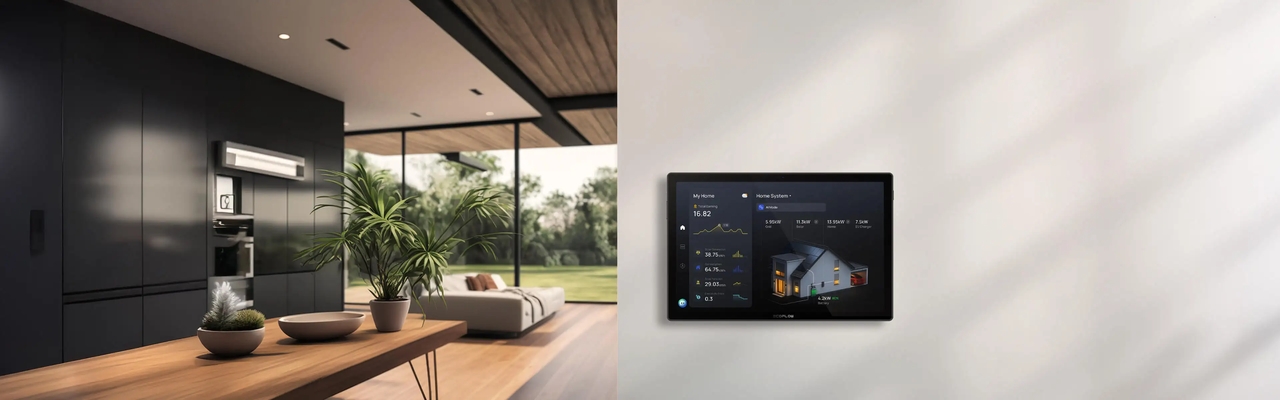
The most insidious threat to a long solar panel lifespan is performance loss that goes undetected for years. Annual manual checks won't catch a 2–3% yearly drop. The EcoFlow PowerInsight 2 Monitor provides continuous real-time energy monitoring across your entire system—generation, storage, and consumption. If output begins drifting beyond the expected 0.5% annual degradation rate, it flags the anomaly before it compounds into a significant financial loss.
Schedule Your Free Consultation Today!
What kind of product or solution are you interested in?
Conclusion
When talking about solar panel lifespan, we are not just talking about a fixed number, for example 20 years or 30 years. This phrase refers to the entire trajectory and span in the performance of solar panels. And, it’s worth pointing out that panels usually degrade gradually, not suddenly. The lifespan of solar panels is affected by PID, LID, micro-cracking, moisture ingress, and inverter failure. However, these threats are manageable with the right setup, the right hardware, and consistent monitoring. If you have quality panels and implement active performance tracking, your solar panels can easily push past the 25-year warranty period.
For homeowners aiming to extend the usable life of their solar installations, long‑term system design and ongoing performance monitoring play an important role. Solutions that combine durable hardware with continuous performance monitoring can help identify degradation early and support more consistent system output over time. Understanding how different components affect solar panel lifespan allows homeowners to make more informed decisions about system upgrades and long‑term energy planning.
Solar Panel Lifespan Frequently Asked Questions
Do Solar Panels Stop Working Completely After 25 Years?
No—they don't simply switch off. The 25-year mark represents the standard industry performance warranty period. After this timeframe, your panels will likely still function, though their power generation efficiency will have declined to around 80–85% of their original day-one output. The lifespan of a solar panel continues beyond the warranty; performance just continues its gradual decline.
How Can I Tell If My Solar Panels Are Degrading Faster Than They Should?
The best way to spot it is when you notice your kilowatt hour (kWh) production decreases on sunny days than what it's averaged year-to-year. If your output is significantly lower than the expected degradation rate of 0.5% per year, check for a problem with the shading or soot buildup, or any other problem with the inverter before concluding that it has failed. Understanding what is the lifespan of solar panels in your specific climate helps set realistic benchmarks.
Does Cold, Cloudy Weather Shorten the Solar Panel Lifespan?
Actually, cold weather is highly beneficial for solar cell efficiency—electronics operate more effectively at lower temperatures. However, persistent cloud cover and damp conditions increase moisture exposure risks around frame seals. This makes choosing high-grade, weather-sealed panels crucial for long-term protection in regions with high rainfall. The solar panels lifespan in the UK is very much tied to build quality and ingress protection.

