
Solar Panel Kit With Battery and Inverter UK: What's Included, What it Costs, and What to Expect?
When permanently installed, solar systems can generate a considerable amount of electricity for 20 years and more; and are commonly known as home solar panel kits with battery and inverter. In this guide you'll learn what they are, how to size them correctly, what to expect the cost of these systems to be in 2026, and how you can utilize a solar kit to your benefit, in terms of bill savings.
What Does a Solar Panel Kit With Battery and Inverter Include?
Three key components to a home solar solution: solar panels, the hybrid inverter and battery storage.
A complete home solar kit is one of the three components that must work together as a unit. They can be incompatible and come with split warranties if bought as stand-alone products.
Solar panels - capturing energy from daylight
A PV panel converts the energy from the sun into direct current electricity. The typical efficiency of most panels in a house installation is 20–23% in 2026. The number of panels to be installed in a typical UK home will vary depending on the roof area, usage and the watt-peak rating of panels. In a typical UK home, panels are usually installed in various numbers, ranging from 8 to 20 panels, depending on roof space, use and the watt-peak rating of each panel. The array is based on your roof's orientation, pitch and shading pattern.
The hybrid inverter — managing energy flow
The hybrid inverter transforms the Direct Current (DC) electricity generated by your panels into Alternating Current (AC) electricity which is used by your house, controls charging and discharging of the batteries, and controls the connection to the national grid. It can also store battery power without requiring a separate battery storage device, making installation simpler, with efficient utilization.
The home battery - storing what you generate
In real time, the panel’s generated power that you do not use during daytime operation is stored by battery. In the absence of storage, excess electricity is sold at the low SEG rate of 4p-15p/kWh. Storage, on the other hand, allows you to take electricity when you don't need it, and store it for later to be used in lieu of grid electricity at 24p — a fundamental financial argument for storage. The lithium iron phosphate (LFP) cells are the predominant type of cells found in most 2026 home batteries; they are safer and more thermally stable than their predecessor, lithium-ion, and they have a longer lifespan.
What a home solar kit is not - balcony and plug-and-play systems
Balcony solar systems are small, self-contained systems with 1-2 solar panels, no battery and no connection to the gird. They are no longer even in the same ballpark. If the solar panel system includes battery and inverter then a full home solar system survey, electrical design, MCS certification and DNO notification and professional installation will be required. The investment – output and/or long term bill impact is not even a comparable match!
Why Buy a Complete Kit Instead of Separate Components?
The main issue to consider when mixing brands is component compatibility. There are voltage and communication protocols that warrant a good match between an inverter and battery. A pre-matched kit comes with unified warranty terms, single support contact and software optimized to work with those specific components with identical warranty terms.
How to Work Out the Right Solar Kit Size for Your UK Home
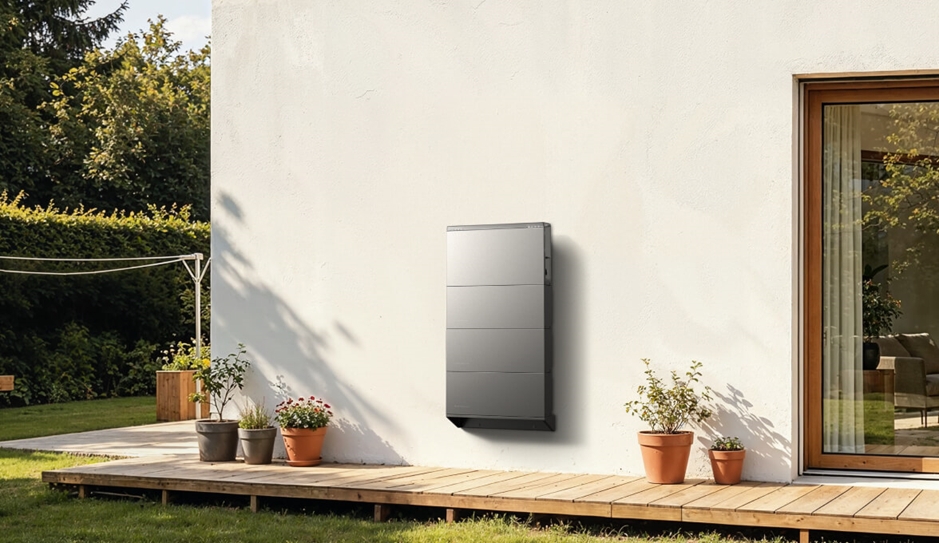
Residential Solar Panel Capacity Options (kWp)
System Size | Typical Use Case | Est. Annual Generation | Suitable Battery Size |
Small (4–5 kWp) | Limited roof space, 1–2 bed | 3,500–4,200 kWh | 5 kWh |
Mid-range (6–8 kWp) | Most 3–4 bed homes | 5,100–6,800 kWh | 8–10 kWh |
Large (10+ kWp) | EV and heat pump households | 8,500+ kWh | 12–15+ kWh |
Assumptions for estimates: A roof with a pitch of 30 – 35 degrees facing south. About 15-20% less will be yielded on panels which face east or west. Your installer will know what to do and simulate your shading.
Start with your annual electricity consumption
Gather up the last 12 months of bills and record the cumulative kWh. The UK average is 2,700 to 3,100 kWh, but a home with an EV may use 6,000 to 8,000 kWh, and one with a heat pump can reach 10,000 kWh or more. The only number to size is your actual count.
Sizing your Solar Panel Array
1 kWp in the UK will produce approximately 850 – 1000 kWh per year. Thus, an average of 3-4 kWp is needed to satisfy around 80% of the demand of a 3,000kWh dwelling. This is much greater if the EV or heat pump is employed.
Sizing Your Battery Storage
Choose the size of the battery to equal the amount of time it will supply power; when the sun isn’t out (late afternoon until the next morning). An 8 kWh battery provides most of the overnight requirement for an 8 kWh per day household. Consider future growth where there may be additional EV uses or charging points.
How Energy Actually Moves Through Your System
During the day - generation and direct use
As long as the sun is out, your panels produce electricity. Your house utilizes what it needs, as required and the overages charge the battery. When the battery is full, if there's still energy to spare, it is sent back to the grid through your SEG contract.
Evening and night - drawing from the battery
As generation drops in the later afternoon, the hybrid inverter automatically switches the energy supply from the generator to the battery again – with no flicker noticed on your circuits! When discharged to a minimum level, the home switches to battery operation and switches back to mains power when the battery is charged up.
Cloudy Days and winter operation
Diffuse daylight can generate electricity on an overcast UK winter's day and typically generates 20-40% of the electricity generated on a clear summer day. A well sized system takes into account seasonal variations, charging during times of the night when the grid is cheap, and supplementing with the times of the day, when the sun is not up.
High-Performance Single-Phase Battery Storage Solutions
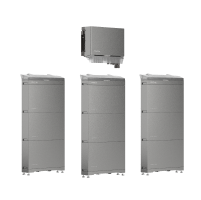
The EcoFlow OCEAN 2 Plus Single-Phase is a hybrid inverter that can seamlessly connect modular LFP storage batteries from 5 kWh to 60 kWh (with the same inverter, no reinstallation required). It can accept up to 24kW of solar input from three separate MPPTs, it is able to process complicated roof configurations, it switches to whole home backup in 0ms time and it features built-in LFP battery heating in the UK winter.

Key Features:
Integrated smart home energy ecosystem for solar, storage, EV charging, and heating
Faster and simpler installation with pre-integrated components
Built-in whole-home backup and smart meter integration
Smart Energy Management for Optimized Solar Performance
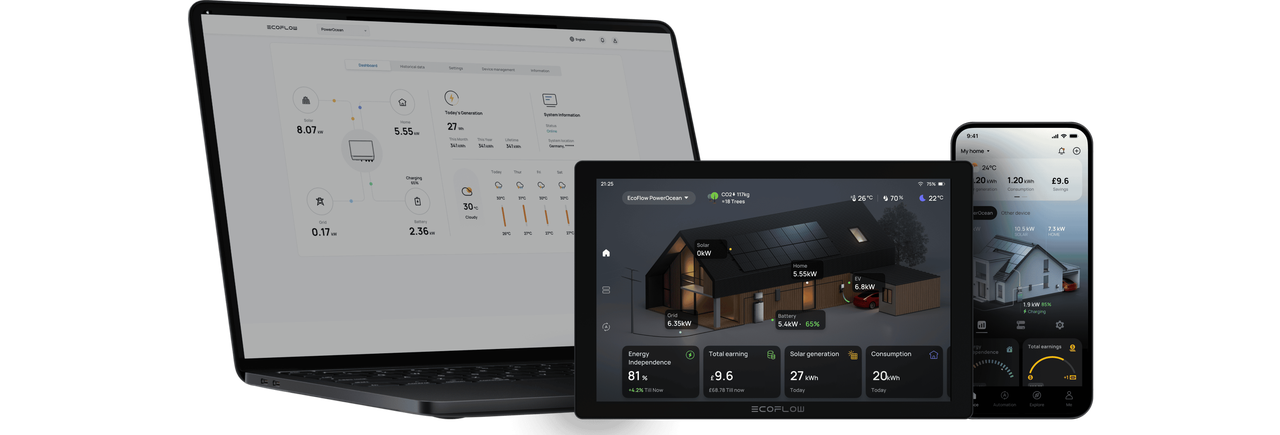
The EcoFlow Intelligent HEMS keeps real-time data of solar energy production, battery status, and energy consumption in the house, and will optimise charging and discharging based on the tariff. It optimises battery activity within time-of-use pricing (such as Octopus Agile) – all without any manual work. The more it observes your home, the more accurately these optimisations will be.
Key Features:
Intelligent tariff optimisation to reduce electricity bills
Automatically charges batteries during low-rate periods and discharges during peak pricing
Real-time solar generation, battery, and home consumption monitoring
Building Regs, Certifications and Grid Connection
MCS certification, Building Regulations Part P, and DNO notification
Only MCS-certified contractors will be able to install solar systems in the UK. Without the MCS certification, the installation is not SEG qualified and may impact on home insurance. Battery storage is covered by Building Regulations - Part P. Prior to grid connection, your DNO needs to be notified: G98 for smaller systems up to 3.68 kW which your installer will be responsible for – more of an instantaneous contact; or G99 for larger systems, which may add a few weeks on.
Planning permission and structural survey
Installations in a majority of residential homes in England qualify as permitted development. This does not apply to listed buildings and conservation areas. It is normal to have a structural survey before installation as the panels weigh 12 to 15kg per panel and the roof has to be tested for its ability to support the weight.
Timeline From Quote to Operation
Key phases and realistic timescales
Phase | Typical Duration |
Initial survey and system design | 1–2 weeks after first contact |
Quote acceptance and equipment ordering | 1–3 weeks |
DNO notification (G98) or application (G99) | 1 day to 6 weeks depending on system size |
Installation on site | 1–3 days |
Commissioning and software setup | Half a day to 1 day |
MCS certificate issued | Within 2 weeks of completion |
The majority of single phase installations can be completed within 4-8 weeks of initial enquiry and installation. If looking to be in operation prior to winter, plan ahead.
What Does a Solar Panel Kit With Battery and Inverter Cost in the UK?
Indicative price ranges by system size
System Size | Solar Panels | Battery Storage | Typical Installed Cost (2026) |
Small (4–5 kWp) | 8–10 panels | 5 kWh | £10,000–£14,000 |
Mid-range (6–8 kWp) | 12–16 panels | 8–10 kWh | £14,000–£20,000 |
Large (10+ kWp) | 20+ panels | 12–15 kWh | £20,000–£30,000+ |
Get 2 or 3 quotes from MCS certified installers and ask for equipment and labour breakdowns.
ECO4 grants and payback period
Projects for ECO4 are eligible for funding and the repayment period is worked out.
Solar with battery storage is not a widespread practice or a standalone solution but is being included in ECO4 as a part of insulation and other low carbon heating solutions for eligible households. Well-sized systems have a 8 to 12 year payback period, and continue to save for 20 to 25 years after that.
How to Spot a Quality Provider
Here, you'll find out what you should look for if you want the best provider.
Confirm MCS certification of the MCS installer database (not the contractor).
Always read independent reviews instead of any of the company's own reviews, for instance at Trustpilot or Google.
A good installer will always do a thorough site survey before quoting on a job rather than quote based on postcode and roof size only.
Ask specifically who you would call if anything goes wrong, say after 5 years. Is there customer support available in the UK?
Make quotations that give you equipment and labour prices for easy comparison.
Looking After Your System
Panel cleaning and battery maintenance
In the UK, rainfall cleans the majority of the panels. An annual or twice-annual professional clean using deionised water can regain 3-5% output, when sufficient pollution and/or birds are present. The maintenance of the home batteries is minimal: with sufficient ventilation, and software is kept up to date, the battery management system takes care of the rest.
What to Check Before Choosing a Solar Kit Package
Before choosing Solar Kit Package, you have to consider the following factors:
Test a permanent as opposed to plug or self-installed system.
Check eligibility of the components for MCS and whether the installer is registered for MCS.
Verify that sizing is done according to the data of your own battery consumption and not by a generic recommendation.
Be sure that the inverter fits your panel configuration and is able to accommodate additional battery banks if necessary.
Ensure all warranties (product, throughput and workmanship) are on paper.
Conclusion
A homeowner in the UK is making the highest value investment in the long-term going ahead of 2026 by investing in a full solar panel system, battery and inverter. Make the sizing correct, select a pre-matched system with trusted support, and complement it with smart energy management — and you have a system that helps to lower bills, prevent outages and shield you from future energy price increases. For more details on home solar battery storage for the UK market, please visit the EcoFlow Home Battery section, or request a free quote for your home's solar battery storage needs.
Schedule Your Free Consultation Today!
What kind of product or solution are you interested in?
FAQs
What is included in a solar panel kit with battery and inverter?
The entire system comprises an array of PV panels (typically 8 to 20 panels), a hybrid inverter (which controls the PV system to ensure energy is generated by the PV panels and then distributed to the circuits in the home and to the grid), and a home battery to store energy generated by the PV system when the PV system generates more power than is being used by the home. A complete installation incorporates the consumer unit, notification and commissioning of the monitoring software to the DNO.
How long does it take to install a solar kit with battery and inverter in the UK?
Installation time on site is 1-3 days. It usually takes 4-8 weeks to complete the entire process from initial contact to a commissioned and certified system. The DNO stage may be extended for a few weeks for G99 applications for larger systems.
H3: Is planning permission required for a solar panel kit in the UK?
The majority of homes in England qualify as permitted development with no planning application requirements. It is primarily for properties listed on the Register of Historic Buildings and those within conservation areas. Your installer should verify your situation at the survey phase.
How much does a solar panel kit with battery and inverter cost in the UK?
In 2026, installed costs range from around £10,000–£14,000 for a 4–5 kWp system with 5 kWh battery, to £14,000–£20,000 for a mid-range 6–8 kWp system with 8–10 kWh of storage. The cost of a larger installation would be £20,000-£30,000 or higher. Be sure to obtain several estimates and compare them item-by-item.
What is the difference between a balcony solar panel and a full home solar kit?
A balcony solar panel is a small box with 1 or 2 panels, no battery and can connect to a home circuit via a standard wall socket. A complete home solar panel system including battery and inverter is a permanent system which is MCS certified. When it comes to scale, cost, product output, regulatory considerations and the impact over time on bills, these are two very different products. They are not to be used as replacements.

