
Solar Charging for Car Battery: How to Charge Your Car Battery with Solar Power
Yes, solar can help keep a car battery charged. For a conventional 12V starter battery, a 10W–30W solar panel can be suitable for maintenance charging when paired with a compatible charge controller and given enough sunlight. For an EV, the setup is different: you’ll need a home solar PV system, inverter, and compatible EV charger to turn surplus solar generation into usable charging power.
This guide covers how solar car charging works, what kit you need, the cost versus mains power, and how to set it up so it works through the UK weather. Not complicated, but you need to get the details right.
Key Takeaways
Two different setups. Small 12V trickle chargers for starter batteries. Full rooftop arrays for EVs pushing 7.4 kW or more.
You need regulation. A charge controller stops overcharging and prevents reverse discharge at night. PWM or MPPT, either works.
Costs vary. A basic trickle-charging kit can be relatively inexpensive, while a full home solar and EV-charging setup requires a much larger upfront investment. The potential electricity savings depend on how much EV charging can be supplied by surplus solar and on the household's import and export tariffs.
UK weather isn't a deal‑breaker. Modern panels work with diffused light. And with a battery, you store what you generate and use it when the sun's not out. No issue.
How Does Solar Charging for a Car Battery Work?
Before you connect anything to the battery, it’s worth knowing how the charging system works.
Solar Panels Convert Sunlight into Electricity
Solar panels convert light into electricity. Sunlight hits silicon wafers, photons knock electrons loose, and you get direct current. That’s the basic process.
One common misconception is that panels need intense heat to work. Actually, they’re more efficient in cooler temperatures. A bright, cool UK day can still produce decent output. That’s good news, because it means winter sun can still generate, as long as it’s bright.
But output drops when daylight is shorter or cloud cover is heavy. That’s a limitation. So while cool weather doesn’t hurt, low light does. That’s what you’re dealing with in the darker months.
Charge Controllers Control Voltage and Current
A 12V solar panel actually puts out more than 12 volts—usually around 17–18V, even higher with nothing connected. So you can’t just wire it straight to the battery. You need a controller between them. It drops the voltage to the right level, follows the proper charging stages, and stops the battery from draining back into the panel when the sun’s down. For anything permanent, that controller’s a must. Skip it and you’ll cook the battery or drain it overnight. That’s the reality.
.webp)
What Equipment Do You Need for Solar Car Battery Charging?
Getting started requires only a handful of well-matched components tailored to your vehicle’s electrical requirements.
Solar Panel for Power Generation
The panel does the heavy lifting. For basic 12V battery maintenance, a 10W to 30W monocrystalline panel can be a practical option when matched with the right charge controller. Monocrystalline panels are widely used because they generally offer higher efficiency and more power output from a given panel size.
If you need more charging power for larger batteries, such as leisure or auxiliary batteries, 50W to 100W panels can provide a useful step up in output. Rigid or semi-flexible panels can be installed on a suitable garage roof, carport, or other location with good solar exposure.
The right panel size depends on the battery capacity, the amount of energy being used, available sunlight, and how quickly you need to replace the energy consumed. For households considering an EcoFlow Solar Battery as part of a larger system, panel sizing should also account for storage and EV demand.
Solar Charge Controller for Regulation
Choosing the right controller keeps your battery healthy.
PWM controllers are simple and relatively inexpensive, making them suitable for some smaller solar charging systems.
MPPT controllers are more sophisticated. They continuously adjust the operating point of the solar panel to make better use of the available power, which can provide higher energy harvest than PWM in many operating conditions. The advantage can be particularly useful when the panel voltage is significantly higher than the battery voltage or when sunlight conditions change.
Cables and Battery Connections
Connecting the panel to your vehicle requires durable, weather-resistant hardware:
Crocodile clips: Best suited for quick, temporary hook-ups directly to battery posts under the bonnet.
Ring terminals: Provide a semi-permanent, vibration-proof connection with an inline fuse tucked safely inside the engine bay.
12V cigarette lighter / OBD-II plugs: Allow neat plug-and-play maintenance from inside the cabin, provided your vehicle’s internal 12V socket remains live when the ignition is switched off.

How Much Does Solar Charging for a Car Battery Cost?
Investing in solar charging involves weighing modest upfront hardware expenses against cumulative fuel and mains electricity savings.
Upfront Costs for Solar Charging Equipment
For standard 12V starter battery preservation, entry-level solar trickle kits (10W–30W panel with an integrated PWM regulator and leads) typically range from £25 to £60. Intermediate setups (50W–100W panels with a robust PWM or basic MPPT controller for leisure batteries) run between £70 and £150. At the high end, a complete residential solar-and-storage setup with a dedicated smart EV charger requires an investment of £4,500 to £8,500+, depending on array capacity, inverter rating, and installation complexity.
Ongoing Costs of Solar Car Battery Charging
Once it’s set up, solar charging pretty much runs itself. Panels have no moving parts, so there’s nothing to wear out. Just wipe them down with a damp cloth every few months to clear off dust and grime. Check the cables and connections once a year, ideally before winter, and that’s it. A regular solar panel cleaning routine can help maintain output by removing accumulated dirt and debris.
Solar vs Grid Charging Costs
Generating your own clean electricity protects your wallet from retail energy price caps and peak-rate grid electricity. If you’re asking how much does it cost to charge an electric car, compare both the charging rate and the cost of the required hardware.
| Charging Method | Typical Upfront Cost | Electricity Purchase Cost | Annual Maintenance | Best Suited For |
|---|---|---|---|---|
| 12V Solar Trickle Kit (10W–30W) | £25 – £60 | No grid electricity required when charging from solar | Negligible (£0) | Preventing battery drain on parked ICE cars & classics |
| Mains 12V Smart Trickle Charger | £35 – £85 | ~24p – 30p / kWh | Negligible (£0) | Garaged vehicles with easy access to a 3-pin wall socket |
| Rooftop Solar + Smart EV Charger | £4,500 – £8,500 | No grid electricity purchase when using surplus solar | ~£20 – £50 | Daily commuter EVs, zero-emission home motoring |
| Standard UK Grid EV Charging | £700 – £1,000 (Wallbox only) | ~24p – 30p / kWh (Standard rate) | Negligible (£0) | Drivers without home solar panels or off-peak EV tariffs |
Note: Using surplus solar can reduce grid electricity purchases, but it is not economically “free”. Overall costs depend on the solar installation, charging equipment, maintenance and any export revenue forgone by using the energy at home.
How Can Solar Power Support Different Vehicle Charging Scenarios?
From preventing dead batteries on airport long-stay car parks to powering daily commutes, solar applications adapt to very different driving habits. A connected Home Energy Ecosystem can coordinate solar generation, storage and EV charging across these different use cases.
Charge EVs Directly with Surplus Solar Power
Leaving a petrol or hybrid car sitting for weeks can drain the 12V battery. Alarm systems, trackers, and remote modules all pull power continuously. A small solar trickle charger on the parcel shelf offsets that drain. Your car starts when you get back. No jump leads, no call to roadside assistance.
For EVs, surplus solar can be directed to the vehicle instead of being exported to the grid. The EcoFlow PowerPulse 2 is designed for UK single-phase homes and supports smart EV charging at up to 7.4 kW. When used within a compatible home energy system, it can help coordinate EV charging with available solar generation. Whether self-consuming electricity offers greater financial value than exporting it depends on your import tariff, export tariff and charging needs.
Smart Charging Based on Solar Availability
A home battery can help make solar power available beyond the hours when the panels are producing at their highest output. During sunny periods, excess solar generation can be stored and then used later, depending on the system’s energy-management settings and operating priorities.
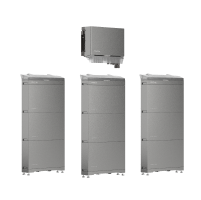
The EcoFlow Ocean 2 Plus Single Phase can be integrated into a home energy system to store solar energy for later use. Depending on the system configuration, stored energy can help support household loads or EV charging when solar generation is lower.
Schedule Your Free Consultation Today!
What kind of product or solution are you interested in?

Conclusion
Solar charging for vehicles has evolved rapidly. Today, it covers two distinct needs: battery preservation and vehicle propulsion. A simple £30 dash-top panel prevents 12V starter battery degradation on parked ICE or hybrid cars, sparing you from unexpected replacement costs and roadside breakdown calls. Meanwhile, a full rooftop system paired with Ocean 2 Plus storage and a PowerPulse 2 EV charger allows you to run an electric vehicle on self-generated daylight.
Whether you are protecting an auxiliary battery or powering daily commutes with clean energy, the principle is the same: generate, regulate, and use. Done right, it keeps your vehicle reliable year-round while cutting your long-term motoring costs.
FAQ
Can a solar panel charge a dead car battery?
No. A 10W–30W trickle charger is for maintenance, not revival. If the battery’s below 10.5V, you need a mains charger or a jump‑start.
Can you connect a solar panel directly to a battery?
It is generally not recommended. Even low-wattage panels can drain your battery at night unless they have a built-in blocking diode to stop reverse discharge. Furthermore, while a tiny trickle charge (under 1% of the battery’s Ah capacity) rarely overcharges a standard car battery, unmanaged voltage spikes can still damage sensitive vehicle electronics. Always use a dedicated solar charge controller for peace of mind.
How much solar power does a car battery need?
For maintenance, 10W–20W is plenty. If you’re actively charging a leisure battery, step up to 50W–100W to get it back up in a reasonable time.
Does solar work on cloudy days?
Yes, but at reduced output. Monocrystalline panels capture diffused light. Expect 10‑25% of peak rating under thick UK clouds. So you still get something. Just not as much as on a bright day. It still adds up over time.

