
Solar Battery Storage Price: 2026 Cost Guide & Savings
In the UK in 2026, indicative installed prices can range from around £2,500 to £3,800 for some 5 kWh systems and £4,500 to £6,800 for some 10 kWh systems, although actual quotes vary significantly by product, system design and installation requirements. Qualifying residential battery installations, whether installed alongside solar or retrofitted as standalone storage, are subject to 0% VAT until 31 March 2027, helping reduce upfront costs.
This guide covers typical UK solar battery prices in 2026, potential annual savings, payback periods, and the key factors to consider when choosing the right battery size for your home.
Key Takeaways
A 5 kWh solar battery typically costs around £2,500–£3,800 installed, while a 10 kWh system costs around £4,500–£6,800.
Qualifying residential battery installations are currently subject to 0% VAT until 31 March 2027.
A battery can increase the amount of solar electricity you use at home and may also reduce electricity costs when paired with a time-of-use tariff.
Compare usable capacity, inverter output, warranty terms and installation costs, rather than looking at battery size alone.
How Much Does Solar Battery Storage Cost in the UK in 2026?
Solar battery prices vary mainly by capacity, inverter type, installation requirements, and whether solar battery storage is installed with new solar panels or added to an existing setup.
Solar Battery Storage Price by Battery Capacity
The initial purchase price generally increases with storage capacity, although the relationship is not always linear. The table below outlines indicative installed costs for typical UK domestic installations:
| Battery Capacity (Nominal) | Typical Usable Capacity | Indicative Installed Cost (0% VAT) | Best Suited For |
|---|---|---|---|
| 5 kWh | 4.5 – 4.8 kWh | £2,500 – £3,800 | 1–2 bedroom terraced houses, flats, low evening usage |
| 10 kWh | 9.0 – 9.6 kWh | £4,500 – £6,800 | 3–4 bedroom homes, higher household usage |
| 15 kWh+ | 13.5 – 15 kWh+ | £6,800 – £9,500+ | Larger homes, heat pump or EV use |
What Is Included in a Solar Battery Installation Cost?
An all-inclusive installer quote can cover more than just the battery module itself:
Hardware: The battery pack and a dedicated battery inverter or integrated hybrid inverter.
Balance of System (BOS): Items such as isolators, meters where required, DC cables, switches, and fire detection equipment where required by the system design or installation requirements.
Labour & Commissioning: Installation, testing, commissioning, and setup of the manufacturer’s monitoring app. Where applicable, the installer may also be MCS-certified, with an MCS certificate providing evidence of certification.
Compliance & Paperwork: Handling DNO (Distribution Network Operator) requirements, including the appropriate EREC G98 or EREC G99 process depending on the installation’s total generation and storage configuration.
How Much Does It Cost to Add a Battery to Existing Solar Panels?
Retrofitting a battery onto an existing solar array can cost around £2,800 to £7,200, depending on the battery capacity, inverter configuration, site requirements, and whether the system is AC- or DC-coupled.
With an AC-coupled retrofit, a separate battery inverter is connected alongside the existing solar inverter and consumer unit. This can allow the existing solar inverter to remain in place, although the impact on existing warranties and wiring should be confirmed with the installer. AC-coupled systems can also have additional conversion losses because electricity passes through additional conversion stages.
If your existing solar inverter is older, replacing it with a compatible hybrid inverter can allow the battery and solar panels to work together through a DC-coupled setup. This can cost more upfront, while potentially reducing conversion losses compared with some AC-coupled configurations.

What Affects Solar Battery Storage Prices?
Battery capacity is only one part of the price. Inverter type, installation work, usable capacity, and your home’s existing electrical setup can all affect the final cost.
Battery Capacity and Usable Capacity
Nominal capacity does not represent the amount of electricity you can actually use. A 10 kWh battery with an 80% Depth of Discharge (DoD) provides 8 kWh of usable capacity, while some LiFePO4 batteries are specified with usable DoD levels of around 90% to 100%, depending on the manufacturer and system design. Comparing quotes by cost per usable kWh gives you a clearer basis for evaluating the system.
Battery Type, Efficiency and Lifespan
Lead-acid batteries are less common in UK residential battery storage, while LiFePO4 batteries are widely used in modern residential systems because of their thermal stability and long service life:
Cycle Life: Some higher-specification batteries are rated for 6,000 to 10,000 cycles, with some products also specifying around 70% to 80% capacity retention after a defined period or number of cycles.
Round-Trip Efficiency: Many residential battery systems report round-trip efficiency in the 90% to 95% range, although the actual figure varies by battery, inverter, operating conditions, and system configuration.
Inverter and Installation Requirements
Cable run length, your consumer unit’s age, and the battery location can all affect labour charges. Installing a battery in an unheated garage or on an external wall may require additional measures depending on the battery’s operating temperature range and manufacturer requirements. Under PAS 63100:2024, batteries should not be installed in bedrooms, certain escape routes, lofts or roof spaces, among other restricted locations. Suitable installation locations depend on the property, system design, ventilation, fire safety requirements, and manufacturer instructions.
Your Home's Energy Use and Solar Generation
A 4 kWp south-facing roof in southern England can produce more summer electricity than an east-west array in northern England or Scotland, although actual output depends on orientation, shading, roof angle and local conditions. Oversizing a battery beyond your array’s realistic seasonal surplus can leave part of the storage capacity unused, particularly during winter.
How Much Can a Solar Battery Save You on Energy Bills?
A battery can reduce your electricity bill by storing surplus solar power or charging from the grid when electricity prices are lower, then using the stored electricity later when prices are higher.
How Solar Batteries Reduce Your Electricity Bills
Some solar-only homes may directly use around 30% to 40% of their solar generation, although the actual self-consumption rate varies significantly with system size, occupancy and household electricity use. The remainder may be exported to the grid under the Smart Export Guarantee (SEG), with rates varying by supplier and tariff.
Adding a suitably sized battery can substantially increase solar self-consumption in some homes, although the actual result depends on battery capacity, solar generation and household demand. Stored afternoon solar can then be used for ovens, kettles and evening lighting, reducing the amount of electricity purchased from the grid at standard variable tariff rates.
How Much Can a 5kWh or 10kWh Battery Save?
Annual savings can come from avoided grid purchases, increased solar self-consumption and, where applicable, smart off-peak grid charging:
5 kWh Battery: Potential annual savings vary depending on solar generation, household electricity use, import and export tariffs, and how the battery is operated.
10 kWh Battery: A larger battery may provide greater savings in households with higher electricity demand, but the actual benefit depends on system size, tariff structure, battery operation and household load profile.
How UK Electricity Tariffs Affect Battery Savings
Time-of-use tariffs can increase battery savings by allowing the battery to charge when electricity prices are lower and discharge when rates are higher. Understanding how much is electricity per kWh can also help you compare different tariff periods. This can also be useful in winter, when daytime solar generation may not be enough to fully charge the battery.
Continuous Output and Backup Power
Battery capacity tells you how much electricity can be stored, while inverter output determines how much power the system can supply at a given time. If several high-demand appliances run at once, the battery may not be able to cover the full load on its own.
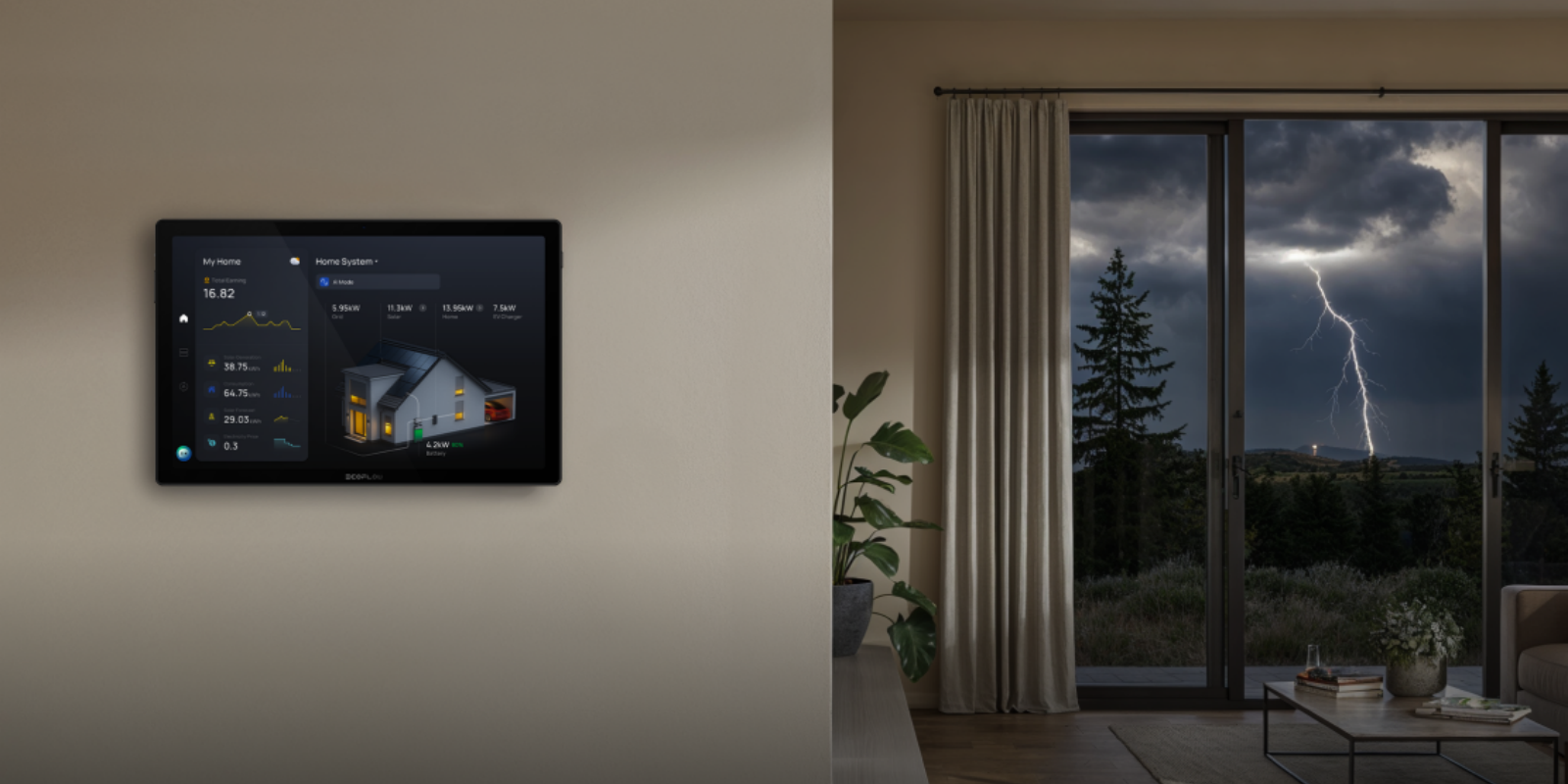
For homes after higher output or backup capability, an integrated system is often easier to live with than separate battery and inverter bits. The EcoFlow OCEAN 2 Plus Single Phase, for instance, pairs battery storage with a hybrid inverter and can carry household loads while also providing backup power during an outage.
How Long Does a Solar Battery Take to Pay for Itself?
Battery payback depends on the upfront cost, annual savings, any additional export revenue, and how you use your electricity tariff.
How to Calculate Your Solar Battery Payback Period
A simple way to estimate payback is:
Payback Period (Years) = Net Installed Battery Cost ÷ (Annual Electricity Bill Savings + Additional Export Revenue)
You can also account for gradual battery degradation and changes in electricity tariffs over time to make the estimate more realistic.
Example Solar Battery Payback Calculation
Consider a 3-bedroom semi-detached home installing a 10 kWh battery:
Net Initial Outlay: £5,200 (including VAT relief and installation)
Estimated Annual Bill Reductions: £620 (based on displaced grid purchases at standard variable rates)
Off-Peak Tariff Arbitrage & Additional Export Revenue: £160
Total Annual Net Benefit: £780
Illustrative Simple Payback Time: about 6.7 years under these assumptions
Some LiFePO4 battery products come with performance warranties of around 10 to 15 years, so an illustrative payback period of around 7 years could fall within the warranty period for some products.
Is Solar Battery Storage Worth It in the UK in 2026?
A solar battery can make financial sense for some homes, but the potential savings depend heavily on when you use electricity, how much solar you generate, the battery size and your tariff.
When Is a Solar Battery a Good Fit for Your Home?
If your home is empty during the day, a battery can store surplus solar electricity for use in the evening. Homes with higher electricity demand may also have more opportunities to use the stored electricity.
A battery can also work well with a time-of-use tariff, charging when electricity prices are lower and discharging during higher-priced periods. This can be particularly useful in homes with a heat pump, air conditioning or an EV.
When Might a Solar Battery Offer Less Value?
If you’re already using most of your solar electricity during the day, there may be less surplus left to store. A very small solar array may also struggle to charge a larger battery regularly, particularly outside summer. If you’re planning to move within the next three or four years, it’s also worth considering whether the expected savings justify the upfront cost over your planned ownership period.
How to Choose the Right Solar Battery Size
A suitable battery size should broadly reflect your typical electricity demand between sunset and sunrise, while also considering daytime solar generation and seasonal variation. A UK household using around 10–12 kWh across a full 24-hour day may use around 4–6 kWh overnight, but the appropriate battery size depends on the household’s actual consumption profile and solar generation.
Use Your Actual Energy Data to Size the Battery
Average household figures are useful as a starting point, but your own consumption pattern is more useful for sizing. Check when your home uses the most electricity, how much excess solar you normally export, and how much electricity you use after sunset.
A home energy management system such as EcoFlow PowerInsight 2 can track solar generation, battery status and household consumption in real time. This makes it easier to judge whether a 5 kWh battery is enough or whether a larger system would actually be used.
How to Compare Solar Battery Installation Quotes
When reviewing quotes from local or national installers, check more than just the bottom-line price:
Installation Certification: Check whether the installation meets the relevant certification requirements for your SEG arrangement. For eligible solar PV installations, this may be demonstrated through an MCS certificate or an equivalent certification route.
Warranty Terms: Check the warranty period and the guaranteed throughput or capacity retention figure when comparing an EcoFlow Solar Battery or other battery system, such as a specified percentage of retained capacity after a defined period or number of cycles.
Included Inverter Specs: Check whether the inverter's maximum continuous discharge rate matches your household's peak appliance demand.
Itemised Breakdown: Ensure the quote clearly confirms the applicable VAT treatment, DNO application or notification handling, and any required consumer unit upgrades.
Schedule Your Free Consultation Today!
What kind of product or solution are you interested in?
Conclusion
A solar battery can reduce grid electricity use, but the potential value depends on how well the system matches your actual consumption, solar generation and tariff. Before buying, compare the full installed cost, usable capacity, inverter output and warranty rather than choosing based on battery size alone.
Disclaimer: The prices, savings estimates and payback examples in this article are indicative and may vary depending on your location, electricity tariff, energy use, system design, installation requirements and other factors. VAT, SEG and other regulatory requirements may also change. Always check the latest information with the relevant authority, energy supplier or qualified installer before making a purchase or installation decision.
FAQs
How much does a 5kWh solar battery cost in the UK?
A 5 kWh solar battery fully installed in the UK may cost around £2,500 to £3,800, depending on the system and installation requirements. Qualifying residential battery installations are currently subject to 0% VAT until 31 March 2027.
How much does a 10kWh solar battery cost?
A 10 kWh solar battery installation typically costs around £4,500 to £6,800, depending on the system configuration, installation requirements and whether you choose an integrated hybrid system or an AC-coupled retrofit.
Can I add a battery to my existing solar panels?
Yes, you can add an AC-coupled battery to an existing solar installation, although the exact configuration and compatibility should be checked by the installer. Alternatively, you can replace a compatible existing string inverter with a hybrid inverter for a DC-coupled setup.
Is a solar battery worth it without solar panels?
A standalone battery can be financially useful without solar panels, particularly when paired with a time-of-use tariff. For example, if a tariff offers a 7p/kWh off-peak rate, the battery could charge during cheaper periods and discharge during higher-priced daytime or evening periods, subject to the tariff’s rules and the battery’s operating limits.

