
How the Wrong Solar Charge Controller Can Limit Your MPPT Performance
Your solar panels aren't the problem. That's the bit nobody tells you. A poorly matched MPPT solar charge controller, or worse, an outdated PWM unit pretending to do the same job, is quietly bleeding watts out of your system every single day, and most UK homeowners never notice because the panels themselves look fine on paper.
Cloud cover, or even the British weather aren’t the bottleneck in your solar panel underperformance. The threat is a failure to optimise the voltage conversion taking place between your roof and the battery bank. Standard controllers usually clamp panel voltage down to match the battery. It’s this clamping that creates a real energy drop, especially during overcast winters when panel voltage swings wildly from hour to hour.
This guide looks at:
What an MPPT Solar Charge Controller is
How an MPPT Solar Charge Controller works
Why conventional solar setups bottleneck your power output
How an MPPT solar charge controller uncovers hidden energy
Common configuration mistakes that cripple an MPPT solar charge controller
What an MPPT Solar Charge Controller Actually Does for Your System
An MPPT solar charge controller is the intelligent electronic match maker between your solar panels and your battery bank. The MPPT is an abbreviation for maximum power point tracking. This device tracks and calculates the exact sweet spot where your panels produce the maximum possible power which usually fluctuates throughout the day based on sunlight intensity and temperature.
Standard controllers usually operate by choking back excess voltage, and this is the opposite to an MPPT controller which acts as a smart DC-to-DC converter that takes the high-voltage, low-current power required to safely and rapidly charge your batteries. This device ensures that no solar energy is wasted in your setup which can significantly improve overall system efficiency compared to non‑tracking PWM controllers.
Why Conventional Solar Setups Bottleneck Your Power Output
Many residential systems lose efficiency due to a mismatch in the conversion hardware behind them. And by this we are referring to the basic electrical arithmetic that gets ignored at installation, not manufacturing defects.
The Costly Reality of Panel and Battery Voltage Mismatch
A standard solar panel usually produces between 18V and 40V depending on the model and string configuration. On the other hand, battery banks usually run at 12V, 24V, or 48V, and the gap has to go somewhere.
If your setup doesn’t have intelligent conversion, the excess voltage is clipped and discarded. In more smart setups, the excess is usually converted into usable current, which increases its efficiency and energy generation.
Why Cold Weather Drops Your Traditional Charging Efficiency
Many homeowners don’t know that solar panels actually produce higher voltage in cold, crisp conditions. Many people usually assume that cold equals poor performance and low voltage production. And this is where standard controllers decrease the efficiency of your setup by not harvesting that extra headroom.
The UK climate is normally characterised by sharp temperature drops paired with sudden overcast shifts that create voltage spikes that go to waste under non-tracking setups.
The Structural Limits of Standard PWM Technology
PWM controllers function as basic switches—on, off, on, off—rather than intelligent transformers. They were never designed to track anything. Industry estimates have long placed losses from non-tracking setups at around 30% compared to a properly tuned solar MPPT charge controller, which is a staggering gap when you consider the upfront cost of the panels themselves. For a deeper technical breakdown of these differences, check out our guide on MPPT controller vs PWM.
Controller Feature | PWM Technology | MPPT Technology |
Operating Principle | Acts as a basic on/off switch | Functions as a smart DC-to-DC transformer |
Voltage Management | Clamps panel voltage down to match battery | Runs panels at peak efficiency voltage |
Average Efficiency Loss | Up to 30% energy discarded as heat | Near-zero conversion waste |
Ideal Climate | Constant, warm sunlight | Dynamic, overcast, and cold conditions (UK Standard) |
How an MPPT Solar Charge Controller Uncovers Hidden Energy
This is where the engineering actually solves the problem rather than just describing it.
The Mechanics of Dynamic DC-to-DC Power Transformation
A solar charge MPPT controller down-steps the high voltage coming off your panels to match what your battery needs, while simultaneously stepping up the current. Energy isn't created from nothing, obviously—but none of it gets destroyed either. Watts in equal watts out; the controller just changes the shape of the delivery.
Real-Time Tracking Through Variable Cloud Cover
Advanced algorithms inside an MPPT solar charge controller sweep the voltage-current curve—the I-V curve—continuously, often dozens of times per second. When a cloud passes over a home, the controller adapts within milliseconds, holding output as close to peak as the available light allows.
Maximising Daily Yield from High-Voltage Series Strings
Wiring panels in series raises overall string voltage and reduces line transmission loss—less heat wasted in the cabling, more power reaching the controller intact. Only a properly rated MPPT solar charge controler can safely handle these higher-voltage configurations, which is precisely why series wiring and MPPT technology tend to go hand in hand in well-designed systems.
Common Configuration Mistakes That Cripple Your Solar Charge MPPT Controller
Even good hardware underperforms when it's set up badly. These are the mistakes installers see most often.
Selecting the Wrong Voltage Overhead Ratios
Every solar charge MPPT controller needs a minimum voltage cushion above the home battery voltage just to activate its tracking algorithm—typically a few volts at minimum. Under-specify your panel string voltage, and the controller may never properly engage, leaving you with PWM-level performance from MPPT-grade hardware.
Overlooking Input Current Limits and Clipping Thresholds
Max array wattage, max input voltage, and max output current are three different specifications. Confusing them can cause real problems in your solar setup. Exceeding the wrong one risks causing damage to your hardware, and undersizing also means you are clipping potential output for no reason at all.
Neglecting Temperature Compensation Sensors
Battery chemistry shifts with ambient temperature—LiFePO4 cells behave differently at 5°C than at 25°C. Skip the internal or external thermal probe, and your MPPT solar charge controllers will either overcharge or undercharge depending on the season, shortening battery life in the process.
Why Smart Solar MPPT Charge Controller Tech Scales with Complex Home Loads
Balancing Massive Grid Backup and Multi-Array Tracking
High-demand UK properties often split their solar arrays across multiple roof faces—East, West, and South—to capture daylight throughout the day rather than just at midday. The trouble is that mismatched strings facing different directions can drag each other down if they're forced through a single tracking channel.
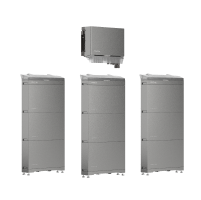
Some modern residential battery‑inverter platforms integrate multiple independent MPPT channels to manage complex roof layouts. For example, systems such as the EcoFlow OCEAN 2 Plus Single-Phase include separate MPPTs designed to reduce cross‑string losses on multi‑orientation arrays.

Optimising Automated Energy Savings Using Home Energy Management System
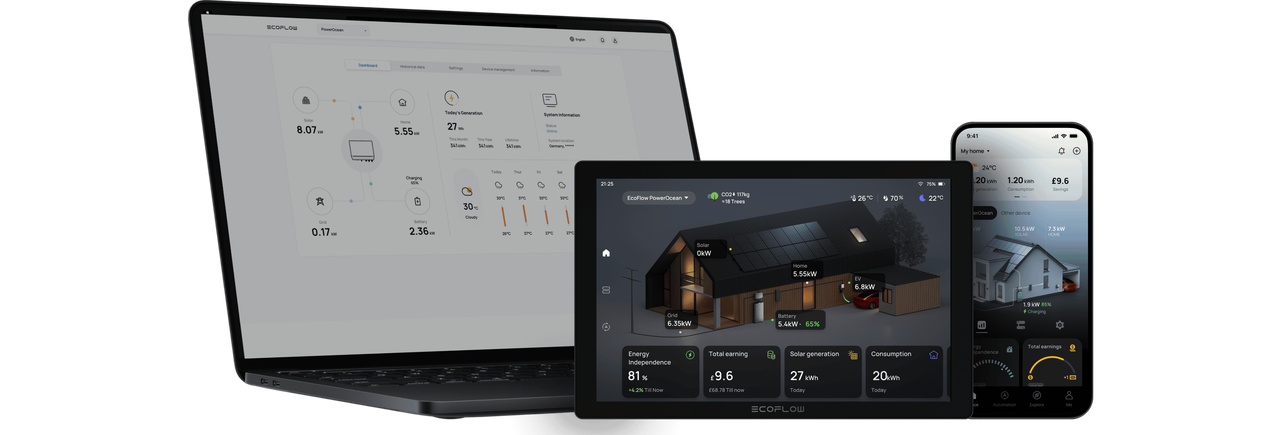
Manually scheduling when to charge, when to discharge, and when to draw from the grid is tedious—and most people get it wrong simply because tariff windows shift and forecasts change daily. The EcoFlow Intelligent HEMS automates that entire decision process, tracking solar forecasts against dynamic UK electricity tariffs so your system charges or discharges precisely when it's most economical to do so.
Schedule Your Free Consultation Today!
What kind of product or solution are you interested in?

Upgrade Your Home Energy System with a High-Capacity MPPT Solar Charge Controller
Many people usually assume that underperformance in a solar setup is due to the panels themselves. But, they often overlook the importance of an MPPT solar charge controller in this setup. Adding an outdated or mismatched solar charge MPPT controller means that the setup will fail to bridge the voltage gap between your roof and your battery storage.
MPPT solar charge controllers play a critical role in determining how efficiently a solar system converts panel output into usable energy. Understanding voltage behaviour, array configuration, and controller specifications helps installers and system owners identify performance bottlenecks before they lead to long‑term losses.With correct system design, appropriate MPPT sizing, and ongoing performance monitoring, solar installations can operate closer to their intended efficiency over time.
MPPT Solar Charge Controller Frequently Asked Questions
PWM is a basic electronic switch that forces your panels down to the battery's voltage level, sacrificing efficiency in the process. An MPPT solar charge controller is an intelligent DC-to-DC converter that lets your panels run at their most efficient, highest-voltage point, then transforms that voltage into extra charging current.
Can I Use Multiple MPPT Solar Charge Controllers on a Single Battery Bank?
Yes. However, ensure the MPPT solar charge controllers are in parallel and each is programmed with identical battery type settings and charge profile. We recommend this setup for East-West array configurations to prevent solar panels facing in different directions from interfering with each other’s tracking.
How Much Higher Should My Solar Panel Voltage Be Than My Battery Voltage for MPPT to Work?
Generally, panel array voltage needs to sit at least 1V to 2V above battery voltage just for the controller to activate, though many high-end units want a 5V cushion or more before tracking kicks in properly. Keeping your array in a higher-voltage series configuration helps your MPPT solar charge controller stay within its tracking zone throughout the day.

