
How Many Solar Panels Do I Need? A Guide to System Size and Energy Usage in the UK
Picking a solar system starts with a practical question: how many panels will fit your roof and match how you use electricity? Most UK homes go for 8 to 14 panels, or roughly 3 kW to 5 kW of capacity, but the right size depends on your annual usage, roof space and any plans for kit like a heat pump or EV charger. This guide walks you through estimating the number you may need and what to check before you settle on a system.
Key Takeaways
Standard home setup: A typical three-bed UK home usually needs 10 to 12 panels (around 4 kW to 5 kW) to cover a big chunk of its yearly electricity use.
The maths: Divide your annual consumption (kWh) by your local solar yield factor (roughly 850–1,000 kWh per kWp in the UK) and you get the system capacity you need.
Roof limits: Each modern panel takes up about 1.8 to 2 square metres of unshaded roof, so your roof’s pitch, orientation and layout decide how many you can actually fit.
Storage matters: Solar peaks around midday when most families are out. Add a high-capacity battery and that daytime export turns into evening heating, cooking and EV charging.
Payback: Solar payback varies with installation cost, location, self-consumption and tariffs, and the panels comfortably last 25 years or more.
How Many Solar Panels Does an Average UK Home Need?
The number of panels varies with household electricity use and the space available on the roof. These typical ranges offer a starting point; an installer can refine the estimate after checking the property and its energy use.
Typical Solar Panel Numbers for Different Household Sizes
Electricity consumption varies with occupancy and daily habits; the figures below are illustrative planning ranges, rather than Ofgem installation recommendations. The table below outlines typical requirements using modern 400W–430W monocrystalline panels:
| Household Size | Typical Home Type | Average Annual Electricity Use | Recommended System Size | Number of Panels (400W–430W) | Roof Space Required |
|---|---|---|---|---|---|
| 1–2 People | Flat / Small Mid-Terrace | 1,800 – 2,400 kWh | 2 kW – 3 kW | 6 – 8 panels | ~12 – 16 m² |
| 2–3 People | 2–3 Bed Semi-Detached | 2,700 – 3,200 kWh | 3.5 kW – 4.2 kW | 8 – 10 panels | ~16 – 20 m² |
| 3–4 People | 3–4 Bed Detached / Semi | 3,800 – 4,600 kWh | 4 kW – 5.2 kW | 10 – 12 panels | ~20 – 24 m² |
| 5+ People / High Demand | 4+ Bed with EV / Heat Pump | 5,500 – 8,000+ kWh | 6 kW – 9 kW+ | 14 – 22+ panels | ~28 – 45 m² |
Average Solar Panel System Size and Annual Electricity Generation in the UK
The average solar panel system size for a UK home is around 4.5 kWp, according to the Energy Saving Trust. A system of this size typically consists of approximately 12 solar panels, although the exact number depends on individual panel wattage. In the UK, a well-positioned 4.5 kWp system can generate around 3,800–4,500 kWh of electricity annually, depending on location, roof orientation, pitch and shading. Generation is generally higher in spring and summer and lower during the shorter, cloudier winter days. Adding solar battery storage can help households store surplus daytime electricity and use it later in the evening, reducing their reliance on grid electricity.
How to Calculate How Many Solar Panels You Need
You can make a first estimate using your annual electricity use and the typical solar yield in your area. The calculation will not replace a roof survey, but it helps you compare possible system sizes.
Calculate Your Annual Household Electricity Consumption
Dig out your annual energy statement or log into your supplier’s app (think Octopus, British Gas or E.ON Next). Find your yearly consumption in kilowatt-hours (kWh). If you’ve only just moved in, look at your monthly kWh figures at either end of the year and use them to work out an annual baseline. For a starting benchmark, see how many kWh does a house use, then use your own annual consumption to size the system.
Understand Solar Panel Wattage and System Capacity (kWp)
Panels are rated by their peak wattage under standard test conditions, expressed in watts (W). Most residential rooftop panels installed today produce between 400 W and 440 W. System capacity is measured in kilowatt-peak (kWp), which indicates the panels’ combined peak output under standard test conditions:
System Capacity (kWp) = Number of Panels × Panel Wattage (W) ÷ 1,000
For example, 10 panels rated at 410 W make a 4.1 kWp array.
Estimate Annual Solar Generation Based on Your Location
Regional solar irradiance differs between Penzance and Aberdeen. Across the UK, every 1 kWp of installed solar generates roughly 800 to 1,050 kWh per year, depending on geographic latitude:
Southern England & South Wales: ~950 – 1,050 kWh per kWp
Midlands & Northern England: ~850 – 950 kWh per kWp
Scotland & Northern Ireland: ~800 – 900 kWh per kWp
Calculate the Number of Solar Panels Required for Your Home
To work out your target panel count, just plug the numbers into this simple formula:
Target array size (kWp): annual electricity demand (kWh) ÷ local yield (e.g. 900 kWh per kWp)
Total panels: target array size (kWp) × 1,000 ÷ panel wattage (e.g. 410 W)
Say a family in the Midlands uses 3,800 kWh of electricity a year. They’d need roughly a 4.2 kWp array (3,800 ÷ 900). With 410 W panels, that’s about 10 to 11 panels (4,200 ÷ 410 ≈ 10.2).

What Factors Affect How Many Solar Panels You Need?
The calculation gives you a target, but the roof may limit the final system size. Check how much clear, suitable area is available and whether the roof’s direction or nearby shade will affect output.
Available Roof Space and Installation Area
Modern residential modules measure approximately 1.72m by 1.13m, requiring roughly 2 square metres per panel once installer access margins and wind-loading clearance are taken into account. Dormer windows, soil vent pipes, chimneys, and roof valleys quickly eat into available surface area, turning what looked like a 16-panel roof into a 10-panel reality. Check the selected model’s solar panel dimensions and the installer’s required clearances before confirming the layout.
Roof Orientation and Pitch
South-facing pitched roofs (ideally angled between 30° and 40°) capture the highest solar yield throughout the British calendar. East- and west-facing pitches remain highly practical, generating roughly 80–85% of an equivalent south-facing array while producing handy generation bumps during morning breakfast rushes and evening dinner hours. North-facing pitches are rarely recommended due to poor financial returns.
Shading From Trees and Nearby Buildings
Even slight, localized shading from a neighbour’s gable wall, a mature oak, or a brick chimney can noticeably drag down the output of a traditional string array. Microinverters or DC power optimisers help bypass shaded cells so that a single shaded panel will not drag down the performance of the entire run.
Seasonal Changes in Solar Generation and Household Energy Demand
Britain’s daylight swings are dramatic: midsummer delivers up to 16 hours of daylight, whereas December offers barely 8 hours of low-angle sun. Around 70% of annual solar generation typically occurs between April and September in many parts of the UK. Because heating demands and lighting spike precisely when winter daylight dwindles, right-sizing your array often means accommodating summer surpluses to offset winter grid reliance.

How to Make the Most of Your Solar Panel System
Once the system is installed, how much of its electricity you use at home affects its value. Shifting some household use to sunny hours or storing surplus for later can reduce the amount you buy from the grid. A home energy ecosystem can coordinate solar generation, storage, heating and EV charging around household demand.
Use More Solar Electricity During Peak Generation Hours
The Smart Export Guarantee (SEG) pays eligible generators in Great Britain for exported electricity; suppliers set their own rates and terms. Compare your export payment with your import tariff before deciding when to use or store solar electricity. In Northern Ireland, ask your supplier about available export tariffs. Scheduling suitable appliance use for sunny hours can increase self-consumption.
Pair Solar Panels With Battery Storage
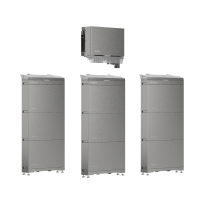
For British homes with bustling morning routines and busy evenings, calculating panel numbers is only part of the equation; storing surplus daytime generation for dinner, bath times, and overcast days is equally critical. If you are charging an electric car on the driveway, heating your home with an air source heat pump, or running high-draw induction hobs, an integrated hybrid generation and storage setup becomes an essential component of household infrastructure. The EcoFlow OCEAN 2 Plus Single Phase serves as a complete solar generation and energy storage hub designed for high-demand homes. Featuring 3 independent MPPTs, it handles multiple roof orientations—such as east, south, and west splits—with independent efficiency, helping reduce mismatch losses between differently oriented strings. Supporting up to 24 kW of PV input power, it gives growing British households the headroom to scale up their solar array over time subject to the selected inverter’s output rating, battery configuration and installation limits.
Monitor Solar Generation and Household Energy Consumption
You cannot manage what you cannot measure, particularly given Britain’s unpredictable weather patterns. With generation fluctuating between sunny spells and passing rainclouds, having live data on generation, battery reserves, and domestic demand helps you decide whether it is the right moment to run the tumble dryer.
The EcoFlow PowerInsight 2 simplifies this by bringing your entire home’s energy picture onto a vibrant 11-inch touchscreen. Positioned in your kitchen or hallway, it displays real-time generation, consumption, and storage flows, helping your family make informed, effortless adjustments to daily energy habits.
Schedule Your Free Consultation Today!
What kind of product or solution are you interested in?
FAQs
How Much Can UK Homeowners Save with Solar PV?
Solar savings depend on location, installation cost, electricity use and import and export tariffs. Adding a battery can increase self-consumption, but does not guarantee a particular annual saving or a shorter payback period. Compare a site-specific solar-only estimate with a solar-plus-battery quote.
Can I Add More Solar Panels Later to My Existing System?
Yes, as long as your inverter still has spare capacity or free MPPT trackers and your roof has the room. If the existing inverter is already maxed out, the installer will need to upgrade it or add a secondary microinverter setup, along with a revised DNO (G99) grid application.
Is It Worth Getting Solar Panels Without a Battery?
Panels still stack up financially without a battery if you use a fair amount of power during the day, say when you’re working from home. Without storage, though, households typically send 50% to 70% of what they generate back to the grid at modest SEG rates instead of using it during the pricey evening peak.
How Long Does It Take for Solar Panels to Pay for Themselves?
Solar payback varies with installation cost, location, self-consumption and tariffs; use a site-specific estimate rather than a fixed UK-wide range. Exact payback depends on local irradiance, panel orientation, how much you use yourself, and what grid electricity costs at the time.
How Long Do Solar Panels Last in the UK?
Modern panels last 25 to 30 years, and most reputable manufacturers back them with a linear performance warranty guaranteeing at least 80% to 85% of original output after 25 years. Inverters and batteries generally need replacing or servicing once over that span, usually around year 10 to 15.

