
UK Energy Funding Service: Grants and Support for Home Energy Improvements
If you’re looking to make your home warmer and more energy efficient, UK government-backed funding may help cover some of the cost. Depending on where you live and your circumstances, support can be available for insulation, heating upgrades and, in some cases, renewable energy measures such as solar PV.
The key is finding a scheme that matches your household, property and location. This guide explains the main UK energy funding programmes, what they can cover, who may qualify and how to apply.
Key Takeaways
Substantial Financial Support: ECO4, the Warm Homes: Local Grant, and the Boiler Upgrade Scheme can cover part or all of the cost of key energy upgrades.
Broad Range of Measures: Funding can go towards loft, cavity, and solid wall insulation, heat pumps, and in some schemes, solar PV – depending on what you qualify for.
Low‑Income and Vulnerable Focus: Many schemes prioritise low-income households and those receiving qualifying benefits. Some local programmes, such as the Warm Homes: Local Grant, use household income thresholds as part of their eligibility assessment.
Universal Options Available: The Boiler Upgrade Scheme provides eligible homeowners in England and Wales with upfront support of up to £7,500 towards eligible heat pump installations, with no income-based eligibility requirement.
Integrated Energy Optimisation: Pairing funded measures like solar with battery storage and smart monitoring can help households use more self-generated energy and improve long-term energy management.
.png)
What Home Improvements Are Covered by UK Energy Funding
Most schemes focus on improving energy efficiency first, such as reducing heat loss through better insulation. Depending on the scheme and your property, funding may cover three main types of improvements.
Insulation and draught-proofing measures
A huge amount of heat escapes through uninsulated roofs, unsealed floorboards, and hollow walls. Funded insulation measures are designed to reduce heat loss and may help lower heating demand over time.
Loft and Roof Insulation: Bring loft insulation closer to the recommended depth of around 270mm, which may help reduce heat loss depending on your property's existing insulation level and condition.
Cavity and Solid Wall Insulation: Solid brick or stone homes can be transformed with external or internal wall insulation. For suitable post-1920s properties, cavity wall insulation can help improve thermal performance.
Underfloor and Draught‑Proofing: Seal up suspended timber floors, chimney breasts, doors, and window gaps to stop cold draughts creeping in.
Heating system upgrades
Old, inefficient boilers waste a lot of fuel. Energy funding can help replace them with better alternatives:
Low‑Carbon Heat Pumps: Switching to air source or ground source heat pumps that deliver steady, efficient warmth.
High Heat Retention Storage Heaters: For homes off the gas grid, modern smart storage units replace old night storage heaters, making the most of cheap off‑peak electricity.
Advanced Heating Controls: Smart thermostats, TRVs, and weather compensation controls all help avoid burning fuel you don't need.
Renewable energy installations
Generating your own clean power can help reduce reliance on grid electricity, depending on system size, household usage and energy generation conditions. Households researching grant money for solar panels should check scheme eligibility and regional availability before installation:
Solar Photovoltaic (PV) Panels: Generating daytime electricity directly from sunlight to power household appliances and heating systems.
Solar Thermal Systems: Solar collectors that pre-heat domestic hot water cylinders.

Which UK Energy Funding Schemes Are Available for Home Improvements
Several distinct funding streams operate across the UK, each tailored to specific housing types, income brackets, and regional targets. Households planning an EcoFlow Solar Battery alongside funded solar PV should confirm whether storage costs are included or self-funded.
Energy Company Obligation (ECO4)
ECO4 is a mandate placed on major UK energy suppliers (such as British Gas, Octopus, E.ON Next, and OVO) to deliver whole-house energy efficiency retrofits. Rather than providing single patchwork fixes, ECO4 focuses on multi-measure installations designed to improve a property’s energy efficiency and potentially enhance its EPC rating.
Warm Homes: Local Grant and local council schemes
Local Grant is run by local councils across England. It’s designed to help low‑income households with full retrofits. Eligible households may receive funding of up to £15,000 for energy efficiency improvements, with additional support potentially available for clean heating measures such as heat pumps. Available measures and funding levels depend on local authority programmes and household eligibility.
Boiler Upgrade Scheme (BUS)
Unlike means-tested programmes, the BUS offers non-means-tested upfront capital grants to property owners across England and Wales. It provides an upfront grant of up to £7,500 towards eligible air source or ground source heat pump installations, with the amount depending on the technology installed and scheme rules.
Great British Insulation Scheme (GBIS)
The Great British Insulation Scheme (GBIS) ended on 31 March 2026 and is no longer open to new applications through the national eligibility service. Households looking for insulation support should check other current schemes, including ECO4 where eligible, the Warm Homes: Local Grant in England, and relevant devolved or local programmes.
Devolved Regional Schemes (Scotland & Northern Ireland):
While ECO4 and GBIS operate across Great Britain, direct grant frameworks vary by region. Homeowners in Scotland should apply through the Home Energy Scotland (HES) Grant and Loan (offering up to £7,500–£9,000 for heat pumps plus interest-free loans), while residents in Northern Ireland can access support via the Affordable Warmth Scheme
| Scheme Name | Eligible Regions | England, Scotland, Wales | Typical Measures & Funding Amount |
|---|---|---|---|
| ECO4 (Energy Company Obligation) | England, Scotland, Wales | Qualifying households based on benefits, income, vulnerability criteria, or ECO4 Flex routes set by participating local authorities and suppliers | Fully funded whole-house retrofit (insulation, low-carbon heating, controls) |
| Warm Homes: Local Grant | England (via local councils) | Eligible low-income households meeting local authority criteria, typically including EPC D–G properties in England. | Up to £15,000 for energy efficiency measures, with additional support available for eligible clean heating improvements depending on local programme rules. |
| Boiler Upgrade Scheme (BUS) | England, Wales | All homeowners & small property owners (non-means-tested) | Flat £7,500 upfront grant towards air/ground source heat pump installation |
| GBIS (Great British Insulation Scheme) | England, Scotland, Wales | Homes in lower Council Tax bands (A–D in England, A–E in Scotland/Wales) with EPC D–G | Free or heavily subsidised single-measure insulation (cavity/loft) |
Who Can Qualify for UK Energy Funding Support
Who qualifies depends on factors such as household income, benefits, tenancy, and the condition of the home.
Low-income households and vulnerable residents
Households receiving qualifying government benefits are generally fast-tracked for full funding under ECO4, GBIS, and local council grants:
Universal Credit
Pension Credit (Guarantee or Savings Element)
Income Support / Income-based Jobseeker’s Allowance (JSA)
Income-related Employment and Support Allowance (ESA)
Housing Benefit / Working Tax Credit / Child Tax Credit
Not everyone who qualifies for energy funding is on benefits. There are flexible local routes too. ECO4 Flex, for instance, generally covers households with a gross annual income under £31,000. The Warm Homes: Local Grant sets its threshold a bit higher at £36,000. There’s also a health route. If someone in the home has a condition that’s made worse by living in a cold, damp property, that can qualify you as well.
Homeowners, landlords, and tenants
Homeowners (Owner-Occupiers): Owner-occupiers may qualify for support under several schemes, but eligibility, available measures and any required household contribution depend on the specific programme, property and household circumstances.
Private Tenants: Eligible for funded upgrades provided the property meets energy criteria and the landlord grants written consent.
Landlords: Landlords may also access certain energy funding schemes to improve the efficiency of private rented properties and meet relevant energy standards. However, eligibility depends on the specific programme, property requirements, tenant circumstances, and local scheme rules. Some schemes may require landlords to contribute towards upgrade costs, while others may cover eligible measures fully or partially depending on the funding route.
Property eligibility - EPC rating, system type, and property age
Funding is aimed mainly at homes with an EPC rating of D, E, F, or G. If your property runs on solid fuel or old electric storage heaters, you’re likely to get higher priority. This is because improving these homes can often deliver significant energy efficiency benefits relative to the investment required. Typical candidates include pre‑war solid‑wall terraces and uninsulated 1960s cavity builds. They’re exactly the kind of properties that benefit most from a full grant‑funded retrofit.
How to Apply for UK Energy Funding
You can apply for funding by following these three steps.
1. Find the right scheme and application process
Start by checking your home’s official rating on the UK Government’s online EPC Register. Next, use the GOV.UK energy grant checker or contact your local council’s climate/housing team to identify active initiatives in your area.
2. Check your eligibility and complete a home assessment
Once initial financial or geographic eligibility is established, a qualified PAS 2035 Retrofit Assessor will visit your property. They inspect wall construction, loft depth, window glazing, and current heating appliances to formulate an official property improvement plan.
3. Arrange installation with approved installers
Work must be completed by TrustMark-registered or MCS-certified tradespeople. In council and ECO schemes, the provider pays the installers directly from the grant allocation, meaning eligible households may not need to pay upfront costs for approved funded measures, depending on the scheme and installer arrangement.
What Are the Benefits of UK Energy Funding for Households
Upgrading your home can make everyday living more comfortable while helping reduce your regular household costs. A connected Home Energy Ecosystem can help coordinate these improvements with storage and smart monitoring.
Lower energy bills with improved home energy efficiency
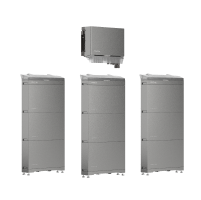
Sealing thermal leaks and installing high-efficiency heating drives down monthly gas and electric outgoings. Following energy-efficiency upgrades through UK energy funding, many households focus on further reducing long-term energy costs. While government grants primarily cover baseline insulation, solar PV, and heat pumps, pairing these installations with an aftermarket/self-funded battery storage solution like the EcoFlow OCEAN 2 Plus Single Phase helps homeowners manage self-generated power effectively. By capturing excess daytime solar generation and storing it for evening peak hours, it can help increase home energy self-sufficiency by storing excess solar generation for later use and reducing the need to draw electricity from the grid during higher-demand periods.
Monitor and optimise household energy use
Pairing insulation and microgeneration with granular energy data can give households better visibility and control over how energy is used. Once energy retrofits are complete, tracking real-time usage is equally crucial. The EcoFlow PowerInsight 2 provides British households with clearer visibility into household energy flows and appliance loads. By monitoring daily consumption patterns on an intuitive display, users can adapt daily routines, align power-heavy chores with off-peak rates, and make more informed decisions that may help improve energy efficiency over time.
Better EPC ratings and indoor comfort after upgrades
Getting rid of draughts, cold spots, and damp walls makes for a much healthier home to live in. Pushing your EPC rating up from an E or D to an A, B, or C also may improve property appeal, support rental compliance, and help homeowners prepare for future energy efficiency requirements. Understanding how to improve EPC rating can also help households prioritise the upgrades with the greatest effect.
Schedule Your Free Consultation Today!
What kind of product or solution are you interested in?

FAQ
Will receiving energy funding affect my existing benefits or tax credits?
In most cases, home energy grants do not affect existing benefits or tax credits because the funding is usually paid directly to approved installers rather than provided as household income. However, households should check their individual circumstances if unsure. In many cases, funding is paid directly to approved installers rather than provided as household income. However, households should confirm the payment arrangement and benefit implications for their specific scheme.
Are there any solar panel grants available in the UK in 2026?
There isn’t a single national grant that covers solar panels for everyone. But some government‑backed schemes can include solar PV as part of a wider upgrade package. For example, the Warm Homes: Local Grant can fund solar panels for eligible households in England, subject to your home, your circumstances, and what your local authority has available. If you don’t qualify for a grant, you might still be able to cut costs through other incentives or by using the electricity your system generates.
Can pensioners get grants for home improvements?
Yes, pensioners often qualify for fully funded upgrades. If you’re receiving Pension Credit (Guarantee or Savings Element), you may meet the eligibility criteria for certain ECO4 and local support schemes, depending on the programme requirements. Those in lower Council Tax bands can also access insulation through GBIS, regardless of savings.
Can tenants apply for energy funding, and do they need landlord consent?
Yes, private tenants can apply, but you’ll need written consent from your landlord before any survey or work goes ahead. Landlords have to agree to the installations, especially for things like heating conversions or external insulation that alter the property.
Note that for rental properties, certain major heating conversions are restricted or may require direct co-funding contributions from the landlord under MEES regulations.
Conclusion
Accessing UK energy funding can help households reduce the upfront cost of energy improvements while improving comfort and efficiency. Whether you qualify for a fully funded retrofit through ECO4 or the Warm Homes scheme, or you’re looking at the Boiler Upgrade Scheme to modernise your heating, an EPC check and a proper home assessment are where it all starts. Pairing funded insulation and clean heating measures with smart storage and real-time monitoring can help create a more efficient and flexible home energy system over the long term.
Disclaimer: Energy funding schemes, eligibility criteria, available measures and grant amounts may change over time. The information in this guide is for general guidance only and should be verified with official government sources, local councils or approved scheme providers before applying.

