
Automatic Power Reduction: The Secret to Smarter Energy Management
UK homes are using more electricity than ever. With EV chargers, heat pumps, induction cookers, and other high-power appliances becoming more common, many households are putting greater pressure on their existing electrical systems. Automatic power reduction helps manage this demand by adjusting energy use in real time, reducing the risk of overload while helping homeowners make better use of cheaper energy periods.
In this guide, we’ll explain what automatic power reduction is, how it works, why it is becoming increasingly important for UK homes, and how smart energy management systems can help households control electricity use, reduce peak demand, and get more value from renewable energy.
What Is Automatic Power Reduction and How Does It Work?
Modern energy management goes beyond simple timers. Real-time monitoring helps homes adjust power use automatically based on changing demand.
The Basics of Automatic Power Reduction
Automatic power reduction is a form of dynamic load management that kicks in when total household demand edges too close to pre-set electrical limits. Rather than cutting the power altogether and switching appliances off entirely, the system temporarily dials down their output. The result is a smooth, uninterrupted operation across the board, without the breaker tripping and everything going dark.
How Power Adjustment Happens Automatically
The entire process relies on continuous digital monitoring. A central energy controller tracks the real-world current flowing through the main consumer unit. When a high-draw appliance like a power shower or electric hob starts up, the management hub instantly signals flexible loads—such as a home battery storage system or an EV charger—to temporarily scale back their power draw until the peak demand drops.
Differences From Traditional Energy Saving Methods
Unlike traditional energy-saving methods, automatic power reduction does not rely on manual adjustments. It continuously monitors household demand and adapts energy use when conditions change.
| Feature | Traditional Energy Saving | Automatic Power Reduction |
|---|---|---|
| How it works | Relies on manual actions or fixed schedules | Automatically adjusts power use based on real-time demand |
| User involvement | Requires users to turn devices off or schedule usage manually | Works in the background with minimal user input |
| Response to changing demand | Cannot adapt to sudden increases in electricity use | Dynamically reduces or shifts power consumption when needed |
| Example | Waiting until off-peak hours to run a washing machine | Automatically adjusting EV charging when other appliances are running |
| Energy management | Focuses on reducing usage | Focuses on balancing and optimizing usage |
Why Do UK Homes Need Automatic Power Reduction?
UK homes are using more electricity than before, but many properties still rely on older electrical systems that were not designed for today’s energy demands.
Rising Household Electricity Costs
With energy price caps going up and down and time-of-use tariffs like Octopus Agile becoming more common, electricity rates can change a lot throughout the day. Run high-draw appliances during peak hours, and your monthly bill will soon show the difference.
Growing Number of High-Power Appliances
Modern homes have rapidly adopted heavy electrical loads. Transitioning from traditional gas boilers to domestic heat pumps, replacing standard ovens with multi-zone induction cookers, and installing 7kW home EV chargers quickly pushes aggregate electrical consumption to peak levels.
Outdated Home Electrical Infrastructure
A large chunk of UK housing stock still runs on older 60-amp or 80-amp main fuses, while even modern 100-amp supplies can quickly hit their physical ceiling. Fire up several high-draw appliances at the same time, and those older consumer units can quickly become overloaded. Before upgrading your energy system, it’s also worth understanding the potential consumer unit replacement cost, especially if your existing electrical infrastructure no longer meets current household demand.

How Does Automatic Power Reduction Enable Smarter Energy Management?
Smart energy management helps households better control how electricity is generated, stored, and used across the home.
Real-Time Control of Household Energy Use
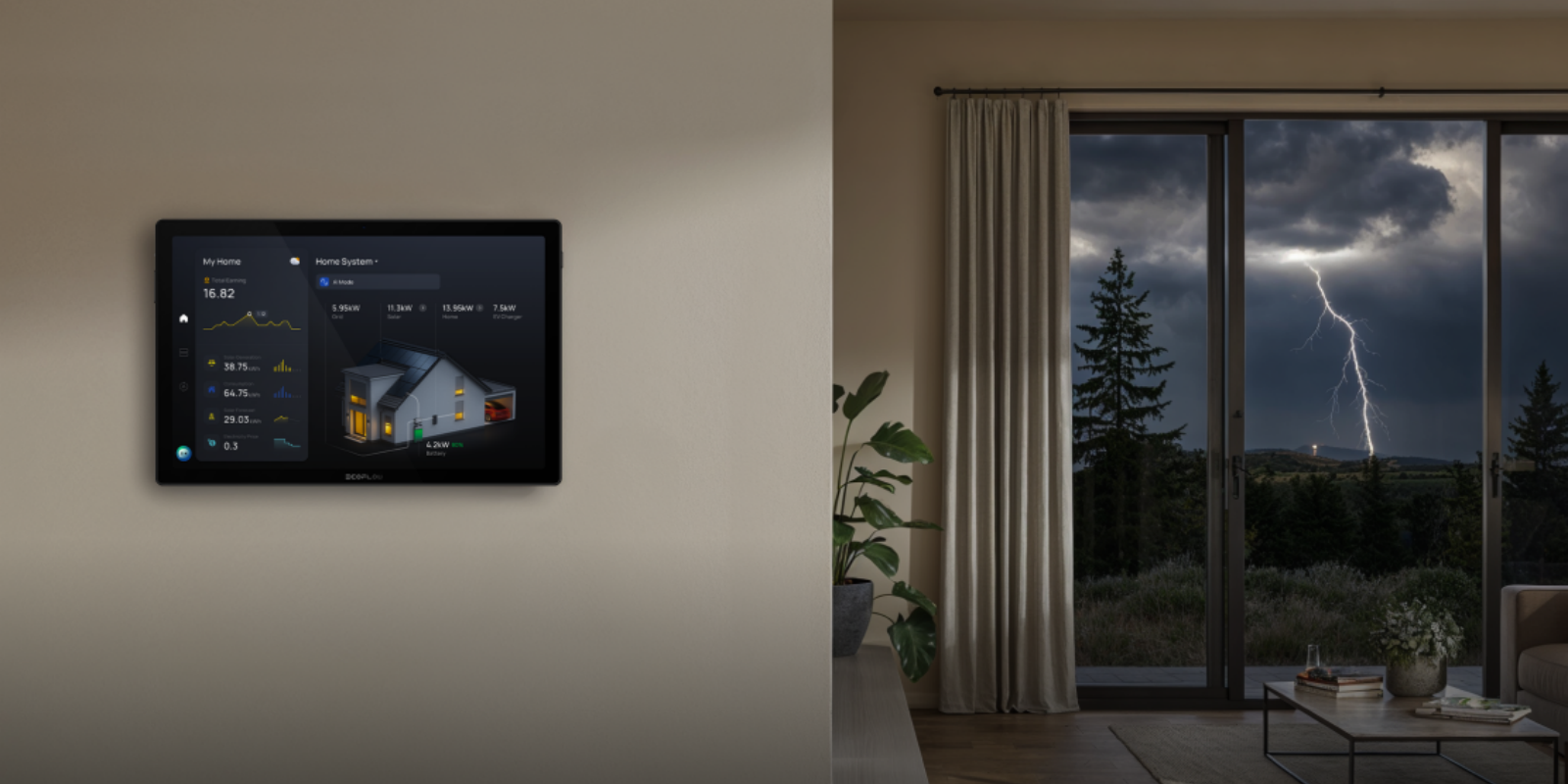
Effective energy reduction comes down to making smart calls based on live generation and consumption data. To get the most out of your setup, the system needs to know exactly how much power is coming in and going out across the home, before it decides where to send it next.
The EcoFlow PowerInsight 2 steps in to provide that crucial overview. It pulls live solar generation, total household consumption, and real-time battery status onto a single screen. With Matter 1.4 under the hood, it links up smoothly with compatible smart home gear, bridging the gap between energy monitoring and device control. That way, households can rebalance loads on the fly as soon as appliance demands change.
Reducing Peak Energy Demand at Home
Domestic power demand across the UK typically spikes during morning and evening hours when households run heat pumps, cook dinner, and plug in electric vehicles concurrently. Mitigating reliance on the grid during these peak windows requires proactive energy planning to absorb high load shifts.
The EcoFlow OCEAN 2 Plus Single Phase addresses this issue directly through its integrated EcoFlow HEMS (Home Energy Management System). The unit tracks household energy profiles, reviews regional solar forecasts, and analyzes dynamic utility tariffs to automate home battery performance. By storing cheap grid power or excess solar energy during off-peak hours and prioritizing battery discharge when rates spike, it minimizes grid strain and lowers overall power costs.
Adjusting Energy Use Based on Conditions
Smart energy management systems adapt continuously to changing environmental and situational factors. Behind this flexibility is an intelligent EcoFlow BMS, which continuously monitors battery status, balances charging and discharging, and helps maintain safe, stable operation while responding to changes in solar generation and household demand. If a sudden cloud cover reduces solar array output, or if a dynamic utility rate unexpectedly jumps, the control architecture instantly reallocates power priorities, preserving battery storage for critical household needs.
Where Can Automatic Power Reduction Be Used in UK Homes?
Automated energy management applies directly to several high-energy zones within a modern household setup.
| Application Area | Primary Function | Real-World Benefit |
|---|---|---|
| Solar & Battery Storage | Stores excess generation and balances grid export limits. | Maximizes solar self-consumption without overloading local hardware. |
| EV Charging Infrastructure | Dynamically throttles charging speed based on active house load. | Prevents the main 60A/100A service fuse from blowing during peak hours. |
| Smart Home Appliances | Coordinates operational cycles of heat pumps and white goods. | Shifts heavy appliance usage to low-cost utility windows automatically. |
Solar Energy and Home Battery Systems
When solar panels produce more than the home can use at that moment, automated controllers step in and send the extra straight to the battery. Pairing solar panels with an EcoFlow Home Battery allows more surplus electricity to be stored for use during the evening or periods of high electricity prices, improving self-consumption while reducing reliance on the grid. If the battery fills up, the system gently dials back generation just enough to stay within the grid export limits.
Electric Vehicle Charging Management
Home EV chargers are usually the biggest single draw in a modern household. With automatic power reduction, the car can charge at full tilt – 7.4kW – during the small hours, but the system will automatically dial the charge rate back if appliances like power showers or kettles kick in during the evening peak.
Smart Home Appliances
Connected appliances can delay or scale back their heating cycles depending on what else is running in the home. Take a smart heat pump, for instance. It can tweak its cycle slightly while the induction hob is in use, keeping overall demand in check without anyone noticing the temperature dip.
What Should You Look for in an Automatic Power Reduction Solution?
Selecting the right hardware configuration is essential for building a reliable, long-term home energy network.
Compatibility With Existing Energy Systems
Any energy management solution you choose must integrate smoothly with your existing consumer unit, solar inverter, and utility meter. If you’re planning a smart meter installation, choosing equipment that supports accurate real-time energy monitoring can help maximize automation and improve tariff optimization. Opting for open communication standards like Matter ensures different hardware brands work together without data dropouts.
Ease of Setup and Daily Use
A good energy dashboard should make things clear without needing an electrical engineering degree to read it. Go for an app that’s straightforward to use, shows you the energy flows at a glance, and lets you set up automated rules with just a couple of taps.
Support for Future Energy Upgrades
A good home energy system should be modular. A system installed today to manage a basic solar array should easily scale tomorrow to handle an additional EV charger, an air-source heat pump, or extra battery storage blocks.
Schedule Your Free Consultation Today!
What kind of product or solution are you interested in?


Conclusion
Transitioning to automatic power reduction helps future-proof your home against rising energy costs and changing infrastructure demands. Using intelligent management platforms like the EcoFlow PowerInsight 2 and advanced storage systems like the EcoFlow OCEAN 2 Plus Single Phase allows UK households to protect their electrical systems from overloads, maximize renewable energy use, and lower monthly bills—all while keeping daily life running smoothly.
FAQ
Do You Need a Smart Meter for Time of Use Tariffs?
Yes, you will need a working smart meter to sign up for a time-of-use tariff. These tariffs run on half-hourly readings sent straight to your supplier, so they can calculate exactly what you’re owed during the cheaper off-peak periods.
Do Smart Meters Make Your Bills Cheaper?
Not on their own, no. A smart meter won’t automatically cut your bills. What it does is give you the detailed tracking data you need to move onto a more flexible tariff, and the real-time visibility to spot where you can trim back your usage.
How to Prevent Overloaded Circuits in House?
Spread heavy appliances across different ring circuits and bring in intelligent load management. Automated power reduction does the heavy lifting by dialling down high-power devices before total demand gets anywhere near tripping the breaker.
What Is a Smart Home Energy Management System?
A smart home energy management system, or HEMS, is a digital platform that keeps an eye on household power flows, analyses the data, and takes control where it counts. It ties together solar panels, battery storage, and smart appliances to drive up efficiency and drive down running costs.
Do I Need Load Management for an EV Charger?
Yes, load management is highly recommended for home EV chargers to avoid overloading your property’s main fuse. This is particularly important for UK homes with 60-amp or 100-amp main supplies when running other high-draw appliances simultaneously.

