
Are Solar Panels Worth It UK? 2026 Costs & Payback Periods
Yes, solar panels are absolutely worth it in 2026. For the average UK household, a well-designed solar-plus-storage system now offers a payback period of 7 to 10 years, while providing a 25-year hedge against volatile energy prices. With the 0% VAT incentive still in place and the maturation of smart battery technology, the transition to solar has shifted from an environmental statement to a savvy financial “no-brainer” that can shave up to 70% off your annual electricity bills.
How Much Do Solar Panels Cost in 2026?
Panel prices aren’t really dropping or jumping around anymore; they’ve levelled out. What you’ll actually pay depends on your house and the kit you go for. Many homeowners begin their journey by asking, “Is my house suitable for solar panels?” before committing to a specific quote.
Total System Cost Breakdown for UK Households
For a standard three-bedroom semi-detached home, a typical 4kW to 6kW system now ranges between £6,000 and £9,000. This includes the panels, inverter, and mounting hardware. To maximise these savings, most modern installations now include a home battery storage unit to capture energy for evening use. While entry-level kits are cheaper, most UK homeowners are opting for “all-black” aesthetic panels that blend better with slate or tile roofs.
Labour and Installation Costs
Installation remains a significant portion of the bill, usually accounting for 20% to 30% of the total. Scaffolding is a mandatory safety cost in the UK, and depending on your location—be it a London terrace or a Cornish cottage—the complexity of the roof can swing the labour price by several hundred pounds.
VAT Rules and Government Incentives
The good news is that the 0% VAT rate on energy-saving materials has been a massive help for British budgets. By removing the standard 20% tax, the government has effectively subsidised the transition to renewables, making high-spec systems much more accessible for the average household.
Impact of Panel Efficiency on Price
Not all panels are created equal. High-efficiency N-type or TOPCon cells cost more upfront but perform better in the “grey” diffused light common in Northern England and Scotland. Investing in higher efficiency often means you need fewer panels to hit your energy targets, potentially saving on mounting costs.
Regional Cost Differences Across the UK
| Region | Avg. Install Cost (4kW) | Est. Annual Sunlight Hours |
|---|---|---|
| South East England | £6,500 | 1,600+ |
| Midlands | £6,200 | 1,450 |
| Scotland | £6,000 | 1,200 |
| Wales | £6,300 | 1,400 |
Will Your Electricity Savings Cover the Investment?
The ultimate “worth it” metric is the payback period. In 2026, the combination of high grid prices and better export rates has made the financial case stronger than it was a decade ago.
Annual Savings Based on Energy Tariffs
Depending on your daytime usage, a well-sized system can shave £500 to £900 off your annual electricity bill. If you work from home or have high daytime demand (like running the washing machine or dishwasher when the sun is out), your savings will sit at the higher end of that scale.
Passive Income from the Smart Export Guarantee (SEG) in 2026
You don’t just save money; you can make it. The Smart Export Guarantee (SEG) allows you to sell excess energy back to the grid. While rates vary by provider, some “Green” tariffs in 2026 offer competitive prices, turning your roof into a small, passive revenue stream.
Impact of Rising UK Electricity Prices on Long-Term Savings
Every time the energy price cap fluctuates, the value of your solar energy increases. By generating your own power, you are essentially “locking in” a fixed energy price for the next 25 years, shielding your household from global market volatility.
Net Savings After Maintenance and System Performance Factors
Solar is generally low-maintenance, but you should budget for an inverter replacement around year 12 and occasional professional cleaning. Even with these costs, the net lifetime savings of a system often exceed £20,000 over 25 years.
Estimated Solar Panel Payback Period in the UK
Currently, the average UK payback period sits between 7 and 10 years. However, if you integrate a battery and manage your loads smartly using a home energy management system, it’s possible to see a return on investment (ROI) in as little as 6 years.
.png)
Why Is Energy Storage Becoming a Necessity?
In the early days of solar, most energy was sent back to the grid because people weren’t home to use it. In 2026, the “Solar + Storage” model is the new standard.
Avoid Solar Waste: Without a battery, up to 50% of your generated power might be exported for a lower price than what you pay to buy it back later.
Power Your Home During Peak Hours: Use your “bottled sunshine” between 5 PM and 9 PM when grid prices are at their highest.
Increase Self-Consumption: A battery can push your self-consumption rate from 30% to over 80%.
Grid Resilience: While most solar systems shut down during a blackout for safety, modern storage systems with “Gateway” tech keep your lights on.
High-Demand Support: Effortlessly run power-hungry appliances like kettles or ovens using stored energy rather than drawing from the expensive grid.
Can Smart Technology Speed up Your ROI?
Modern hardware has evolved far beyond simple “dumb” panels. Intelligence is the key to shrinking that payback window.
Upgrade to an Advanced Home Storage System
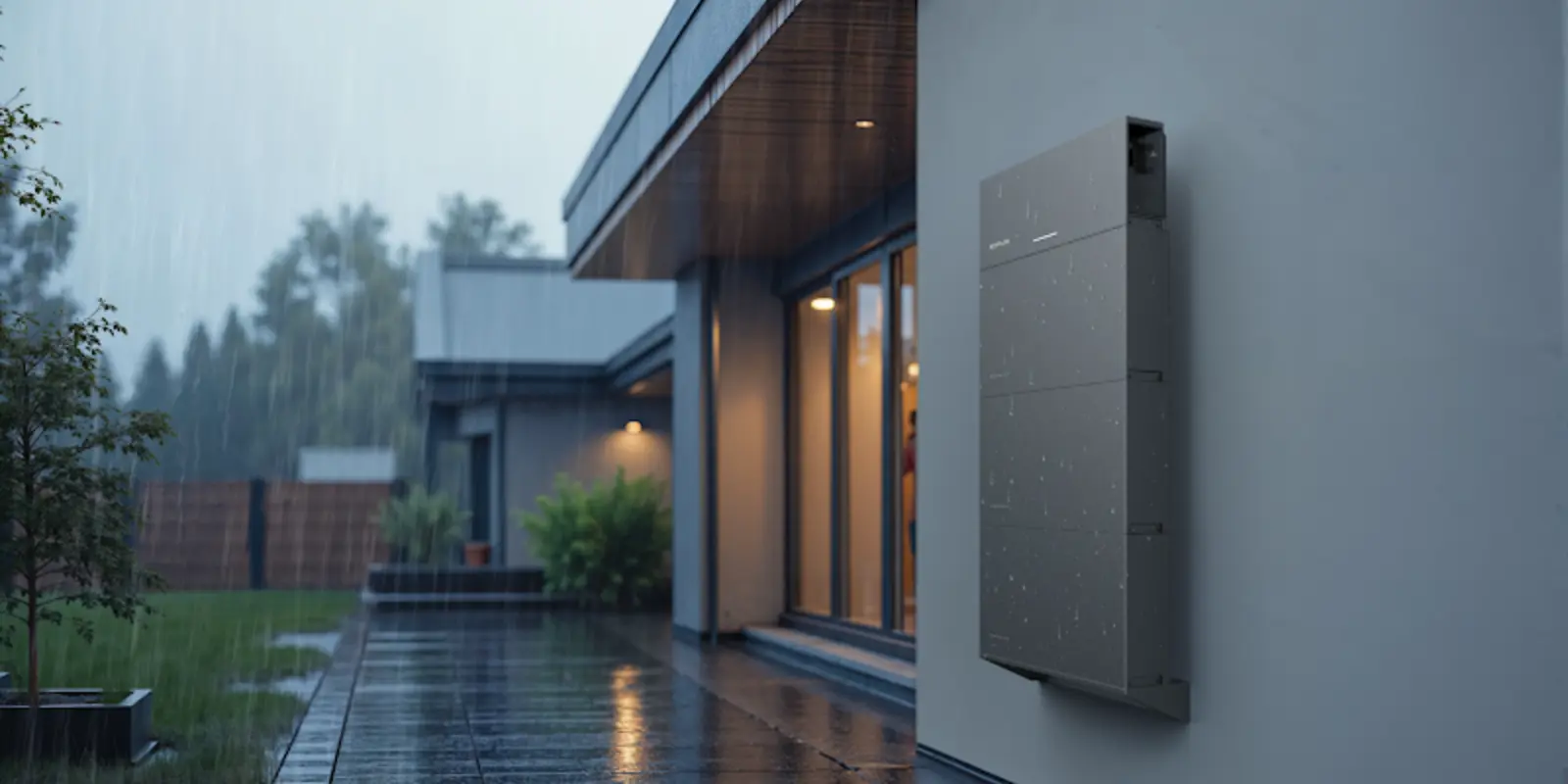
In 2026, simply installing a battery isn’t enough to navigate the UK’s complex price fluctuations; you need a system that changes the ROI logic entirely. Upgrading to a solution like the EcoFlow PowerOcean allows for flexible expansion from 5kWh to 45kWh. This modularity means you can precisely size your system to your family’s needs, avoiding the trap of over-investing in capacity you won’t use. Its 90V MPPT charge controller is a game-changer for the British climate, capturing energy efficiently even on those drizzly, overcast afternoons. With a 6000-cycle lifespan and a 15-year warranty, it ensures your system remains profitable for over a decade after it has paid for itself.
Monitor Real-Time Usage with Smart Dashboards
Shrinking your payback period requires precision. The EcoFlow PowerInsight 2 removes the guesswork with its 11-inch touchscreen, allowing you to see exactly where every watt is going. Beyond just monitoring, its AI Energy OS automatically optimises your home’s energy flow to cut costs. Because it supports the Matter protocol, it can also control your smart thermostats and lights, ensuring no energy is wasted. This level of transparency helps you identify “vampire loads” and accelerate your investment’s break-even point.
Optimise Battery Cycles for Longer Life
Smart software now manages your battery’s health, ensuring it doesn’t stay at 100% or 0% for too long, which preserves the lithium cells and secures your long-term dividends.
Integrate Heat Pumps and EV Chargers
The most profitable solar homes are those that “electrify everything.” Diverting excess solar to your electric vehicle or using it to run a heat pump maximises the value of every photon captured.
Automate Home Energy for Maximum Independence
Automation allows your home to “buy low and sell high”—charging the battery from the grid when prices are bottom-of-the-barrel (like at 3 AM) and using that power during the morning rush.
How to Start Your Solar Project in 2026?
Ready to make the jump? Here is the roadmap to getting it right the first time. Understanding the technical stages of how solar panels are installed can help you communicate more effectively with your chosen contractor.
Assess Roof Orientation and Shading Issues
South-facing is best, but East-West splits are increasingly popular for capturing morning and evening sun. Check for “shading” from chimneys or nearby trees, as even a small shadow can significantly drop output.
Verify Local Council Planning Permission Rules
Most solar installations fall under “Permitted Development,” but if you live in a Conservation Area or a Listed Building, you’ll need to check with your local council before the scaffolding goes up.
Find MCS-Certified Installers in Your Area
Always ensure your installer is MCS (Microgeneration Certification Scheme) certified. This is non-negotiable if you want to access the SEG export payments or ensure your insurance remains valid.
Claim Available 2026 Green Energy Grants
Check for local council grants or the “ECO4” scheme if you meet certain income criteria. While national grants have changed, many regions still offer low-interest “Green Loans” to help with the upfront cost.
Right-Size Your Battery System for Family Needs
Don’t just buy the biggest battery. Look at your winter energy usage; that’s when you’ll rely on the battery most to shift loads. A 10kWh system is usually the “sweet spot” for the average UK home.
Schedule Your Free Consultation Today!
What kind of product or solution are you interested in?

Conclusion
So, are solar panels worth it in the UK in 2026? Absolutely. While the upfront cost is a consideration, the combination of 0% VAT, high-efficiency panels, and smart management systems like the EcoFlow PowerOcean makes solar a savvy financial move. By taking control of your own energy production, you aren’t just saving money—you’re gaining independence from an unpredictable energy market.
FAQ
1. How to Use Solar Panels During a Power Outage in the UK?
You must have a battery storage system with a “backup” or “off-grid” function to use solar power during an outage. Most standard grid-tied systems shut down during blackouts to prevent back-feeding the grid while engineers are working on it.
2. Do Solar Panels Change Your EPC Rating?
Yes, installing solar panels typically improves your Energy Performance Certificate (EPC) rating by one or two grades. This can increase your home’s value and make it more attractive to future buyers who are wary of high energy costs.
3. What Happens to a Solar Loan if You Move?
If you have a solar loan, you generally have two options: pay it off using the proceeds of the house sale or, in some cases, transfer the loan to the new owner. It is essential to check the specific terms with your lender before listing the property.
4. Does Having Solar Panels Affect Selling Your House in the UK?
Evidence suggests that solar panels generally make a house easier to sell, as buyers appreciate the lower running costs. Houses with “owned” panels (rather than leased roof schemes) typically see a boost in market appeal.
5. Does House Insurance Cost More if You Have Solar Panels?
Most insurers do not significantly increase premiums for solar panels, but you must inform them so they are included in your “buildings” cover. Failure to notify your insurer could potentially void a claim if the roof is damaged.

