
Air Cooler vs Air Conditioner: Which Works Better With Home Battery Storage?
With summer heat waves becoming more frequent and common in the UK and electricity costs remaining high, many homeowners are asking themselves, "Should I buy a cooling appliance? And what kind?". It's not a matter of comfort when it comes to the air cooler vs air conditioner question. If your home has solar panels attached and a battery storage system, the type of cooling equipment you choose can impact how much clean, stored energy you can use. Understanding air conditioner vs air cooler differences in power demand is the key to making that decision correctly.
How Each System Actually Cools Your Home
How an air cooler works
An air cooler, also known as an evaporative cooler, evap cooler, or swamp cooler, uses a simple physical process. A fan circulates warm air through water-soaked pads. This cools the water just prior to blowing it into the room. As the water evaporates, it absorbs heat from the air. Some models include a small water tank and pump to continually maintain the saturated pads.
How an air conditioner works
The operation of an air conditioner is based on the refrigerant cycle. It removes heat from the air inside the house and pumps it outdoors through a compressor and condenser, and then pumps the cooled air back inside the home. Unlike air coolers, it also dries the air, by actively dehumidifying the room while cooling it.
Why underlying technology determine everything else
This is the core air cooler vs air conditioner difference: one adds moisture to cool, the other removes heat and moisture. No, these are not different versions of the same product. They have entirely different assets and weaknesses, as well as different energy requirements, and this is true for all comparisons, from running expense to battery compatibility.
Cooling Performance in the UK Climate
How humidity affects air cooler effectiveness
Evaporative cooling is limited by the physics of cooling in that the more humid the air, the less effective the cooling. Comparing an evap cooler vs air conditioner on a typical summer day in the UK, the following factor of humidity becomes one of the main advantages of the air conditioner. If the air is already rich in moisture, more moisture will evaporate into the air, but the temperature drop is minimal. Air coolers will provide a more moderate 3-5°C cooling effect when it is humid during the hot summer days in the UK than in dry conditions, when they can cool by 8-10°C.
Where air conditioners have a consistent advantage
The air conditioner keeps cooling efficiently even under or over-humid conditions outside. Its cooling output is easily controllable since it does not depend upon heat evaporation but operates by a mechanical refrigerant cycle. During humid heatwaves, this is a significant practical advantage.
When an air cooler is genuinely sufficient
During the dry, hot spells that the UK does experience, typically in June and July, a swamp cooler vs air conditioner comparison often favours the cooler for single-room use. An evaporative cooler vs air conditioner comparison may be an advantage for the cost alone when outdoor humidity levels are below 60%, and you are cooling one particular room, such as a bedroom at night or home office during the day. It is when the temperature and humidity both increase at the same time that their limitations become obvious.
Air Cooler vs Air Conditioner Power Consumption: The Numbers That Matter
Air cooler vs air conditioner power consumption is the single most important factor for any household with solar panels or a home battery system. The gap is substantial.
Typical wattage for air coolers
The normal operation range of most domestic air coolers is between 60W and 200W. A mid-range unit running at 100W for eight hours uses 0.8 kWh. That costs about 20p at Ofgem's indicative April rate 2026 of 24.50p per kWh.
Typical wattage for air conditioners
A Dyson air cooler vs air conditioner comparison can help show the difference. The fan and cooling products range from 40W to 100W, and a real split air conditioner will consume between 900W and 2,500W based on the size of the unit. A mid-range 1.5kW unit running for 8 hours would consume 12kWh, which would cost approximately £2.94 per day.
Startup surge current
The only thing you can tell from the hawtage rating is nothing when it comes to battery compatibility. Compressor motors consume a large amount of current when they start up, typically 2 to 3 times the wattage that they draw while running for 1 to 3 seconds. A 1.5kW unit may surge from 3,000W to 4,500W at startup. This surge cannot exceed the amount of power your battery system can handle, but only the continuous output, not the peak.
Running cost comparison
The table below uses eight hours of daily operation across a thirty-day summer month.
Appliance | Rated wattage | Daily usage (8 hrs) | Daily cost | Monthly cost |
Air cooler | 100W | 0.8 kWh | £0.20 | £6.00 |
Mid-range air conditioner | 1,000W | 8 kWh | £1.96 | £58.80 |
Split air conditioner | 1,500W | 12 kWh | £2.94 | £88.20 |
Note: Figures based on 24.50p/kWh. Actual costs vary by model and usage pattern.
The air cooler vs air conditioner electricity consumption gap over a summer month is significant: roughly £6 versus £58 to £88. The difference between a solar/battery home is simply how much of your cooling load you can expect to meet from the stored energy.
What These Power Differences Mean for Home Battery Storage
How battery capacity and continuous output interact with cooling
There are two critical ratings to consider when choosing a home battery solution: total storage capacity in kWh, and continuous output in kW. Both have a cooling effect. The 100W air cooler can be powered for 50 hours by a 5 kWh battery. Running the 1,500W air conditioner from the same battery would actually deplete it in about three hours' time and include other household charges.
Running an air cooler on battery power
The relatively low draw from an air cooler fits easily into the continuous output of virtually any home battery system. Operating an air cooler overnight with stored solar energy is very feasible and not a large battery or high-powered inverter is needed.
Running an air conditioner on battery power
The air conditioner vs cooler equation is a different one! With standard evening use (lighting, cooking, TV), a 1,500W air conditioner will easily see the total demand reaching 3,000W or higher. This requires adequate battery storage capacity, in addition to a battery that has enough continuous output rating to provide energy storage without using the grid. The battery's ability to deliver high power at the startup is another demand: it must also be able to withstand the running load.
Battery sizing changes with your cooling choice
A 5-10 kWh battery system can easily provide cooling power and other loads in an air cooler. Selecting an air conditioner makes both storage space and power requirements become more significant.
Solar Self-Consumption and Cooling: Getting the Timing Right
Why peak solar and peak cooling demand align
A good benefit of a daytime cooling system is that it can be used while the sun is generating electricity. Solar panels produce the greatest amount of electricity during the hottest time of day, from 10am to 4pm, when there is most demand for cooling in the UK, especially in warm, sunny weather. Running the cooling appliance now uses solar power directly, and not stored battery energy or energy from the grid.
What happens to evening cooling demand
The challenge arises at the end of the day. After 5pm, solar generation is significantly reduced, and the temperatures in the interior areas, especially bedrooms, are high in the evening hours. This is where battery storage comes in and releases solar energy in the evening when there is greater cooling demand. A normal battery system will cope well with the low draw of an air cooler. The higher the demand from the air conditioner, the greater the discharge budget and management delicacy is needed.
Designing a Home Energy Setup Around Your Cooling Choice
Low-draw cooling and a self-sufficient summer setup
For households that choose an air cooler, the energy arithmetic is straightforward. A medium-sized home battery bank can be combined with a solar array to provide a medium amount of energy for cooling during the summer, with only a little energy from the grid. The low wattage leaves plenty of energy stored for the other evening loads.
Higher-draw cooling and larger storage requirements
If a house decides to get an air conditioner, the energy system must be properly sized. This implies that the battery will be bigger, the inverter will be more powerful and preferably a solar array that can be used to power the house during the day and recharge the battery in the evening. The investment is greater, but so is the cooling performance.
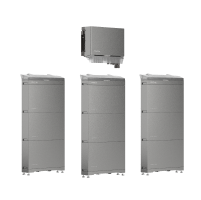
The EcoFlow OCEAN 2 Plus Single-Phase Home Battery is built for standard UK homes with a single-phase supply. It stores solar energy during the day and releases it on demand, so high-draw appliances like your washing machine can run on clean, low-cost power rather than peak-rate grid electricity. Capacity starts at 5 kWh and scales up to 60 kWh with a single inverter, giving you room to grow as your energy needs increase. They are integrated with solar to optimise self-consumption during the summer cooling season.

Time-of-use tariffs for air conditioner households
If the grid needs to be topped up, then the battery can be topped up at night when electricity is cheaper and discharged when it is cooler to reduce the effective cost of kWh. This approach is especially helpful for households with air conditioners that have a higher total consumption per day.
Intelligent Energy Management: From Manual Decisions to Automated Optimisation
What a home energy management system does
Manual scheduling, timer for air conditioning or when you charge the battery, does help you a little. A HEM system does more than just monitor the solar production, battery status, domestic energy use and tariff signals; it can combine all these to make automatic decisions on how to minimize energy costs and maximize self-consumption.
Monitoring cooling loads alongside solar and battery state
When you know how much electricity your cooling device consumes, how much solar power you're producing, and how much electricity your battery has to offer, you can make informed decisions. Without that visibility, you are guessing.
Automating charge and discharge to keep cooling costs low
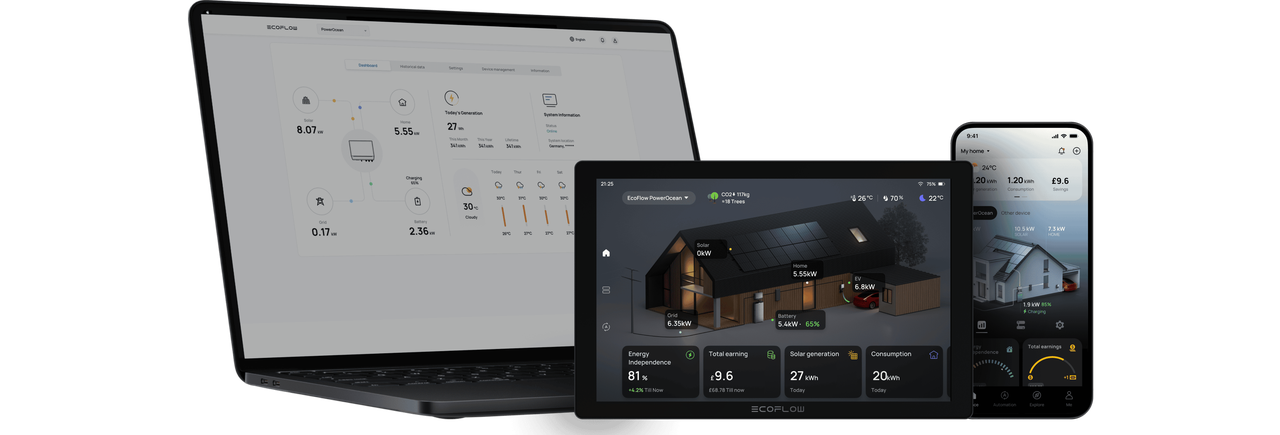
This is automatic with the EcoFlow Intelligent HEMS. They monitor real-time energy data on your solar panels, battery and household loads, respond to energy tariffs and stop speculating about controlling a summer cooling system. For families with an air conditioner, the economy is consistent, except on perfect days without this automation.
Side-by-Side Comparison: Air Cooler vs Air Conditioner for Solar and Battery Homes
Factor | Air cooler | Air conditioner |
Cooling method | Evaporative | Refrigerant cycle |
UK humidity performance | Moderate | Consistent |
Typical power draw | 60W to 200W | 900W to 2,500W |
Startup surge | None | Yes, 2 to 3x running wattage |
Battery compatibility | Excellent | Requires careful sizing |
Upfront cost | £50 to £300 | £500 to £2,500+ |
Monthly running cost (8 hrs/day) | ~£6 | £59 to £88 |
Suitable for solar self-consumption | Highly suitable | Suitable with larger system |
Which Cooling Type Is Right for Your Home?
Scenarios where an air cooler is the stronger choice
So, air conditioner vs air cooler which is better for your home? If you are looking for low operating costs, compatible with battery systems, and primarily using the air cooler to cool a single or two rooms during the occasional hot days, you've found the solution. Where battery drain is not a concern and keeping your energy costs low are important, the relatively small up-front cost and negligible battery drain make it the lower risk alternative.
Scenarios where an air conditioner is the right investment
The air conditioner wins the air conditioner vs water cooler comparison in these situations: when you need consistent cooling during the humid summer months, if you want to cool more than one room or a larger area, and you've already paid for a bigger battery system that can manage an air conditioner. Although the initial and operating costs are higher, steady performance in the high humidity and high temperature conditions of the UK summer make them worthwhile.
Conclusion
The 'air conditioner vs cooler' thing depends on three factors: the climate conditions in the UK that you are looking for, the cooling capabilities that you require, and the battery capacity that you have or are ready to commit to your home. An evaporative cooler easily integrates into most solar/battery systems with very little modification. An air conditioner works better in humid settings, but needs the right size battery, an adequate inverter and smart energy management to be economical. If you are installing or upgrading a home energy system around your cooling needs, get a solar battery quote to properly size your system up front.
Schedule Your Free Consultation Today!
What kind of product or solution are you interested in?

FAQs
What is the difference between an air cooler vs air conditioner?
The air cooler works by evaporation to cool the air and to moisturize the air in the room. An air conditioner applies a refrigerant cycle to remove heat and humidity and provides constant cooling in any outdoor conditions. They are not the same product - they are different technologies.
Which uses less electricity, an air cooler or an air conditioner?
Air coolers are much more economical in power consumption. The average air cooler consumes 60W to 200W, whereas an air conditioner consumes 900W to 2,500W. The running cost of an air cooler for an 8 hour period over a summer month is about £6 per day, compared to an air conditioner at £59 to £88 per day.
Can I run an air conditioner on home battery storage?
Yes, but it's important to size the system correctly. The battery must have enough power storage and a high continuous output to meet the starting surge and running wattage of an air conditioner. An air conditioner without a grid top-up could require a larger size system than the size of the household load.
How does my cooling choice affect the size of the home battery I need?
The low draw of an air cooler can be coupled with normal household loads in a 5 kWh battery system. The greater the demand of an air conditioner, the bigger the battery, the higher the output of the inverter, and the larger the solar array to charge the battery, which also has to supply the cooling power during the day. The type of cooling you choose should also be considered when determining battery size.

