
5kWh Home Battery Systems: Costs, Sizes, and Energy Storage Guide
What is a 5kWh home battery and how does it work?
A 5kWh home battery is a home energy storage system that can store around 5 kilowatt-hours. In other words, if a household uses 5 kilowatts of power each hour, it could use that power for 1 hour from the battery, 5 hours at 1 kilowatt, or even less for a longer duration, as required by the household.
These systems are often installed alongside rooftop solar panels, enabling homeowners to store power from the sun if they need it later in the day or week, instead of using it all right away and having to pay for it from their grid. The stored electricity can be used at night, when solar power is less abundant, helping reduce grid electricity consumption and boost overall energy efficiency.
A house battery system consists of:
Power storage module
An inverter to change electricity
Battery management software
Smart monitoring and optimization features
A 5kWh battery could store enough energy to power important items like lights, Wi-Fi routers, TVs, refrigerators and small kitchen appliances for a few hours, for a smaller home or apartment with moderate electricity needs. However, larger houses tend to have higher energy requirements, which call for larger batteries to support larger appliances and longer power outages.
Understanding home battery sizes: from 5kWh to 100kWh
There are many different sizes of home battery systems available that can be used to meet the needs of various households based on their energy usage, the requirement for backup power and their size. Small batteries might be employed for essential-load backup and self-consumption from solar, while larger batteries can be used for whole-home energy independence and high-demand appliances.
Battery Size | Typical Household Type | Common Use Case | Backup Capability |
5kWh | Apartments, small households | Basic solar storage and essential backup | Lights, Wi-Fi, fridge, small appliances |
10kWh | Medium-sized family homes | Daily solar self-consumption and partial backup | Kitchen appliances, entertainment systems, lighting |
20kWh | Larger households | Extended backup power and EV support | Multiple appliances and longer outage coverage |
30kWh–50kWh | High-energy homes | Whole-home energy optimization | HVAC systems, EV charging, larger appliances |
100kWh | Large properties or commercial use | Full energy independence and large-scale storage | Whole-home or commercial backup |
With the continued development of residential energy storage technology, battery storage systems of all sizes are growing more efficient, scalable and connected to intelligent energy management systems.
How much energy can a home battery power?
The size of a household's energy demand, how efficiently appliances are used, the capacity of the batteries, and whether energy is used for the whole house or only critical circuits can affect how much energy a home battery can deliver. The battery size is important, but the actual duration depends on the amount of electricity consumed at a given time.
A house that runs only essential appliances while power is down will generally be able to run its batteries for longer than a house with heating systems, EV charging, or multiple high-power appliances running at the same time.
Appliances a 5kWh home battery can support
Most home batteries are designed to provide backup power for essential systems in your home, not to supply full home power. This kind of battery can usually provide power for the following during a temporary outage or during the evening hours when prices are highest:
LED lighting circuits
Wi-Fi routers and communication devices
Refrigerators and freezers
Televisions and laptops
Small kitchen appliances
Appliance | Approximate Power Usage | Estimated Runtime on 5kWh Battery |
Refrigerator | 100–200W | 20–40 hours |
LED Lighting | 50–100W | 50+ hours |
Wi-Fi Router | 10–20W | 100+ hours |
Television | 80–150W | 25–50 hours |
Laptop Charging | 50–100W | 40–80 hours |
A 5kWh battery can offer several hours of backup power for a smaller-sized home, depending on energy consumption habits. The highly efficient appliances and reduced electricity usage in these homes can maximize the value of the smaller battery system by carefully prioritizing critical loads.
Backup duration for 10kWh and 20kWh home batteries
Larger battery systems offer more extended backup times and more flexibility for homes with more electricity consumption. A home battery with a 10kWh capacity can generally power a medium-sized home's basic appliances for longer periods while a 20kWh battery can power a greater percentage of a home's electricity needs during an outage.
A 10kWh battery will generally be enough for:
Use of solar energy in the evenings.
Partial home backup
Refrigeration and lighting
Entertainment systems
Moderate use of kitchen appliances
On the other hand, a 20kWh battery pack is better suited for:
Larger family homes
Heat pump support
EV charging assistance
Coverage for a longer power outage
In solar-powered homes, bigger batteries will also enable the accumulation of more solar power during the day and use it at night rather than sending the excess power back to the grid.
Whole-home backup vs essential-load backup
Homeowners need to determine whether they want an essential-load backup or a whole-home backup when selecting a home battery system.
Essential-load backups are only for the circuits that supply critical household functions such as:
Refrigeration
Lighting
Internet connectivity
Security systems
Basic appliance usage
This helps to decrease battery size and enables smaller systems like 5kWh or 10 kWh batteries to offer a significant amount of backup time.
In contrast, whole home backup will try to operate most or all of the household appliances which include:
Heating and cooling systems
Electric ovens
Washing machines
EV chargers
High-demand appliances
Whole-home backup typically demands bigger batteries, more sophisticated inverter systems, and sophisticated energy management to help keep household electrical power steady when outages last longer.
Key factors that affect home battery performance
There are more than battery size considerations when it comes to home batteries. Several technical and environmental parameters can affect their efficiency in the real world, the backup duration and the savings that they can make over the long term, which homeowners should consider before they install an energy storage system.
Daily household energy consumption
The way electricity is used can significantly affect the efficiency of a battery system. For households with high evening energy use, a larger battery size might be needed to support their backup energy needs and to maximise the use of their solar panels.
The amount of electricity used in a household varies according to:
Number of occupants
Appliance efficiency
Heating and cooling systems and equipment.
EV charging requirements
The average daily electric use is used to calculate the appropriate battery size for home storage.
Solar panel system size
Battery systems are best utilized when they are correctly sized to the solar generation capacity. Sometimes a small solar panel system will not produce enough excess electricity that can be used to charge a larger battery, or a larger solar panel system could have more battery storage capacity to use.
Households can benefit from balancing solar generation and battery storage by:
Reduce electricity imports
Store excess daytime energy
Improve self-consumption rates
Optimize the use of the building's design, location, and materials.
Enhance long term energy savings.
Battery chemistry and efficiency
The lithium-ion battery technology is the most common battery technology used in most modern residential storage systems due to the following:
Higher energy density
Faster charging capability
Longer lifespan
Improved efficiency
Lower maintenance requirements
Round-trip efficiency is a standard way of measuring battery efficiencies and is defined as the amount of energy that can be extracted from a battery after charging losses and discharged losses. More efficient batteries are less energy-wasting when converting and storing energy.
Weather conditions and seasonal energy generation
Weather patterns and seasonal solar generation also have an impact on solar battery performance. The UK has less daylight hours and cloudy weather in the winter months, which may impact solar electricity production, further limiting the amount of energy available for storage.
In the summer months, when solar PV production is generally higher, homeowners can make the best use of battery charging, and cut down on their need for electricity from the grid.
Battery performance may be influenced by temperature as well. The charging efficiency and battery life may be slightly impaired in the long run for extremely cold and hot environments.
Smart energy management systems
Intelligent energy management systems are designed to enable homeowners to get the most out of their batteries by automatically tracking electricity generation, storage and use.
These systems can:
Prioritize solar self-consumption
Optimize charging schedules
Reduce peak electricity costs
Enhance back-up power supply capacity
Smart energy management is becoming increasingly crucial to optimizing the efficiency and economic benefits that ca
Home battery cost per kWh explained
Among several factors homeowners consider when they're looking into residential energy storage options is battery pricing. The total cost of the home battery divided by the amount of usable energy storage capacity provided by the battery is home battery cost per kWh.
Larger battery systems tend to be more expensive up front, but often have a lower cost per KWh because of economies of scale and efficiency over time.
Average home battery prices per kWh
Residential battery storage costs in the UK depend on battery technology, installation requirements, storage capacity, and the brand quality. When installation and equipment are taken into account, home battery storage systems typically range from a few hundred to more than a thousand lbs per kWh usage.
The price of batteries has been steadily dropping in recent years worldwide because of:
The development of lithium-ion batteries.
Increased manufacturing scale
Increased use of renewable energy resources
Improved battery efficiency
But there are still differences in prices between:
Premium battery brands
Entry-level systems
Modular storage systems
Whole-home backup installations
For households that have relatively high electricity needs and a larger solar PV system, larger systems may be more valuable to them in the long run.
What affects home battery storage cost per kWh?
The price of the total battery storage package and the total cost of installation depends on a number of factors.
Some of the most important pricing considerations are:
The number of batteries in the system
Installation complexity
Inverter compatibility
Backup power functionality
Customer satisfaction
Larger inverters, more advanced electrical work or an advanced energy management system might be needed for homes that need whole home backup or advanced smart energy integration as well.
Long-term savings and return on investment
While initial costs of home battery systems can be high, the investment can prove to be cost effective in the long run as it can cut down on the high costs of grid power and enhance solar self-consumption.
Households can use battery storage to:
Reduce reliance on outside sources of energy from the sun
Store lower-cost off-peak electricity
Minimize electricity demand during the peak hours.
Enhance energy security in the event of a power outage.
Promote industrial development and fuel diversification.- Reduce overall dependence on energy.
However, the financial value of residential battery systems could increase over time, especially for homes with large solar lattices, EV charging needs, or higher daily electricity usage, as electricity costs continue to fluctuate.
Building a smarter solar energy system with battery storage
Residential energy systems are continually changing and home battery storage is growing beyond mere backup power solutions. Today, battery power is a key element in full house optimization, enabling consumers to better manage electricity consumption, consume as much solar energy as possible, and minimize future electricity purchases.
However, many homes in today's market are designing an integrated energy system that integrates:
Solar panels
Battery storage
Smart monitoring systems
Intelligent energy management
Smart energy usage and conservation at charging stations and homes
This will enable consumers to perform energy tasks more efficiently with electricity, and in the process make their households more resilient to energy shocks.
Why solar battery storage improves energy independence
One of the biggest advantages of home battery storage is improved energy independence. If there is no battery storage, surplus power from the Sun can be fed back into the electrical grid, but the homeowner may need to buy electricity at a later time of day when the Sun is not available.
One solution to this is battery storage, which can be used to store excess solar power for later use. This can:
Minimize the use of electricity from the grid.
Improve low-income areas' ability to pay their energy bills
Enhance back up power supply
Raise the self-consumption of renewable energy.
Ensure financial stability with reduced exposure to electricity prices' volatility.
Battery storage can help enhance the overall efficiency of bigger solar systems, helping more of the electricity produced by the panels to be consumed within the home rather than exported.
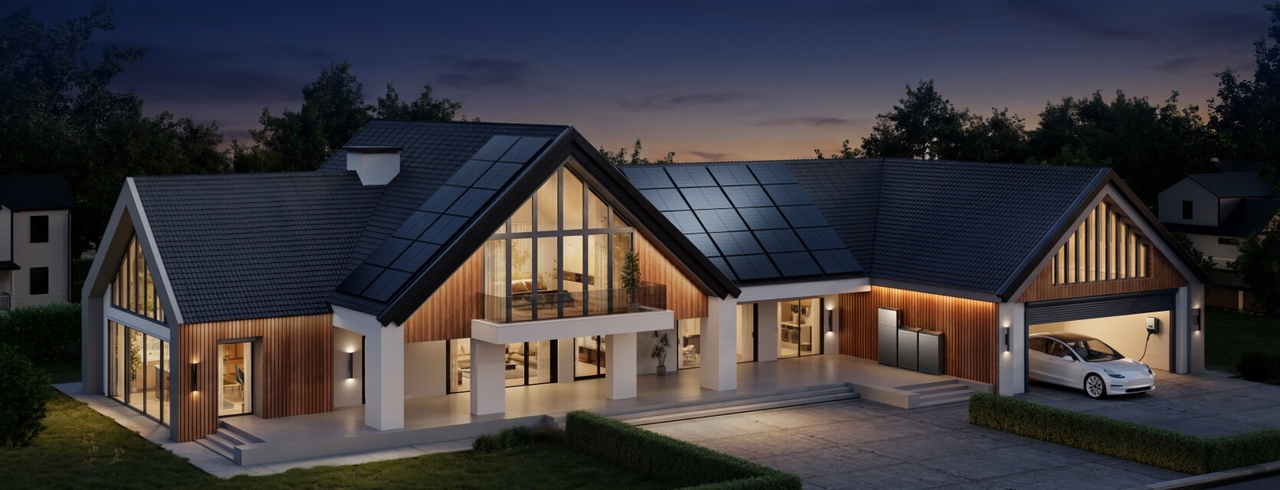
Home solar energy storage with EcoFlow PowerOcean 2
New residential battery storage systems are becoming more complex to enable flexible home energy management, in conjunction with solar panels and smart home applications.
The OCEAN 2 Plus Single-Phase is a type of solar storage system that can help homeowners manage excess solar power, increase self-consumption, and generate backup electricity when needed or during high electricity prices. Scalable residential storage systems can also help facilitate future energy expansion, and are appropriate for households that are expanding their energy use:
Additional solar panels
Electric vehicles
Heat pumps
Higher-capacity energy systems
The homeowner can enhance the efficiency of the home and cut back on the use of the traditional grid system by partaking in intelligent energy optimization and battery storage.
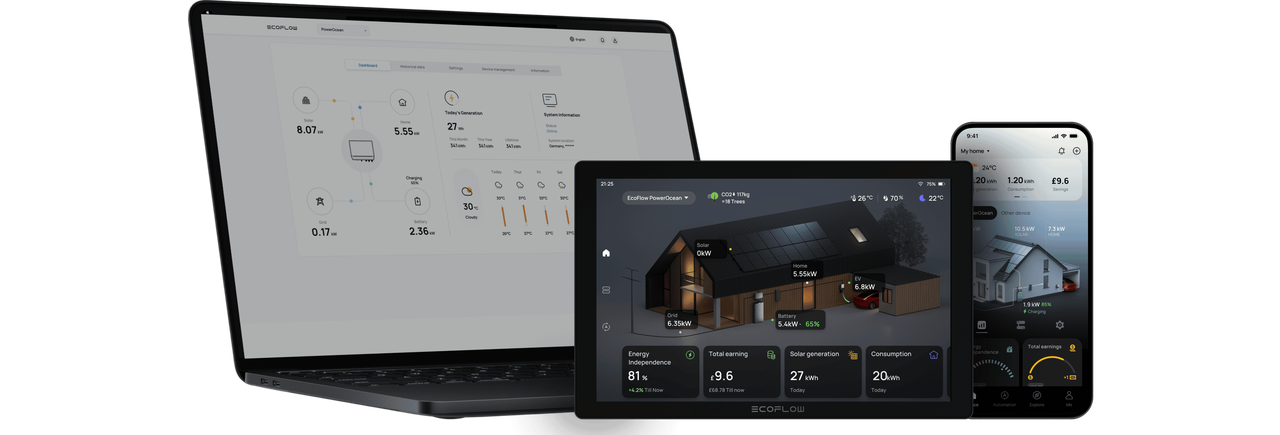
Intelligent energy management with EcoFlow Intelligent HEMS
Combined with a smart home energy management system, battery storage systems become even more efficient. Smart energy management systems for households allow them to track real-time electricity generation, battery consumption, and energy use.
Automatically optimizes household energy use by:
Prioritizing solar self-consumption
Minimizing battery life usage and offsetting
Lowering peak time electricity charges
Monitoring energy performance
Enhancing the availability of back-up energy
Intelligent systems also enhance the visibility of the energy consumption of the homeowner, giving them a better understanding of how they use their electrical services and how they need to plan for energy in the future.
How to choose the right home battery size for your needs
The right battery size is contingent on various factors, such as home electricity consumption, solar panel production, power requirements for backup and future needs. For some small systems, storing energy may be enough, but for larger homes, storage capacity might need to be greater to meet increasing energy demand.
When considering battery storage options, it's essential to understand your household's electricity consumption.
Small households and apartments
For homes or apartments that use moderate amounts of electricity, 5kWh home battery systems can be an appropriate choice. The following batteries are usually fit:
Essential appliance backup
After midday solar energy use
Lighting and internet connectivity
Small kitchen appliances
Reduced grid dependence
Smaller systems may offer a more practical compromise for households with less roof area or those that do not require as much energy.
Medium-sized family homes
The typical household requirements for medium sized family homes may also be higher because of more household appliances and more electricity consumed daily.
The 10kWh battery systems provide a range of benefits many families enjoy because they can:
Provide more time for late night power use.
Store more solar energy during the day.
Do a backup of some kind during power outages
Improve long-term electricity savings
This battery capacity level is typically regarded as one of the most versatile home storage solutions for the UK household market with an average to moderate energy usage.
High-energy households and EV owners
Households using EVs, heat pumps or those with high electricity consumption tend to need larger batteries to control energy efficiently.
Higher capacity batteries (20kWh and more) are typically better for:
EV charging support
Electric heating systems
Larger solar installations
Extended backup power
With an increasing number of households making the switch to electric vehicles and heaters, larger batteries are becoming increasingly significant in ensuring energy efficiency and lowering the dependency on costly electricity from the grid.
Off-grid and backup power requirements
If households want to be completely independent of the grid or to be supplied continuously during an outage, they may need a much larger battery system depending on their daily energy needs and their expectations of electricity outages.
For the following, an off-grid and/or advanced backup system is typically used:
Rural properties
Areas with unstable electricity supply
Larger residential buildings
Long-duration backup requirements
They tend to be combined with larger solar panel installations and sophisticated energy management systems to ensure consistent power generation round the year.
Future energy expansion considerations
Homeowners ought to also evaluate their future energy requirements when selecting a home battery system, not just their present electrical consumption.
The following are likely to be added to the above in the future:
Adding more solar panels to the roof or structure
Buying an e-vehicle
Expanding household size
Building app-enabled homes.
Selecting the right scalable battery system can benefit homeowners who do not want to be stuck with an expensive upgrade in the future, and who want to make sure the energy system is flexible and meets the changing needs of the household.
Common mistakes to avoid when buying a home battery
While many homeowners consider battery size and initial cost, they don't take into account other factors that impact system performance and value over time.
Common mistakes include:
Installing too small of a battery system for domestic energy needs.
Adopting a “use it if it fits” approach to battery capacity and not considering the usable capacity
Considering the compatibility and installation of the inverter
Not accounting for future growth of electricity demand
The warranty is ignored, and the battery life is limited.
Not using a smart energy management system
Selecting systems for the initial cost rather than for long-term savings
When considering the energy storage solution, every homeowner can assess their household energy requirements, the expectations for back-up power, and future growth of energy storage capacity with great care.
Conclusion
Residential energy storage systems are gaining significance in today's era. For homeowners looking for a small 5kWh battery for backup power needs or a larger battery system to optimize the use of energy in their homes, it is important to understand the performance and value of batteries before purchasing.
With electricity prices remaining volatile and solar energy becoming more popular throughout the UK, battery storage solutions can help to promote energy independence, lower bills and optimise solar self-consumption. New systems and smart energy management solutions are also enabling the construction of more efficient, scalable, and flexible residential energy systems to meet future residential energy demands.
The right battery size and the inclusion of smart energy management technologies enable homeowners to create a more flexible and resilient home energy system that is capable of long-term efficiency and sustainability.
Schedule Your Free Consultation Today!
What kind of product or solution are you interested in?

FAQs
Is a 5kWh home battery enough for a house?
For smaller homes or apartments that consume less power, a 5KWH home battery may be enough. It can be used for essential-load backup, equalization of solar energy use, and consumption reduction of the grid electricity. Larger homes with greater electric consumption can use larger batteries to provide longer backups and for whole-home backup.
How much does a 5kWh home battery cost?
The price of a 5kWh home battery depends on the type of battery, installation, compatibility with an inverter, battery warranty, and the battery brand. Total installed costs vary widely in the UK depending on the system configuration and back-up options. Other smart energy management components can also impact costs.
How many batteries do I need for whole-home backup?
The number of batteries needed varies with:
The amount of electricity consumed by an average household each day.
Backup duration expectations
The number of high-powered appliances.
EV charging requirements
Air conditioners and heaters
Depending on the size of the house, you might need one battery for the essential loads or more than one battery for whole house coverage.
Is home battery storage worth it in the UK?
If a household has solar panels, has high electricity consumption or is on a time of use electricity tariff, then home battery storage can offer long-term benefits. Benefits may include:
Lower electricity bills
Improved solar self-consumption
Keep working without power during a power outage
Reduced grid dependence
With the ongoing development of battery technology, energy storage in the home is becoming more viable for homeowners in the UK to become more energy efficient and energy independent.

