
What Installers Need to Know About 3000W Inverters for UK Home Solar Systems
The inverter is the part of the system that everything else relies on when designing a residential solar and battery system. It establishes the system's maximum output, defines the grid connection criteria, and influences the battery configuration. The 3000W inverter is in a really nice place for single-phase UK homes: it can power most household loads but is below the G98 notification value, making it easy to commission. This is a guide for all 3000W inverter UK solar system installers to help them understand before specifying a 3KW inverter system.
What Is a 3000W Inverter and What Can It Run?
The role of an inverter in a solar and battery system
An inverter is an electronic device that converts the DC power generated by solar panels or batteries into AC power for use by appliances. The 3000W rating refers to a 3000W continuous AC output, that is, the maximum sustained power, over time, that the inverter can provide, rather than the surge rating, which is applicable to power surges occurring during start-up.
The inverter is part of a solar and battery installation that serves as the power hub, controlling the flow of energy between the solar panels, battery, home, and the grid. It also supports grid charging and backup power delivery in a hybrid configuration during a power outage.
What a 3000W power inverter can realistically power in a UK home
A 3000W power inverter provides sufficient continuous power to operate most standard loads found in most UK households: LED lighting, fridge-freezer, TV, router (short bursts), laptop charging and moderate kitchen appliances (short bursts). It cannot power an electric shower (8.5kW-10.5kW), an immersion heater or a 7kW EV charger alone. Establish these limits clearly during the client survey.
A 3000W inverter is not a 3000W inverter generator
A 3000W inverter generator is a type of inverter generator that is powered by petrol and can be taken out to temporary sites. A home solar system with a 3000W hybrid inverter is a permanently installed appliance connected to the grid. They only share the same wattage, and that's about it. This guide only applies to permanently installed hybrid inverters.
Types of 3000W Inverter Relevant to UK Solar Installations
String inverters at 3kW: straightforward but limited
A 3kW string inverter converts the DC power from the panel string into AC power for the household. Reliable and well understood, this type of inverter 3000w, has no native battery integration. Lack of storage means the addition is a subsequent battery inverter or an AC-coupled unit, increasing the expense and complexity of the retrofit.
Hybrid inverters at 3kW: the preferred choice for battery-ready installs
A hybrid inverter controls the solar input, battery charging and discharging, the grid and backup power in one. It is the right specification from the beginning of all installations in which storage is planned or likely.
AC-coupled battery inverters: for retrofitting storage to existing systems
If the client has a string inverter and desires to install a battery-backed inverter on the string, then an AC-coupled inverter is installed on the AC side. It doesn't require replacing the inverter and adds a second conversion stage, making it a bit less efficient but certainly viable. It is not a good way to install new systems; it's a good way to retrofit.
Why hybrid inverters are the default recommendation for new UK installs in 2026
Hybrid inverters and battery storage have become the new default for new buildings due to lower battery prices and tariff complexity. Installing a string-only inverter on a new project will increase the risk of needing a retrofit and the associated overhead. By specifying this from the beginning, the client-installer relationship is protected.
How to Size a 3000W Inverter for a Residential Installation
Matching inverter output to household peak demand
Before confirming, check the client's peak demand profile to ensure a 3kW inverter is appropriate. The household will be able to see from the smart meter data or the site survey whether they regularly exceed 3kW. If these items are all used at once, it can cost up to 5kW or more; either the inverter can be upgraded, or load management can be designed in.
The G98 threshold and why 3.68kW matters for single-phase homes
A single-phase inverter rated at 3.68kW or less can be installed under EREC G98, instead of an EREC G99 application. This is where the 3kW inverter fits into the picture, and it has a significant impact on project timeframes: notification to G98 is usually done within days, whereas G99 requires a formal DNO review, which can take several weeks. The home solar energy guide discusses household sizing in detail for more information on sizing a complete solar system.
DC-to-AC ratio and battery capacity sizing
For optimum performance in the UK, the DC/AC ratio should be 1.1 to 1.3, which in the case of a 3kW inverter translates to an array of around 3.3kWp to 3.9kWp. A ratio of 1.5 is starting to cause significant clipping losses. As a starting point, for a smaller home, the minimum battery capacity is 5 kWh, and for most homes, a 10kWh capacity would provide meaningful overnight coverage. For more general advice, the home battery storage sizing page discusses sizing issues in the UK.
Technical and Regulatory Requirements
Key specifications to check
Check that the surge rating can withstand the property's maximum inrush current, especially for motor-driven appliances like washing machines and fridge compressors. Check the number of MPPTs and their voltage limits to confirm the string configuration suits the roof layout. For models, prefer the European Weighted Efficiency figure (ηEU) over peak efficiency; 3kW at 97% or higher is expected for a well-specified 3kW hybrid inverter. Check that the IP rating and clearance requirements are appropriate for the application.
G98 notification and commissioning documentation
A single-phase 3kW system is considered a 3kW G98 system. Notified to the relevant DNO before commissioning, with no prior approval required, on the notification form. A compliant commissioning pack should contain the signed G98 form and confirmation, the MCS Installation Certificate, the Electrical Installation Certificate, the Schedule of Inspections and Tests, and the commissioning test results, including islanding protection verification.
MCS certification and compliance
To take advantage of the Smart Export Guarantee (SEG), clients must be MCS certified. Must be installed by a certified contractor and have been listed in MCS. Specify an inverter and battery before finalizing any specifications listed in the current MCS Product Directory. Non-conformance shall be the use of non-listed components, which may lead to withdrawal of the certificate and loss of SEG eligibility for the client. If you're wondering what an MCS certificate means for homeowners, it's important to understand the certification requirements and eligibility criteria. All associated electrical work is subject to Building Regulations Part P; installers registered with NICEIC or NAPIT can self-certify, while others will need to apply for Building Control sign-off.
Integrating a 3000W Inverter With Battery Storage
The inverter is just one component of a total installation. Long-term performance is what the client will actually experience, depending on the battery it connects to and how well it is managed.
DC coupling is the recommended storage system for new 3kW hybrid inverter installations – in this configuration, the solar charge to the battery is handled by a single DC-to-DC converter, and the battery is converted to AC by the inverter, so that the round-trip efficiency is maximised. Only existing string inverter systems should be retrofitted to add storage, with AC coupling as the right solution.
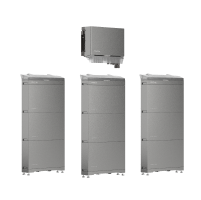
The EcoFlow OCEAN 2 Plus Single-Phase device was made for this purpose. It is a modular, LiFePO4-based home battery specifically configured for a UK single-phase installation, and expandable from 5kWh upwards. It provides whole-home backup, 0ms switchover and is MCS-listed with a 15-year warranty. The pre-integrated design and streamlined commissioning procedure make it an easy option for installers working on several projects.

Smart Energy Management as the Final Layer
After the energy inverter and battery are selected, the energy management platform can determine the daily operating performance of the inverter and battery. Even if a system is relatively large without one, it will function reactively. It automatically optimises while using one, on tariffs, solar forecasts and household demand.
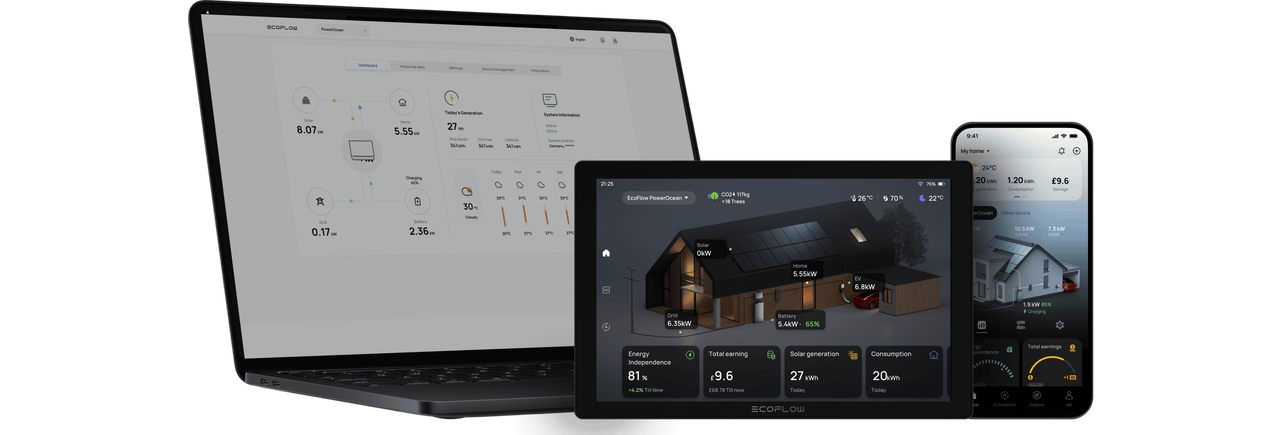
The EcoFlow Intelligent HEMS integrates the inverter, battery, solar power generation and grid tariff data into a unified managed platform. It manages the charging and discharging cycles of batteries in line with variable tariffs, including Octopus Agile or Economy 7; it learns ahead about battery generation, incorporates weather forecasts and offers remote monitoring on an installer dashboard. Any performance anomalies or fault codes are exposed as they occur, allowing for proactive aftercare – without a site visit. It is also a differentiator for installers: when they have real-time energy flow visibility, their clients will refer more work to them.
Schedule Your Free Consultation Today!
What kind of product or solution are you interested in?
Common Installation Mistakes to Avoid
Undersizing the battery. It can be drained in less than an hour when the need for electricity is moderate in the evening, with a 3kW inverter connected to a 2.5kWh battery. Sizing for a minimum of 3-4 hours of realistic load at maximum inverter output.
Skipping surge calculations. The startup current for motor-driven loads is 2 to 6 times their running current. A clean system can go wrong if the fridge compressor cycles on at night while in the discharge phase. Always check the inverter's surge rating against the highest inrush load.
Incomplete commissioning documentation. Common MCS non-conformances are missing test results, unsigned EICs, and undated records. Ensure that a standard commissioning pack template is used and completed in full before departing the site.
Conclusion
A 3000W inverter is a good choice for a wide variety of single-phase solar systems for residential use in the UK. It's located below the G98 threshold, making it easy to connect to the grid. It can power most standard household loads and be seamlessly paired with modular battery storage, such as the EcoFlow OCEAN 2 Plus Single-Phase, to provide a full energy solution. When combined with an intelligent energy management platform, a well-defined system becomes an active performer year after year for the client.
FAQs
What is the difference between a 3000W inverter and a 3000W inverter generator?
A 3000W inverter generator is a portable, fuel-powered generator designed for temporary off-grid power. In the context of a home solar system, a 3000W inverter is a fixed device permanently connected to the grid that controls the flow of power between the solar and battery systems and the home. They have the same wattage but are completely different product categories.
Can a 3000W power inverter run a whole UK home?
Can provide lighting, refrigeration, entertainment, and medium-sized kitchen appliances at the same time. Cannot support a 7kW EV charger, immersion heater or electric showers on its own. If a high simultaneous load is experienced regularly, you may need a higher-rated inverter or load management.
Does a 3kW inverter require G99 approval in the UK?
No. A 3kW single-phase inverter comes under EREC G98, where the DNO needs to be notified prior to commissioning, but not for prior approval. G99 is used for inverters greater than 3.68kW single-phase.
What battery capacity should be paired with a 3000W inverter?
Smaller households can use a minimum of 5KWH. If it's an evening-use scenario with no grid draw, 10kWh is more practical. Modular systems like the EcoFlow OCEAN 2 Plus Single-Phase are future-proof by allowing additional capacity to be added to the core unit.
Do inverters need to be MCS-certified for a residential solar installation in the UK?
Yes. Every major component must be registered in the MCS Product Directory for an installation to be MCS-certified. The SEG requires certification for the client to benefit from. Prior to finalising the specification, check to ensure that product listings are up to date.

