
Why a 3 Phase EV Charger Could Be Triggering Hidden Home Energy Costs
The best way to enhance your charging speeds is to invest in a 3 phase EV charger. However, upgrading from a standard single-phase power to a high-output three-phase system is not a plug-and-play process. And, doing so without a strategic approach, you can expect to face expensive grid upgrades, shocking peak-rate energy bills, and severe household circuit overloads.
This guide looks at:
The basics of a 3 phase EV charger
The challenges you may not know about when upgrading to rapid home charging
How to solve EV infrastructure challenges without expensive grid overhauls
How to offset the heavy utility impact of 3 phase EV chargers
How to design a future-proof layout for your 3 phase home EV charger
Understanding the Basics of a 3 Phase EV Charger
A 3 phase EV charger is a charging unit that draws electricity from a three-phase AC supply, rather than the standard single-phase connection found in most UK homes. Single-phase power delivers one alternating current wave—power arrives in pulses. Three-phase power runs three offset current waves simultaneously, producing a smoother, more continuous energy stream that reduces electrical stress across the entire charging circuit.
The numbers make the case. Standard single-phase home charging peaks at around 7.4kW. A 3 phase EV charger unlocks up to 22kW—roughly three times the output. In practical terms, that's the difference between plugging in overnight and plugging in after dinner with a full battery by the time you finish the washing up.
Not every UK property is ready for a 3 phase EV charger. Most homes run on a single-phase supply from their Distribution Network Operator (DNO), and accessing three-phase power requires a formal supply upgrade—a process that is neither quick nor cheap.
The Hidden Bottlenecks of Upgrading to Rapid Home Charging
Before installing a 3 phase EV charger, it pays to understand the structural and financial friction involved. The charger hardware is rarely the biggest line item.
The Harsh Financial Reality of Three-Phase Grid Conversions in the UK
Installing a 3 phase home EV charger requires a formal DNO application to organisations such as UK Power Networks, Western Power Distribution, or SP Energy Networks. The process involves a site survey, new cabling from the street supply, a three-phase meter replacement, and internal consumer unit rewiring. Costs typically range from £1,500 to over £5,000 before the charger unit itself is purchased. Properties requiring excavation—older terraced homes, rural connections with long cable runs—can see that figure rise considerably. For more information and insight, read the article about the cost to install three-phase power in the UK.
Note: Grid upgrade costs vary by region, property type, and DNO. For current guidance on network connection charges and your consumer rights, visit Ofgem's official website.
Why a 22kW 3 Phase EV Charger Causes Severe Peak-Demand Spikes
A 22kW 3 phase EV charger operating at full draw is the equivalent of running roughly 18 standard electric ovens simultaneously. Most UK domestic supplies are rated between 60A and 100A. When a 22kW 3-phase EV charger runs during the early evening—peak consumption window for most grid operators—it pushes total household draw into higher-cost pricing tiers, inflating monthly bills significantly.
Balancing Domestic Appliance Loads Against Massive Automotive Power Draws
EV chargers don't operate in isolation. Running a tumble dryer, electric hob, and dishwasher alongside 3 phase EV chargers at full output can easily exceed a standard main fuse rating. Without active load management, the outcome is nuisance breaker trips, thermal stress on household wiring, and—in worst cases—damage to the consumer unit itself.
Solving the EV Infrastructure Dilemma Without Expensive Grid Overhauls
Understanding Static Versus Dynamic Load Balancing for Residential Spaces
Static load balancing is a method used to cap the EV charger at a fixed power ceiling. Dynamic load balancing, on the other hand, involves monitoring real-time household consumption and automatically adjusts how much power flows to your vehicle. For example, let’s say you have an oven that draws 3kW mid-charge, the system will trim the EV allocation by the same margin to keep the total draw within safe limits. Current EV charger 3 phase hardware has an integrated CT clamp technology that enables dynamic load balancing.
Mitigating Voltage Drops and Localized Circuit Overload Issues
High-amperage draw results in heat generation that can degrade your cables' insulations over time. This is more adverse in older properties whose wiring was done without considering the demands of modern EV charging. Therefore before you implement a home charging setup ensure that you have correctly rated miniature circuit breakers (MCBs), appropriately specced cable runs, and professional consumer unit assessment.
Transitioning from Grid Dependence to a Closed-Loop Residential Ecosystem
When it comes to EV charging, the best approach is reducing reliance on grid power altogether. You can achieve this through combining rooftop solar with on-site battery storage to create a closed-loop system in which the solar charges the battery during daytime hours and the battery powers the EV charger 3 phase unit during evening charging windows. This can help reduce reliance on peak‑rate grid electricity and lower monthly electricity costs over time.
How to Offset the Heavy Utility Impact of 3 Phase EV Chargers
Scaling Up Local Solar Energy Capture via Home Energy Management System
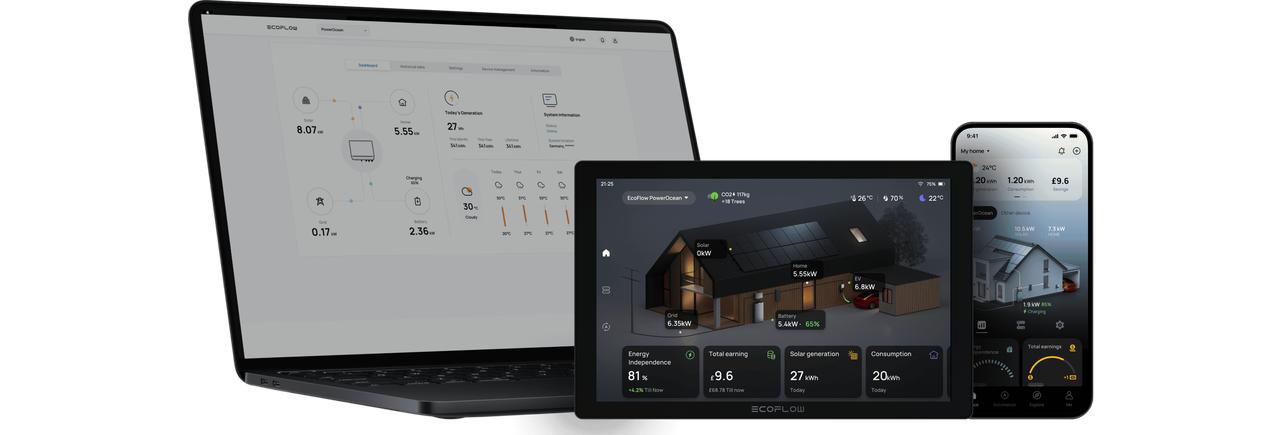
An intelligent home energy management system is the connective tissue between solar generation, home storage, and your 3 phase EV charger. The EcoFlow Intelligent HEMS illustrates this well—it monitors Time-of-Use (TOU) tariff windows, tracks real-time solar output, and automates charge and discharge scheduling so the EV draws the cheapest available energy at any given moment. In practice, a well‑configured system can significantly reduce how often a 3 phase home EV charger draws expensive peak‑rate electricity.
Buffering Peak Utility Spikes Using the Expandable Single-Phase Home Battery
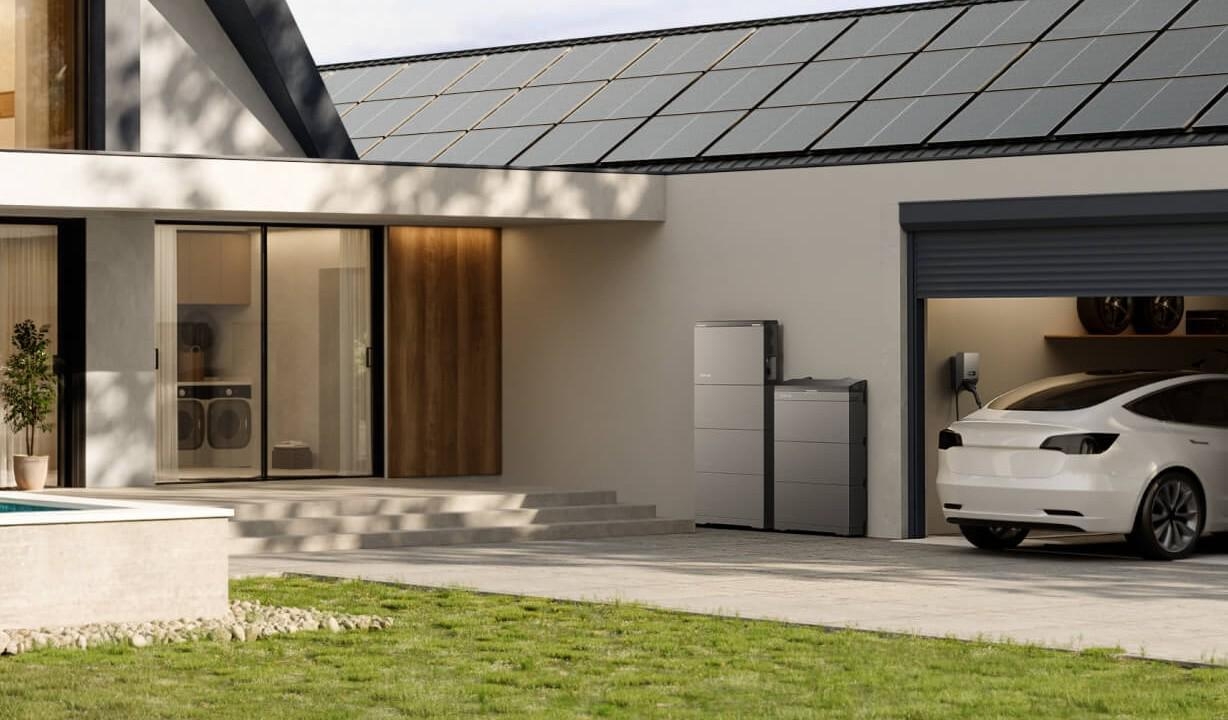
Home battery storage acts as both a financial and electrical buffer between the grid and high-demand loads. The EcoFlow OCEAN 2 Single-Phase Home Battery is well suited to this role—storing off-peak or solar-generated electricity and releasing it during high-demand windows, including when 3 phase EV chargers are running at full output. Built on LiFePO4 chemistry for long cycle life, and with modular capacity expansion, it integrates directly with EcoFlow's HEMS platform for automated, intelligent control.
Capitalising on Time-of-Use Tariffs and Intelligent Scheduling
On a time-of-use tariff—Octopus Energy's Agile or Go, for instance—electricity can drop to 5–15p/kWh during off-peak windows. A battery charged at those rates and discharged to cover your EV charger 3 phase load during the evening peak can materially reduce effective charging costs compared to standard daytime rates, depending on tariffs and charging patterns.
Note: The time-of-use electricity price provided here is always changing. Therefore, to get the actual real-time figures, always check on your electricity and gas supplier dashboard.
The Role of AI Energy Management in Predictive Home Storage
Artificial intelligence (AI) is becoming a major part of our daily lives. Modern HEMS platforms use AI and can use weather forecast data and live grid pricing to help you make proactive storage decisions. For example, if the weather is predicted to be overcast or cloudy, the system pre-charges your battery during cheap overnight windows. And if the weather is forecasted to be sunny, it reserves capacity for maximum solar capture. And all this means one thing, savings in your electricity bills especially if you run 3 phase EV chargers daily.
Maximising Self-Consumption Rates via Dedicated Residential Solar Arrays
UK Smart Export Guarantee (SEG) export rates typically range from 2p to 25p per kWh—well below the cost of importing equivalent energy. Directing solar generation into home battery storage and onward into EV charging keeps that value within the property. A well-sized array paired with adequate storage can offset a significant portion of annual EV running costs entirely.
Note: To know the up-to-date cost of exporting electricity to the grid, check on Ofgem, Energy Saving Trust (EST), and Solar Energy UK websites.
Schedule Your Free Consultation Today!
What kind of product or solution are you interested in?
Designing a Future-Proof Layout for Your 3 Phase Home EV Charger
A well-planned 3 phase EV charger installation accounts for today's vehicle and tomorrow's technology—avoiding costly retrofits as the EV market evolves.
Selecting the Right Tethered Versus Untethered Hardware Configurations
Tethered units have the cable permanently attached—convenient and marginally cheaper upfront. Untethered 3 phase EV chargers accept any compatible Type 2 cable, offering greater adaptability as vehicle models and connector standards evolve. For multi-vehicle homes or those planning to switch EVs over the coming years, untethered hardware is the more resilient long-term investment.
Essential Safety Certifications and Regional Compliance Standards
Every 3 phase home EV charger installation in the UK must comply with BS 7671 wiring regulations and meet PEN fault protection requirements under the Electric Vehicles (Smart Charge Points) Regulations 2021. Installation must be completed by a qualified electrician registered with a competent persons scheme—NAPIT or NICEIC are the primary accreditation bodies.
Preparing Storage Systems for Future Vehicle-to-Home Capabilities
Vehicle-to-Home (V2H) technology—where the EV battery discharges back into the house during peak demand or grid outages—is gaining traction in the UK market. Homeowners pairing bidirectional-compatible vehicles with home batteries and an intelligent HEMS are already building the foundations of a genuinely resilient energy ecosystem, with the vehicle serving as a mobile storage node rather than simply a large electrical load.
Take Complete Control of Your Home Power with a 3 Phase EV Charger
A 3 phase EV charger gives you faster charging speeds. However, speed without strategy can be an expensive mistake. Installing a 3 phase EV charger exposes you to grid upgrade fees, peak-rate electricity, and unmanaged load conflicts that can all result in inflating your energy bills. To handle this pain point, pair your rapid charging hardware with intelligent storage and automated AI energy management. This approach helps balance faster charging with lower costs and reduced reliance on grid infrastructure.
3 Phase EV Charger Frequently Asked Questions
Does an EV Charger 3 Phase Setup Require a Completely New Grid Connection from My Provider?
Yes. If your property currently operates on a standard single-phase supply—common across most UK homes—you must apply to your local DNO for a three-phase upgrade. This involves running new physical cabling from the street grid to your property and installing a new three-phase meter pan. Costs vary significantly by region and property type, so always confirm with your local DNO before budgeting.
Can I Run a 22kW 3 Phase EV Charger Purely on a Residential Solar Panel Array?
A standard domestic solar array rarely produces 22kW of instantaneous output on its own. Pairing solar panels with a home battery storage system can make sustainable high‑speed charging more achievable, however. The battery accumulates solar energy throughout the day and discharges it rapidly when the vehicle connects—effectively making a 22kW 3 phase EV charger solar-powered for a significant portion of the year.
What Happens If My Domestic Power Consumption Exceeds Capacity While Charging My Vehicle?
If you have high-demand appliances and an active EV charger all drawing maximum current simultaneously, your main supply is overloaded and trips your breakers. That’s why dynamic load balancing or a smart home storage system is necessary to ensure background appliances receive priority power and automatically adjust the current routed to your vehicle. We highly recommend pairing your 3 phase EV chargers with an intelligent HEMS platform.

