Split System Air Conditioner: Running Costs and How to Choose One in Australia
Australian homes can face very different conditions: a bedroom may need cooling through a hot summer night, while a living room in the south may need heating on a cold winter morning. A split system can handle both jobs when it’s sized for the room and used well. This guide covers typical running costs in Australia, how to choose a unit for your home, and practical ways to reduce the electricity it uses.
Key Takeaways
Affordable running costs: A modern 2.5 kW bedroom split system typically costs between $0.21 and $0.0.25 per hour to run, whereas a larger 7.1–8.0 kW unit in an open-plan lounge typically costs around $0.70 to $0.84 per hour once the room stabilizes.
Reverse cycle wins on value: Modern reverse cycle inverter units double as one of the most cost-effective heating methods available in Australia, outperforming conventional electric bar heaters and portable oil columns.
Accurate sizing is critical: Undersized units run flat-out and spike power consumption, while oversized units short-cycle and leave rooms feeling humid.
Smart thermostats save cash: Consider 25°C–27°C for summer cooling and 18°C–20°C for winter heating, allowing for comfort and health needs; more demanding settings can increase heating and cooling energy use by around 5%–10% per degree.
Solar plus battery storage unlocks night savings: Shifting daytime rooftop solar generation into an evening battery setup lets you run cooling during peak tariff hours without drawing expensive grid electricity.
What Is a Split System Air Conditioner and How Does It Work?
A split system has an indoor unit and an outdoor unit connected by refrigerant pipes and wiring. The indoor unit circulates conditioned air through the room, while the outdoor unit moves heat in or out of the house.
How the Indoor and Outdoor Units Work Together
Two distinct enclosures handle the heavy lifting. Mounted high on your interior wall, the sleek indoor head unit houses an evaporator coil, a quiet tangential fan, and air filtration screens. Outside—either mounted on exterior brackets or set on a concrete slab—sits the outdoor compressor and condenser unit. Refrigerant lines, drainage pipework, and electrical wiring run between the two through a compact three-inch wall penetration. The outdoor compressor pumps refrigerant fluid back and forth continuously, shifting thermal energy out of the room rather than simply blowing conditioned air around.
How a Split System Air Conditioner Cools and Heats a Room
Thermal physics does the actual work here. During cooling mode, the indoor evaporator absorbs ambient heat from indoor air as cold liquid refrigerant evaporates inside its copper coils. The warm vapor travels outside, where the compressor pressurises it and dumps the heat outdoors before condensing back into liquid. Reverse cycle models feature an internal reversing valve. When winter rolls through Melbourne, Adelaide, or the Canberra highlands, the refrigerant flow flips direction completely: the outdoor coil captures ambient heat from outdoor air and delivers it indoors as efficient warmth.
How Much Does It Cost to Run a Split System Air Conditioner?
Your bill depends on how much electricity the unit draws, how long it runs and the rate on your electricity plan. The estimates below use a rate of $0.35 per kWh; check your bill for your own usage rate, since tariffs vary across Australia. If you are comparing ways to shift solar electricity into evening cooling, solar battery storage is one option to assess alongside your tariff.
Average Hourly and Daily Running Costs
Modern inverter units draw significantly less electrical power than their advertised thermal capacity. A 2.5 kW cooling capacity unit, for instance, typically draws only 0.6 to 0.7 kW of electricity once the room reaches the target temperature. The table below outlines typical running costs across common room sizes based on an illustrative electricity rate of $0.35/kWh, rather than a national average:
| Room Type | Recommended Capacity | Typical Power Draw (Input) | Approx. Cost Per Hour | Est. Daily Cost (4 Hours) | Est. Daily Cost (8 Hours) |
|---|---|---|---|---|---|
| Small Bedroom / Home Office | 2.5 kW | 0.6 – 0.7 kW | $0.21 – $0.25 | $0.84 – $1.00 | $1.70 – $2.00 |
| Master Bedroom / Study | 3.5 kW | 0.9 – 1.0 kW | $0.31 – $0.35 | $1.25 – $1.40 | $2.50 – $2.80 |
| Mid-Sized Living Room | 5.0 – 6.0 kW | 1.4 – 1.6 kW | $0.49 – $0.56 | $1.96 – $2.24 | $3.90 – $4.50 |
| Large Open-Plan Living & Dining | 7.1 – 8.0 kW | 2.0 – 2.4 kW | $0.70 – $0.84 | $2.80 – $3.36 | $5.60 – $6.72 |
Estimated Monthly and Annual Electricity Costs
Seasonal usage habits dictate your quarterly power bills. Running a standard 3.5 kW unit for 6 hours a day during a scorching 90-day summer stretch adds approximately $170 to $220 to your power bills for that period. Over a full 12-month calendar year, an energy-efficient reverse cycle unit used for moderate summer cooling (around 300 hours) and winter evening heating (around 400 hours) generally costs between $220 and $450 in total running power per room, delivering exceptional economy compared to centralized ducted gas or older electric space heaters.

How to Choose the Best Split System Air Conditioner for Australian Homes
Think about the room you want to cool or heat first. A unit that suits a small bedroom may struggle in an open-plan living area, and the best option also depends on your local weather, outdoor space and whether you’ll use it through winter. Compare the cost of installing air con as well as ongoing electricity use before choosing a system.
Choose Between Reverse Cycle and Cooling-Only Systems
Cooling-only models may save $100 to $200 upfront, but they make little sense for the vast majority of Australian homes. Reverse cycle split systems provide year-round heating and cooling from a single wall bracket. Unless you live in the deep tropical heat of Far North Queensland or the Top End where heating is never required, reverse cycle units deliver far better long-term return on investment.
Choose Between Single-Split and Multi-Split Systems
Single-split setups pair one outdoor compressor to one indoor head unit, making them simple to install and cost-effective for cooling a single bedroom or family room. If your home has limited outdoor yard space, such as a townhouse, villa, or tight suburban block, a multi-split system allows up to five individual indoor units to run off a single, shared outdoor condenser. Each indoor head unit retains independent temperature control, though the initial equipment and refrigeration pipework installation costs run higher.
Match Air Conditioner Capacity to Your Room Size
Getting your sizing right is crucial. An undersized unit struggles on 38°C days, driving up power consumption without cooling the room properly. Conversely, an oversized unit reaches temperature too quickly and switches off before it can extract muggy humidity from the air.
Up to 20 m² (small bedroom or study): 2.0 kW – 2.5 kW
20 m² – 35 m² (large master bedroom or home office): 3.5 kW
35 m² – 50 m² (average lounge room or open kitchen): 5.0 kW – 6.0 kW
50 m² – 75 m² (large open-plan living and dining): 7.1 kW – 8.0 kW
Tip: Add 0.5 kW to 1.0 kW of capacity if your room has high cathedral ceilings, large unshaded west-facing glass windows, or poor ceiling insulation.
Compare Energy Efficiency Ratings and Running Costs
Most residential single-split models must display the Zoned Energy Rating Label (ZERL), although exceptions include multi-split and three-phase systems. Unlike older nationwide labels, the ZERL rates seasonal efficiency separately for cooling and heating across three distinct climate zones: Hot (e.g. Brisbane/Darwin), Average (e.g. Sydney/Perth/Adelaide), and Cold (e.g. Melbourne/Canberra/Hobart). Because performance varies dramatically with ambient temperature, a model rated 4.5 stars in the Average zone might achieve only 3 stars in the Hot zone. When comparing units, always check the star rating specific to your zone and primary usage mode (cooling vs heating). Compare the label’s estimated annual kWh for similar-capacity models in your climate zone; a star rating alone does not guarantee a fixed percentage saving. A smart meter can help you review when grid electricity is used, although it does not normally show the air conditioner’s consumption separately.
Consider Noise Levels for Different Living Spaces
Indoor acoustic comfort matters just as much as thermal performance, especially when trying to sleep on warm summer nights. Check the indoor decibel rating (dBA) on low fan speed. High-end split systems run as quietly as 19 to 22 dBA indoors—barely audible above a faint whisper. For living areas, indoor sound ratings under 35 dBA remain unobtrusive. It is also wise to check outdoor condenser noise limits to ensure you remain compliant with local council boundary noise regulations.

How to Reduce Split System Air Conditioner Running Costs in Australia
Small changes to settings and maintenance can help keep electricity use down. Start with the thermostat, then look at when the unit runs, how freely air moves through it and how well your home holds its temperature. For homes with rooftop solar, the EcoFlow solar battery can also store surplus generation for later use, subject to system capacity and household demand.
Set Energy-Efficient Thermostat Temperatures
Australian Government guidance suggests 25°C to 27°C for summer cooling and 18°C to 20°C for winter heating, adjusted for comfort and health needs. Resist the urge to crank the temperature down to 18°C on a boiling 40°C afternoon; doing so will not cool the room down any faster, but it will force the compressor to run at peak capacity for hours, burning through excess power.
Use Timers and Smart Features to Avoid Unnecessary Operation
Modern split systems come equipped with Wi-Fi connectivity and onboard scheduling. Instead of letting your unit run all day in an empty house, program it to kick on 30 minutes before you arrive home from work. Using the sleep timer overnight allows the unit to gradually raise the set point by 1°C or 2°C as ambient temperatures drop outside, keeping you comfortable while trimming unnecessary power draw.
Clean Air Filters and Maintain Your System Regularly
Dust, pet hair, and airborne fibers collect on the indoor filters every month. When airflow becomes choked, your fan motor and compressor work harder to move less air. Unclip the front panel every four to six weeks during heavy seasons, vacuum the mesh screens, and rinse them clean in lukewarm water. An annual professional service to rinse the coils and verify refrigerant pressures keeps the unit running at factory efficiency.
Improve Home Insulation to Reduce Heating and Cooling Demand
No air conditioner can operate efficiently if your conditioned air escapes through draughty gaps. Draw heavy curtains or cellular blinds over large north- and west-facing windows during peak daytime sun to block radiant heat load. In winter, sealing gaps around external doors and maintaining adequate ceiling insulation batts (with the appropriate R-value confirmed for your climate, roof and installation) traps warmth inside and cuts running times significantly.
Use Solar Power to Offset Air Conditioning Electricity Costs
Solar panels can supply some of the electricity used for cooling during the day, when the sun is shining. The timing can be a challenge: many households use more air conditioning in the late afternoon and evening, as solar generation falls and electricity rates may rise.
A home battery can store some of the surplus solar energy produced earlier and make it available later. The amount of air conditioning it can support depends on the battery’s usable capacity, the household’s other loads and the system’s backup configuration.
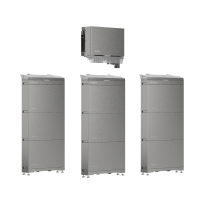
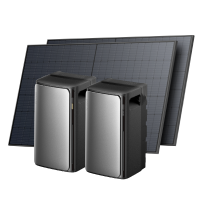
Solutions like the EcoFlow OCEAN 2 Plus single phase provide a dedicated home battery platform that stores daytime generation for nighttime climate control. To eliminate guesswork around household consumption, the EcoFlow PowerInsight 2 home energy monitor delivers real-time visibility across solar generation, battery reserve levels, and household load habits. Monitoring can help inform cooling schedules; automation and savings depend on compatible devices, system settings, household demand and the electricity tariff.
Schedule Your Free Consultation Today!
What kind of product or solution are you interested in?
Conclusion
A split system can provide efficient heating and cooling for an Australian home, but its running cost depends on more than the unit’s capacity. Room size, insulation, local weather, thermostat settings and electricity rates all affect how much it uses.
Before buying, compare the system’s capacity and energy rating with the room it needs to serve. Once it’s installed, sensible temperature settings, clean filters and well-timed use can help keep the home comfortable without adding unnecessary demand to your power bill.
FAQs
How Long Does a Split System Air Conditioner Last in Australia?
A good split system in Australia usually lasts 10 to 15 years with regular servicing and a proper install. Units on the coast, where salt spray is heavy, can see coil corrosion sooner unless they’ve had a specialised anti-corrosion coating (like gold or blue fin condenser treatment).
What Are Common Problems with Split System Air Conditioners?
Common issues include clogged filter screens, blocked indoor drain lines that send water dripping down the inside wall, refrigerant leaks that leave heating or cooling struggling, and failing control boards. Most of these come down to skipped cleaning or pipe penetrations that weren’t sealed properly.
Can I Get a Rebate on an Air Conditioner in Australia?
Yes, depending on your state and whether you are upgrading an older, inefficient heating or cooling system. State energy-efficiency schemes, such as the Victorian Energy Upgrades (VEU) program and the NSW Energy Savings Scheme (ESS), offer upfront discounts when replacing outdated gas heaters or resistive electric units with high-efficiency reverse cycle systems. In Queensland, Energex and Ergon Energy state that PeakSmart is closed to new participants; existing enabled air conditioners can continue responding to network signals. Check current eligibility and program conditions with the relevant state government or network before purchasing.
Can You Install a Split System in an Existing Home?
Yes, split systems are easy to install in almost any existing Australian home, whether it’s timber weatherboard, double brick or brick veneer. The install only needs a small core-drilled hole through the external wall to route the refrigerant lines, electrical connections and condensation drain to the outdoor compressor.
Do Larger Split System Air Conditioners Cost More to Run?
Yes. Larger capacity units draw more power per hour because they house bigger compressors and fan motors.