Solar and Battery Price: How Much Does a Solar Battery System Cost in Australia?
Rooftop solar is everywhere across Australian suburbs. But once the sun goes down, the bills still bite. Pairing panels with a home battery lets you store your excess daytime generation instead of exporting it for a measly feed-in tariff. This breakdown cuts through the marketing hype. It covers what a solar and battery setup actually costs in Australia, how incentives cut your upfront hit, what drives long-term payback, and how to pick gear that’s built for local conditions.
Key Takeaways
Typical Installed Cost: A 6.6 kW to 10 kW solar system with a 10 kWh battery usually sets you back 13,500–18,500, depending on the inverter and site.
Battery Retrofit: Adding a 10 kWh battery to existing solar typically costs 8,000–12,000.
Payback Period: High-use households may recoup the cost in 6 to 9 years, depending on tariffs and usage.
Usage Data Matters: Check your energy use and backup needs to see how much value a battery could actually provide.
How Much Does a Solar and Battery System Cost in Australia?
Solar and battery prices vary with system size, equipment and installation requirements. The figures below give a typical starting point. Compare solar battery storage options alongside itemised installation quotes.
Solar and Battery System Prices by Size
A standard 10 kWh battery remains the benchmark for typical three-to-four-person households. Larger properties running ducted reverse-cycle air conditioning, a swimming pool, or an EV charger usually step up to 13.5 kWh to 20 kWh.
| Battery Storage (Usable) | Typical Solar Array Size | Average Gross Installed Cost (AUD) | Typical Net Cost Post-Solar STC (AUD) |
|---|---|---|---|
| 5 kWh | 5 kW – 6.6 kW | $11,500 – $14,000 | $9,500 – $11,500 |
| 10 kWh | 6.6 kW – 8 kW | $14,500 – $18,500 | $12,500 – $16,000 |
| 13.5 kWh – 15 kWh | 8 kW – 10 kW | $17,000 – $22,000 | $14,500 – $19,000 |
| 20+ kWh | 10 kW – 13.2 kW | $23,000 – $30,000+ | $19,500 – $26,000+ |
Note: These indicative budget ranges are not national price benchmarks or current installer quotes. The table’s net figures account for solar PV STCs only, excluding any eligible federal battery discount. NSW’s former battery installation discount is suspended. Compare dated, itemised local quotes and confirm current federal and state eligibility before relying on a net price.
Solar-Only vs Solar and Battery System Costs
A standalone 6.6 kW rooftop solar system without energy storage costs between $4,500 and $7,000 AUD after conventional STC discounts. Bolting a 10 kWh battery onto that plan roughly doubles the upfront invoice. However, with feed-in tariffs in states like NSW, Victoria, and Queensland hovering around an underwhelming 3¢ to 7¢ per kWh, daytime exports deliver low returns. A battery retains that power so you avoid buying grid electricity at 35¢ to 50¢ per kWh during evening peak hours.
New Solar Installation vs Battery Retrofit Costs
Bundling solar panels and a storage unit simultaneously is cheaper overall than staging the purchases years apart.
Combined Installation: Installers mount the racking, pull DC wiring, set up a single hybrid inverter, and sign off on grid paperwork all in one go.
Retrofit onto Existing Solar: If your current inverter is a basic string model with no battery connection, you will need to choose between swapping out the old unit for a hybrid inverter or wiring an AC-coupled battery system directly into your sub-board. That extra hardware and labour adds $1,500 to $3,000 AUD compared to a clean, integrated new-build setup.
What Affects the Cost of a Solar Battery System?
The final quote depends on more than battery size. Your solar array, inverter, switchboard and the work needed to connect everything can all affect the price. Our solar battery cost guide explains how capacity and installation work affect the battery component of a quote.
Battery Capacity and Usable Storage
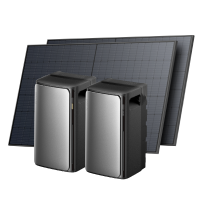
A battery’s total capacity is the energy it can hold; usable capacity is the amount available to your home after the depth-of-discharge limit is accounted for. A larger battery may cost less per usable kWh, but it still means a higher upfront price. Compare usable capacity when reviewing quotes. For an overview of compatible home storage options, explore the EcoFlow solar battery range.
Solar Panel Capacity
Your panels need to produce enough surplus power to charge the battery after meeting your daytime needs. A small or older array may not fully charge a 10 kWh battery, especially in autumn and winter. That can leave storage unused or increase reliance on grid power, reducing potential savings.
Inverter Compatibility and Replacement Costs
A DC-coupled battery needs a compatible hybrid inverter to manage solar generation and battery charging. If your existing inverter is getting on in years, replacing it with a 5 kW to 10 kW hybrid model typically costs $2,000 to $4,500. Some batteries have an inverter built in, which simplifies the setup but can push the equipment price up.
Installation Complexity and Additional Electrical Work
Older switchboards, wiring that needs upgrading, extra breakers, or long cable runs can add $800 to $2,500 to the quote. A good installer will check the switchboard and the proposed battery location before giving you a final price, so there are no surprises later.

What Solar Battery Rebates Are Available in Australia?
Federal incentives can reduce the upfront price, and some states and territories offer additional support. Availability and eligibility vary, so check current program details before relying on a rebate.
Federal Solar Battery Rebates
Eligible home batteries can receive upfront discounts through Small-scale Technology Certificates (STCs) under the federal Cheaper Home Batteries Program. The discount depends on installation date, usable capacity, certificate value and fees. Use the Clean Energy Regulator’s current calculator and eligibility guidance rather than assuming a fixed dollar rebate. Check the applicable approved-product lists and SAA installer accreditation before accepting a quote.
State and Territory Solar Battery Rebates
State programs frequently change as budget caps are met, but several regions offer stackable support:
New South Wales: The NSW battery installation discount was suspended from 1 July 2025 following the introduction of the federal program. Eligible households may still receive an incentive for connecting a battery to an approved Virtual Power Plant (VPP).
Australian Capital Territory: The Sustainable Household Scheme offers eligible households low-interest finance. Standard scheme loans have carried a 3% interest rate since 1 July 2025; separate Home Energy Support Program terms may differ. Confirm current eligibility and loan terms before applying.
Western Australia: The WA Residential Battery Scheme offers eligible Synergy and Horizon Power customers rebates of up to $1,300 and $3,800 respectively. Approved equipment and VPP participation are required; eligible households may also apply for a no-interest loan.
Victoria, Queensland & South Australia: Federal battery STCs may be available to eligible households. State grants and loan programs have separate eligibility rules and may close or change; check the relevant state government’s current guidance before applying.
Is a Solar Battery Worth the Cost in Australia?
A battery’s value depends on how much solar power you can store and use instead of buying electricity from the grid. Compare your likely bill savings with the installed cost to estimate whether it makes sense for your household.
Compare Potential Savings with the Upfront Cost
A battery’s savings depend on how much surplus solar power it stores and how much grid electricity it replaces in the evening. Check your daytime use, battery charging and overnight consumption to see how much power you still buy from the grid. The EcoFlow PowerInsight 2 displays household generation, consumption and battery levels on a 10.95-inch screen. Its historical data can help you spot usage patterns and compare potential savings with your electricity bill and the battery’s upfront cost.
Estimate the Solar Battery Payback Period
Estimate simple payback by dividing the net installed cost by annual bill savings:
Payback period (years) = Net installed cost ÷ Annual bill savings
For example, a 10 kWh battery costing $9,500 after incentives could store 9 kWh of surplus solar power each day. If that power would earn 5¢ per kWh as an export but replace grid electricity costing 42¢, the saving is about 37¢ per kWh, or $1,215 a year. The simple payback period is roughly 7.8 years. Higher electricity rates or VPP payments may shorten the payback period. Homes with low evening use may take more than 10 years.

How to Choose a Solar Battery System for Your Home
Choose a battery that fits your household’s energy use, current solar setup and backup needs. The right capacity, inverter type, blackout output and warranty can all affect how well the system works for you.
Match Battery Capacity to Your Household Electricity Use
Size the battery around the electricity your household uses from the evening through the next morning, rather than trying to cover several days of cloudy weather. Check your retailer’s app or smart meter data to see how much power you typically use overnight. If it’s about 8 kWh, a 10 kWh battery with roughly 9.5 kWh of usable storage may cover most of that demand without paying for capacity you rarely use.
Compare AC-Coupled and DC-Coupled Battery Systems
DC-coupled systems connect the solar panels and battery through a shared hybrid inverter. They typically have higher round-trip efficiency, around 90% to 94%, and are a good fit for a new solar installation or when replacing an existing inverter.
AC-coupled systems have their own inverter and connect to the home switchboard separately from the solar inverter. They’re often easier to add to an existing system, though conversion losses can be higher, with typical efficiency around 85% to 89%.
Check Backup Power Capacity for Blackouts
For blackout protection, check both the battery’s storage capacity, measured in kWh, and its continuous output, measured in kW. Storage capacity affects how long the battery can run; output determines which appliances it can power at the same time. A fridge, lights and Wi-Fi use less power than an induction cooktop, water pump or ducted air conditioner, so check the system’s limits against the appliances you want to keep running.
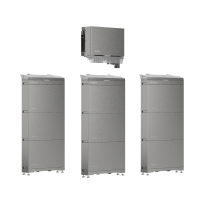
The Ecoflow OCEAN 2 Plus single phase is designed for whole-home backup and uses modular batteries that can scale up to 96 kWh across one inverter platform. Under compatible operating conditions, it offers a 0 ms load-side transfer when the grid fails. Confirm the system configuration and backup loads with your installer.
Compare Solar Battery Warranties
Check the warranty term, energy-throughput or cycle limit, and minimum capacity retention. Many Australian home batteries offer a 10-year warranty, but retention guarantees vary by model, so compare the product terms rather than relying on a single benchmark. Local service and technical support can also make warranty claims easier.
Schedule Your Free Consultation Today!
What kind of product or solution are you interested in?
Conclusion
Lower feed-in tariffs and higher evening electricity costs have made battery storage worth considering for more Australian households. The right system depends on your solar output, electricity plan and when you use power. Compare a few quotes, check which rebates apply in your state, and ask installers to estimate how much of your solar energy a battery could help you use at home.
Disclaimer: Prices, tariffs, rebates and finance options in this article are indicative and may change. Program availability, eligibility and the ability to combine incentives vary by state or territory, installation date and household circumstances. Check the latest Australian Government and relevant state or territory guidance, confirm terms with the program provider, and obtain an itemised quote from a suitably qualified installer before making a purchase. Savings and payback examples are estimates, not guarantees. This article provides general information and does not constitute personalised financial advice.
FAQs
How To Tell If A Solar Panel Is Compatible With A Battery?
Yes, virtually every modern solar panel is compatible with a battery system; compatibility is determined by your inverter and system wiring, not the brand or type of photovoltaic panels mounted on your roof. If you run a standard grid-tied string inverter, you can add an AC-coupled battery directly to your switchboard or upgrade your existing unit to a hybrid inverter that matches the DC voltage and string configuration of your panels.
What Happens To Solar Energy When The Battery Is Full?
Once your battery hits 100% state-of-charge, surplus solar generation is automatically diverted to cover any appliances running in the home, with any remaining excess exported directly to the local electricity grid. Your energy retailer will credit that exported electricity to your account according to your plan’s solar feed-in tariff.
How Long Will A Solar Battery Power A House?
A standard 10 kWh battery will power typical essential household loads, including lights, refrigeration, internet routers, and TV, for 12 to 24 hours during an outage. If you choose to run power-hungry appliances such as ducted air conditioning, electric clothes dryers, or pool pumps, that same 10 kWh storage reserve can be depleted in just 2 to 4 hours.
How Do I Maintain My Solar Battery?
Solar batteries need almost no physical maintenance. There are no moving parts. Keep the unit clean, clear of debris, and unobstructed so air can flow. Check the manufacturer’s app regularly to confirm the cells are charging and discharging smoothly. And every 3 to 5 years, get an accredited solar technician to inspect the terminal torques and safety isolators.
Where Should A Solar Battery Be Installed?
Put it somewhere sheltered and shaded, out of direct afternoon sun. A garage, carport, or shaded south or east-facing wall works well. Australian standard AS/NZS 5139 sets clear fire-safety distances from habitable rooms, windows, and building exits. A certified electrician needs to inspect your site to find an approved spot.