Power Surge: Causes, Signs & How to Protect Your Home Appliances
A power surge is a sudden, short-lived increase in voltage that can rise well above Australia’s nominal 230V supply. Lightning strikes can cause severe surges, but smaller transient events can also result from large appliances switching on and off or switching operations on the electricity grid. To protect your home, you can consider a suitably selected Surge Protective Device (SPD) at the switchboard, use quality surge-protected power boards for sensitive electronics, and use a battery backup system to keep essential loads running during an outage.
This guide breaks down what causes surges in Aussie homes, the warning signs you shouldn’t ignore, which appliances are most at risk, and the practical steps you can take to protect your gear.
Key Takeaways
• Australia's nominal supply voltage: Residential mains supply is nominally 230V, with a commonly referenced supply range of +10% / -6%. Transient surges can rise far above normal operating voltage for a very short period.
• Inside the home or from the grid: Some industry sources estimate that a large share of transient events originate inside buildings, often from motors, compressors and other inductive loads switching on and off.
• The cumulative effect: Beyond immediate failures, repeated transient events can place stress on sensitive electronic components and may contribute to premature failure over time.
• Layer your protection: A layered approach can combine switchboard-level surge protection with point-of-use surge protectors for sensitive electronics.
• Ride out outages: Backup-capable home batteries such as the EcoFlow OCEAN 2 Plus Single-Phase can help keep essential circuits powered when the grid goes down, depending on the system configuration.

What Is a Power Surge and What Causes It?
Electrical circuits in Australian homes are designed to operate within an expected voltage range, but the supply is not perfectly constant. When voltage rises significantly above normal operating levels, connected appliances and electronic equipment can be exposed to additional electrical stress or damage.
Understanding Power Surges and Voltage Spikes
In Australia, residential electricity supply is nominally 230V at 50Hz, although actual supply voltage can vary within the applicable operating range. A transient power surge is a short-duration increase in voltage that can rise significantly above the normal supply level.
These events generally fall into two categories:
• Voltage Spikes (Transient Overvoltages): Very short-duration voltage increases that can reach significantly higher levels than the normal supply voltage.
• Sustained Overvoltages: Longer-lasting increases in supply voltage that can result from network faults, neutral problems or other supply-side conditions.
Even transient spikes deliver excess electrical energy that your TV, computer, and kitchen gadgets were never designed to absorb.
External Causes: Lightning Strikes, Grid Faults, and Power Restoration
External surges can enter a home through the electricity supply or other connected conductive services. Storms and lightning are important causes, and a lightning strike does not have to hit the building directly to create a damaging transient. A nearby strike can induce significant overvoltage on electrical or telecommunications lines.
Other external causes include network switching, faults, damaged power lines and accidents involving electricity infrastructure. Australian network operators such as Ausgrid and Energex also warn that storms, lightning and other network events can cause power surges. Power restoration can also be associated with voltage disturbances, particularly when network faults or other supply conditions are being resolved. This is one reason sensitive equipment can be vulnerable when power returns after an outage. Your smart meter can help you review electricity usage around an interruption, although it is not a surge protection device.
Internal Causes: Switching High-Power Household Appliances
Many smaller transient events can originate within a home. When a motor, compressor or other inductive load switches on or off, the rapid change in current can create a transient disturbance on the electrical circuit.
The usual suspects:
• Ducted air con and split-system heat pumps firing up on a 40°C arvo
• Pool pumps and bore pumps cycling on their timers
• Commercial-grade espresso machines, clothes dryers, and big workshop tools
A single internal transient may not cause immediate damage, but repeated events can place additional stress on sensitive electronics connected to the same electrical system.
What Are the Signs and Risks of Power Surges?
Some surge-related damage is immediately obvious, while repeated or less severe electrical disturbances may be harder to identify. Certain symptoms can provide clues that an appliance or electrical installation needs attention. Pick up on those early signs, and you can catch a wiring or circuit problem before it turns into a hefty repair bill or something genuinely unsafe.
Recognize the Warning Signs of a Power Surge
If your place is copping voltage swings and no one's sorting it, you'll spot a few signs:
• Clocks going haywire: The display on your microwave, oven, or smart hub jumping back to 12:00, even though the power never went out.
• Downlights flickering: LED downlights giving a quick flick or buzz every time the air con compressor kicks in.
• Safety switches tripping: Repeated RCD or safety-switch trips should not be ignored, but they do not necessarily indicate a power surge. RCDs are designed primarily to detect residual current or current imbalance, so repeated trips can have several possible causes and should be investigated by a qualified electrician.
• Burning or unusual smells: A sharp burning or chemical smell from a power point, appliance or switchboard can indicate overheating or electrical damage and should be checked promptly by a qualified electrician.
The Hidden Damage to Electronics and Circuitry
Catastrophic failures, like a modem going up in a puff of smoke, are pretty obvious. Repeated lower-level transient events can be harder to detect and may place cumulative stress on electronic components over time. Modern appliances increasingly rely on compact electronic control boards and semiconductor components that can be sensitive to abnormal electrical conditions.
A significant voltage increase can subject power supplies, capacitors, semiconductor devices and other electronic components to additional electrical and thermal stress. Repeated abnormal events may contribute to premature component failure or symptoms such as resets, glitches and unexpected shutdowns. Whether resulting damage is covered by a warranty depends on the manufacturer’s terms and the cause of the failure.
The Fire Hazards and Electrical Safety Risks
A severe electrical fault or surge event can generate enough heat or arcing to damage terminals, power points, wiring or other components, potentially creating a fire risk. Older switchboards and outdated protective equipment may provide less comprehensive protection than modern electrical installations. If a switchboard or its protective devices are ageing, damaged or unsuitable for the installation, a qualified electrician should assess whether an upgrade is required. Out in rural and bushfire-prone areas, keeping transients contained inside the switchboard isn’t just good practice, it’s critical for protecting your place.
Which Appliances Are Most Vulnerable to Surges?
Not all electrical devices handle voltage spikes the same way; simpler resistive appliances withstand brief bumps far better than gear built around microchips and inverter drives.
| Appliance Category | Examples | Primary Vulnerability | Typical Surge Impact |
|---|---|---|---|
| Smart Devices & Microprocessors | Smart TVs, laptops, NAS drives, gaming consoles | Sensitive microcontrollers, small silicon pathways | Instant PCB fry, corrupted flash memory, system lockups |
| Motor-Driven Inverter Units | Inverter fridges, front-loader washing machines, heat pumps | Variable Frequency Drives (VFDs), motor capacitors | Inverter board failure, motor drive burnout, error codes |
| High-Wattage Heating Gear | Induction cooktops, smart ovens, heat-pump hot water systems | Digital touch control panels, relays, temperature sensors | Control module failure (element survives, but unit won't turn on) |
| Plug-In Power Adapters | Wi-Fi routers, smart speakers, cordless vacuum docks, EV chargers | Switch-mode transformer coils, internal diodes | Melted casing, blown internal fuses, total power loss |
Smart Devices & Microprocessors
Home entertainment gear, gaming consoles, desktop rigs, and smart home hubs all run on delicate low-voltage DC, converted from the AC coming out of your wall. A sufficiently severe surge can damage the power supply and other electronic components, potentially affecting processors, memory or stored data. When planning a Home Energy Ecosystem, include surge protection for the monitoring and control devices as well.
Major Motor-Driven Appliances
Older fridges and washing machines ran on basic, heavy-duty induction motors that shrugged off minor voltage bumps without a worry. Many modern energy-efficient appliances use inverter-based controls to regulate motor speed and improve efficiency. These electronic control systems can be sensitive to abnormal voltage conditions and other electrical disturbances.
Heating Elements & High-Wattage Appliances
A simple resistive heating element may be less sensitive to short voltage disturbances than electronic control components, although severe electrical events can still cause damage. But modern induction cooktops and high-end ovens are a different beast, they’ve got touch-sensitive glass panels and micro-relays inside. The heating element might ride out a violent storm just fine, but the multi-hundred-dollar mainboard running the timers and power stages is often the first thing to go.
Electronics with External Power Adapters
Wi-Fi routers, NBN equipment and phone chargers typically connect to Australian mains power through compact external power supplies or adapters. These components contain electronic circuitry that can be vulnerable to abnormal voltage conditions. They’re compact, cheap, and run a bit warm, so when a surge hits, they often act as the sacrificial fuse. The diodes inside blow, and next thing you know, you’re sitting there with no internet.
How Can You Protect Your Home From Power Surges?
Effective home surge protection usually involves a layered approach rather than relying on a single plug-in power board. The appropriate protection should be selected and installed in accordance with applicable Australian electrical standards and the requirements of the individual installation.
Choose the Right SPD Type for Your Home
Surge Protective Devices (SPDs) are designed to limit transient overvoltages by diverting surge current through an appropriate protective path, helping reduce the voltage stress seen by downstream equipment. SPDs are covered by relevant international and Australian standards, while their selection and installation also need to take into account applicable electrical installation requirements, including the Australian Wiring Rules (AS/NZS 3000).
Type 1: Designed for locations where protection against high-energy lightning currents is required, typically at the service entrance or main distribution point. Type 1 SPDs are associated with the 10/350 μs test waveform.
Type 2: Commonly installed at distribution boards or switchboards to provide protection against induced lightning effects and switching transients. Many Type 2 devices are DIN-rail mounted, and their configuration should be selected for the specific installation. Type 2 testing commonly uses the 8/20 μs waveform.
Type 3: Provides additional point-of-use protection close to sensitive equipment and is typically used as part of a coordinated protection strategy.
Use Quality Surge Protected Power Strips
Don’t confuse a cheap power board with an overload reset button for a proper surge suppressor. When choosing a surge-protected power board, check the manufacturer’s surge-energy rating, protection specifications and compliance information rather than relying on the number of outlets alone. For products sold in Australia, look for appropriate regulatory compliance information such as the RCM where applicable and verify that the product meets the relevant Australian requirements. If the product’s protection indicator shows that surge protection has been exhausted or failed, replace the unit according to the manufacturer’s instructions. MOV-based protection components can degrade after repeated surge events.
Check Your Home Electrical Installation
An SPD relies on a correctly designed and maintained earthing and bonding system to operate effectively. Problems with earthing, neutral connections or other switchboard components can affect electrical safety and surge-protection performance, so these should be assessed by a qualified electrician. Get a licensed sparky out to test your earth loop impedance.
Unplug Sensitive Devices During Severe Storms
When the Bureau of Meteorology issues severe weather or lightning warnings, one practical precaution is to disconnect sensitive equipment from the mains where it is safe and practical to do so. Physically pull the plugs on your expensive desktop setup, OLED TV, and EV charger. And don’t forget physical telecom lines. If your home uses copper-based NBN connections—like FTTN or FTTC (via copper telephone line / DSL), or HFC (via coaxial cable)—unplug those communication cables immediately, as lightning-related electrical transients can also enter through connected telecommunications or coaxial lines. (If you have a pure fibre FTTP setup, the glass fibre itself does not conduct electricity, though unplugging the indoor power pack is still smart practice).
Ask a Qualified Electrician For Advice
Switchboard and other electrical installation work must be carried out by appropriately licensed electrical professionals, with certification and inspection requirements varying by state or territory. For example, prescribed electrical installation work in Victoria can require a Certificate of Electrical Safety and independent inspection. They can check your board’s capacity, swap the old gear over to modern RCBOs, and fit the right Type 2 SPD to suit your solar or grid setup. If you are also adding backup storage, include any required switchboard upgrades when comparing solar battery cost.
Manage Backup Power for Essential Devices
Surges and blackouts often come together, and during a long outage, managing the power left in your battery becomes just as important as protecting against the initial spike.
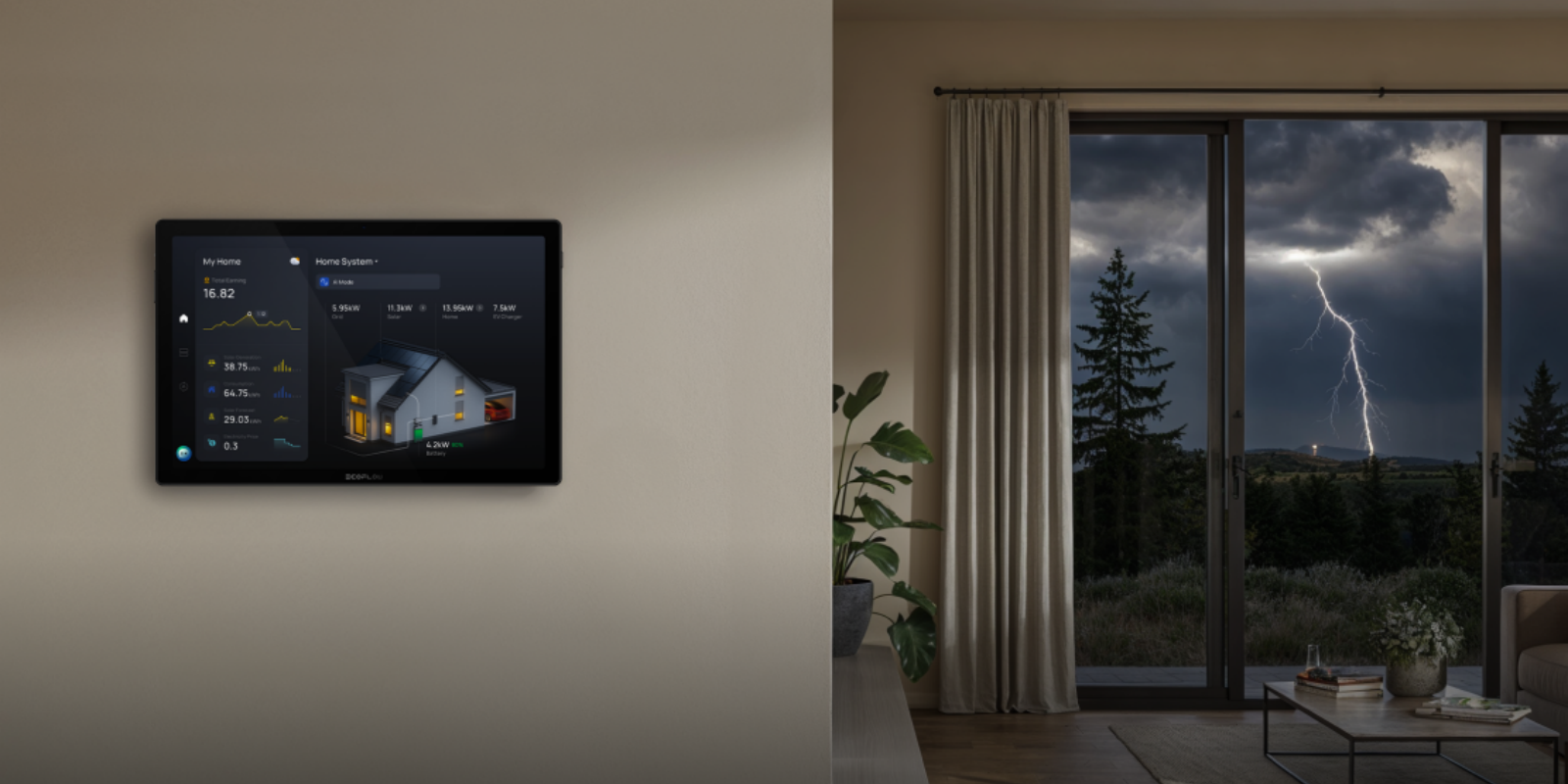
The EcoFlow PowerInsight 2 gives Aussie homeowners a real-time view of home consumption, battery level, and connected loads. It can help you monitor consumption, identify essential and non-essential loads, and manage energy use so available backup power can last longer during an outage.
How Can Home Batteries Help During Power Surges and Outages?
Home energy storage is often used to increase solar self-consumption and provide backup power. Depending on the system design, a battery and inverter can also help maintain a stable supply to selected loads during grid interruptions, but dedicated surge protection remains important.
Protect Against Grid Voltage Surges
While microsecond voltage transients require dedicated surge-protection measures, a backup-capable battery and inverter system can help protect selected loads from some grid disturbances by disconnecting the home from the grid when an outage occurs. The inverter and backup system can then supply supported circuits from the battery, depending on the system design and operating conditions. However, battery backup should not be treated as a replacement for a properly designed SPD system, particularly for high-energy transient events such as lightning-related surges.
Supply Seamless Backup Power for Essential Loads
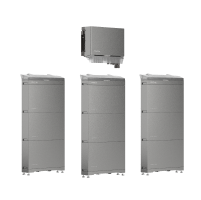
Out here in Australia, a bad storm, bushfire damage to transmission lines, or a local transformer blowing up can knock your power out without warning. The Ecoflow OCEAN 2 Plus single phase switches over automatically, taking on the house supply the moment the grid drops out.
It’s quick enough to help keep supported essentials—such as the kitchen fridge, home office setup, lighting circuits and Wi-Fi router—running through the switchover. During backup operation, the inverter supplies AC power to supported loads according to its operating specifications. This can help provide a more controlled power supply during an outage, while dedicated surge protection should still be used to address transient overvoltage events.
Recharge with Solar During Blackouts
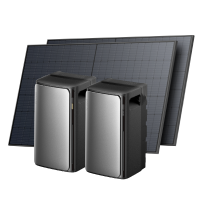
A basic grid-tied solar system shuts down the moment there’s a blackout. Chuck a decent battery into the mix, though, and you can keep running off-grid. With a compatible backup configuration, a battery system can use available rooftop solar during an outage to support household loads and, where supported, recharge the battery. This can help maintain power to support loads during an extended outage and reduce reliance on the grid while repairs are underway. For this purpose, solar battery storage needs a compatible backup configuration.
Schedule Your Free Consultation Today!
What kind of product or solution are you interested in?

Conclusion
With storms, network events and everyday electrical switching all capable of creating transient voltage disturbances, Australian homes with modern electronics can benefit from a considered surge-protection strategy. A practical approach is to use appropriately selected switchboard-level surge protection, quality surge-protected power boards for sensitive equipment, and disconnect vulnerable devices from the mains when severe lightning is forecast and it is safe to do so. Combined with a compatible home battery and backup system, these measures can help keep essential loads powered during outages and improve overall household energy resilience.
Disclaimer: The information in this article is provided for general educational purposes only and does not constitute electrical, safety or professional advice. Electrical installations, surge protection and home battery systems should be assessed and installed by appropriately licensed professionals in accordance with applicable Australian requirements. Product performance and backup capabilities may vary by system configuration and installation conditions.
FAQs
What is the difference between a power surge and an overload?
A power surge is a short-duration increase in electrical voltage, whereas an overload occurs when a circuit carries more current than it is designed to handle. Surges can result from lightning, network switching or electrical equipment switching, while overloads can occur when too much load is connected to a circuit, causing protective devices such as circuit breakers to trip.
How to tell if a power strip is overloaded?
Look for a warm or discoloured housing, unusual buzzing, flickering indicators or a burning smell. If the power board’s overload protection trips repeatedly, disconnect some loads and investigate the cause rather than repeatedly resetting it. A 10A supply at 230–240V nominal voltage corresponds to roughly 2,300–2,400W, but the applicable rating of the specific product should always be followed.
Do new appliances have built-in surge protection?
Some modern appliances include basic protection components such as filtering or transient-suppression components, but the level of protection varies by product and manufacturer. Built-in protection should not automatically be assumed to provide comprehensive protection against severe external surges, so additional surge protection may still be appropriate depending on the installation and equipment.
Do surge protectors prevent all surge damage?
No surge-protection device can guarantee that equipment will remain undamaged under every circumstance. Properly selected and installed SPDs can reduce the risk from many transient events, but very severe lightning-related surges can exceed the protection capability of individual devices. During severe thunderstorms, disconnecting sensitive equipment from the mains where practical can provide an additional precaution.
How often should you replace a surge protector?
There is no single replacement interval that applies to every surge-protected power board. Replace the unit if its protection indicator shows that protection has failed, if it has been damaged, or according to the manufacturer’s replacement guidance. MOV-based surge protection can degrade after repeated transient events, so products that have experienced a significant surge should be checked or replaced in line with the manufacturer’s instructions.