NSW Energy Rebate Guide: Eligibility, Benefits, and How to Apply in 2026
The NSW Government launched the Home Energy Saver Program on 17 June 2026. The program is backed by $557 million in government funding and provides eligible NSW households with zero-interest loans of up to $15,000 for energy-saving home upgrades. A separate discount of up to $4,000 is opening later in 2026 for lower-income households. For anyone searching for an energy rebate NSW households can use in 2026, this is the main state-backed program to understand.
Solar panels, home batteries, insulation, heat pumps, and reverse-cycle air conditioning all qualify. The loan has no interest attached. Repayments spread over up to ten years. For many households, the monthly repayment works out to less than the monthly electricity saving from the upgrade.
This guide covers the full program, who qualifies, and how to apply. It also covers why a home battery backup system is one of the most financially compelling upgrades to consider under the scheme.
What Is the NSW Energy Rebate (Home Energy Saver Program)?
The NSW Home Energy Saver Program helps lower the upfront cost of energy-saving technologies, making upgrades possible for eligible households. Households can get a discount of up to $4,000 or a zero-interest loan of up to $15,000 to make their house or apartment cheaper to run and more comfortable to live in. In practical terms, it functions as a NSW government energy rebate for households ready to invest in approved upgrades rather than a bill credit paid after the fact.
The loan portion opened on 17 June 2026 and is administered through two approved finance providers: Brighte and Plenti. The discount portion is expected to open later in 2026. Loans and discounts can be combined on the same purchase. Where a household qualifies for both, applying for the discount first is recommended. The loan then covers only the remaining balance.
The program is managed by the NSW Government's energy.nsw.gov.au portal, which lists approved suppliers, eligibility tools, and a savings calculator.
Available Support: Discounts and Zero-Interest Loans
Two types of support are available, and they work differently.
Zero-interest loan: Up to $15,000, available now. Open to households with a taxable income up to $210,000 per year. Repayments run over up to 10 years. No interest applies. The loan covers the cost of eligible upgrade equipment and installation. It does not cover remedial work like rewiring unless that work is itself an eligible upgrade.
Discount: Up to $4,000, opening later in 2026. This is a direct upfront reduction in the purchase price, not a loan. It is available only to lower-income households: those with a combined income under $80,000 per year or holders of an eligible concession card. The discount is funded by a separate $77 million government commitment. This support is separate from bill-assistance programs such as the NSW Family Energy Rebate, because it reduces eligible upgrade costs rather than offsetting an electricity bill.
Both can be combined. Apply for the discount first. The loan then covers only the remaining balance after the discount is applied.
Why the Program Was Introduced
Many NSW households are already saving money through rooftop solar, home batteries and efficient appliances, with just over half of all houses in the state equipped with solar and 13,000 new batteries being installed each month. Energy-efficient upgrades reduce costs in the long run. But the upfront costs have locked many households out. This program is designed to close that gap.
The Home Energy Saver replaces the earlier Empowering Homes Program and expands both the loan cap and the income threshold significantly. It also sits alongside the federal Cheaper Home Batteries Program, which provides a 30% upfront discount on eligible battery systems. Below we break down the two core forms of financial support available under the 2026 scheme, including income limits and key terms for each option.
Who Is Eligible for NSW Energy Rebates?
Eligibility depends on the applicant type, property status, income, and which energy rebates NSW households are trying to use: the loan, the discount, or both.
Eligibility Requirements for Homeowners
Owner-occupiers are eligible for both the loan and, when it opens, the discount. Basic requirements include:
Australian citizen or permanent resident
Property is a residential home in NSW
Taxable household income up to $210,000 per year (for the loan)
Taxable household income up to $80,000 per year, or an eligible concession card (for the discount)
Equifax credit score of 500 or above (required for loan approval through Brighte or Plenti)
All products must be Clean Energy Council listed where applicable. Installation must be carried out by an accredited installer on the approved supplier list.
Eligibility Requirements for Renters and Landlords
Unlike many rebate schemes, this loan is open to both owner-occupiers and landlords, meaning rental properties can also be upgraded, provided the landlord is the applicant. Renters themselves are not eligible for the loan, though they will be able to access the upcoming discount with their landlord's permission.
Renters looking to access the discount must obtain written approval from both their landlord and, where applicable, their strata manager. That approval process is the renter's responsibility.
Income Thresholds and Concession Card Criteria
The income thresholds are set separately for the loan and the discount.
Support Type | Income Threshold | Alternative Eligibility |
Zero-interest loan | Up to $210,000/year | N/A |
Discount | Up to $80,000/year | Eligible concession card |
Eligible concession cards for the discount include the Pensioner Concession Card, Health Care Card, Commonwealth Seniors Health Card, DVA Gold Card, and the Veteran Gold Card.
What Energy-Efficient Upgrades Are Covered?
The program supports upgrades that reduce electricity use, lower peak-demand costs, or help households store and use more of their own solar energy.
Solar Panels and Home Battery Systems
Solar panels and home battery storage are among the most popular upgrades under the program. Both qualify for the loan. Battery systems are also eligible for the federal Cheaper Home Batteries Program rebate. That rebate reduces the upfront price before the NSW loan amount is calculated.
The stacking effect is significant. Federal solar STC rebates come off the solar system price. NSW Peak Demand Reduction Scheme incentives apply if the household signs up to a Virtual Power Plant. The NSW Home Energy Saver discount reduces the price further for eligible households. The Home Energy Saver loan then covers the remaining balance at zero interest over up to ten years.
Heating, Cooling, and Hot Water Upgrades
Reverse-cycle air conditioning, heat pump hot water systems, and ceiling fans all qualify under the program. These upgrades address the largest single driver of household electricity bills. Heating and cooling account for up to 40% of average household electricity use in NSW. Heat pump hot water systems use roughly three to four times less electricity than standard resistive electric heaters for the same output.
Insulation, Draught-Proofing, and Other Home Improvements
Ceiling and wall insulation, draught-proofing, window treatments, and switchboard upgrades all appear on the eligible products list. Switchboard upgrades are particularly relevant for households adding a battery or EV charger. The existing board may not be rated for the increased load. The total financial benefit you can claim depends on your household income, chosen upgrades and overlapping federal incentives, detailed below.
How Much Can You Receive?
The value depends on income, upgrade type, quote size, and whether other state or federal incentives apply first.
Up to $4,000 in Discounts
The discount applies at the point of sale. It reduces the purchase price directly rather than being paid as a separate credit or cash refund. For lower-income households combining the discount with the federal Cheaper Home Batteries Program, the combined upfront reduction on a battery system can be substantial.
The discount program is expected to open for applications later in 2026. Eligibility is limited to households under the $80,000 income threshold or concession card holders. Each household is eligible for one discount application.
Zero-Interest Loans of Up to $15,000
The loan covers the full range of eligible upgrades, from a standalone heat pump hot water system costing a few thousand dollars to a combined solar and battery package at the loan ceiling. Loans run between $1,001 and $15,000. They carry no interest. Repayments run over up to 10 years.
A household borrowing $10,000 over 10 years repays approximately $83 per month with zero interest. The equivalent bank loan would cost around $200 to $240 more per year in interest alone over the loan term.
Can You Combine Both Incentives?
Yes. Households eligible for both should apply for the discount first. The loan then covers the remaining balance after the discount is applied. The loan amount is also calculated after other federal and state rebates are deducted from the system price, not before. This ordering means every available rebate reduces the principal before any loan is taken out.
How to Apply for the NSW Home Energy Saver Program
The application process starts with eligibility checking, then moves through quote comparison, finance approval, and installation.
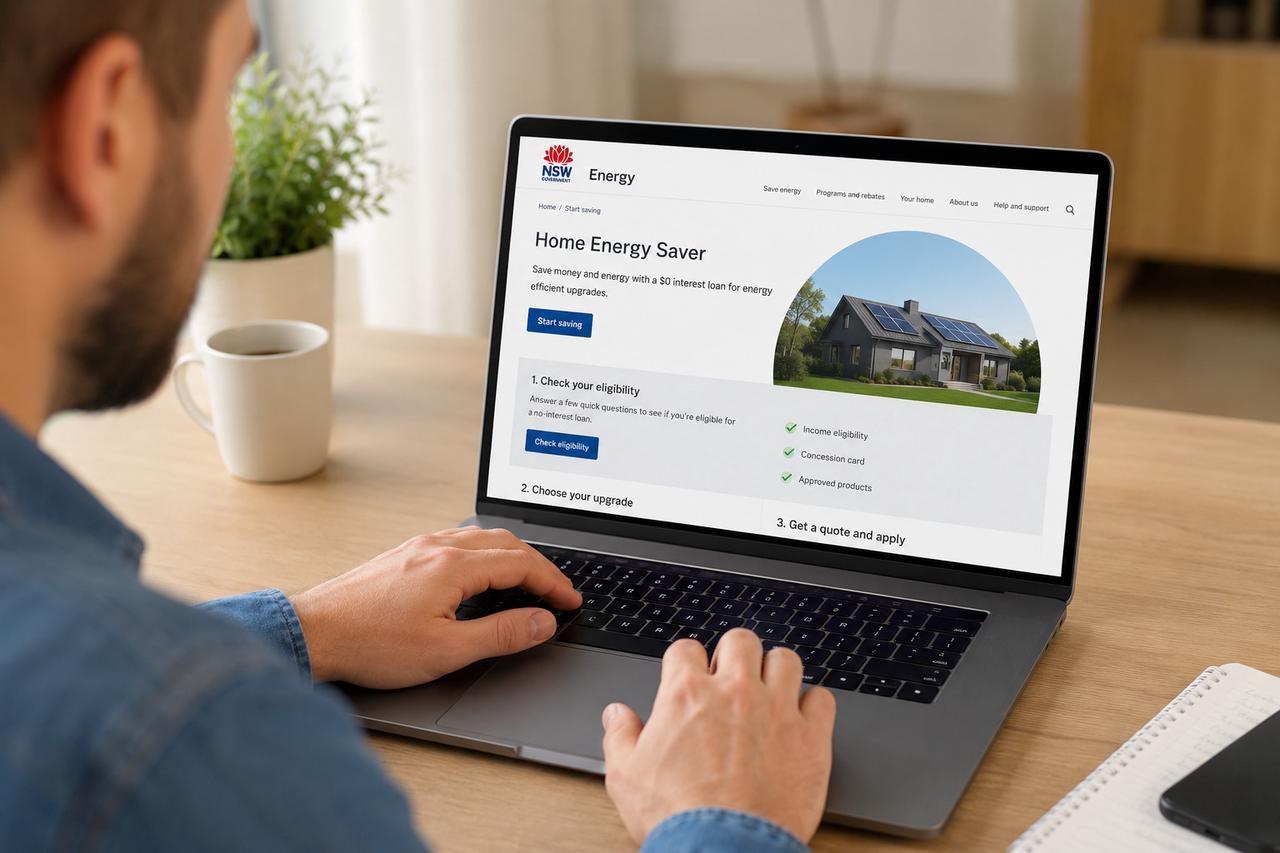
Step 1: Check Your Eligibility
Visit energy.nsw.gov.au/home-energy-saver and use the Energy Savings Finder tool. This confirms income eligibility, concession card status, and whether the intended upgrade qualifies under the program's approved product list.
Step 2: Choose Your Energy Upgrade
Use the NSW Energy Hub's savings calculator to estimate the financial benefit of different upgrade options before approaching any supplier. This gives an informed starting point for comparing quotes.
Step 3: Obtain Quotes and Submit Your Application
Obtain quotes from at least two approved suppliers and compare them. Once a supplier is selected, advise the chosen approved seller to proceed. The finance provider then conducts a credit and serviceability assessment and issues a pre-approval decision. Once the loan agreement is signed, installation is booked and the process completes through the finance provider.
Using Your NSW Energy Rebate for Solar and Battery Storage
For many households, solar and battery storage are the upgrades most likely to turn program support into ongoing bill savings.
Why Batteries Are Becoming a Popular Upgrade
NSW now has one of the highest rates of solar battery storage adoption in Australia. Around 13,000 new batteries are being installed per month statewide. The financial case has strengthened since the federal Cheaper Home Batteries Program launched. The NSW Home Energy Saver Program adds further cost reduction on top.
The time window matters. The federal STC solar rebate reduces each January. The Cheaper Home Batteries Program is running through 2030 but the per-unit rebate tapers. Combining these programs in 2026 captures more combined value than waiting.
How Home Battery Systems Help Reduce Electricity Costs
A home battery stores surplus solar generated during the day and releases it in the evening, when grid electricity is most expensive. NSW households on time-of-use tariffs pay peak rates between roughly 2 pm and 9 pm on weekdays. A battery charged from solar covers that window without drawing from the grid.
The financial impact on the quarterly bill depends on system size, household consumption, and tariff structure. For many NSW households, the annual electricity saving from a correctly sized solar and battery system exceeds the annual loan repayment. Understanding solar power cost breakdowns helps households assess which system size and configuration offers the best return before approaching installers.
What to Look for in a Home Battery System for NSW Households
NSW's summer heat, coastal humidity, and the grid's time-of-use pricing structure all influence what makes a home battery suitable. Several specifications matter.
LFP chemistry. Lithium iron phosphate cells are more thermally stable than older NMC types. In NSW summers, a battery installed in a garage or on an exterior wall benefits significantly from a chemistry that handles sustained heat without degrading.
Modular capacity. Household energy needs change. EVs arrive. Additional appliances add load. A modular battery allows capacity to be expanded without replacing the existing installation.
Backup capability. NSW experiences outages during severe summer storms and heatwave-related grid stress events. Backup switching keeps the home running during outages without any manual steps.
IP weatherproof rating. Batteries installed outside or in uninsulated spaces face dust and moisture. IP55 or IP65 ratings indicate meaningful protection.
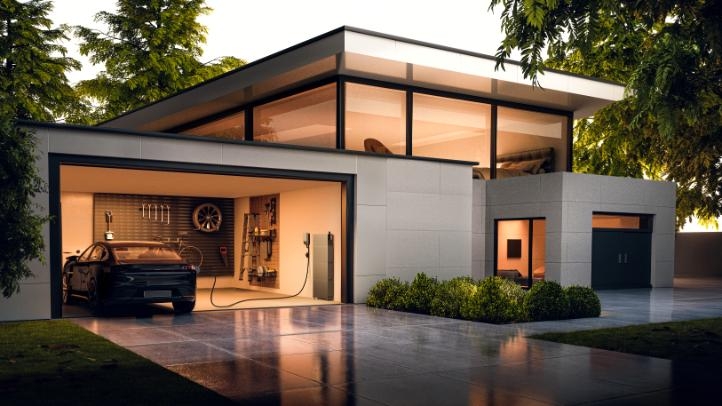
Modular systems like the EcoFlow PowerOcean Single-Phase Battery are designed specifically for these demands. Starting at a usable capacity of 5 kWh, it can expand up to 15 kWh per unit. This allows you to install what you need today and seamlessly add modules later when an EV or new air conditioner arrives.
Built with safe LFP chemistry, reliable backup switching, and an IP65 weatherproof rating, it is rated to withstand harsh Australian climates through 6,000 charge cycles. This scale-as-you-go approach is easier to budget for and pairs perfectly with the staggered structure of the NSW Home Energy Saver loan.
Schedule Your Free Consultation Today!
What kind of product or solution are you interested in?

FAQs
Can Renters Apply for the NSW Energy Rebate?
Renters cannot apply for the zero-interest loan. The loan is available to owner-occupiers and landlords only. Renters will be able to access the upcoming discount when it opens later in 2026, provided they have written permission from their landlord. Where the property is in a strata scheme, strata manager approval may also be required. For help navigating the application process, contact our professional energy consultants for guidance.
How Long Will the Program Be Available?
The NSW Government has not announced a specific end date for the Home Energy Saver Program. Loan applications opened on 17 June 2026 and are available while program funding remains. The discount component is expected to open later in 2026. The federal STC rebate steps down each January. The Cheaper Home Batteries Program runs through 2030 but tapers. Applying earlier captures more combined rebate value.
Are Home Battery Systems Eligible for NSW Energy Rebate Support?
Yes. Home battery systems are listed as eligible upgrades under the NSW Home Energy Saver Program. Batteries must be Clean Energy Council listed and installed by an accredited installer on the approved supplier list. The loan can be combined with the federal Cheaper Home Batteries Program. Federal and other incentives are applied first. The loan then covers the remaining balance.