Lithium Battery Voltage Chart: Voltage Levels by Battery Charge
Whether you’re checking a 12V battery in your 4WD or monitoring solar storage at home, voltage can offer a useful snapshot of charge. With LiFePO4 batteries, though, the reading is easy to misinterpret: voltage stays fairly steady through much of the discharge cycle, and active charging or appliances can shift it. This guide shows how to read resting voltage across 12V, 24V and 48V systems, when to use a battery monitor, and which limits to check.
Key Takeaways
The plateau effect makes voltage tricky to read: LiFePO4 batteries sit between 13.0V and 13.2V (for a 12V pack) across roughly 70% of their cycle, so voltage alone is rarely a reliable gauge of remaining capacity.
Resting voltage matters: Surface charge and active loads distort readings. An accurate open-circuit voltage check needs at least 30 to 60 minutes with no load and no charging input.
Stay within the battery’s voltage limits: A LiFePO4 cell should generally remain between 2.50V and 3.65V. For a 12V pack, setting absorption to 14.20V–14.40V can reduce nuisance BMS cut-offs caused by cell imbalance; follow the battery manufacturer’s settings.
Amp-hour counting beats voltage monitoring: A shunt-based monitor or an integrated smart energy console provides an estimated State of Charge, bypassing the guesswork caused by load-induced voltage sag.
What Is the Voltage of a Lithium Battery at Different Charge Levels?
A LiFePO4 battery’s voltage changes as it charges and discharges, but the change is small through much of its usable range. The chart below gives approximate resting-voltage readings by state of charge. Check your battery maker’s specifications too, since cell design and settings can affect the figures. For a wider view of home solar battery storage, compare usable capacity and system compatibility alongside voltage. The table is illustrative rather than a model-specific calibration: percentage-to-voltage values and protection thresholds vary, and these 4S/8S/16S figures are not settings for the EcoFlow home battery.
Lithium Battery Voltage Chart by State of Charge (SoC)
Most LiFePO4 batteries use cells rated at 3.2V nominal: four cells make up a 12V battery, eight a 24V system and 16 a 48V system. For a useful resting-voltage reading, switch off charging sources and loads such as a solar controller, mains charger or 12V fridge, then give the battery time to settle.
| State of Charge (SoC) | Single Cell (V) | 12V System (4S) | 24V System (8S) | 48V System (16S) | Operational Status |
|---|---|---|---|---|---|
| 100% (Full/Absorption) | 3.65V | 14.60V | 29.20V | 58.40V | Maximum charging limit (active charge |
| 100% (Resting) | 3.40V | 13.60V | 27.20V | 54.40V | Settled surface charge removed |
| 90% | 3.33V | 13.32V | 26.64V | 53.28V | High operational range |
| 80% | 3.30V | 13.20V | 26.40V | 52.80V | Nominal plateau begins |
| 70% | 3.28V | 13.12V | 26.24V | 52.48V | Stable discharge plateau |
| 50% | 3.25V | 13.00V | 26.00V | 52.00V | Mid-cycle storage level |
| 30% | 3.22V | 12.88V | 25.76V | 51.52V | Nominal plateau ends |
| 20% | 3.20V | 12.80V | 25.60V | 51.20V | Shoulder curve; prepare to recharge |
| 10% | 3.00V | 12.00V | 24.00V | 48.00V | Rapid voltage cliff |
| 0% (Cut-off Threshold) | 2.50V | 10.00V | 20.00V | 40.00V | BMS low-voltage cut-off |
LiFePO4 Voltage Chart for 12V, 24V and 48V Battery Systems
A battery’s nominal voltage does not provide a universal chart for estimating its state of charge. Readings vary by battery design and operating conditions, and the voltage measured while charging or under load may differ from a resting reading. This is especially important when comparing 12V, 24V and 48V systems: their voltages cannot be used to infer charge levels by simply scaling one chart.
Use the state-of-charge chart or monitoring guidance supplied for your specific battery. If that information is unavailable, treat terminal voltage as a general operating check rather than a precise measure of remaining capacity. A compatible battery monitor can provide a more useful estimate when configured to the battery manufacturer’s specifications.

How Can You Tell How Much Charge Is Left in a Lithium Battery?
A voltage reading can help you spot a broad change in charge, but it won’t always tell you how much capacity remains. The method matters: readings taken while charging or running appliances can be misleading, while a shunt monitor tracks energy moving in and out of the battery.
Estimate Remaining Battery Charge from Voltage
Checking terminals with a multimeter or glancing at an in-dash voltmeter gives you a rough baseline, but only under strict conditions. If your portable compressor or 2000W inverter is actively running, voltage sag will depress the reading by several tenths of a volt, mimicking a low state of charge. Conversely, if your rooftop solar panels are pumping 20 amps into the bank on a sunny afternoon, the voltage will read high due to surface charge. To estimate capacity from voltage with any reliability, isolate the battery from all loads and inputs for at least 45 minutes, then reference the resting voltage chart above.
Use a Shunt-Based Battery Monitor
For touring rigs, camper trailers, and marine setups, a quality current shunt is essential. Installed directly on the battery’s negative terminal, a shunt measures the exact current entering (via alternator or solar) and leaving (via fridges, lighting, or appliances) the bank over time. By calculating current against time (coulomb counting), the monitor estimates State of Charge during charging and discharging; correct settings and regular synchronisation are still needed. In an off grid solar system, tracking battery charge alongside solar generation and household power use can also help users understand how much stored energy is available when solar production falls.
Check Charge via Built-In Displays and Apps
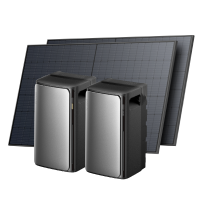
Modern lithium storage units increasingly feature integrated CAN bus or Bluetooth communication, feeding real-time cell voltages, temperatures, and cycle counts straight to a smartphone app or fixed wall display. For households running fixed solar storage, monitoring battery charge alongside household consumption and generation patterns provides complete visibility over daily energy performance. The EcoFlow PowerInsight 2 features an intuitive touchscreen display that centralises solar generation, home energy consumption, and battery charge/discharge metrics in real time. It allows homeowners to see exactly how stored energy flows to household circuits throughout peak evening tariff windows and how the battery interacts with daily household demands.
What Voltage Is Too Low or Too High for a Lithium Battery?
A battery’s safe voltage limits depend on its chemistry and the manufacturer’s settings. The BMS can disconnect the battery if a limit is reached, but it’s better to set chargers and inverters correctly so the system doesn’t rely on that protection during normal use. EcoFlow BMS illustrates how integrated monitoring can track voltage, current and temperature.
Low-Voltage Limits for Lithium Batteries
Low-voltage cut-offs vary by model; the chart’s 2.50V-per-cell endpoint is a reference, not a universal BMS setting. While hitting this threshold won’t instantly ruin the battery, leaving a depleted pack discharged for extended periods allows parasitic drains and self-discharge to pull cell voltages below safe limits, causing permanent damage. After a low-voltage shutdown, follow the manufacturer’s recovery procedure and use only an approved charger.
High-Voltage Limits for Lithium Batteries
Overcharging poses equal risks, causing electrolyte breakdown, gas generation, and accelerated internal degradation. A single cell should never exceed 3.65V under active charge. For whole packs, maximum absorption charging voltages translate to:
12V Packs: 14.60V maximum (typical recommended bulk/absorption sits between 14.20V and 14.40V).
24V Packs: 29.20V maximum (recommended 28.40V to 28.80V).
48V Packs: 58.40V maximum (recommended 56.80V to 57.60V).
Follow the specified absorption duration and any float stage; reaching the voltage limit does not mean switching immediately to float.
Normal Operating Voltage Range and Recommended Limits
Avoiding prolonged operation at extreme charge levels can support service life; cycle life depends on the model and conditions. Configuring your inverters, MPPT solar regulators, and DC-DC chargers to an upper charge limit of 14.2V–14.4V (or 56.8V–57.2V on 48V) may suit some packs, but alarm settings and voltage-to-SoC estimates must follow the model’s guidance.

How Can You Maintain Lithium Battery Performance and Lifespan?
Lithium batteries need less routine maintenance than lead-acid batteries, but they still need the right charging settings and operating conditions. Temperature, discharge current and time spent near full or empty can all affect how the battery performs over the years. Understanding LFP battery chemistry also helps put these maintenance requirements in context.
Follow Recommended Charging and Discharging Limits
Unlike lead-acid batteries, lithium does not suffer from sulfation and therefore does not require lead-acid equalisation; some lithium models still need an absorption period for balancing. In fact, running an equalisation cycle on a lithium pack will spike voltage past safe levels and trip the BMS. Keep continuous discharge rates within the rated Continuous Discharge Amperage (C-rating) of the battery to avoid heating up busbars and internal terminals.
Maintain Safe Battery Temperatures
Lithium batteries need to stay within the temperature limits set by the manufacturer. In parts of northern and inland Australia, a battery stored under a bonnet or in an enclosed camper compartment can get very hot in summer. Check the temperature around the battery itself, not just the weather forecast, and don’t charge outside its specified range.
High temperatures: Reduce or pause charging if the battery gets close to its maximum charging temperature. The exact limit varies by model.
Below-freezing conditions: Most standard LiFePO4 batteries shouldn’t be charged below 0°C unless they have a low-temperature charging system. Charging frozen cells can cause permanent damage. Discharging may be allowed at lower temperatures, but check the battery’s operating limits.
Monitor Battery Charge and Voltage Regularly
Regularly review cell balance and historical performance through your monitoring interface. If your battery system consistently trips its BMS before hitting the expected low-voltage cut-off, or cuts off early during bulk charging, individual cells may be out of balance. Running a controlled, low-current charge at the recommended absorption voltage allows top-balancing circuitry inside the BMS to equalize differences across the cell string.
Choose a Durable Lithium Battery for Long-Term Use
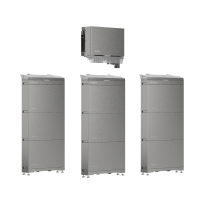
A home battery’s lifespan comes down to more than just how often it’s charged and discharged. Cell chemistry, operating temperature, and system settings all play a part. The Ecoflow OCEAN 2 Plus single phase uses lithium iron phosphate cells for residential solar storage. When you’re comparing systems, check the specs for cycle life, operating temperature range, and protection features. Once it’s installed, follow the manufacturer’s guidance on charge voltage, discharge limits, and temperature settings. That’s what helps the battery perform reliably over time.
Schedule Your Free Consultation Today!
What kind of product or solution are you interested in?
Conclusion
LiFePO4 voltage is most useful as a reference when the battery has been resting; while it’s charging or powering appliances, the reading can shift. For a clearer view of remaining charge, use a shunt monitor or the battery’s own monitoring system, and follow the manufacturer’s voltage and temperature limits. That gives you a more dependable way to manage a battery in a touring setup or at home.
FAQs
Why Does Battery Voltage Drop When Under Load?
Battery voltage drops under load due to internal cell resistance and cable resistance, causing an immediate drop known as “voltage sag.” The higher the current drawn by an appliance (such as an induction cooktop, kettle, or winch), the larger the momentary voltage dip. Once the heavy load switches off, the voltage recovers to its normal resting level.
Is It Okay To Charge LiFePO4 To 100%?
Charging to 100% is generally acceptable within the specified limits; balancing requirements vary by model. However, if the battery is being placed into storage for several months, keep it between 50% and 60% SoC (around 13.2V for a 12V pack) in a cool environment rather than holding it at 100% float to maximise long-term cell life.
Can Lithium Battery Voltage Indicate Battery Health?
No, resting voltage alone cannot confirm the overall health or remaining capacity of a degraded lithium battery. A heavily worn lithium cell with significant capacity loss can still read 13.3V at rest when fully charged, yet collapse almost instantly under moderate load. True state of health (SoH) is determined through controlled capacity testing under a calibrated discharge load.
Why Does My Lithium Battery Keep Shutting Off?
Your lithium battery is shutting off because its internal Battery Management System (BMS) has detected an operational parameter outside its safe threshold and triggered a protection disconnect. Common triggers include low-voltage cut-off from depleted capacity, high-voltage cut-off caused by an uncalibrated charger, severe cell-to-cell imbalance, high or low internal temperature limits, or an excessive current draw exceeding the continuous discharge rating.