Level 1 EV Charger: Charging Speed, Costs and Suitability in Australia
A standard household power point can be enough to charge an EV at home, especially if your daily driving is modest and the car is parked overnight. But charging is slow, and the result depends on how far you drive, how long the car is plugged in and what you pay for electricity. This guide covers typical charging times and costs in Australia, and when a faster home charger may make more sense.
Key Takeaways
No install headaches: Level 1 charging runs off a standard Australian 230V, 10A single-phase power point using the portable cable that comes with most EVs.
Steady range gain: Expect around 10 to 15 km of driving range for every hour plugged in, so a typical Aussie commute of 30 to 40 km tops up easily overnight.
Cheap daily top-ups: Charge at off-peak rates and running costs drop to around $2.00 to $4.50 per 100 km, well under what you’d spend on petrol.
Easy to upgrade: Trickle charging suits light daily driving, but if you need faster turnaround, you can move up to a dedicated Level 2 wall charger, or pair a home battery with rooftop solar and use stored solar energy for charging after dark, subject to available capacity and household demand.
What Is a Level 1 EV Charger?
A Level 1 charger is the portable cable that often comes with an EV. It plugs into a regular household socket, so it’s useful to understand what the car and the socket each do before relying on it for everyday charging.
How Level 1 EV Charging Works With a Standard Power Point
Often called a “granny charger” or trickle lead, a Level 1 charger is an Electric Vehicle Supply Equipment (EVSE) cable that connects directly into an everyday domestic three-pin socket. In Australia, our residential power grid supplies 230V alternating current (AC).
A standard 10A general power outlet (GPO) delivers a continuous electrical draw capped around 8A to 10A for safety, yielding an output between 1.8 kW and 2.3 kW. Inside the vehicle, an on-board charger (OBC) takes this incoming AC power and converts it into direct current (DC) to top up the lithium battery cells. While it represents the slowest method to juice up an EV, an existing socket may be sufficient, but a licensed electrical contractor should assess the socket, wiring and protection before regular EV charging.
Level 1 vs Level 2 vs Level 3 EV Charging
Charging speeds vary dramatically depending on circuit voltage, phase wiring, and whether power conversion occurs inside your car or at an external station.
| Feature | Level 1 (Trickle Charger) | Level 2 (Dedicated AC Wallbox) | Level 3 (DC Fast Commercial) |
|---|---|---|---|
| Power Source | Standard 230V 10A GPO socket | Hardwired single-phase (32A) or three-phase | High-voltage commercial DC supply |
| Charging Power | 1.8 kW to 2.4 kW | 7.4 kW (single-phase) to 22 kW (three-phase) | 50 kW to 350 kW+ |
| Range Added Per Hour | 10 – 15 km | 40 – 120 km | 250 – 1,000+ km |
| Typical Location | Domestic carports, garages, holiday rentals | Private homes, apartment carparks, workplaces | Highway service centres, public transit hubs |
| Equipment & Setup Cost | Included with vehicle ($0 – $400 replacement) | $800 – $2,500 including electrical installation | $50,000+ (commercial infrastructure) |
How Fast Does a Level 1 EV Charger Charge an Electric Car?
Charging speed depends on the power available at the socket and how efficiently your car uses it. The examples below give a rough idea of the range a typical EV can gain overnight.
Typical Charging Speed and Driving Range Added Per Hour
Most modern electric passenger cars consume roughly 15 to 18 kWh per 100 kilometres in combined city and suburban driving.
Delivering a steady 2.0 kW output to your battery:
One hour of charging adds approximately 1.8 to 2.0 kWh of usable energy.
Hourly range gain sits reliably between 10 and 14 km of real-world driving.
A 10-hour overnight dwell (e.g., plugging in at 8:00 PM and unplugging at 6:00 AM) injects around 18 to 20 kWh of juice—easily delivering 100 to 130 km of fresh driving range by morning.
A home energy ecosystem can coordinate solar generation, battery storage and EV charging, although it does not increase a standard socket’s charging power.
How Long It Takes to Charge Different EV Battery Sizes
Because battery sizes range from compact runabouts to massive dual-cab platforms, a full zero-to-100% recharge spans anywhere from a single night to multiple days.
| Vehicle Model & Battery Pack | Usable Capacity | Output at 2.0 kW (10A Socket) | Estimated Time (20% to 80%) | Estimated Time (0% to 100%) |
|---|---|---|---|---|
| BYD Atto 3 Standard Range | ~49.9 kWh | 2.0 kW | ~15 hours | ~25 – 27 hours |
| Tesla Model 3 RWD (LFP) | ~57.5 kWh | 2.0 kW | ~17.5 hours | ~29 – 31 hours |
| Hyundai Ioniq 5 / Kia EV6 Long Range | ~77.4 kWh | 2.0 kW | ~23 hours | ~39 – 42 hours |
| Kia EV9 / Large Electric SUV | ~96.0 kWh | 2.0 kW | ~29 hours | ~48 – 52 hours |
Note: These are approximate capacity-based examples, not verified specifications for every model year. At 2.0 kW from the wall, 10% losses increase the ideal capacity ÷ power time by about 11%; actual charging times vary.

How Much Does Level 1 EV Charging Cost in Australia?
The cost of charging comes down to how much electricity your car uses and your household tariff. An off-peak plan can make a noticeable difference, so it helps to compare rates before estimating your running costs.
Typical Household Electricity Rates for EV Charging
The tariff ranges and equipment costs below are illustrative assumptions, not current nationwide offers or quotes. Eligibility, time windows, supply charges and installation costs vary; check your retailer’s current energy price fact sheet and obtain an installation quote.
Retail electricity tariffs differ considerably between distribution networks across New South Wales, Victoria, Queensland, South Australia, and Western Australia. Flat-rate residential plans usually sit between 28c and 38c per kWh.
Households on Time-of-Use (ToU) tariffs or specialised EV plans, however, unlock significantly lower overnight shoulder and off-peak windows:
Standard Flat Rate: ~30c – 35c / kWh
ToU Off-Peak Grid Rate: ~15c – 22c / kWh
Specialised EV Night Windows (Midnight to 6 AM): ~8c – 12c / kWh
For a broader comparison of home and public charging, see how much does it cost to charge an electric car; use your own tariff for any estimate.
Calculating the Cost of a Full EV Charge
To determine the running expense of charging a 60 kWh battery pack (assuming an empty-to-full cycle with 10% charging overhead, equating to 66 kWh pulled from the wall):
Total Cost = 66 kWh × Tariff Rate
On a standard 32c/kWh flat rate:
66 × $0.32 = $21.12 (enough for about 400 km of driving, or $5.28 per 100 km)On an 18c/kWh off-peak rate:
66 × $0.18 = $11.88 (enough for about 400 km of driving, or $2.97 per 100 km)On an 8c/kWh dedicated EV night tariff:
66 × $0.08 = $5.28(enough for about 400 km of driving, or $1.32 per 100 km)
Compared to a conventional petrol hatchback sipping 7.5 L/100 km on $2.00/L unleaded ($15.00 per 100 km), these illustrative electricity scenarios reduce energy costs by roughly 65% to 91%; actual savings depend on tariffs, efficiency and petrol prices.
Which Households Are Best Suited to Level 1 EV Charging?
Your daily driving and parking routine will help determine whether a standard socket can keep up. For many people who drive locally and charge overnight, it may be all they need.
Low and Predictable Daily Driving Needs
The ABS reported 11,100 km per passenger vehicle in the year ended June 2020, equivalent to about 30 km a day; this historical, pandemic-affected figure is not a current commuting average. School runs, shopping and a suburban commute may use around 5 to 7 kWh—an amount a Level 1 charger can typically replace in three to four hours. For single-car households, city commuters and PHEV owners with smaller 10 to 18 kWh batteries, a standard socket may cover everyday driving.
Sufficient Overnight Parking and Charging Time
If your car is parked from early evening until morning, Level 1 charging has plenty of time to add range. A 13-hour window, for example, can add roughly 130 to 160 km, so you may not need a public charger for routine trips. A faster charger may suit households with less predictable schedules, frequent road trips or more than one EV. The EcoFlow PowerPulse2 is a Level 2 option for that situation. It delivers up to 7.4 kW on a single-phase connection—more than three times the power of a standard socket—and can add around 40 to 50 km of range per hour. Scheduled charging can help make use of cheaper periods; confirm Australian retailer and tariff compatibility before relying on dynamic pricing integration.

How Can You Reduce the Cost of EV Charging?
Your charging bill depends on both the rate you pay and the time you plug in. An EV-friendly tariff, off-peak charging or surplus rooftop solar can help bring the cost down.
If your car is away during sunny hours, solar battery storage can keep surplus rooftop generation available for charging after you get home, subject to battery capacity and other household loads.
Choose an Electricity Plan With EV-Friendly Rates
Some Australian retailers offer EV plans with lower overnight rates, often between midnight and 6:00 AM. If you switch, set your car to charge during that window and avoid higher evening rates, which commonly apply from around 3:00 PM to 9:00 PM. Check the plan’s peak rates and daily supply charge too, as a cheaper night rate may not suit every household.
A smart meter can provide interval usage data to help assess time-of-use plans; confirm the meter configuration and tariff with your retailer.
Schedule Charging During Off-Peak Periods
Charging as soon as you get home can mean paying more during the evening peak, when household demand is high. Use your car’s app or charging settings to start later, such as at 10:00 PM or midnight, if those hours are cheaper on your plan. You can plug in when you arrive and let the timer handle the start time.
Use Excess Solar Power to Charge Your EV
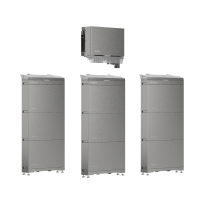
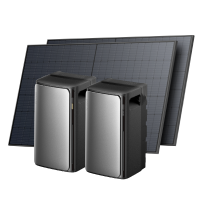
If your EV is home during the day, charging it from surplus rooftop solar can make good use of electricity that might otherwise earn a low feed-in tariff. If the car is away during peak sunshine, a home battery can store some of that energy for evening charging. The EcoFlow OCEAN 2 Plus single phase supports up to 24 kW of PV input, which can suit homes with larger solar arrays. Paired with a compatible EV charger, it can store surplus daytime generation and make that energy available later, including when you arrive home after sunset.
Schedule Your Free Consultation Today!
What kind of product or solution are you interested in?
Conclusion
Level 1 charging can work well for shorter daily trips when your car has a reliable overnight parking spot. If your mileage grows or you often need a quicker turnaround, a dedicated Level 2 charger may be more convenient. Compare your driving routine with your charging window and electricity tariff to decide what fits your home.
FAQs
Does Level 1 Charging Really Extend EV Battery Life?
Charging only as fast as needed can support battery longevity, but Level 1 does not guarantee a longer battery life than Level 2. Battery chemistry, temperature, state of charge and the vehicle’s battery management system also matter. Follow the manufacturer’s recommended charging limits.
Can I Charge My Electric Vehicle in the Rain?
Only charge outdoors if the vehicle, cable, control box and socket are approved for the conditions. IP ratings vary by model; do not assume all equipment is IP65 or IP66. Follow the manufacturer’s instructions, keep connections clear of standing water, and stop if equipment is damaged or conditions exceed its rating.
Is It Safe to Unplug the EV Charger Before It's Fully Charged?
Yes, you can unplug at any state of charge without harming the battery pack or the charging gear. Modern EV plugs have mechanical locking pins and a dedicated “control pilot” pin that cuts the power the instant you unlock the car or press the handle release.
Are There Government Rebates for Home EV Charging Equipment in Australia in 2026?
Support depends on your state, property and eligibility. As checked on 10 November 2026, NSW’s Home Energy Saver loans include eligible EV chargers, while the federal Household Energy Upgrades Fund offers finance through participating lenders that may include home chargers. These are finance arrangements, not a universal charger rebate. Check current official eligibility before applying.
Can a Standard Household Circuit Handle EV Charging Alongside Other Appliances?
It depends on the circuit rating, wiring, protection and other loads. EV charging is a sustained load, so avoid combining it with high-draw appliances on the same circuit until a licensed electrical contractor has assessed the arrangement. They can advise whether a dedicated circuit and protection upgrades are required. Plug directly into an appropriate socket, without an extension lead or power board.