Home Energy Emergency Assistance Scheme: Government Support and Energy Bill Tips
A bill spike after a hot Queensland summer or a cold snap can be hard to manage, especially when it lands alongside an unexpected expense or a drop in income. If you’re behind on electricity or gas payments, the Home Energy Emergency Assistance Scheme (HEEAS) may help. This guide explains who can apply, how to start an application through your retailer, and where to look for other support and ways to manage future bills.
Key Takeaways
Targeted Crisis Relief: HEEAS provides a one-off payment of up to $720 once every two years for eligible Queensland households facing sudden, unforeseen financial hardship.
Retailer-Led Process: You can’t apply directly through a government portal. Your energy retailer, like Origin, AGL, or EnergyAustralia, has to initiate the application on your behalf.
Safety Net Protections: Contact your retailer promptly about hardship support. Keeping to an agreed payment plan protects you from disconnection for non-payment.
Layered Assistance: You can combine HEEAS with regular concessions, retailer hardship plans, and standard payment arrangements.
Long-Term Control: Shifting everyday appliance use, monitoring real-time habits, and pairing rooftop solar with modern battery storage offer ways to reduce grid purchases, with savings depending on costs and usage.
What Is the Home Energy Emergency Assistance Scheme?
Before panic sets in over an overdue notice, it pays to know that Queensland maintains a dedicated safety net for sudden energy debt.
The Home Energy Emergency Assistance Scheme (HEEAS) is a Queensland Government initiative designed to assist low-income households facing short-term, unforeseen financial emergencies. Rather than acting as a recurring discount, HEEAS delivers a one-off payment of up to $720 within any two-year period to help clear or reduce an outstanding electricity or reticulated natural gas bill. If approved, the payment goes to your energy provider to reduce your account balance. Ask your retailer about payment arrangements while the application is assessed.
Emergency bill assistance addresses existing debt. Planning a home energy ecosystem to coordinate solar, storage and household loads is a separate, longer-term decision once immediate bills are manageable.
Who Is Eligible for the Home Energy Emergency Assistance Scheme?
Eligibility depends on your concession card or income, the circumstances behind your hardship, and whether you have an overdue energy bill. A low income by itself may not be enough: HEEAS is intended for households dealing with a recent, unexpected difficulty.
Income Limits and Concession Card Requirements
A current concession card is one eligibility route. Ask your retailer to assess your circumstances; examples of concession cards include:
Services Australia Health Care Card
Pensioner Concession Card
Department of Veterans’ Affairs Veteran Gold Card
Other eligibility routes include income at or below the Australian Government’s maximum income rate for part-age pensioners, or participation in your provider’s hardship program or payment plan. You must also meet the scheme’s emergency criteria.
Qualifying Financial Hardship Circumstances
HEEAS does not cover ongoing low income alone; the scheme requires an unforeseen emergency or short-term financial crisis within the past 12 months that affected your ability to pay. Genuine qualifying events include:
A substantial, unexpected drop in household income (such as sudden job loss, injury, illness, or slashed casual shifts).
Significant, unavoidable out-of-pocket expenses (like critical home repairs, emergency medical bills, or essential funeral costs).
Experiencing family and domestic violence or relationship breakdown resulting in acute financial distress.
Outstanding Energy Bill Requirements
The grant exists specifically to tackle real, existing arrears. To proceed:
You must be responsible for paying the outstanding electricity or reticulated natural gas bill for your Queensland home.
You must have an outstanding bill; you do not need to wait for a disconnection warning before seeking help.
You cannot have received a HEEAS payment within the past 24 months for the same household.

How Do You Apply for the Home Energy Emergency Assistance Scheme?
To apply for HEEAS, give your energy retailer a call first.
Contact Your Energy Retailer to Start an Application
A quick phone call to your power company gets the ball rolling. Ask to speak directly with their Hardship Team or Customer Support Team, and let the representative know you are struggling with your bill and wish to apply for HEEAS. The representative will run through preliminary eligibility questions. Once confirmed, they will officially register your application in the government portal and issue you an application reference number alongside an online link or paper form.
Prepare the Required Information and Supporting Documents
Having your paperwork sorted in advance avoids frustrating back-and-forth delays. Gather the following:
Your concession card details (CRN) or proof of household income (such as recent payslips or bank statements).
Details of your current energy bill and account number.
Clear proof of your emergency situation—for example, a mechanic’s invoice, a specialist’s medical invoice, or an employer separation certificate.
Submit Your Application and Check the Outcome
Once your retailer initiates the case, you must complete your portion of the form and upload your supporting documents. The Queensland Government assesses the application. Once approved, the funds (up to $720) credit directly against your energy bill, and your retailer will notify you when your updated balance is applied.
What Other Energy Assistance Is Available in Queensland?
If you have already claimed HEEAS recently or don’t quite fit the criteria, several other support channels can keep your power running smoothly.
Check Other Queensland Energy Rebates and Concessions
Standard ongoing government assistance runs parallel to emergency relief:
| Concession / Program | Annual benefit | Who it helps |
|---|---|---|
| Electricity Rebate | $399.47 per year (GST inclusive) | Eligible Pensioner Concession Card, Health Care Card and Seniors Card holders |
| Reticulated Natural Gas Rebate | $96.45 per year (GST inclusive) | Eligible cardholders using reticulated gas for hot water or cooking |
| Medical Cooling and Heating Concession | $522.09 per year (GST inclusive) | People with chronic medical conditions affected by heat or cold |
Note: Check the Queensland Government’s electricity and gas rebates and Medical Cooling and Heating Electricity Concession Scheme pages for current rates and full eligibility requirements. Rates checked on 28 October 2026.
Explore Energy Retailer Hardship Programs
In Queensland, retailers must have customer hardship policies under the National Energy Retail Law. Support includes payment options, help finding a suitable plan and checking concessions. Customers in a hardship program must not be charged late payment fees; keeping to an agreed payment plan protects against disconnection for non-payment.
Arrange a Payment Plan for Outstanding Energy Bills
Breaking an overwhelming lump sum into predictable, bite-sized amounts is one of the simplest ways to get back on an even keel. Ask your retailer for an affordable payment plan covering your debt and ongoing energy use. Agree on the amount, timing and payment method; direct debit is one possible arrangement, rather than a requirement.

How Can You Reduce Energy Bills and Manage Future Costs?
Once you’ve addressed an urgent bill, a few practical changes can help with future costs. Comparing plans, using heating and cooling efficiently, and checking when appliances run can all help you see where savings may be possible.
For households with rooftop solar, solar battery storage can be assessed after low-cost changes and bill support, with upfront costs weighed against likely savings.
Compare Electricity Plans and Check Available Discounts
Loyalty rarely pays when it comes to power providers. Energy companies frequently update market offers, leaving long-standing customers on outdated, expensive default standing offers. Visit the Australian Government’s independent comparison platform, Energy Made Easy, once a year. Upload a recent bill to compare reference price discounts, daily supply charges, and usage rates across competing retailers in your postcode.
If you already export solar, compare your solar feed in tariff qld with the plan’s usage rates and supply charges, rather than choosing on export credits alone.
Reduce Heating, Cooling and Appliance Energy Use
Thermal comfort, including heating and cooling, accounts for a large share of household electricity use in Australia.
Air Conditioning Setpoints: Every degree lower in summer adds roughly 5% to 10% to cooling costs. Aim for 25°C to 27°C in summer and 18°C to 20°C in winter.
Vampire Power: Entertainment units, gaming consoles, and secondary computers draw standby power around the clock. Switching them off at the powerboard stops silent power leaks.
Laundry Habits: Washing clothes in cold water cuts wash-cycle energy consumption by up to 80%, while leaning on the outdoor clothesline instead of the tumble dryer saves significant power every week.
Checking interval data from a smart meter can also show when grid imports are highest, helping you decide which flexible appliance loads to shift.
Monitor Household Energy Consumption to Identify Savings Opportunities
For households that want to move past emergency bill stress and actually get on top of their daily energy use, knowing when and where power gets used is essential. Pinpointing peak hours lets you run pool pumps, dishwashers, and split systems when energy is cheaper, or when your own system is producing. Solutions like the EcoFlow PowerInsight 2 give you a real-time dashboard to monitor compatible system performance and household power trends, giving you the clear insights you need to make smart, cost-saving adjustments.
Explore Solar Panels and Home Battery Storage for Long-Term Energy Management
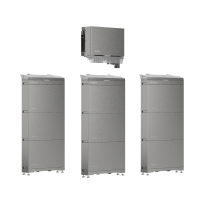
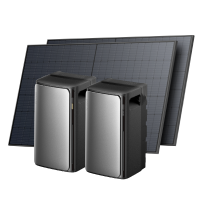
Daily habits help cut your electricity use, but pairing rooftop solar with a home battery gives you longer-term protection from rising power prices. Once you’ve looked at your roof space, installation budget, and typical usage, consider whether a battery could store excess daytime solar for the costly evening peak, rather than exporting it for a low feed-in tariff. The Ecoflow OCEAN 2 Plus single phase is one option for households wanting to combine solar generation with battery storage. Potential savings depend on system size, household usage, sun exposure, and local tariffs, so start by working out how and when your home uses energy.
Schedule Your Free Consultation Today!
What kind of product or solution are you interested in?
Conclusion
If you’re struggling to pay an energy bill, contact your retailer and ask about HEEAS and its hardship support. You can also check whether you qualify for Queensland concessions or a payment plan. For longer-term savings, start by comparing your electricity plan and looking at when your household uses the most power; solar and battery storage may be worth considering once you know your costs and usage.
Disclaimer: This article provides general information only and is not financial or legal advice. Government policies, payment amounts, eligibility criteria and application processes may change. Check the latest Queensland Government guidance and confirm your circumstances with your energy retailer before applying. Assistance is subject to assessment and approval; eligibility or payment is not guaranteed.
FAQs
How long do solar panels last in Australia?
Solar panels are generally designed for long-term use, but their service life and performance guarantees vary by manufacturer and model. Check the panel’s product and performance warranties and the inverter’s separate warranty, maintenance requirements and replacement costs.
What happens if your HEEAS application is rejected?
If your application is declined, your retailer has to tell you the decision and discuss other support. Ask your retailer or the scheme administrator how to query the decision. You can join their hardship program, set up a payment extension, or get free, confidential advice from the National Debt Helpline on 1800 007 007.
What household appliances use the most energy?
Heating and cooling can account for 20% to 50% of household energy use, depending on the climate zone. Hot water and appliances are also major uses; their shares vary with the home, equipment and household habits.
Can you receive HEEAS and other Queensland energy rebates at the same time?
Yes. You can get HEEAS alongside regular concessions like the Queensland Electricity Rebate or the Medical Cooling and Heating Concession. HEEAS is an emergency top-up for crisis debt, so ongoing rebates on your normal billing don’t disqualify you from emergency relief.