What Is an Energy Management System? A Guide for Australian Homes
A Home Energy Management System (HEMS) is a software and hardware platform that monitors, manages, and automates household electricity flows. In Australia, where electricity prices and solar feed-in tariffs vary significantly by retailer, tariff and location, a HEMS can coordinate rooftop solar, home batteries, EV chargers, and flexible household loads to increase on-site solar use and manage grid consumption.
This guide explains how energy management systems work, how they can affect household electricity use and costs, and what to consider when choosing a setup for your home.
Key Takeaways
• More than an inverter: A HEMS can shift flexible loads, such as hot water, air conditioning, and pool pumps, toward periods when solar generation is higher or electricity prices are lower.
• Increase solar self-consumption: When feed-in tariffs are relatively low compared with electricity purchase rates, using more solar electricity at home can be more valuable than exporting it.
• Reduce grid use during higher-price periods: Depending on the system configuration and tariff, a HEMS can coordinate battery discharge to reduce electricity purchased from the grid when prices are higher.
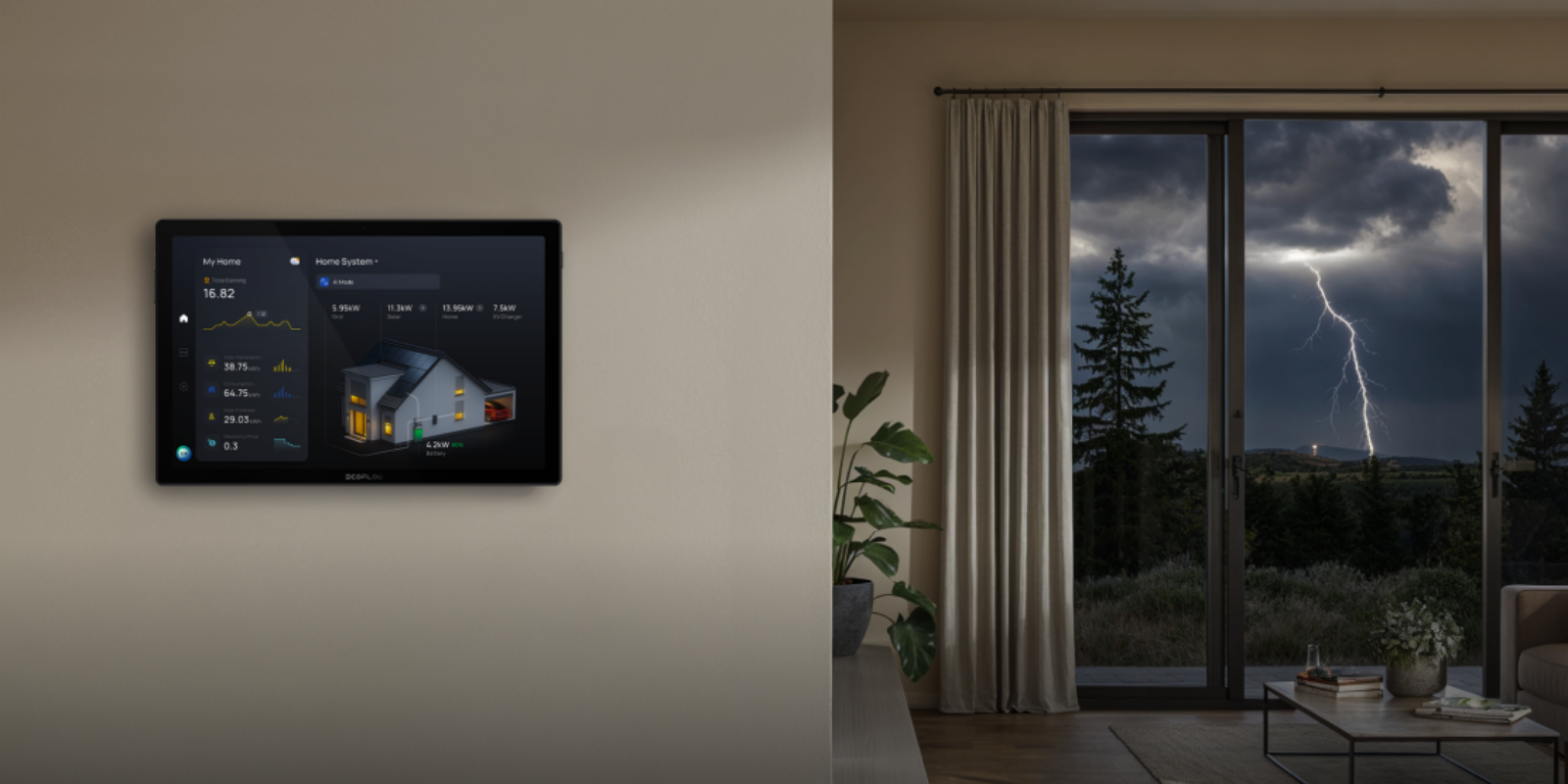
• Hardware that clarifies energy use: Dedicated wall monitors like the EcoFlow PowerInsight 2 provide real-time visibility into generation, consumption, and storage.
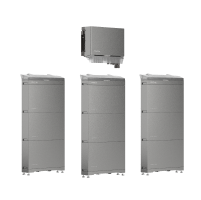
• Smart control complements battery capacity: Integrated systems like the EcoFlow OCEAN 2 Plus Single Phase can coordinate generation, storage, and household demand dynamically, helping you size storage around your actual usage patterns.
What Is an Energy Management System?
An Energy Management System (EMS) connects household energy sources, storage systems, and loads so they can be monitored and, where supported, coordinated through a central control system.
What Is a Home Energy Management System (HEMS)?
A Home Energy Management System (HEMS) is a platform that monitors and coordinates electricity flows within a home. Depending on its capabilities and connected devices, a HEMS can help determine when to store solar electricity, operate flexible loads, or draw electricity from the grid based on factors such as generation, tariffs, battery state, and household demand.
How Does a Home Energy Management System Work?
The system operates continuously through a three-step cycle:
• Sense: Current transformers (CT clamps), meters, and connected devices measure electricity flows at the switchboard or other monitoring points, providing data on solar generation, battery state of charge, and household consumption. The measurement interval depends on the system and hardware.
• Analyse: System logic and, where available, cloud-based services can analyse energy data alongside inputs such as weather forecasts, tariff information, battery status, and historical household consumption.
• Act: Where supported, the system sends control signals to connected inverters, batteries, smart circuits, or appliances. For example, if a rooftop solar system is generating surplus electricity around midday, the HEMS may direct available energy toward battery charging or a controllable hot-water load instead of exporting some of that electricity to the grid.
What Can an Energy Management System Monitor and Control?
Depending on the system and connected devices, modern HEMS platforms can monitor or control more than inverter output:
• Solar PV arrays: Generation, system output, and, where supported, string-level or export data.
• Home battery storage: Charge and discharge rates, state of charge, and, where supported, battery health and reserve settings.
• HVAC systems: Compatible ducted or split-system air conditioning can be scheduled or adjusted around solar generation and household demand.
• Domestic hot water: Compatible resistive storage tanks and heat pumps can be scheduled to use electricity during selected periods.
• EV chargers: Where supported, charging can be adjusted or scheduled according to surplus solar generation, electricity prices, or other household priorities.
• Flexible household loads: Pool pumps, hot-water systems, EV chargers, and other compatible high-load appliances.
Energy Management System vs. Smart Meter: What’s the Difference?
While both can be associated with the home’s electricity monitoring setup, they serve different purposes. A utility smart meter measures electricity consumption and, depending on the meter and market arrangement, provides interval data used for billing and other electricity-market functions. A smart meter generally does not control household appliances or battery operation. A HEMS sits above or alongside these measurement systems and can use energy data to monitor and, where supported, coordinate connected devices.
| Feature | Utility Smart Meter | Home Energy Management System (HEMS) |
|---|---|---|
| Primary Purpose | Measuring electricity consumption and providing meter data | Monitoring and coordinating generation, storage, and household loads |
| Data Granularity | Depends on the meter and market arrangement | Depends on the HEMS and connected devices |
| Hardware Control | Generally not designed to control household devices | Can control compatible batteries, appliances, or circuits where supported |
| Tariff Adaptation | Records usage for the applicable tariff | Can use tariff information to schedule or optimise compatible loads |
| User Access | Often through a retailer or meter-data platform | Often through a dedicated app, web dashboard, or wall-mounted display |
What Are the Benefits of an Energy Management System for Australian Homes?
An EMS can help households increase solar self-consumption, coordinate battery charging and discharging, and manage grid consumption during higher-priced periods.
Monitor Household Energy Use in Real Time
A standard electricity bill shows how much electricity you used, but it may not show clearly when that electricity was consumed or which loads contributed most. Real-time monitoring can make it easier to understand how solar generation, battery storage, and household loads interact throughout the day.
To take control, you need visibility you can actually understand. A central home monitor like EcoFlow PowerInsight 2 pulls fragmented data into a cohesive, physical hub right on your wall. By displaying live production, consumption, and storage stats side by side, it clarifies the real-time link between your rooftop generation and daily habits. You instantly see the impact of running the clothes dryer or firing up the oven, allowing you to tweak appliance schedules and fine-tune your energy strategy with zero guesswork.
Maximise Solar Self-Consumption
Solar feed-in tariffs in Australia vary considerably by retailer, location, and electricity plan. Current residential offers listed by Energy Made Easy include feed-in tariffs ranging from 0 to several cents per kWh, while some time-of-use electricity rates can exceed 45 cents per kWh. A HEMS can prioritise compatible household loads, battery charging, or other uses of surplus solar electricity, helping increase self-consumption when exporting solar provides a lower return.
Instead of exporting all available daytime surplus, a compatible system may direct some of it toward your solar battery storage, hot water system, EV charger, or other flexible loads.
Reduce Electricity Use During Peak-Price Periods
Some Australian electricity tariffs apply higher rates during afternoon and evening peak periods, although the exact times vary by retailer, tariff, and distribution area. For example, Energex’s residential tariff information describes a 4:00 PM–9:00 PM peak period for certain residential time-of-use tariffs from 1 July 2026. A HEMS can help shift compatible loads to lower-cost periods and, where battery control is supported, coordinate battery discharge during higher-priced periods.
This can reduce grid consumption during peak periods, but the extent of the reduction depends on household demand, battery capacity, solar generation, tariff structure, and system configuration.
Optimise Home Battery Charging and Discharging
Where these functions are supported, an energy management platform can adjust battery charging and discharging based on factors such as weather forecasts, historical consumption, and tariff periods. For example, a system may charge during a lower-price period when less solar generation is expected the following day, or preserve battery capacity for a higher-demand evening period. When comparing storage options, solar battery cost is another factor to weigh against expected bill savings.
Improve Energy Efficiency and Reduce Reliance on the Grid
Standby loads and poorly timed appliance use can contribute to higher electricity consumption. A HEMS can help identify recurring consumption patterns and, where supported, automate compatible loads or coordinate battery operation. However, the extent to which it can reduce grid reliance depends on the home’s generation, storage, appliances, tariff, and control capabilities.

Why Is Energy Management Becoming More Important in Australia?
Energy management is becoming more relevant as rooftop solar, batteries, time-of-use tariffs, flexible exports, and other forms of distributed energy become more common across Australia.
Australia’s Growing Rooftop Solar and Battery Adoption
Australia has one of the world’s highest levels of rooftop solar adoption. By the end of 2025, more than 4.3 million Australian households had rooftop solar, according to the Clean Energy Council. High levels of rooftop solar generation can contribute to periods of low operational demand in parts of the electricity system, particularly around the middle of the day. Network operators are also introducing dynamic export arrangements in some areas to manage network conditions. These changes increase the relevance of local energy management for households with solar and batteries.
How Electricity Tariffs Affect Household Energy Costs
Flat, time-of-use, demand, and other tariff structures are all available in different parts of Australia. Some networks and retailers are expanding time-variable and demand-based pricing options, while the specific tariff structure available to a household depends on its location, meter, retailer, and electricity plan. For example, Energex currently publishes residential time-of-use and demand tariffs with different peak, shoulder, and off-peak periods. Managing changing tariff periods manually can be inconvenient, while a compatible HEMS can use tariff information to automate some scheduling and battery-control decisions.
Why Solar Self-Consumption Matters With Feed-in Tariffs
Australia has seen substantial changes in solar feed-in tariff structures over the past decade, and current FiT rates vary by retailer, location, tariff, and export period. Some current residential plans offer only a few cents per kWh for solar exports, while others provide higher rates for exports during selected periods.
Some networks are also introducing more flexible export arrangements as rooftop solar penetration increases. For households considering solar and storage, the value of self-consumption should therefore be assessed alongside FiT revenue, electricity purchase rates, battery costs, and the applicable tariff rather than treated as a universal rule.
The Role of Demand Response and Virtual Power Plants
Energy management can also extend to Virtual Power Plants (VPPs) and demand-response programs. Depending on the program, participating households may allow an aggregator or energy provider to coordinate battery charging, discharging, or other flexible loads in response to market or network conditions. Some programs provide financial incentives or bill credits, but the terms and control requirements vary by provider and program.
Where supported, a HEMS can help coordinate these signals with household energy settings and battery reserves.
Which Australian Homes Can Benefit Most From Energy Management?
Many households can benefit from better visibility into electricity use, while the potential value of automated energy management may be greater for homes with flexible loads, solar, batteries, or time-varying tariffs:
• Homes with high electricity demand: Properties using heat pumps, induction cooking, electric hot water, or other electricity-intensive appliances.
• Homes with swimming pools or ducted air conditioning: Flexible loads that may be scheduled around solar generation or tariff periods.
• EV drivers: Households that can schedule EV charging around solar generation or lower-price tariff periods.
• Homes with high evening demand: Households that regularly use several appliances during higher-price periods may have more opportunities to shift flexible loads or use stored electricity.
How to Choose an Energy Management System for Your Australian Home
Choosing a platform involves considering device compatibility, software capabilities, network requirements, and the level of automation you need. A Home Energy Ecosystem can bring compatible generation, storage, and monitoring devices together.
Check Compatibility With Solar, Batteries and Smart Devices
If a HEMS only supports a limited range of devices, it may restrict future integration options. Check which standards and protocols the system supports, such as Modbus, Matter, Zigbee, or local APIs, and confirm compatibility with your existing inverter, battery, and home automation devices.
Look for Real-Time Energy Monitoring and Energy Insights
Check how frequently the platform updates its data and whether the dashboard presents information in a useful way. Depending on your needs, useful features may include near-real-time monitoring, phase-level data, battery status information, and analysis of major household loads.
Consider Automated Energy Scheduling and Control
For Australian households with or considering solar-plus-storage, energy control can be an important consideration alongside battery capacity. While some homeowners deploy standalone HEMS controllers across legacy hardware, modern all-in-one platforms, such as the Ecoflow OCEAN 2 Plus single phase, embed native HEMS intelligence directly inside the hybrid inverter system. This natively coordinates rooftop generation, battery storage, and dynamic load scheduling in a single, unified architecture.
In a typical household, the system can be configured to use available solar generation during the day, store surplus electricity when appropriate, and use stored electricity during selected higher-demand or higher-price periods. Depending on the tariff and system configuration, this can help reduce electricity purchased from the grid without requiring daily manual adjustments.
Check Support for Time-of-Use Tariffs and Demand Response
Your software should support the tariff structure that applies to your electricity plan. Check whether the platform supports customisable ToU schedules, demand-response events, weekend variations, and integration with relevant VPP or energy-service providers. This can help the system adjust its operation when tariff periods or program requirements change.
Consider Connectivity, Security, Installation and Ongoing Support
Australian installation conditions can vary significantly, from outdoor switchboards exposed to heat to humid coastal environments. When choosing a system, consider the following:
• Local processing fallback: Check whether core control and safety functions continue to operate if the home internet connection is interrupted.
• Data security: Check how the system protects data transmitted between local devices, apps, and cloud services, and review its privacy settings.
• Compliant switchboard installation: Use a licensed electrician and confirm that the installer meets the accreditation and product requirements that apply to your installation. Australia’s installer accreditation arrangements have changed, with Solar Accreditation Australia (SAA) now operating the accreditation scheme previously administered by the CEC.
• Local support and warranty: Check the warranty terms, Australian support arrangements, software update policy, and the process for handling faults or replacement claims.
Schedule Your Free Consultation Today!
What kind of product or solution are you interested in?
Conclusion
A Home Energy Management System can help households monitor electricity use and coordinate solar generation, battery storage, and compatible household loads. For Australian homes with solar, batteries, EV charging, or time-of-use tariffs, it may help increase solar self-consumption and manage grid consumption during higher-priced periods. Before choosing a system, check device compatibility, tariff support, automation features, connectivity, data security, and applicable installation requirements.
Disclaimer: The information in this article is provided for general informational purposes only and does not constitute professional, electrical, regulatory or financial advice. Electricity tariffs, network requirements, export limits, rebates, installer requirements and other energy-related rules in Australia can vary by state, network, retailer and individual installation and may change over time. Always check the latest requirements with your electricity retailer, distribution network and a suitably qualified installer before making installation or energy-management decisions.
FAQs
Can I Install an Energy Management System Without Solar Panels?
Yes. Some HEMS platforms can operate without solar and can be used to monitor electricity consumption and schedule compatible loads around Time-of-Use (ToU) tariffs. Depending on the system, these loads may include electric hot water systems, pool pumps, and EV chargers. The available scheduling periods depend on your electricity plan and the devices connected to the HEMS.
Does an Energy Management System Need an Internet Connection?
An internet connection may be required for initial setup, cloud-based services, weather data, tariff updates, and remote monitoring, depending on the system. Some platforms retain local control functions when the internet connection is interrupted, while others may rely more heavily on cloud services. Check the manufacturer’s specifications to understand which functions remain available offline.
Can an Energy Management System Work During a Power Outage?
A HEMS can continue operating during a power outage only when it is part of a system designed to provide backup power, with the required isolation and backup functionality. A standard grid-connected solar system without backup capability will generally shut down when the grid supply is lost to prevent unintentional islanding. The applicable inverter and installation requirements should be checked against current Australian standards, including AS/NZS 4777.2 and any relevant state or network requirements.
Can I Add an Energy Management System to an Existing Solar System?
Yes, some HEMS platforms can be retrofitted to existing solar systems, but compatibility depends on the HEMS, inverter, switchboard, and connected devices. Installation may involve current transformer (CT) clamps or other monitoring hardware, and some systems may require additional control equipment or inverter compatibility. Before installation, confirm the requirements with the manufacturer and a suitably licensed installer.
How Long Does It Take to Set Up a Home Energy Management System?
Installation time varies depending on the switchboard, system architecture, wiring requirements, and the number of devices being connected. A straightforward installation may take only a few hours, but more complex systems can take longer. Software setup, tariff configuration, Wi-Fi connection, and device pairing can add additional time depending on the platform and installation requirements.