Claim Your 2026 Electricity Rebate: Slash Australian Power Bills Now
Energy costs in Australia are not slowing down. The federal Energy Bill Relief Fund ended on 31 December 2025, and millions of households felt it almost overnight. Bills jumped not because power got more expensive that day, but because the government the automatic federal bill credits that reduced monthly power costs have been fully discontinued.
That does not mean all help has gone. Targeted rebates, concessions, and state programs are still running. Many eligible Australians are not claiming what they are entitled to. On top of that, long-term tools like solar and battery storage can permanently cut exposure to rising grid costs.
This guide covers what electricity rebate support is still available in 2026. It explains who qualifies, how to claim it, and what to do once short-term relief runs out.
What is a government electricity rebate?
A government electricity rebate is a financial credit applied directly to a household's power bill. It reduces the amount owed without the household needing to change retailers or switch plans.
In 2026, these rebates fall into two broad groups.
The first is the now-concluded federal Energy Bill Relief Fund. This ran from 2023 through to 31 December 2025. It gave all Australian households automatic credits of up to $300 in 2024-25 and a further $150 extension through mid-2025. Those payments are finished.
The second group is ongoing. State and territory concession schemes cover pensioners, seniors, low-income households, and people with certain medical needs. These are not automatic for most people. Eligible households need to register their concession card with their energy retailer or apply through a state portal.
The Australian Government's rebates and assistance lists every active program by state and card type. It is the best starting point for checking what is currently available at a specific address.
Amounts vary significantly by state. Queensland pensioners and seniors can receive up to $386.34 per year on electricity alone. South Australia's Energy Bill Concession sits at $281.78 per year. NSW offers multiple separate rebates that can stack on top of each other depending on circumstances.
Who is eligible for energy bill relief?
Eligibility in 2026 depends on which state the household is in and what type of concession card is held. Some support applies broadly. Other programs are tightly targeted.
Support for families and low-income earners
Concessions provide substantial annual or quarterly bill reductions for low-income households, Health Care Card holders, and Family Tax Benefit (FTB) recipients. State-specific programs include:
New South Wales: The Low Income Household Rebate offers $285 annually ($313.50 for embedded networks), while the Family Energy Rebate assists FTB recipients.
Victoria: Provides an Annual Electricity Concession of 17.5% off usage and supply charges.
Queensland & South Australia: Offer combined rebates up to $386.34 and $281.78 per year, respectively.
Crucially, the electricity account must be registered in the exact name of the concession card holder for the reduction to apply.
How to get the seniors electricity rebate
Securing the seniors electricity rebate requires ensuring the correct concession details are linked to the household energy account. Australian pensioners, veterans holding a DVA Gold Card, and Commonwealth Seniors Health Card holders are eligible for these high-tier, state-level concessions.
In most states, simply contacting the energy provider to record the concession card on the account guarantees the discount is applied automatically to future bills. The main exception is the NSW Seniors Energy Rebate ($200 annually for self-funded retirees), which requires a yearly application through Service NSW. Keeping concession details actively updated with the energy provider prevents missing out on valuable, and sometimes backdated, financial support.
Step-by-step: How to claim electricity rebate
The process for how to claim electricity rebate support in 2026 is fairly simple. It depends on whether the rebate is automatic or requires an application.
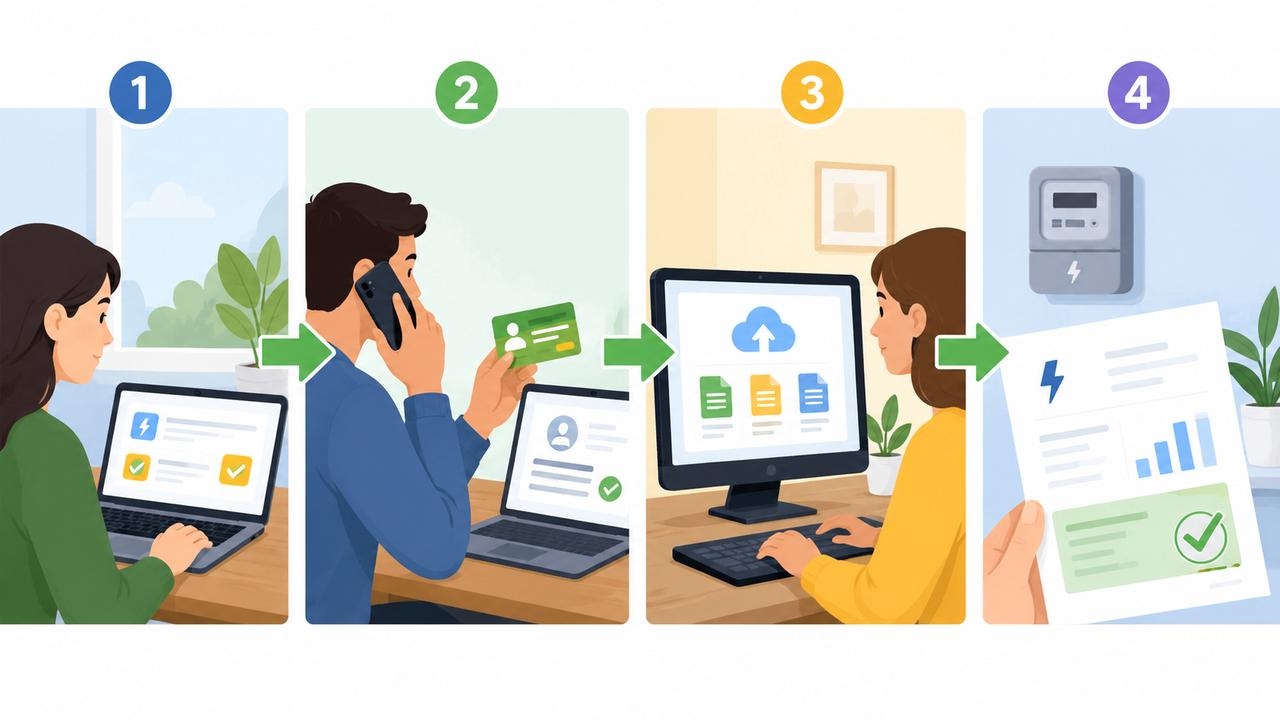
Step 1: Check eligibility
Visit the state government's energy portal. In NSW, that is Service NSW. In Victoria, it is the Department of Families, Fairness and Housing portal. In Queensland, check the Queensland Government concessions website. Each portal lists every active program and the card types that qualify.
Step 2: Update the energy retailer
Link the concession card to the electricity account. Log into the retailer's online account portal or call their customer service line. Have the concession card number and the electricity account number ready. Most retailers apply the discount to the next bill once the card is verified.
Step 3: Apply directly where required
Some rebates do not apply automatically. The NSW Seniors Energy Rebate requires an annual application through Service NSW each financial year. Some hardship grants require applying through a community organisation such as St Vincent de Paul or the Salvation Army. The Energy Accounts Payment Assistance (EAPA) scheme in NSW works this way.
Households in embedded networks (apartments, retirement villages, caravan parks) follow a different process in most states. Rather than applying through a retailer, they apply through the state government portal directly.
Step 4: Check the bill
After registering or applying, check the next electricity bill. The credit should appear labelled clearly. If it does not arrive within one billing cycle, contact the retailer or the relevant state government agency.
What happens after your electricity rebate ends
A rebate lowers the current bill. It does not change the underlying cost of electricity. Grid rates are still rising. Evening peak pricing is still expensive. The long-term answer is reducing how much grid power the household needs in the first place.
Upgrade household energy efficiency
The biggest single draw on most Australian home energy budgets is heating and cooling. Air conditioning and electric heating together account for up to 40% of the average power bill. Reducing that baseline load produces ongoing savings that compound every quarter.
Practical upgrades that pay back over time include:
Switching to a heat pump hot water system (roughly 3 to 4 times more efficient than standard electric resistive heaters)
Sealing gaps around windows and doors to prevent heat loss in winter and heat gain in summer
Installing heavy curtains or thermal blinds on west and north-facing windows
Replacing older whitegoods with high energy star-rated appliances
A home that uses less energy to stay comfortable costs less to run whether prices rise or not.
Using solar and battery storage to manage peak electricity costs
Electricity is cheapest in the middle of the day when solar generation peaks across Australia. It is most expensive between roughly 3 pm and 9 pm when solar drops off and gas or coal generators fill the gap. That is the period retailers charge the highest Time-of-Use rates.
Storing daytime solar in a home battery storage system lets the household power through that evening window without drawing from the expensive grid. It is one of the most reliable long-term strategies to offset costly evening peak grid rates.
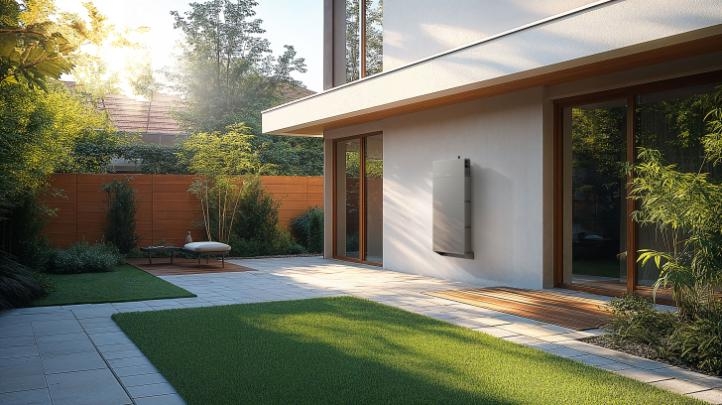
Even with state concessions cutting quarterly power bills, evening peak grid tariffs remain a major recurring expense for Aussie households. Expandable home battery storage lets you store free midday solar power to avoid expensive after-hours electricity charges, with capacity adjustable to match your actual nightly usage. Modular solutions such as the EcoFlow PowerOcean Single-Phase Battery are one of the most reliable long-term strategies to offset costly evening peak grid rates. Usable capacity starts from 5 kWh and expands up to 15 kWh per unit. That means the system can be sized to cover actual nighttime usage rather than over-specifying from the start.
One important note: high-voltage residential storage systems must be properly integrated with the home's switchboard. Installation should always be carried out by a Clean Energy Council-accredited electrician to meet Australian safety standards and local council requirements.
Expand your home's energy capacity—Learn more about modular battery solutions.
Optimise with an intelligent HEMS
A battery alone stores what is available. An intelligent Home Energy Management System (HEMS) actively decides the best time to store, hold, and release that energy.
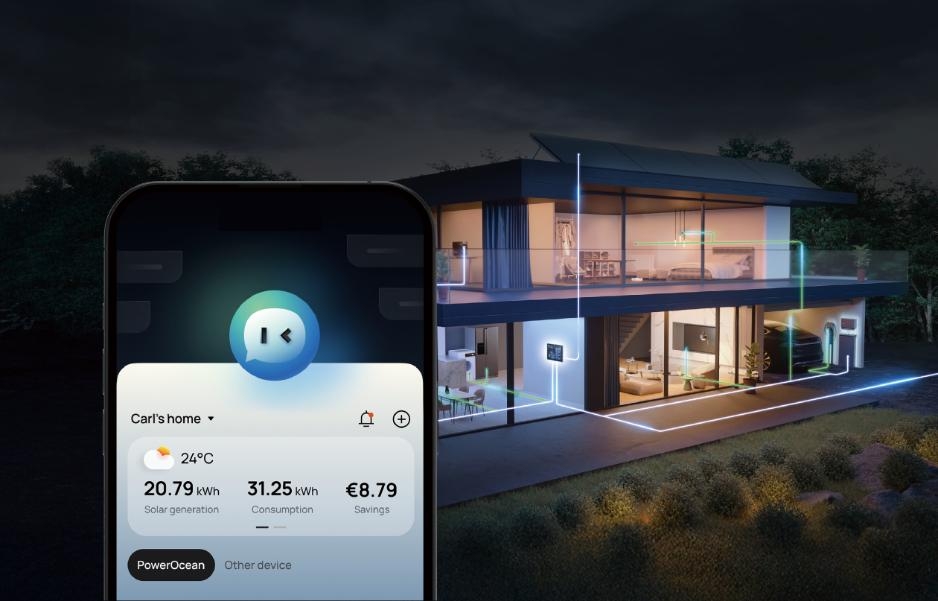
Simply storing solar power can deliver savings, but automated energy management further maximises your self-consumption gains. Smart HEMS systems automatically adjust battery charge and discharge cycles based on local weather and time-of-use tariff rules without manual adjustments. The EcoFlow App functions as an intelligent HEMS, built into the broader EcoFlow Home Energy Ecosystem. It tracks weather patterns, solar generation, and household usage habits. Before a cloudy day, it charges the battery harder. On hot evenings when air conditioning runs long, it reserves stored energy for that window. When peak pricing is approaching, it holds back rather than discharging early. All of this runs without any manual input.
The result is a system that saves more than a battery operating on its own. Intelligent management also reduces unnecessary charge cycles, which protects cell health over the battery's lifespan.
Unsure how a solar storage system fits a specific household's 2026 energy goals? Contact our professional energy consultants for a customised solar battery quote based on actual usage, roof size, and local tariff structure.
Master Time-of-Use tariffs
Switching to a Time-of-Use tariff plan costs nothing. It simply changes when higher and lower rates apply. Combined with smart habits, it can cut bills without spending a dollar.
The core idea is to shift energy-hungry tasks away from the expensive peak window. Run the dishwasher after 10 pm. Set the washing machine to run at midday on weekdays. Schedule pool pumps to run during the "solar sponge" window between roughly 10 am and 3 pm. That is when solar generation peaks and grid prices are lowest.
These habits do not require any equipment purchase. Over a full year, shifting load out of the peak window produces consistent, predictable savings on every quarterly bill.
Conclusion
Rising energy costs in 2026 call for two responses working together. The first is securing every electricity rebate and concession the household is entitled to right now. Many eligible Australians are leaving hundreds of dollars unclaimed each year simply because their concession card is not linked to their account.
The second is building towards energy that does not depend on the grid for the expensive parts of the day. Efficiency upgrades, solar storage, intelligent energy management, and smarter tariff habits all compound over time.
Claiming a rebate today is the immediate step. Reducing grid dependence is the longer-term one. Both matter.
FAQs
How often is the government electricity rebate paid?
Most state concession rebates are applied as a daily rate, showing up as a reduction on each quarterly electricity bill. Some, like the NSW Seniors Energy Rebate, are paid as a single annual credit. The amount and timing depends on the specific program and the state.
Do I need to reapply for the electricity rebate every year?
It depends on the rebate. Many state concession discounts apply automatically once the card is registered with the energy retailer. The NSW Seniors Energy Rebate requires a new application each financial year through Service NSW. Always check the specific program's requirements.
How to get the seniors electricity rebate if my provider didn't apply it?
Contact the energy retailer directly and confirm the Commonwealth Seniors Health Card details are recorded on the account. If still missing, apply through Service NSW or the relevant state government portal. Retailers can sometimes apply credits retroactively.
Can I get an electricity rebate if I rent my home?
Yes. Most state concession rebates apply to the electricity account holder, not the property owner. Renters who hold an eligible concession card and have the electricity account in their name qualify. Those in embedded networks (apartments billed through a strata) follow a separate application process through their state government portal.
Does having solar panels affect my eligibility for an electricity rebate?
No. Having rooftop solar does not affect eligibility for government electricity rebates or state concession discounts. Eligibility is based on the type of concession card held, household income where relevant, and the account being in the card holder's name.