Electricity Comparison Adelaide: Compare Plans, Rates and Providers
Comparing electricity plans in Adelaide can be a headache. The lowest usage rate doesn’t always mean the lowest bill. Daily supply charges, peak and off-peak rates, and solar feed-in tariffs all come into play. This guide covers what to check on your bill, how to compare the plans available at your address, and which pricing features might actually suit how your household uses power.
Key Takeaways
Look past the headline discount. What you actually pay comes down to the daily supply charge and the usage rate. One can offset the other.
Check the Reference Price. Retailers have to show how their offer compares to the Default Market Offer. Use it as your benchmark.
Solar homes need the full picture. A high feed-in tariff can hide inflated usage rates. A battery often delivers better long-term value than chasing export credits.
Switching is easy. SA Power Networks still owns the poles and wires. Changing retailers means no downtime and no rewiring.
What Should You Compare When Choosing Electricity Plans in Adelaide?
Start by comparing the charges that make up your bill: the daily supply charge, usage rates and, where relevant, time-of-use or controlled-load rates.
Electricity Usage Rates and Daily Supply Charges
Every electricity bill is split into two foundational charges:
Daily Supply Charge: A fixed fee charged just for having your property hooked up to the power grid, calculated in cents per day (c/day). Even if you head away on holiday to the Yorke Peninsula for three weeks and switch off every appliance at the wall, you still pay this base fee.
Usage Rate: The variable cost charged for each kilowatt-hour (kWh) of electricity your household consumes, calculated in cents per kilowatt-hour (c/kWh).
| Charge Type | What It Covers | Who Should Prioritise It? |
|---|---|---|
| Daily Supply Charge (c/day) | Maintaining grid connection & infrastructure | Low-energy users (apartments, 1–2 person homes) |
| Usage Rate (c/kWh) | Volume of electricity consumed | High-energy users (large families, pool pumps, EVs) |
If you run a compact unit in Glenelg with minimal electricity consumption, opting for a lower daily supply charge can save you more money overall. On the flip side, larger suburban family homes in Marion or Mawson Lakes will usually benefit far more from shaving cents off the usage rate.
Single-Rate and Time-of-Use Tariffs
The structure of your tariff determines when and how your usage gets priced:
Single-rate (flat tariff): You pay the same usage rate 24/7, no matter when the dishwasher or oven runs. Predictable billing, no need to change your habits.
Time-of-use (ToU): Your usage is split into peak, off-peak, and often shoulder windows. Peak hours, usually late afternoon to mid-evening on weekdays, carry steep rates. Off-peak, overnight and early morning, offers discounts.
Controlled load: A dedicated circuit for heavy, slow-draw appliances like storage hot water or pool heaters, metered separately at a heavily discounted rate.

Which Electricity Providers and Plans Can You Compare in Adelaide?
Adelaide households can choose from a range of retailers, but plan names and advertised discounts only tell part of the story. Compare the rates, conditions and features attached to each offer.
Major Electricity Retailers in South Australia
The local scene has the big names and plenty of challengers worth a look.
The big three: AGL, Origin Energy, and EnergyAustralia. They cover a big share of SA homes and come with rewards programs, broadband bundles, and decent apps.
Challengers and renewables specialists: Amber Electric, OVO, Red Energy, Alinta, and Dodo. Many of these compete hard on customer service, green credentials, or solar incentives.
Electricity Plans and Features Offered by Retailers
Retailers set their offers apart with different contract perks and conditions:
Fixed-rate plans: Your supply and usage rates stay locked in for a set period, usually 12 months. That protects you from mid-year rate hikes.
Variable-rate plans: Rates can go up or down with wholesale costs, as long as the retailer gives you written notice in advance.
GreenPower add-ons: An optional tier that lets you offset 10% to 100% of your electricity use through government-accredited renewables fed into the grid.
EV-specific tariffs: Ultra-cheap super off-peak rates, usually overnight or in the middle of the day, that make charging an EV very economical.
Market Offers vs. Standing Offers
Knowing the difference between these two contract types matters, because one can quietly cost you a lot more than the other.
Market offers: These are the competitive plans retailers set themselves, with their own rates, perks, and terms. They almost always come in cheaper, because retailers use them to win and keep customers who bother to shop around.
Standing offers: This is the default safety-net plan, capped at the Default Market Offer set by the AER. If your fixed contract ends and you haven’t renegotiated, your provider will often slide you onto a standing offer without much fanfare. And it’s usually substantially more expensive.
How Much Do Electricity Plans Cost in Adelaide?
What an electricity plan costs you depends on its rates and charges, how much power your household uses, and when you use it. Compare those factors and you can get a decent estimate of your bill and work out which offers are actually worth a closer look.
Compare the Estimated Cost of Each Plan
A promotional discount doesn’t tell you what you’ll actually pay. A plan with a bigger advertised discount can still cost more if its usage rates or daily supply charge are higher. Compare plans using the same usage figures, and look at the estimated annual cost. The discount on its own doesn’t mean much. For households with rooftop solar, comparing solar battery cost with potential savings on grid electricity can also help determine whether battery storage is worth considering alongside a change of electricity plan.
Estimate Your Quarterly Electricity Bill
In Adelaide and surrounding areas, a two-person household typically uses around 1,100–1,500 kWh of electricity per quarter, while a three-person household uses about 1,350–1,850 kWh. Actual consumption varies by season and household.
A simple estimate is:
Quarterly bill = (daily supply charge × 91 days) + (quarterly usage × usage rate)
For example, the AER’s 2026–27 Default Market Offer (DMO) for South Australia’s SA Power Networks region lists an annual comparison price of $2,334 for a household using 4,000 kWh a year. AER DMO 2026–27 prices This is a reference price for comparing plans, not a fixed bill or a cap on household spending. Your bill depends on your plan, meter, location and actual usage. Check your bill and compare current offers at Energy Made Easy for an estimate based on your household’s consumption.

Which Electricity Plan Is Best for Your Household in Adelaide?
The right plan comes down to how your household uses power, your daily routine, and whether you’re exporting solar. These common patterns can help you work out which rates and features are worth comparing.
Plans for Low and High Electricity Users
Low-Usage Homes (Apartments & Empty Nesters): When daily power usage stays under 7–8 kWh, supply fees make up a disproportionate chunk of the invoice. Look closely for plans featuring the lowest daily supply rates, even if usage rates sit a cent or two higher.
High-Usage Homes (Large Families, Ducted Air Conditioning): When quarterly consumption crosses 1,800+ kWh, usage rates dominate the calculation. Focus primarily on plans offering competitive cents-per-kWh rates and peak/off-peak flexibility.
Electricity Plans for Solar-Powered Homes
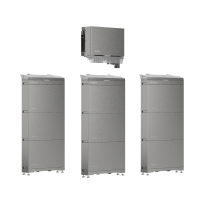
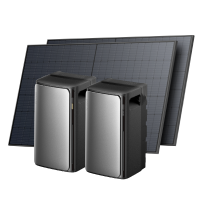
Adelaide’s sunny climate makes rooftop solar common, but feed-in tariffs vary by retailer and plan. Compare the credit you receive for exported power with the rates you pay when drawing electricity from the grid. If you often export solar during the day and buy power in the evening, a home battery may help you use more of your own generation. The EcoFlow OCEAN 2 Plus Single Phase combines solar input with scalable battery storage; check its compatibility and specifications against your system before considering it.
Time-of-Use Plans for Flexible Electricity Consumption
If you can automate or shift your energy-heavy routines, a Time-of-Use plan may help reduce electricity costs. Run the pool pump, dryer and dishwasher during cheaper windows, or charge the EV overnight. For households with rooftop solar, solar battery storage may also help make surplus daytime generation available for evening use, depending on the system and tariff.
How Can You Compare and Switch Electricity Plans in Adelaide?
Before switching, check your recent bill and compare offers using your actual usage and meter details. This helps you judge the estimated annual cost instead of relying on a headline discount.
Review Your Current Electricity Usage and Plan
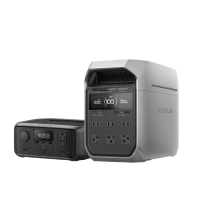
Check a recent electricity bill for your average daily use, usage rates, daily supply charge and any discounts or offer end dates. If you’re considering a time-of-use plan, you’ll also need to know when your household uses the most power. The EcoFlow PowerInsight 2 can show real-time solar generation and household consumption with compatible energy systems, giving you a clearer picture of your usage. Use that information alongside your bill and current offers when comparing plans.
Compare Plans Available at Your Address
Distributors define connection boundaries, so plan availability and network charges vary slightly across Adelaide metro and regional SA:
Use independent comparison resources such as the federal government’s Energy Made Easy portal (energymadeeasy.gov.au).
Input your specific NMI (National Meter Identifier, found on your bill) and postal code to review quotes tied to your exact meter setup.
Filter by single-rate or time-of-use preferences, as well as solar feed-in terms if you export power.
If you’re also exploring ways to use more of your rooftop solar generation, you can learn more about EcoFlow solar battery solutions and assess whether battery storage fits your household’s energy needs.
Check the Energy Price Fact Sheet and Contract Terms
Before hitting apply, review the Basic Plan Information Document (BPID) or
Energy Price Fact Sheet:
Check for conditional credits or promotional perks (e.g., direct-debit credits, e-billing requirements, or sign-up bonuses that only apply to the first bill).Review payment processing fees (credit card surcharges, paper bill fees).
Confirm contract length and benefit periods; standard residential plans in South Australia are legally prohibited from charging exit fees (unless bundled with third-party hardware or solar financing).
Schedule Your Free Consultation Today!
What kind of product or solution are you interested in?
Conclusion
To compare electricity plans in Adelaide, start with your latest bill. Check the daily supply charge, usage rates, tariff type, and any solar feed-in terms. Then look at the offers available at your address, and compare the estimated annual cost and contract conditions. Don’t just set it and forget it either. Review your plan when rates change or your household’s usage shifts.
FAQs
Will Switching Electricity Providers Affect Your Power Supply?
No, switching providers will never interrupt your physical electricity supply. The physical poles, wires, and emergency outage repairs throughout Adelaide remain entirely owned and operated by the network distributor, SA Power Networks (though smart meters are managed via competitive metering coordinators). Your new retailer simply takes over the financial billing and wholesale purchasing behind the scenes.
Can You Switch Electricity Providers If You Have an Outstanding Bill?
Generally yes, you can still switch providers if you have an unpaid balance, provided you haven’t been formally disconnected. However, you remain legally responsible for settling that debt with your previous retailer. If left unpaid, it can be referred to debt collection agencies and negatively impact your credit rating.
Can Your Electricity Provider Increase Rates During a Contract?
Yes, on variable-rate market contracts, which cover the vast majority of plans in South Australia. When wholesale or network costs change, they can adjust your rates. But they have to notify you in writing first, usually at least 10 to 14 business days before the new pricing kicks in.
How Often Should You Compare Electricity Plans?
You should review and compare your electricity plan at least every 12 months, or immediately whenever you receive a formal rate change notice in your inbox. In South Australia, many attractive sign-up benefit periods expire after one year, leaving accounts vulnerable to higher ongoing default tariffs.
Who is the cheapest electricity provider in South Australia?
There is no single cheapest electricity provider for every home in South Australia, because total costs depend heavily on your meter type, whether you have rooftop solar, and your split between daily supply charges and energy volume. Currently, providers such as OVO Energy, Dodo, Amber, and AGL frequently feature competitive market offers sitting 10% to 25% below the Reference Price, but the best option for your household hinges on your actual daily kWh usage.