Cheaper Home Battery Program Subsidy Changes: What Australians Need to Know in 2026
Australian households with rooftop solar may get only a few cents per kilowatt-hour for power they export, then draw from the grid after sunset. A home battery can store some of that daytime generation for evening use, but the upfront cost still matters. In 2026, changes to the Cheaper Home Batteries Program affect how much support a system can get. This guide explains the updated STC factors and capacity tiers, estimates the discount for different battery sizes, and covers eligibility and ways to make the investment work for your household.
Key Takeaways
Twice-yearly reductions: Battery STC factors now drop every six months instead of tapering on a slower annual cadence, stepping down steadily until the program ends.
Tiered capacity structure: The first 14 kWh of usable capacity earns 100% of the base STC factor, storage between 14 kWh and 28 kWh earns 60%, and capacity from 28 kWh up to 50 kWh earns 15%.
Installer discount at point of sale: Households rarely trade STCs themselves,certified installers calculate the certificates and take the savings straight off your quote.
Strict eligibility criteria: Systems need 5–100 kWh nominal capacity (subsidies capped at the first 50 kWh), Clean Energy Council (CEC) approved hardware, installation by an accredited technician (SAA), and Virtual Power Plant (VPP) capability if grid-connected.
Smart monitoring drives ROI: Long-term returns depend heavily on using your own solar during the day, smart energy management and a modular system design.
What Is the Cheaper Home Batteries Program in Australia?
The program’s discount is delivered through Small-scale Technology Certificates (STCs), so it helps to know how those certificates are calculated and applied to an installation. Explore solar battery storage options alongside the program rules.
The Background and Objectives of the Cheaper Home Batteries Program
Australia leads the world in rooftop solar adoption, yet millions of suburban homes still dump surplus generation into the grid at midday only to buy expensive fossil-fuel power back after dusk. Introduced under the expanded Small-scale Renewable Energy Scheme (SRES), the Cheaper Home Batteries Program aims to bridge this gap. By slashing the initial capital barrier by roughly 30% on standard systems, the government seeks to stabilise local grid feeders, curb peak evening demand, and make clean evening power accessible to ordinary families.
How the Government Funds the Battery Discount
Rather than relying on power retailers to absorb additional certificate liability, the federal government directly funds the battery initiative within the Renewable Energy Target framework. Dedicated Commonwealth budget appropriations underpin the scheme, allowing the government (via the Clean Energy Regulator) to systematically purchase and surrender battery STCs directly. This ring-fences the battery program from the broader rooftop solar STC market, preventing certificate oversupply while ensuring installers can apply guaranteed upfront invoice deductions without unexpected voucher freezes.
How Small-scale Technology Certificates (STCs) Deliver the Battery Discount
Every qualifying battery creates a set number of Small-scale Technology Certificates based on usable kilowatt-hour capacity and an official government multiplier. In day-to-day practice, you do not need to register on trading exchanges. Your accredited installer calculates the total STCs your unit generates, assigns them to an aggregator or REC agent, and applies the equivalent cash value as an upfront discount on your installation invoice.
What Changed in the Cheaper Home Batteries Program in 2026?
Following amendments to the Renewable Energy (Electricity) Regulations 2001, the revised STC schedule officially took effect on 1 May 2026. While installations completed prior to May 2026 utilized an 8.4 multiplier across all capacities, installations from May to December 2026 are subject to the 6.8 factor alongside the three-tier tapering system (100% / 60% / 15%). The next statutory reduction drops the factor to 5.7 on 1 January 2027.
More Frequent STC Factor Reductions
Earlier iterations followed extended adjustment cycles, but adjustments now occur every six months. For the latter half of the year, the base STC factor is pegged at 6.8. It is scheduled to step down to 5.7 at the turn of the new year, followed by subsequent half-yearly cuts. Because the certificate volume is locked on the actual physical commissioning date, not when you pay a deposit, delays in installer scheduling can directly influence your final out-of-pocket figure
The Introduction of Tiered Subsidies Based on Battery Capacity
To discourage the subsidisation of oversized commercial-scale units at the expense of regular households, the regulator introduced a three-tier bracket system:
| Usable battery capacity | STC factor applied |
|---|---|
| Up to 14 kWh | 100% |
| Above 14 kWh, up to 28 kWh | 60% |
| Above 28 kWh, up to 50 kWh | 15% |
| Above 50 kWh | 0% |
The Scheduled STC Factor Decline Through 2030
Like the steady phase-down that solar panels have undergone, the battery STC multiplier is mapped out to drop continuously until it reaches 2.1 by late 2030, before sunsetting altogether. The policy design anticipates manufacturing and cell costs falling over time, meaning early adopters capture the most generous government contribution.

How Much Can Australians Get Under the Updated Battery Subsidy?
Because certificate values fluctuate slightly on the secondary market (modelled here at $37 to $38 per certificate, rather than a verified current market average), your exact dollar concession varies by location, installer margin, and usable capacity.
Estimated Subsidy Amounts for Different Battery Capacities
Using a baseline STC trading price of approximately $37.50 to $38.00 per certificate and the current 6.8 multiplier, the table below illustrates what Aussie homeowners can anticipate shaving off typical residential systems:
| Usable Battery Capacity | Applicable Calculation Formula | Approximate STCs Generated | Estimated Upfront Rebate Value (AUD) |
|---|---|---|---|
| 5 kWh | 5 kWh × 6.8 × 100% | ~34 STCs | $1,275 – $1,300 |
| 10 kWh | 10 kWh × 6.8 × 100% | ~68 STCs | $2,550 – $2,585 |
| 13.5 – 14 kWh | 14 kWh × 6.8 × 100% | ~95 STCs | $3,500 – $3,610 |
| 20 kWh | (14 × 6.8) + (6 × 6.8 × 60%) | ~120 STCs | $4,500 – $4,560 |
| 28 kWh | (14 × 6.8) + (14 × 6.8 × 60%) | ~152 STCs | $5,700 – $5,775 |
| 35 kWh | (14 × 6.8) + (14 × 4.08) + (7 × 1.02) | ~159 STCs | $5,980 – $6,040 |
The sweet spot for suburban dwellings sits squarely between 10 kWh and 14 kWh, where every kilowatt-hour qualifies for full certificate funding without suffering tier dilution. For a broader comparison of installed prices and cost drivers, see our guide to solar battery cost.
What Are the Eligibility Requirements for the Cheaper Home Batteries Program in 2026?
Meeting the program’s fine print prevents unexpected surprises on installation day.
Eligible Property Types and Battery Capacity Requirements
Suburban standalone homes, townhouses, small businesses, and community facilities qualify across all states and territories. The property must be associated with a dedicated National Metering Identifier (NMI), and the incentive applies only once per connection. The battery system must have an approved nominal capacity between 5 kWh and 100 kWh (with STC calculations strictly applying to the first 50 kWh).
Approved Battery Products and Accredited Installer Requirements
Equipment and safety standards under the SRES framework are strictly enforced: Understanding LFP battery chemistry can also help when comparing equipment specifications.
Product Listing: Battery units, inverters, and battery management systems must be listed on the Clean Energy Council (CEC) approved battery list (or the relevant national accredited product register recognised by the Clean Energy Regulator).
Accredited Installer: Installations cannot be signed off by a standard general electrician. Work must be carried out and commissioned by an installer accredited through Solar Accreditation Australia (SAA) who holds current grid-connect storage endorsements.
On-site Commissioning: SAA regulations require accredited technicians to be physically on site during installation and final commissioning to validate STC claims.
Solar PV Connection and Grid Connection Requirements
Standalone battery installations charged strictly from grid power do not qualify under this scheme. Storage units must be paired with an operational rooftop solar system, either installed alongside a new solar PV system or retrofitted to existing rooftop panels. For off-grid systems, VPP capability requirements depend on the property’s distance from the main electricity grid. Systems located more than 1 km from the grid are exempt from this requirement. Systems within 1 km must either be VPP-capable or provide written evidence from the relevant distribution network service provider (DNSP), accredited service provider or equivalent organisation confirming that the cost of connecting to the main grid exceeds A$30,000, excluding additional costs for extending the connection to a building.

How Can Australian Households Maximise the Value of Home Battery Storage After the Subsidy Changes?
Unlocking tangible bill relief involves tailoring your setup around how your household actually consumes power. A coordinated home energy ecosystem can help align generation, storage and household demand.
Matching Battery Capacity to Household Energy Needs
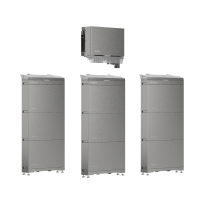
Aussie energy demands evolve constantly. A quiet two-person household might see evening consumption surge once kids arrive, when ducted reverse-cycle air conditioning runs through humid summer heatwaves, or when an electric vehicle (EV) is parked in the driveway after work. Selecting a storage unit requires balancing immediate baseline needs against future lifestyle adjustments. Systems with static capacities can leave you locked into an undersized setup, whereas over-sizing initially can be unnecessarily expensive due to the 14 kWh tiered subsidy limits. For households wanting to strike that balance, the EcoFlow OCEAN 2 Plus Single Phase offers a practical pathway. Its modular design allows families to install an appropriately sized system today while preserving the ability to stack additional capacity down the road as household energy demands grow.
Maximising Solar Self-Consumption and Reducing Electricity Costs
Simply bolting a battery to an exterior wall does not guarantee minimal power bills. You need visibility over where your rooftop generation goes, how your appliances draw load, and whether your battery discharges at the most advantageous times.
Managing these dynamic power flows becomes much simpler with a centralised dashboard. Solutions like the EcoFlow PowerInsight 2 give homeowners real-time visibility over solar generation, overall home power demand, and battery charge states. Having a clear window into these energy habits helps you schedule energy-intensive loads like pool pumps and washing cycles during peak solar windows, keeping battery reserves intact for expensive evening tariff spikes.
Assessing Long-Term Savings and Battery Payback Periods
When evaluating payback, look closely at your retail electricity tariff structure. On standard flat-rate plans, saving 30c per kWh by avoiding grid imports yields steady returns. However, pairing battery storage with Time-of-Use (TOU) tariffs where evening peak rates often jump to 45c–55c per kWh dramatically accelerates the return on capital.
Combined with the upfront federal STC discount and potential state-specific top-ups (such as incentives in Western Australia or VPP bonuses in NSW), a 6-to-9-year payback should be treated as an illustrative scenario, rather than a typical or guaranteed result. Actual payback depends on the installed quote, tariff, export opportunity cost, battery losses, usage and warranty terms.
Schedule Your Free Consultation Today!
What kind of product or solution are you interested in?
Conclusion
The 2026 updates to the Cheaper Home Batteries Program reward informed decision-making. By focusing the strongest financial support on capacities up to 14 kWh, federal policy clearly incentivises practical residential sizing over unnecessarily bulky storage. With base factors stepping down on a strict six-month schedule, locking in your system design with an accredited installer sooner rather than later may help you meet the intended installation window; the applicable discount depends on installation and certification, rather than the booking or deposit date.
Disclaimer: This article provides general information only and reflects policy information checked on 6 November 2026. Program rules, eligibility requirements, subsidy amounts and application processes may change. Confirm the latest requirements with the Clean Energy Regulator and relevant state or territory government, and ask your accredited installer to confirm your system’s eligibility before committing to a purchase. Any costs, savings or payback periods are illustrative and are not guaranteed.
FAQs
Are Home Batteries Worth Installing if I Have Low Solar Exports?
Yes, provided your solar array generates enough power to cover daily self-consumption and supply the battery on clear days. If your daytime exports are low because your household already runs air conditioning or heavy appliances during daylight hours, a smaller 5–8 kWh battery can capture remaining surplus generation to cover night-time lighting and refrigeration without overspending on capacity.
How Much Battery Capacity Does a Home Battery Typically Lose Each Year?
Modern lithium-iron-phosphate (LFP) domestic batteries typically degrade by roughly 1.5% to 2.5% per year under normal cycling conditions. Most tier-one manufacturers back this with warranties guaranteeing at least 60% to 70% of initial capacity retention after 10 years or a set cycle threshold (often 6,000 to 10,000 cycles).
Will the 2026 Battery Subsidy Changes Affect Existing Battery Owners?
No, the revised certificate schedules and tiered capacity rules apply solely to newly installed systems commissioned on or after their respective implementation dates. If you already claimed STCs under earlier rules, your prior discount is locked in. Additional capacity cannot receive STCs after a battery system has already claimed them. Expansion of a system that has not previously claimed STCs may qualify where at least 5 kWh of nominal capacity is added, total nominal capacity remains no more than 100 kWh, and all other eligibility requirements are met.
How Long Do Solar Batteries Last in Australia?
High-quality solar batteries in Australia generally last between 10 and 15 years when installed in shaded, well-ventilated locations that avoid harsh afternoon summer sun. Extreme ambient heat is the primary enemy of lithium chemistries; mounting the system inside a garage or under an insulated carport helps preserve the cells and electronics over the long run.