What Are Carbon Credits and How Do They Work?
Last year, the Clean Energy Regulator issued a record 21.7 million Australian Carbon Credit Units. Over 200 large industrial facilities are now legally required to reduce emissions or buy credits to stay compliant. Australia's carbon credit market hit around AUD 1.4 billion in 2025. While Australia’s carbon credit market expands rapidly, most residential homeowners remain unfamiliar with how tradable carbon units function and where households stand within this system.
Carbon credits have moved from niche policy concept to a functioning market. Real money is moving through it. But for most people outside the energy sector, the basics are still murky.
This guide answers what are carbon credits and explains how the trading system works. It also looks at who the different markets serve and where households fit in, including practical options like solar battery storage.
What is a carbon credit?
To answer what is carbon credit, think of it as a receipt. Not for buying something, but for not emitting something. One credit equals one tonne of carbon dioxide equivalent (CO₂e) that either stayed out of the atmosphere or was pulled back out of it.
Governments and international bodies use CO₂e as a standard unit. Different greenhouse gases trap different amounts of heat. Methane is far more potent than carbon dioxide over a short timeframe. CO₂e converts them all into a single comparable number.
In Australia, these credits are called Australian Carbon Credit Units, or ACCUs. The Clean Energy Regulator issues and administers them. Each one is linked to a verified project that either avoided emissions or removed carbon from the atmosphere.
A few terms often get used interchangeably but mean slightly different things.
Carbon credits is the broad term. It covers units in both regulated and voluntary markets.
Carbon offsets usually refer to credits bought voluntarily, to compensate for emissions produced elsewhere.
Allowances are permits issued under a cap-and-trade system. They give a company the right to emit up to a set limit.
A simple way to hold these apart: an allowance is a permission slip to pollute up to a cap. An offset is a receipt showing that pollution was balanced out somewhere else.
How do carbon credits work?
Carbon credits operate on a market-based model designed to reduce greenhouse gas emissions. They assign a concrete financial cost to pollution, creating an economic incentive for companies to lower their carbon footprint.
The Cap-and-Trade System
A government sets a maximum limit (the "cap") on total allowable emissions for a sector. Companies receive or purchase credits equal to this cap and must surrender enough credits to cover their actual emissions at the end of each period. Facilities that exceed their limit must buy extra credits, while those under the limit can sell their surplus. Because the cap decreases annually, total permitted emissions shrink over time. For example, Australia's Safeguard Mechanism requires facilities emitting over 100,000 tonnes of CO₂e to stay below a declining baseline or purchase Australian Carbon Credit Units (ACCUs) to cover the difference.
The Trading Mechanism
Companies that cut their emissions well below their baseline end up with excess credits. Those credits can be sold on the open market. Companies that are over their baseline buy them.
This trading is where price signals come from. The price of an ACCU tells companies roughly what it costs to reduce one tonne of emissions in the current market. ACCUs were last trading at around A$37.60 per tonne as of 2025 market growth continues into mid-2026 with rising ACCU prices. Market analysts expect prices to push toward A$40 as Safeguard Mechanism baselines tighten further.
Supply and Demand
Supply comes from verified projects. Demand comes from companies with compliance obligations and voluntary buyers. When the Safeguard Mechanism covers more facilities or sets tighter baselines, demand goes up. When more projects are approved and generating credits, supply rises.
Higher prices make it more attractive to invest in cleaner equipment rather than keep buying credits. In practice though, companies weigh capital timelines, technology readiness, and compliance costs across different horizons. The price signal is real. The decisions are rarely simple.
Types of carbon markets
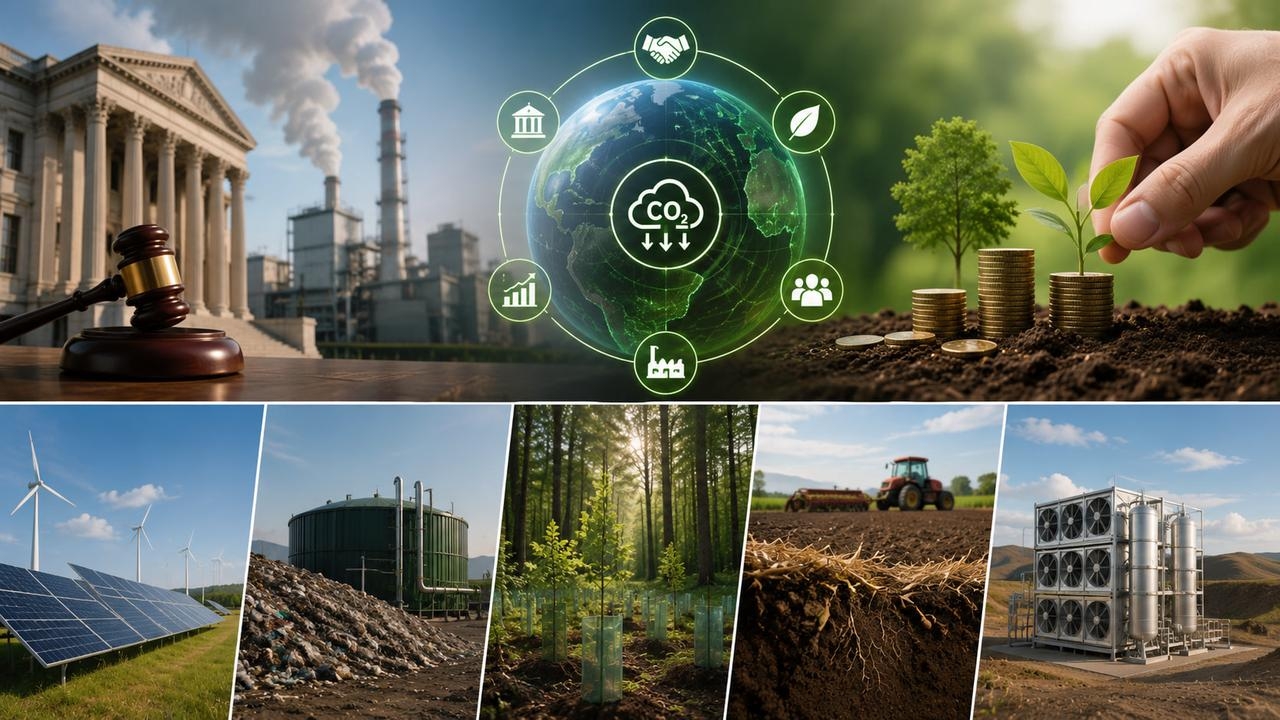
Carbon markets operate through two primary structures—mandatory and voluntary and fund diverse projects that either reduce or remove greenhouse gases.
Compliance Markets
Compliance markets are regulated by law. Companies participate because they have to. Australia's Safeguard Mechanism is a compliance market. The EU Emissions Trading System (EU ETS) is the largest in the world. California's cap-and-trade program, New Zealand's ETS, and South Korea's system are other examples.
Each has different rules, price levels, and sectors covered. What they share is the legal obligation driving participation.
Voluntary Carbon Markets
In voluntary markets, companies and individuals buy credits without a legal requirement to do so. The reasons vary. Some companies want to hit internal net-zero targets. Some offset specific products or events. Some individuals want to compensate for flights or other unavoidable emissions.
Voluntary markets have come under scrutiny. Some credits in earlier years represented emissions reductions that were difficult to verify or would have happened anyway. The market in 2026 has shifted toward stricter standards. Two questions now matter more than before.
The first is additionality. Would the project have happened without carbon credit funding? The second is permanence. Will the carbon stay out of the atmosphere long-term? Or could fire, land clearing, or project abandonment release it again?
Project Types
Carbon credit projects split into two main categories.
Reduction projects stop emissions from happening in the first place. Building a wind farm that displaces a coal plant is a reduction project. Capturing methane from a landfill site is another.
Removal projects pull carbon that is already in the atmosphere back out. Planting trees and letting them grow is the most common example. Soil carbon projects on farms increase the carbon stored in the ground through changed land management. Direct air capture technology pulls CO₂ from the air mechanically, though at much higher cost per tonne.
Benefits of carbon credits and projects
Carbon markets provide a structured mechanism to fund emission reductions while supporting broader environmental and regional initiatives. However, their overall effectiveness relies heavily on rigorous project design and strict verification.
Climate Impact
The core argument for carbon markets is straightforward. Money flows toward the cheapest or most effective emissions reductions, wherever they are. A Sydney company funding a Queensland reforestation project might achieve more per dollar than upgrading its own factory floor.
That argument holds when credits are genuine and verified. It breaks down when they are poorly designed or hard to verify. Credit quality varies significantly. Not all ACCUs are equal. Not all voluntary credits meet the same bar.
Co-benefits
Well-designed projects often deliver more than just carbon accounting. Indigenous-led savanna fire management projects in northern Australia reduce dry-season fire intensity. They also support cultural land management practices and create local employment in remote communities. A soil carbon project on a NSW farm can improve water retention and land resilience alongside generating ACCUs.
These co-benefits are not guaranteed by any carbon credit. They depend on how the project is designed and who runs it.
Australia's Role in Global Climate Efforts
Australia committed to the Paris Agreement in 2016. The national target is now a 62 to 70% reduction in emissions below 2005 levels by 2035. Achieving that requires direct emissions reduction and carbon market mechanisms working together. ACCUs are one part of a broader strategy that includes renewables, efficiency standards, and transport electrification.
The Kyoto Protocol, which preceded the Paris Agreement, established the early framework for international carbon trading. Article 6.4 of the Paris Agreement is developing the next generation of international carbon credit standards. The detailed rules are still being finalised.
How homeowners can reduce their carbon footprint
Carbon markets are mainly a tool for industry and policy. But household decisions matter too. Residential energy use, transport choices, and consumption habits contribute meaningfully to Australia's overall emissions profile.
Energy Efficiency
Reducing demand is the most direct step. Better wall and ceiling insulation keeps homes comfortable with less heating and cooling. Double-glazed windows reduce heat transfer in both directions. Switching to high energy star-rated appliances cuts power use without changing daily habits. Heat pump systems for hot water and space heating use far less electricity than resistive electric alternatives.
Each of these changes reduces how much electricity the household draws from the grid. Grid electricity in most Australian states still has a significant fossil fuel component.
Renewable Transition
Rooftop solar shifts part of a household's electricity supply from grid power to direct solar generation. The carbon intensity of the electricity used drops accordingly. How much it drops depends on self-consumption rates and the local grid mix.
Understanding solar power cost is a useful first step before comparing quotes. Upfront cost, available rebates, and expected payback all feed into the decision.
Smart Solar Storage
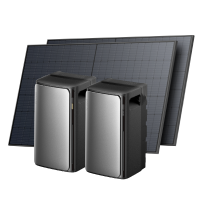
Battery storage extends a household's use of solar into the evening. Without storage, surplus daytime solar exports to the grid at a low feed-in rate, forcing the household to buy power back at a much higher retail rate later. A battery captures this surplus and stores it for direct use during these expensive peak hours.


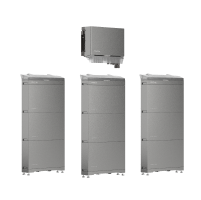
Modular solutions such as the EcoFlow PowerOcean Single-Phase Battery allow households to manage upfront costs by starting with a smaller setup and expanding capacity over time. Usable capacity starts from 5 kWh per battery module. Built for varying environmental conditions, the hardware utilizes Lithium Iron Phosphate (LFP) chemistry and carries an IP65 weatherproof certification to withstand regional climate extremes.
Conclusion
Carbon credits put a price on pollution. That price is supposed to drive investment away from emissions and toward cleaner alternatives. How well that works in practice depends on project quality, verification standards, and policy strength.
At the household level, reducing energy demand and shifting to cleaner generation are the most direct options. Rooftop solar and battery storage are the most widely adopted approaches in Australia. Neither requires any involvement in carbon markets.
For a personalised assessment of home solar and storage options, contact our professional energy consultants based on actual household usage and local grid conditions.
Schedule Your Free Consultation Today!
What kind of product or solution are you interested in?

FAQs
What is the difference between carbon credits and carbon offsets?
Carbon credit is the broad term. It covers any tradable unit representing one tonne of CO₂e avoided or removed. Carbon offset refers specifically to credits bought voluntarily to compensate for emissions produced elsewhere. In compliance markets, those units are usually called allowances.
How much does 1 carbon credit sell for?
Australian Carbon Credit Units (ACCUs) last traded at around A$37.60 per tonne as of mid-June 2026. Voluntary market prices vary widely. Credits in international markets can range from under A$5 to over A$30 per tonne. Project type, certification standard, and vintage year all affect the price.
Who can buy carbon credits?
In compliance markets, covered entities buy credits because the law requires it. In voluntary markets, any organisation or individual can buy them. Businesses, NGOs, event organisers, and individuals all participate for different reasons.
What types of projects generate carbon credits?
Reduction projects stop emissions before they happen. Renewable energy installations and methane capture are two examples. Removal projects pull carbon from the atmosphere. Reforestation, soil carbon sequestration, and direct air capture all fall into this category. In Australia, savanna fire management and land revegetation are significant sources of ACCUs.
What's the best way to reduce my carbon footprint without buying credits?
Improving home insulation cuts how much heating and cooling the home needs. Switching to efficient appliances lowers electricity use. Moving from gas to electric heating removes a fossil fuel source directly. Rooftop solar reduces reliance on grid electricity. An EV or public transport cuts transport emissions. Each of these addresses emissions at the source.