Average Electricity Bill for a 2-Person Household in Australia 2026
A two-person household in Australia can see significant differences in electricity costs depending on location, tariff, home size, appliances, and energy use. As a broad guide, a household using around 11 to 15 kWh of electricity per day may face several hundred dollars in electricity costs per quarter, with higher bills possible during periods of heavy heating or cooling use.
Heating and cooling, hot water, and other high-energy appliances can make a noticeable difference to electricity consumption, particularly during periods of extreme summer or winter weather.
This guide looks at electricity costs for two-person households in Australia in 2026, including typical daily electricity use, state-by-state differences, the appliances that can use the most energy, and practical ways to reduce power costs.
Key Takeaways
• A useful usage benchmark: A two-person household may use around 11 to 15 kWh of electricity per day, although actual consumption varies by home, climate, appliances, and lifestyle. The AER’s residential electricity benchmarks provide a useful reference for comparing household electricity use.
• It varies by state: Electricity costs differ substantially across Australia because tariffs, supply charges, climate, and household energy use vary by location. Households that use gas for heating or hot water may also have lower electricity consumption, although they still have separate gas costs.
• What’s driving the bill: Heating and cooling can account for a substantial share of household energy use, particularly in homes with high seasonal demand. Hot water is another major energy use, typically accounting for around 15% to 30% of household energy use depending on the home and location.
• Supply charges add up: Electricity bills include a fixed daily supply charge as well as variable usage charges. The exact supply charge depends on your location and electricity plan, so it is worth checking both when comparing offers.
• Getting more value from solar: Shifting flexible appliance use into periods of strong solar generation can increase self-consumption. A home battery can also store excess solar electricity for later use, potentially reducing the amount of electricity purchased from the grid.
What Is the Average Electricity Bill for a 2-Person Household in Australia?
For a two-person household, what you pay can swing quite a bit depending on where you live and how much power you use. The figures below give you a rough idea of what to expect each month, quarter, and year.
Average Monthly Electricity Bill
Monthly electricity costs for a two-person household can vary considerably depending on electricity use, location, tariff and billing arrangements. A monthly equivalent can be useful for budgeting, but it should not be treated as a standard national average because Australian electricity prices vary by state and retailer. Households receiving monthly bills, often those on smart meters or retail budget-smoothing plans, can expect predictable figures during spring and autumn, with seasonal spikes creeping in during mid-winter cold snaps and summer scorchers.
Average Quarterly Electricity Bill
Quarterly electricity costs for a two-person household can range from several hundred dollars to substantially more, depending on daily consumption, local tariffs, supply charges and seasonal heating or cooling demand. Homes with high electricity use may see quarterly bills above this range during periods of extreme weather.
Average Annual Electricity Cost
Over a full 12 months, the total electricity cost for a two-person household depends on annual consumption, tariff rates, supply charges and seasonal usage. Rather than using a single national average, households can estimate annual costs by multiplying their typical daily consumption by the applicable usage rate and adding daily supply charges. This total includes daily supply charges (the fixed network connection fee) and variable usage charges based on how much electricity the household consumes.
Average Daily Electricity Cost
Daily electricity costs depend on both consumption and the tariff. Your bill normally combines a fixed daily supply charge with a variable charge for each kWh used. For example, WA’s regulated A1 residential tariff from 1 July 2026 includes a $1.1924 daily supply charge and a 33.2621c/kWh usage charge, illustrating why location-specific rates matter.
How Much Is Electricity for 2 People in Different Australian States?
Electricity prices are not the same across Australia. The following figures show how quarterly bills and daily electricity use can differ between states and territories.
State-by-State Benchmark Table (2-Person Household)
| State / Territory | Avg. Quarterly Bill | Avg. Daily kWh | Common Tariff Type |
|---|---|---|---|
| New South Wales (NSW) | $380 – $510 | 11 – 14 kWh | Time-of-Use (ToU) / Single Rate |
| Victoria (VIC) | $310 – $430 | 9 – 12 kWh | Time-of-Use (Default on Smart Meters) |
| Queensland (QLD - SEQ) | $350 – $470 | 11 – 15 kWh | Single Rate / Controlled Load |
| South Australia (SA) | $440 – $590 | 10 – 13 kWh | Time-of-Use / Flexible |
| Western Australia (WA) | $320 – $440 | 12 – 15 kWh | Regulated Single Rate (A1 Flat) |
| Tasmania (TAS) | $420 – $560 | 14 – 18 kWh | Controlled Load / Two-Rate Heating |
| ACT | $340 – $460 | 12 – 16 kWh | Single Rate / Time-of-Use |
New South Wales
Sydney’s hot summers and cooler winter conditions can make heating and cooling an important part of household electricity use. Electricity costs also vary by distribution network, retailer and tariff. Households on Time-of-Use plans may pay different rates at different times of day, so checking the specific peak, shoulder and off-peak periods on the plan is important.
Victoria
Victorian electricity costs can vary significantly depending on how a home is heated and whether hot water and cooking use electricity or gas. A home that relies on gas for some major energy uses may have lower electricity consumption, although its total energy costs also include gas.
For households moving toward all-electric heating, hot water and cooking, electricity consumption can increase. Smart-meter data and suitable electricity tariffs can help households understand when they use the most energy and whether a Time-of-Use plan suits their routine.
Queensland
South East Queensland can experience substantial cooling demand during hot and humid periods, which can increase household electricity consumption. Rooftop solar is also widely used across Queensland, so households with solar may be able to increase self-consumption by running flexible appliances while solar generation is available.
South Australia
South Australian electricity costs can be relatively high compared with some other parts of Australia, although the amount a household pays depends on its tariff, retailer and electricity consumption. The state’s high penetration of renewable generation also means that solar generation and electricity market conditions can influence how households use and value electricity at different times of day.
Western Australia, Tasmania, ACT and Other Regions
• Western Australia: Residential electricity pricing differs from the NEM jurisdictions. Under the regulated A1 tariff, the WA Government lists a daily supply charge and per-kWh usage rate for residential customers. Billing arrangements can vary by retailer and customer circumstances.
• Tasmania: Cooler weather can increase household electricity consumption because of heating demand. Tasmania also has several residential tariff structures, including flat-rate and peak/off-peak options. The 2026–27 regulated prices vary substantially by tariff, so households should check which tariff applies to their property.
• ACT: Canberra’s colder winters can increase heating demand, while electricity costs depend on household consumption and the retail plan selected. ACT households can use Energy Made Easy to compare available electricity offers.
How Much Electricity Does a Typical 2-Person Home Use?
Two-person households with relatively low electricity demand may use around 7 to 10 kWh per day, particularly when they spend much of the day away from home and use gas or other non-electric energy sources for some major appliances. Actual consumption varies considerably by home and lifestyle.
Low Electricity Usage
Couples who work long hours out of the house, cook with gas, and live in modern, double-glazed apartments often sit comfortably in the 7 to 10kWh-a-day bracket. Their bills stay lean because the heating or cooling only runs for a couple of hours in the evening, and the big-draw appliances only get used a few times a week.
Typical Electricity Usage
As a general reference point, a two-person household may use around 11 to 15 kWh of electricity per day. Actual consumption can be higher or lower depending on heating, cooling, hot water, appliances and time spent at home. That routine usually means a day or two working from home each week, the dishwasher every other day, laundry fairly often, and the reverse-cycle air con running at a moderate level to keep the lounge comfortable.
High Electricity Usage
Households using more than 16 kWh per day may have higher heating or cooling demand, electric hot water, older or less efficient appliances, poor insulation, or more people working from home. Homes with several high-demand appliances can use substantially more electricity during periods of extreme weather.
What Uses the Most Electricity in a 2-Person Home?
A two-person household’s electricity use is usually driven by larger appliances and systems rather than small electronics. Common major energy uses include:
• Space heating and cooling: Depending on climate and the home, heating and cooling can account for a substantial share of household energy use. Australian Government guidance puts the range at around 20% to 50%.
• Water heating: Hot water is another major energy use, accounting for around 15% to 30% of household energy use depending on the home and location.
• Refrigeration and cooking: Refrigerators, freezers, ovens and other kitchen appliances can contribute to household electricity use, with consumption depending on appliance efficiency and usage.
• Washing machines and dryers: Frequent laundry cycles, particularly clothes drying, can add to electricity consumption.
How to Tell If Your Electricity Usage Is Too High
For households in jurisdictions where AER residential electricity benchmarks apply, electricity bills can include a comparison of household usage with benchmarks for similar household sizes in the local area. These benchmarks can help you understand whether your daily electricity consumption is relatively high or low.
Your smart meter data can provide more detailed information about when your household uses electricity and help identify periods of higher consumption.
How to Lower Your Electricity Bill in Australia
Once you know how much electricity you use and what is driving your bill, there are several ways to bring the cost down. Some changes are simple, while others involve changing your tariff or how you use solar power. For households with rooftop panels, solar battery storage is another option to assess against their evening electricity use.
Compare Electricity Plans and Tariffs
Retail energy providers can change their rates, discounts and plan structures. Reviewing your electricity plan regularly can help you identify whether another offer may better suit your usage.
Households in the ACT, NSW, Queensland, South Australia and Tasmania can use Energy Made Easy, while Victorian households can use Victorian Energy Compare to compare available electricity offers.
Understand Your Electricity Usage
Pinning down when your home draws power gives you leverage over your bill. Understanding when your home uses electricity can help you assess whether your current tariff suits your routine. A single-rate tariff generally charges one usage rate regardless of the time of day, while a Time-of-Use tariff applies different rates during defined peak, shoulder and off-peak periods.
Knowing your daily electricity pattern can help you decide whether shifting flexible loads or choosing a different tariff could reduce your costs. A Home Energy Ecosystem can help coordinate compatible devices around that daily pattern.
Use High-Energy Appliances During Cheaper Hours
Delay-start timers on dishwashers, washing machines and pool filtration pumps can help shift flexible electricity use to lower-cost periods. If you have rooftop solar, running these appliances while solar generation is available can also increase self-consumption and reduce the amount of electricity purchased from the grid.
Improve Heating and Cooling Efficiency
Heating and cooling can have a major effect on household energy use. Australian Government guidance recommends setting heating between 18°C and 20°C in winter and cooling between 25°C and 27°C in summer. It also notes that each degree change can affect energy use by around 5% to 10%.
• In summer, consider setting cooling between 25°C and 27°C.
• In winter, consider setting heating between 18°C and 20°C.
• Close doors and vents to unused rooms where appropriate to avoid conditioning areas that do not need heating or cooling.
Reduce Standby Power Consumption
Phantom loads from devices that remain on standby can add to household electricity use. Australian Government guidance estimates that standby power can account for around 3% of household electricity consumption. Switching off suitable devices at the power point or using a powerboard can help reduce unnecessary standby consumption.
Choose Energy-Efficient Appliances
When replacing older appliances, check the Energy Rating Label and compare the estimated running costs of different models. More efficient appliances can reduce electricity consumption over their operating life, although the potential savings depend on the appliance, how often it is used and your electricity tariff.
If you are also considering a home battery, compare solar battery cost with the potential savings from appliance upgrades.
Use Solar Power and Home Battery Storage
For an Aussie couple, the classic solar paradox is well known: your rooftop panels pump out peak power in the middle of the day while you’re both at work, then you roll in at 6pm and buy expensive grid power to cook dinner and cool the house. Sending your excess solar back to the grid for a modest feed-in tariff of 3 to 6 cents per kWh is nowhere near as valuable as dodging retail prices of 35 to 45 cents per kWh.
Storing that excess daytime solar to run your home through the evening peak is exactly where something like the Ecoflow OCEAN 2 Plus single phase home battery comes in:
The OCEAN 2 Plus captures your daytime solar yield and holds onto it for when you actually need it. Instead of handing your clean power to the grid for pennies, a home battery lets you run the air con, wash the dishes, and keep the lights on overnight on stored sunshine, dramatically cutting your reliance on pricey retail grid power.
Monitor and Manage Household Energy Consumption
Knowing the national average is a handy sanity check, but the real key to long-term savings is understanding how, when, and where your own household uses power. An air con running with a filthy filter, an electric hot water element kicking in at odd hours, or a fridge with a dodgy seal can quietly blow out your budget. And relying on a quarterly paper bill that shows up after the fact makes it near impossible to pinpoint which appliance caused the damage.
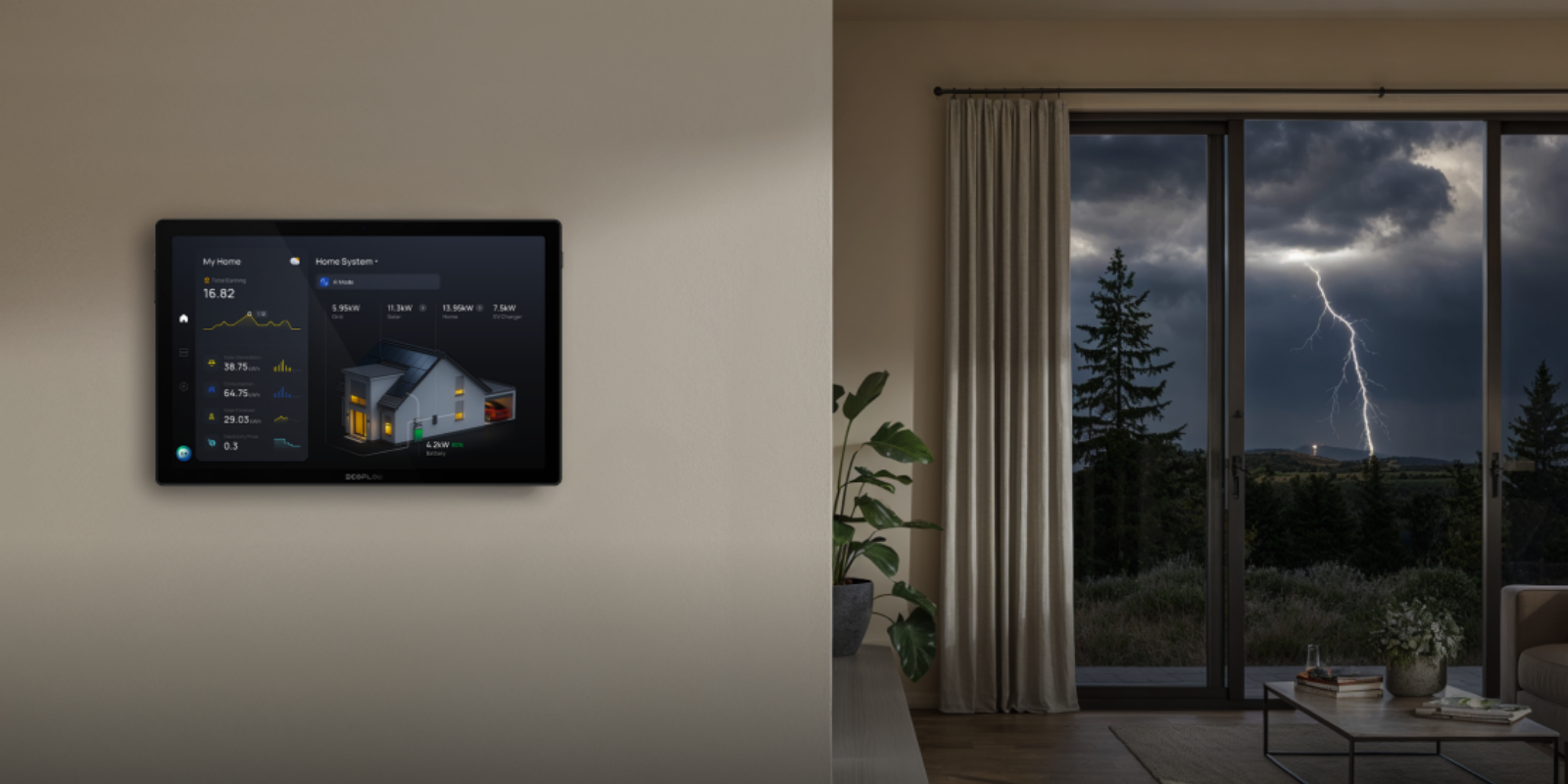
That’s where a dedicated smart energy console like the EcoFlow PowerInsight 2 changes your daily habits. By tracking your household generation and consumption patterns, it gives you a clean visual breakdown of your power flows. So instead of guessing why your bill jumped $100 on last quarter, you can spot the high-draw periods straight away, see how much solar you’re actually capturing, and shift your appliance schedules to match the most cost-effective hours of the day.
Schedule Your Free Consultation Today!
What kind of product or solution are you interested in?

Conclusion
What a two-person household pays for electricity depends on where it is located, which tariff it uses, how much electricity it consumes and how the home is heated, cooled and powered. Rather than relying on a single national average, checking your own daily kWh usage and electricity plan provides a more useful starting point.
From there, shifting flexible appliance use, improving heating and cooling efficiency, choosing an appropriate electricity plan and increasing the self-consumption of rooftop solar can all help manage household electricity costs.
Disclaimer: Electricity prices, tariffs, usage benchmarks and estimated bill amounts in this article are provided for general information and may vary by state, retailer, tariff plan, household usage, and billing period. Always check the latest rates and offers with your energy retailer or the relevant government comparison service before making decisions.
FAQs
What's a normal electricity bill for 2 people in Australia?
There is no single national electricity bill that applies to every two-person household. Costs vary by state, tariff, home size, appliances and electricity use. A household’s own daily kWh consumption and electricity plan are more useful indicators than a single national average.
How many kWh does a 2-person household use per day?
A two-person household may use around 11 to 15 kWh of electricity per day as a general reference range, although actual consumption can vary significantly. Homes with electric heating, cooling, hot water or several high-demand appliances may use substantially more.
Why is my electricity bill so high with only 2 people?
A high electricity bill can result from electric hot water, intensive heating or cooling, inefficient appliances, long periods spent at home, or a tariff that does not suit your usage pattern. Daily supply charges also apply regardless of how much electricity you consume.
Is a time-of-use electricity plan worth it?
It can be suitable if a significant share of your electricity use occurs during lower-priced periods. However, whether it saves money depends on the specific peak, shoulder and off-peak rates, your household’s usage pattern, and how much electricity you can shift to cheaper periods. Comparing the estimated cost of different plans using your actual usage is the most reliable way to assess the difference.