
What Size Inverter Do I Need? Calculate Your Power Needs in Minutes
If you are setting up a home battery backup system, outfitting an off-grid cabin, or installing solar panels, the inverter is the heart of your operation. But getting the sizing wrong comes with serious risks.
An undersized inverter will quickly overload and shut down when you need it most, leaving you in the dark. On the flip side, an oversized inverter can drain your batteries inefficiently through high idle power consumption and cost you unnecessary money upfront.
The goal of this guide is to take the guesswork out of the process. Below, you will find a simple, step-by-step method to calculate your exact power needs, understand the terminology, and confidently choose the perfect inverter size for your home.
What is an inverter and its key power terms?
Before doing any math, it helps to understand what an inverter actually does and the terminology printed on the box.
What is an inverter?
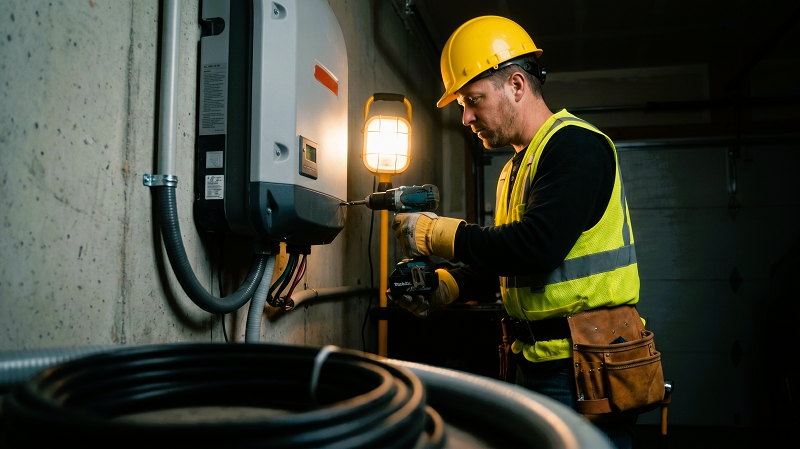
Batteries and solar panels store and produce power as DC (Direct Current). However, your home wall outlets and appliances run on AC (Alternating Current). The inverter is simply the "translator" that turns DC power into AC power so your home can actually use it.
Electrical load (what your appliances need)
Running watts (the cruising speed): This is the steady, continuous amount of power an appliance needs to stay on. For example, a modern television might run smoothly at 150 Watts.
Surge watts (the starting push): This is the brief, massive spike of energy needed to wake up heavy appliances that use motors or compressors (like a refrigerator, AC unit, or well pump). Think of it like the extra physical muscle needed to push a heavy car from a dead stop before it starts rolling easily. Surge watts can be two to three times higher than running watts.
Inverter specifications
Continuous power rating (the capacity limit): This is the maximum amount of power an inverter can provide continuously to run connected appliances without overheating or tripping its internal breakers.
Surge power rating (the temporary shield): This is the absolute maximum wattage an inverter can handle for a very brief moment (typically a few seconds). It is designed to safely absorb the high starting shock of motorized appliances without overloading or shutting down.
The two main types of inverters that you should know about
Depending on your installation goals, residential and backup power systems will almost always utilize one of these two primary inverter categories:
Grid-tied inverters: These devices are engineered specifically to convert direct current (DC) electricity generated by solar panels into alternating current (AC) power, feeding it directly into the utility grid. Because they lack battery integration, they automatically shut off during a power outage to prevent dangerous backfeeding into the grid, meaning they cannot provide backup electricity on their own.
Hybrid inverters: These represent the modern, all-in-one powerhouse for home energy systems. They intelligently manage and route electricity from three different sources simultaneously: your solar panels, a battery storage bank, and the utility grid. This versatility makes them the absolute gold standard for homeowners seeking seamless backup power and maximum grid independence.
How to calculate what size inverter do I need?
You do not need to be an electrician to figure out your inverter size. Just grab a calculator and follow these four steps.
Step 1: List your essential appliances
Write down every single device you plan to run at the exact same time. If you do not plan to use your microwave while your electric stove is on, you do not need to count them together. Simply focus on your peak concurrent usage.
Step 2: Find the wattage
Look at the physical UL labels or power tags on the back or bottom of your appliances. If the tag only lists electric current and voltage instead of wattage, you can calculate the wattage yourself using this simple formula:
Watts = Volts x Amps
Step 3: Add running watts and the highest surge
First, you need to calculate the Total Running Watts, which can be done by adding the running watts of all devices you plan to run simultaneously.
Next, you need to identify the "single" appliance with the highest surge wattage, and note down its value, which will then be used to calculate the Required Surge Power.
Step 4: Apply the 20% safety rule
Running an inverter constantly at 100% of its rated capacity will cause excessive heat, strain its internal circuits, and dramatically reduce its operational lifespan.
To keep your system running safely and efficiently over time, apply the following two formulas to find your required inverter ratings:
Recommended Continuous Power = Total Running Watts x 1.2
Required Surge Power = Total Running Watts + Highest Startup Surge
Common appliance power requirements
To give you a head start on your calculations, here are the typical power draws for common household items:
LED lights: 10W~15W
Laptop charger: 50W~100W
Refrigerator(depending on size and age): 100W~800W (Running) / 1000W - 1800W (Surge)
Microwave: 1000W (Running) / 1500W (Surge)
Air conditioner: 1500W (Running) / 3000W+ (Surge)
What size power inverter do I need: typical inverter sizes for varying scenarios
Once you have done your math, your needs will likely fall into one of two main categories for home use:
5000W - 8000W (standard home backup): This is the sweet spot for surviving a grid outage comfortably. It provides more than enough power to run essential home circuits, including your refrigerator, lights, internet router, TV, and small kitchen appliances simultaneously.
10kW+ (whole-home & heavy duty): If you want to back up your entire home without compromising your lifestyle, you will need a heavy-duty inverter. This tier is required for homes with electric water heating, deep well pumps, EV chargers, or central air conditioning.
The ideal hybrid inverter solution for home users
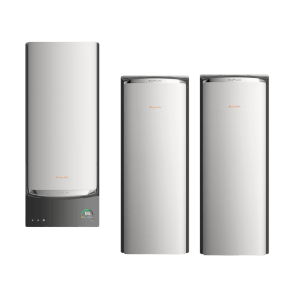
If your "what size solar inverter do I need" calculations put you in the "whole-home" category, standard inverters often struggle to keep up with massive power demands. This is where advanced hybrid solutions like the EcoFlow Ocean Pro come in. Built for heavy-duty whole-home backup, the Ocean Pro offers unmatched 24 kW continuous power.
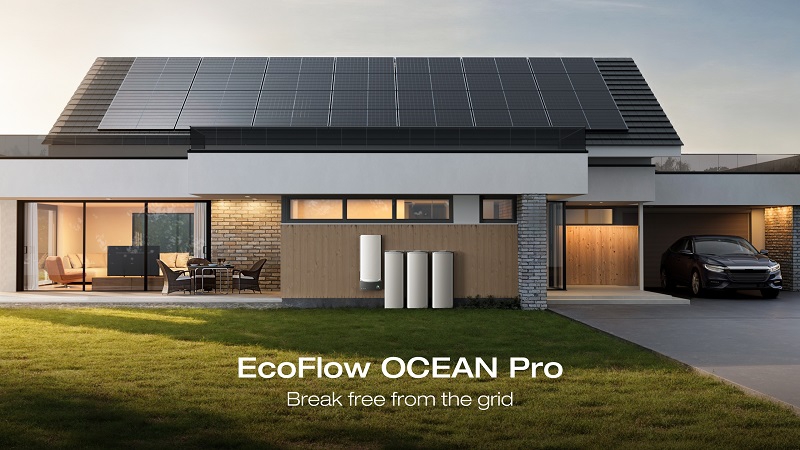
One of the biggest challenges of whole-home backup is managing massive appliance surges. The OCEAN Pro tackles this effortlessly with a 205A LRA (Locked Rotor Amps) capability, making it perfect for high-demand startup loads like heavy HVAC systems or well pumps that would instantly trip standard inverters.
Additionally, for those integrating solar, the Ocean Pro boasts a massive maximum STC solar input of 40kW and is equipped with 8 MPPTs (supporting 5kW per channel). It operates at an incredibly high 97.5% solar-to-home efficiency, letting you get the most out of your clean energy investment.
Get Your Free Home Energy Consultation!
Which energy solution are you interested in?
What size inverter do I need: common mistakes to avoid
Before finalizing your purchase, make sure you aren't making one of these frequent errors:
Forgetting to account for surge wattage: Ignoring the starting power of motorized appliances (fridges, AC units) is the #1 reason inverters fail to power up a system. Always factor in the surge.
Choosing an inverter based only on current energy needs: Failing to plan for future home additions or additional appliances means you will quickly outgrow your system, resulting in a costly replacement of the entire inverter unit down the line.
Skipping the safety buffer: Running an inverter constantly at its absolute maximum limit causes overheating and shortens its lifespan. Always include a 20% to 25% buffer in calculations.
Signing off
Sizing your inverter correctly is the most important step in building a reliable and efficient power system. By taking the time to accurately sum up your running wattage, accounting for heavy appliance surges, and adding a 20% safety margin, you can ensure the lights stay on when you need them most.
Remember to assess your future needs as well. If you plan on powering heavy home loads or achieving total grid independence, consulting with a solar professional and exploring advanced hybrid systems like the EcoFlow Ocean Pro will ensure your home is protected for years to come.
Frequently Asked Questions (FAQs)
What size inverter do I need to run a fridge?
To run a standard household refrigerator safely, you need a pure sine wave inverter rated for at least 1500 to 2000 surge watts. While it only uses 300 running watts, the compressor requires a massive startup push.
Can a 5000W inverter run a house?
Yes, a 5000W inverter can easily power essential household circuits like your refrigerator, lights, internet, and microwave during an outage. However, it cannot run heavy-duty loads like central air conditioning, well pumps, or electric water heaters.
How do you tell what size inverter you need?
To tell what size inverter you need, add up the running watts of all devices you plan to run simultaneously (which is the Total Running Watts), and then multiply it by 1.2, to arrive at the Recommended Continuous Power value. And to calculate the Required Surge Power, you need to add the Total Running Watts (that you already calculated before), with the highest surge wattage of that single appliance in your home (also known as the Highest Startup Surge).
What should you not plug into an inverter?
Never plug in sensitive medical equipment into modified sine wave inverters, as choppy power can damage them. Additionally, never plug in any appliance whose startup surge wattage exceeds your inverter's maximum surge power rating.
Can you run an inverter 24 hours a day?
Yes, high-quality hybrid and backup inverters are designed to run 24 hours a day safely. However, keep in mind that the inverter itself consumes idle power continuously, which can slowly drain your battery bank if solar input is low.

