
What Is Demand Side Response? How This Grid Strategy Lowers Your Power Bills
Imagine a hot summer afternoon. Millions of air conditioners are humming at maximum capacity, office buildings are running high-output cooling systems, and families are returning home to turn on stoves, televisions, and laundry machines.
During these peak hours, the electrical grid experiences massive strain. Traditionally, utility companies solved this spike in demand by turning on expensive, highly polluting "peaker" power plants to keep the lights on. Today, there is a smarter, cleaner, and much more cost-effective alternative: Demand Side Response (DSR).
But what is demand side response, how does it work, and how can everyday homeowners use it to slash their electricity bills while protecting their homes from blackouts? This comprehensive guide will break down everything you need to know, and how you can automate it by using a robust home battery system.
What is Demand Side Response (DSR)?
At its core, Demand Side Response (DSR) is a strategy used by utility providers and consumers to balance electricity supply and demand.
Instead of the grid constantly generating more electricity to meet rising demand, DSR encourages consumers to temporarily shift or reduce their electricity usage during peak hours.
The key difference: DSR vs. DSM
While they sound similar, it is important to understand the difference between Demand Side Response (DSR) and Demand Side Management (DSM):
Demand Side Management (DSM): Focuses on long-term, permanent energy efficiency improvements. Examples include replacing old windows, upgrading insulation, or buying energy-efficient appliances.
Demand Side Response (DSR): Focuses on short-term, immediate flexibility. It involves temporary adjustments, like pausing your dryer or drawing power from a home battery for a few hours, in response to real-time grid conditions or price spikes.
Note: DSR is the short-term flexibility tool within the broader DSM strategy
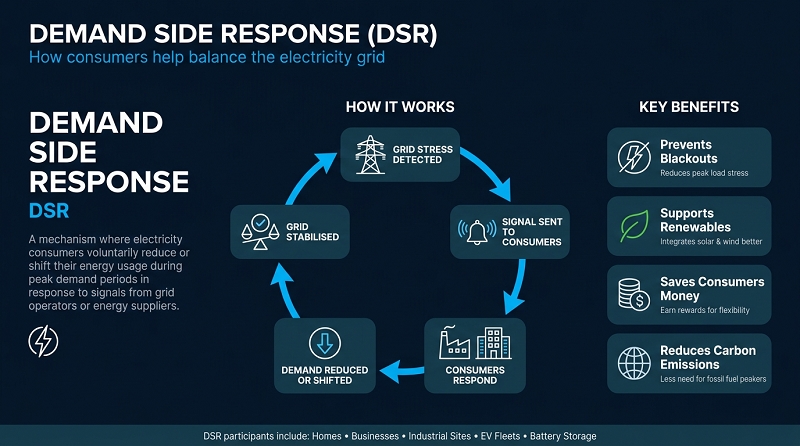
How Demand Side Response energy works (the 4-step flow)?
DSR relies on rapid communication between the grid and the consumer:
The signal
The grid experiences high demand (typically between 4:00 PM and 9:00 PM) or a sudden supply shortage (such as a drop in wind or solar generation).
The communication
The utility company sends a signal to smart meters, automated devices, or directly to consumers alerting them of high pricing or a critical event.
The load adjustment
The consumer (either manually or via automation) reduces electricity drawn from the grid. This might mean lowering the AC, delaying an EV charge, or running the home on backup battery power.
The reward
The consumer is rewarded with cheaper electricity rates, avoided peak surcharges, or direct financial credits on their utility bill.
Why is DSR essential for renewable energy?
As we transition to clean energy sources like wind and solar, power generation becomes variable. The sun does not always shine, and the wind does not always blow when demand is highest.
DSR provides the critical flexibility required to match our energy consumption habits with the natural cycles of clean, renewable energy.
Types of Demand Side Response programs & tariff structures
Utility companies offer several structures to incentivize consumers to participate in DSR:
Time-of-Use (TOU) rates
Under a TOU plan, the cost of electricity changes based on the time of day. Peak hours (when demand is high) are charged at a premium rate, while off-peak hours (late at night or early morning) are highly discounted. DSR helps you shift your heaviest energy tasks into those cheaper windows.
Incentive-based programs
In these programs, often linked to capacity markets, users are paid directly for agreeing to reduce their energy footprint on demand. By promising to lower your energy draw when the grid is strained, you receive direct financial incentives or recurring capacity payments regardless of how often you are called to respond.
Critical Peak Pricing (CPP)
On days of extreme weather or severe grid stress, utilities declare "Critical Peak" events. During these rare windows, electricity prices spike dramatically. By drastically cutting your grid usage during these hours, you protect yourself from massive bills and earn significant credits.
Direct load control
In these programs, consumers give the utility company permission to remotely cycle off or lower heavy-load devices (like central air conditioning systems or water heaters) for short intervals during a grid emergency. In exchange, the consumer receives a flat monthly bill credit.
Why does Demand Side Response matter?
Participating in demand response is not just a civic duty to help the environment; it provides immediate, tangible benefits to your household.
Substantial energy & cost savings
The financial impact of avoiding peak TOU or capacity-based surcharges is significant. By shifting your usage away from peak times, or avoiding drawing grid power altogether when prices are highest, you can shave hundreds of dollars off your annual energy expenses.
Proactive power outage management
Grid stress is the leading cause of localized blackouts. When too many homes demand power simultaneously, transformers blow, and regional grids fail.
Peak shaving: By lowering collective demand, DSR keeps the grid stable and prevents blackouts.
Home resilience: For homeowners with localized energy storage, participating in DSR actually strengthens their personal outage defense. When you have stored energy ready to go, a sudden grid failure will not interrupt your life.
Automating the strategy: introducing the EcoFlow Ocean Pro
While the concept of DSR is simple, executing it manually is incredibly difficult.
No one wants to set alarms to run the dishwasher at midnight, manually turn off the HVAC system during peak hours, or constantly track fluctuating utility prices.
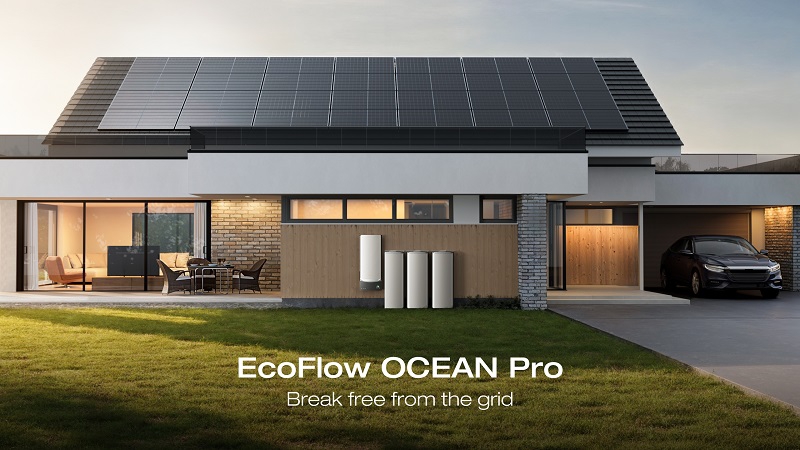
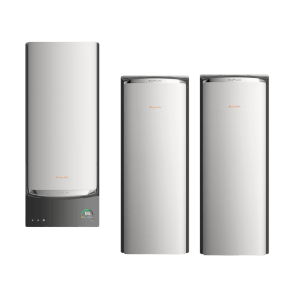
This is where the EcoFlow Ocean Pro changes the game. It is a highly advanced, all-in-one home solar battery and intelligent energy hub designed to completely automate your DSR and TOU management.
How does the EcoFlow Ocean Pro negotiate DSR and TOU?
The Ocean Pro takes guesswork out of smart energy management through several industry-leading features:
Intelligent mode (analysis-driven energy scheduling): The system integrates with your local utility's pricing structure. It automatically charges the battery system using cheap, off-peak power (or free solar energy) and discharges that power to run your entire home during expensive peak TOU windows.
Whole-home power and seamless scale: Delivering up to 24kW of continuous output, the Ocean Pro can effortlessly run heavy-duty appliances, including central air conditioners, electric dryers, and well pumps. Its modular capacity expands from 10kWh up to a massive 80kWh, ensuring you have the exact capacity your household needs.
Instantaneous outage protection: If the grid fails due to extreme stress, the Ocean Pro transfers your home to battery backup in under 10 milliseconds. It also integrates 40 smart circuits (via Smart Electrical Panel 40) to prioritize critical loads during extended outages.
Recognized and reliable: The system features UL9540B safety certification and comes backed by an industry-leading 15-year warranty.
Get Your Free Home Energy Consultation!
Which energy solution are you interested in?
Signing off
The concept of "what is Demand Side Response" is all about shifting the power dynamic of the modern energy landscape. Instead of being at the mercy of volatile utility prices and an aging, fragile electrical grid, DSR allows homeowners to become active, strategic participants in how energy is consumed and managed.
By pairing DSR strategies with an automated, ultra-reliable home battery system, you can permanently lock in lower utility rates, contribute to a cleaner grid, and ensure your home remains completely immune to power outages.
FAQs
What is an example of a demand-side response?
A common example is delaying electric vehicle charging from a high-demand peak period (like 6 PM) to a cheaper, off-peak time (like 2 AM), or automatically raising your smart thermostat by two degrees during a grid emergency.
What are the benefits of demand side?
Demand-side strategies provide critical benefits: they significantly lower your energy bills, prevent local blackouts by reducing stress on the public grid, and protect our environment by decreasing the usage of highly polluting fossil-fuel peaker plants.
Can I participate in DSR if I don't have solar panels?
Yes. You can charge a smart home battery directly from the grid during cheap off-peak hours (like overnight). You then power your home from the battery during expensive peak hours, saving money without any solar panels.
How does a home battery storage system improve power outage management?
During an outage, a home battery immediately isolates your house from the grid to keep your essential appliances running. By relying on stored power, you also reduce strain on the public grid, helping utilities recover.
What is the difference between peak shaving and load shifting?
Load shifting means moving heavy energy chores to cheaper off-peak times. Peak shaving means flattening your overall grid demand during peak hours by running those activities on localized power, like a home battery, so the grid sees zero spike.

