
What is a Sodium-Ion Battery? Pros, Cons, and How It Compares to LFP
The global transition to renewable energy has triggered a massive search for alternative battery chemistries.
While sodium-ion holds a long-term promise for low-cost, light-duty applications like urban electric vehicles and small power tools, Lithium Iron Phosphate (LFP) remains the undisputed champion for critical, high-demand systems like whole-home backup.
This deep dive compares the two battery technologies head-to-head across essential metrics and explains why, for dependable energy security, premium LFP home battery solutions remain the most reasonable & logical choice.
What is a sodium-ion battery? (the basics)
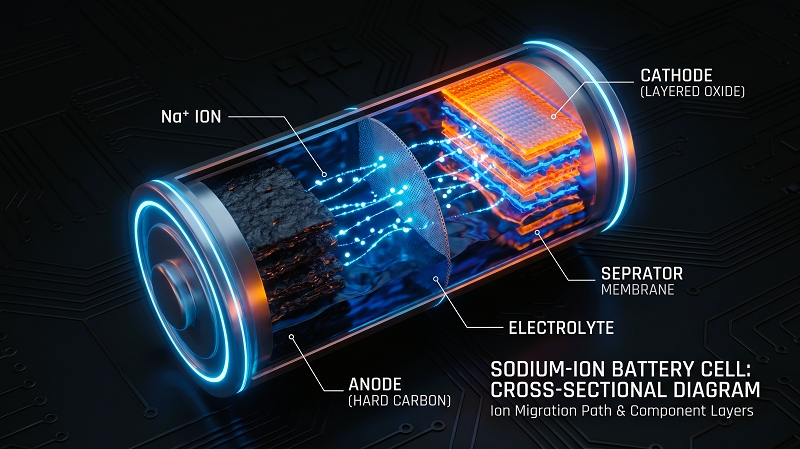
At a cellular level, a sodium-ion battery operates on a nearly identical principle to a lithium-ion battery. However, sodium-ion swaps out lithium ions for sodium ions. Because of this switch, the physical structure of the battery changes:
The Anode: While lithium batteries use graphite anodes, sodium-ion batteries typically use hard carbon, which can better accommodate the physical structure of sodium.
The Cathode: Rather than relying on cobalt, nickel, or iron phosphates, sodium-ion cathodes are usually built from layered transition metal oxides, polyanionic compounds, or Prussian blue analogues.
The "Salt" appeal
The primary driver behind sodium-ion research is abundance. Sodium is more than 1,000 times more abundant in the Earth's crust than lithium and can be cheaply sourced from ordinary salt.
Furthermore, sodium does not react with aluminum at low voltages, allowing manufacturers to use highly affordable aluminum foil for the current collectors on both the anode and cathode.
Current market status
Despite these raw material advantages, sodium battery technology is still in its relative infancy.
While a handful of major manufacturers are beginning to scale up the production of individual sodium-ion cells, the downstream ecosystem, such as complete, safety-certified battery packs, compatible inverters, and mature battery management systems (BMS), is still years away from mass-market readiness.
Sodium batteries vs Lithium Iron Phosphate (LFP): head-to-head
To evaluate whether sodium-ion can truly compete with established Lithium Iron Phosphate (LFP) technology, we must compare them across five critical performance metrics.
Performance Metric | Sodium-Ion Battery | Lithium Iron Phosphate (LFP) | Round Winner |
Energy Density | Lower (100 to 175 Wh/kg) | Higher (150 to 210 Wh/kg) | LFP |
Voltage Curve | Sloping (voltage drops continuously) | Flat (highly stable until empty) | LFP |
Cycle Life | 1,000 to 4,000 cycles (untested 15,000+ claim) | 5,000 to 10,000+ cycles | LFP |
Temperature Tolerance | Excellent in sub-zero cold (to -40°F) | Standard cells drop capacity in cold | Sodium-Ion |
Current Real-World Cost | Higher (low-volume production) | Lower (massive economies of scale) | LFP |
System Compatibility | Poor (requires specialized hardware) | Excellent (industry standard) | LFP |
Energy density & weight
Physics presents the first major hurdle for sodium-ion. Sodium is fundamentally a larger, heavier, and less electrochemically active atom than lithium.
LFP advantage: Standard commercial LFP cells offer an energy density typically ranging from 150 to 210 Watt-hours per kilogram (Wh/kg).
Sodium-ion reality: Commercial sodium-ion cells currently hover between 100 and 175 Wh/kg.
Because of this lower energy density, a sodium-ion battery pack requires more physical space and weighs significantly more than an LFP pack of the exact same capacity.
For a whole-home backup system, which already demands massive amounts of storage, switching to sodium-ion means a bulkier, heavier setup that complicates shipping, floor space requirements, and home installation.
Winner: LFP
Voltage curves & usable capacity
This is the single most critical technical detail that battery hype cycles ignore: the discharge voltage curve.
LFP's flat curve: Lithium Iron Phosphate is famous for its remarkably flat discharge curve. An LFP pack maintains a highly stable, consistent voltage throughout most of its discharge cycle—typically 80–90% of the usable range—before dropping off sharply near the end. Your devices and home inverters receive a steady supply of power right up until the battery is nearly empty.
Sodium-ion's sloping curve: Sodium-ion batteries suffer from a steep, sloped discharge curve. As the battery drains, its voltage drops continuously.
This presents a massive issue for residential systems. Standard household inverters are programmed with a "low-voltage cutoff" threshold to protect themselves and connected equipment from under-voltage damage.
Because a sodium-ion battery’s voltage drops so early in its discharge cycle, the inverter will reach its cutoff threshold and shut down prematurely.
Winner: LFP
Cycle life & lifespan
A residential energy storage system is a major capital investment. Homeowners expect their backup systems to last a decade or more, making lifetime cycles a critical point of comparison.
LFP longevity: Quality LFP cells typically deliver 3,000 to 6,000 cycles under standard conditions. However, premium storage-grade LFP cells are now rated for 8,000 to 10,000+ cycles. Most importantly, these ratings are backed by a decade of real-world field data and proven performance in residential environments.
Sodium-ion longevity: EV-grade sodium-ion chemistry has rapidly advanced to match standard LFP. On paper, newer storage-grade sodium-ion cells claim an incredible 15,000+ cycles, theoretically exceeding even the most premium LFP options.
While a 15,000-cycle claim is impressive, these sodium-ion numbers come from mass-produced cells manufactured only since 2025–2026. This technology remains entirely unproven at scale over time.
LFP, by contrast, offers a decade of field-verified reliability, making it a safe for long-term home energy investment.
Winner: LFP
Environmental and temperature tolerance
This is one category where sodium-ion shines.
Cold-weather performance: Sodium-ion chemistry behaves exceptionally well in freezing conditions. CATL's first-generation sodium-ion cells retain over 90% capacity at -20°C (-4°F), and HiNa Battery reports 85% retention at -30°C (-22°F). While this is impressive, claims of 85% retention at -40°F are not yet supported by published data from major manufacturers. Standard unheated lithium-ion batteries suffer steep capacity losses below freezing.
Safety and stability: Both LFP and sodium-ion are highly stable chemistries, especially when compared to older cobalt-based lithium chemistries (NMC) that are prone to explosive thermal runaway. However, LFP remains the gold standard for proven residential safety certifications (such as UL 9540).
Winner: Sodium-ion
The cost paradox: theoretical vs. practical
The hype: Because sodium is dramatically cheaper as a raw material, it has fueled widespread industry expectations that sodium-ion battery packs would quickly undercut lithium-based chemistries on price.
The reality: Despite intense media hype, sodium-ion cells actually cost more than LFP on average today. Currently, average sodium-ion cell prices hover around $59/kWh compared to just $52/kWh for established LFP cells.
Because of LFP's massive lead in manufacturing scale and mature global supply chains, sodium-ion currently costs slightly more per cell. However, given sodium's raw material advantages, many analysts expect sodium-ion to achieve price parity with—or even undercut—LFP within the next 5~10 years as production scales.
Winner: LFP
Overall Verdict: For whole-home backup today, LFP remains the safer bet, but sodium-ion is closing the gap faster than expected. It may well be an alternative at a future date.
Why use LFP as a reliable choice for whole-home backup?
When the power grid fails during a winter storm or summer heatwave, your backup system cannot be a science project. It has to work instantly and flawlessly.
LFP remains the only reliable choice for home backup because of three key factors:
High instant power demands: Starting heavy household loads, like a 3-ton central air conditioner, a well pump, or an EV fast-charger, requires massive, instant discharge currents. Sodium-ion's electrochemical characteristics, including lower voltage at partial states of charge, can make it less efficient at delivering the instant high-current surges that heavy household loads demand, though newer cell designs are improving this.
Seamless system integration: The entire residential solar and energy storage market is built around LFP's electrical profiles. Hybrid solar inverters, smart electrical panels, and charge controllers are perfectly calibrated to communicate with LFP battery management systems. Attempting to force a sodium-ion battery into this ecosystem leads to frequent system errors and cutouts.
True investment value: Because whole-home batteries are a long-term investment, the cost-per-cycle is far more important than the upfront material cost. While sodium-ion cells claim higher cycle counts on paper (15,000+ vs. LFP's 8,000–10,000+), those sodium-ion numbers remain unproven at scale. LFP offers a decade of field-verified reliability, making it the safer choice for long-term value.
Introducing the EcoFlow Ocean Pro as a reliable LFP solution
If you want the peace of mind of a high-performance, thoroughly proven home backup system, you do not need to wait for experimental technologies to mature. High-end Lithium Iron Phosphate technology is already here, and it is exemplified by the EcoFlow Ocean Pro system.
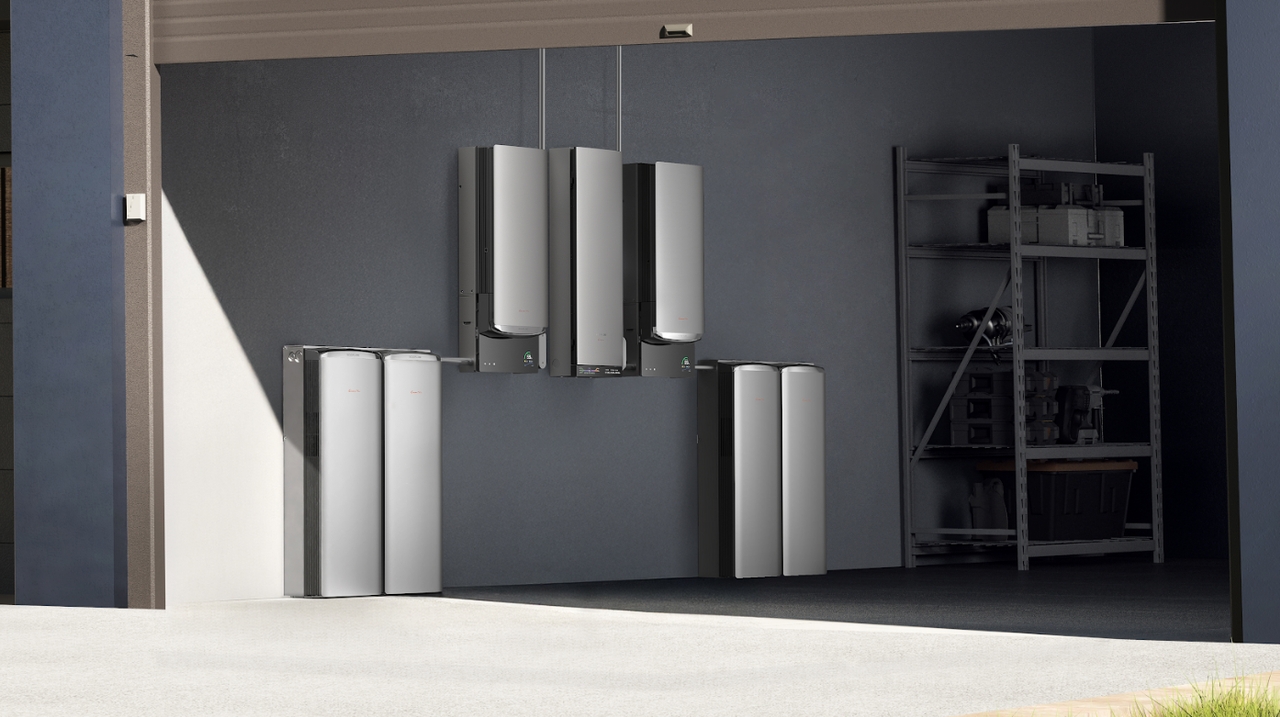
The Ocean Pro represents the pinnacle of modern, scaled LFP technology, delivering the ultimate combination of capacity, power, safety, and longevity.
Modular scalability: The Ocean Pro adapts to your energy needs as they grow. You can start with a single 10 kWh battery module and scale up to a massive 80 kWh per inverter, easily accommodating anything from a small off-grid cabin to a multi-story estate.
Massive output: The Ocean Pro boasts a continuous output of up to 24 kW and an incredible 205A LRA (Locked Rotor Amps) surge capability, allowing you to run multiple heavy-draw appliances simultaneously without breaking a sweat.
Ultimate safety standards: The Ocean Pro is fully certified to the industry's strictest standards: UL 9540, 9540A, and 9540B. Every module also features built-in active aerosol fire protection, providing an autonomous layer of security.
All-weather reliability: The Ocean Pro features advanced aerogel insulation coupled with an intelligent internal thermal management system. This system keeps the cells at their optimal operating temperature, ensuring high performance in temperatures ranging from -4 degrees to 140 degrees Fahrenheit (-20 to 60 degrees Celsius).
Unparalleled peace of mind: Every Ocean Pro system is backed by an industry-leading 15-year manufacturer's warranty. As a result, the Ocean Pro offers a decade and a half of guaranteed, worry-free energy security.
Get Your Free Home Energy Consultation!
Which energy solution are you interested in?

Signing off
The hype around sodium-ion batteries is understandable: a cheap, highly abundant, salt-based battery is an exciting prospect for the future of global utility-scale grids and affordable electric scooters.
But for the critical, high-power demands of whole-home backup, sodium-ion is simply not ready. Its low energy density, steep voltage drop-offs, and short cycle life make it an impractical choice for protecting your household.
For dependable, high-capacity, and long-lasting energy security today, high-end LFP systems like the Ocean Pro remain the undisputed choice. Invest in proven technology and protect your home with an energy storage system built for the real world.
FAQs
Can I use sodium-ion batteries as a drop-in replacement for my existing solar battery setup?
Not without modifications. Many standard solar inverters are optimized for LFP's flat voltage profile and may not fully utilize a sodium-ion battery's capacity due to its sloping discharge curve. However, newer inverters designed specifically for sodium-ion are entering the market. For existing systems, retrofitting may be required.
Are sodium-ion batteries safer than LFP batteries?
Not inherently. Both chemistries are exceptionally stable and highly resistant to thermal runaway. However, LFP remains the superior option because it has a decade of real-world safety data and carries industry-standard, fully proven UL 9540 fire-safety certifications.
When will sodium-ion batteries be widely available and cheaper than LFP?
While raw sodium is cheap, mature global supply chains do not exist. Industry analysts predict that manufacturing scales and cell pricing will not allow sodium-ion systems to achieve true retail price parity with LFP until at least 2035.
What are the downsides to sodium-ion batteries?
Sodium-ion batteries suffer from lower energy density, making them bulkier and heavier. Their sloping discharge voltage curve triggers premature inverter shutdowns, takes up more space, and they currently cost more than widely scaled LFP alternatives.
What is the lifespan of a sodium-ion battery?
Standard sodium-ion batteries currently offer 1,000 to 4,000 cycles. While new storage-grade cells claim 15,000 cycles on paper, this technology remains entirely unproven at scale, unlike LFP's decade of field-verified, highly reliable, and safe residential operation.

