
Community Solar Programs: How Do They Work & Why You Need Backup Power?
Transitioning to clean energy used to require a perfect recipe: you needed to own your home, have tens of thousands of dollars in spare capital, and possess a South-facing roof completely free of shade.
Unfortunately, that left nearly 50% of households locked out of the solar transition.
Enter community solar. Also known as shared solar or solar gardens, this rapidly growing model has democratized clean energy. It allows anyone with an electric bill to benefit from localized solar generation without putting a single piece of hardware on their roof.
But as millions of Americans sign up for these programs to lower their utility bills, a critical misunderstanding persists: many subscribers believe community solar energy programs will keep their lights on during a blackout. It won't.
To achieve true power independence, you have to pair the virtual savings of community solar with a physical, local whole-home backup system. Here is a complete guide to how community solar programs work, how they vary by state, and why a physical home battery backup is the key to your energy conservation.
What is a Community Solar Program?
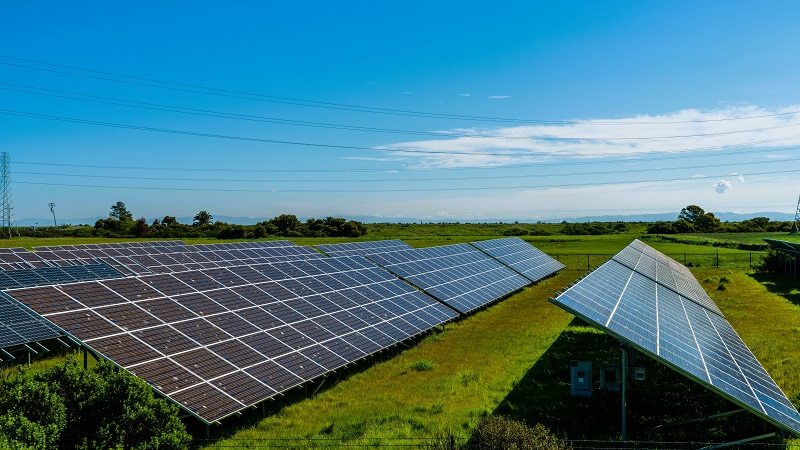
A community solar program is a centralized solar-power array, usually built on underutilized land, commercial rooftops, or former landfills, that generates clean electricity for multiple subscribers within a specific utility region.
Instead of installing solar panels on your physical roof, you purchase or subscribe to a share of the energy produced by this off-site "solar garden". The electricity generated by your share is fed directly into the local utility grid. In return, your utility provider rewards you with financial credits on your monthly electric bill, reducing your overall energy costs.
Who benefits most from Community Solar?
Renters and apartment dwellers: Since there is no physical installation on the property, renters can enjoy clean energy savings and easily transfer their subscriptions if they move.
Properties with structural or environmental shading: If your roof is blocked by mature trees, faces the wrong direction, or cannot support the weight of traditional panels, community solar bypasses these physical limits.
Budget-conscious households: Most community solar subscriptions require zero upfront investment, making green energy financially accessible from day one.
Community Solar Programs: how do they work? (a step-by-step breakdown)
The operational mechanics of community solar programs and how do they work can be simplified into a four-step cycle:
Step 1: The centralized array generates power
A solar developer builds and maintains a medium-to-large-scale solar farm in your utility territory. These arrays typically range from 1 megawatt to 10 megawatts in capacity, capable of powering hundreds or thousands of homes.
Step 2: Feeding the grid
The clean energy generated by the solar farm does not travel directly to your home through a dedicated line. Instead, it is fed straight into the local public electricity grid, cleaning up the overall power supply of your community.
Step 3: The subscription model
When you sign up, the community solar provider evaluates your historical electricity usage. They assign you a "share" of the solar farm, usually sized to match roughly 80% to 100% of your average monthly power consumption.
Step 4: Virtual net metering (the credit system)
Your utility tracks the exact number of kilowatt-hours (kWh) your designated solar share produces each month. Using a policy called Virtual Net Metering (VNM), the utility converts those kilowatt-hours into a monetary credit and applies it directly to your monthly electricity bill, lowering what you owe the utility.
Subscription vs. ownership: what is the difference?
When entering a community solar program, you will generally choose between two business models:
The subscription model (most popular)
With a subscription model, you do not own any physical solar panels. Instead, you agree to buy the electricity produced by your assigned share of the project at a guaranteed discount (usually 10% to 15% below standard utility rates).
Upfront cost: $0.
Risk: Extremely low. You can cancel or transfer the subscription easily.
Savings: Immediate, reliable monthly savings, though lower long-term financial yield than ownership.
The ownership model
Under this arrangement, you pay an upfront fee to buy a specific number of panels or a set kilowatt share of the community solar array.
Upfront cost: High.
Risk: Medium. You are tied to the long-term performance of the array.
Savings: You receive the full value of virtual net metering credits for the lifespan of the system (often 20 to 25 years), resulting in a much higher long-term return on investment (ROI).
Community Solar Programs by state: how location impacts experience
Community solar is governed entirely at the state level, meaning availability, subscription structures, and savings percentages vary widely across the country.
The table below highlights how the leading US markets compare policy structure, typical financial benefits, and operational rules:
State | Primary Policy / Program | Average Bill Discount (Typically) | Unique Structural Feature |
New York | NY-Sun / VDER Stack | 10%+ | Credits are calculated dynamically based on real-time grid value (VDER) rather than simple flat rates; features consolidated billing. |
Massachusetts | SMART Program | 10% to 15% | Offers built-in financial incentives for solar developers who actively pair community solar arrays with physical battery storage. |
Illinois | Illinois Shines (CEJA) | 10% to 15% | Mandates strict equity requirements, ensuring a dedicated portion of solar development directly supports underserved communities. |
California | Community Renewable Energy (CRE) | Not yet available to subscribers | Finalized by the CPUC in June 2026; built on ReMAT avoided-cost pricing rather than a flat retail discount, so once live, savings won't be directly comparable to flat-rate models in other states. Utilities must still file and get approval for implementation plans before subscriptions open. |
While these regional policies dictate the exact credits you see on your statement, they all share one critical, physical limitation.
The hidden limitations of Community Solar Programs
Because community solar is highly publicized as a way to transition to clean energy, many subscribers assume they are insulated from grid failures.
This is a dangerous misconception.
Community solar is fundamentally a financial and environmental program, not a physical backup connection. Because your solar farm is located miles away and feeds directly into the public grid, you remain entirely grid-dependent.
During a blackout, utility companies are legally and technically required to shut down all grid-tied solar assets. This safety protocol (known as anti-islanding) prevents solar arrays from feeding electricity back into damaged power lines, protecting utility crews working to repair the grid.
If a storm, heatwave, or physical grid failure knocks out the power lines on your street, your home will lose power instantly, even if your community solar farm miles away is operating in perfect weather.
Introducing EcoFlow Ocean Pro as a whole-home backup solution
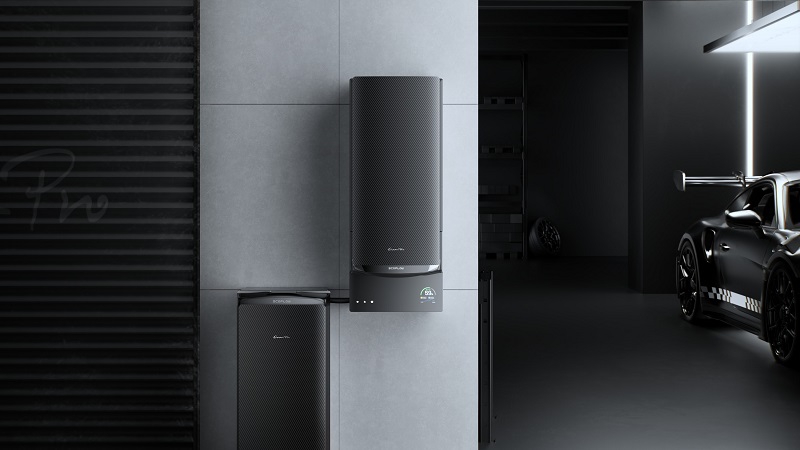
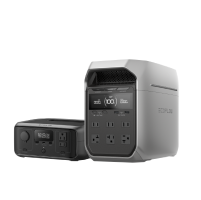
To achieve absolute energy security, you must integrate the virtual financial benefits of community solar with physical, on-site storage. And the ultimate way to bridge this gap is the EcoFlow Ocean Pro, an all-in-one residential energy storage hub designed to keep your entire home fully functional.
Why the EcoFlow Ocean Pro is the ultimate resilience partner:
Massive output capacity: The Ocean Pro delivers up to 24 kW of continuous split-phase output (120V/240V) and a 205A LRA surge capability. This means it can seamlessly run heavy-duty household appliances, like HVAC systems, EV fast chargers, etc., at the same exact time.
Scalable modular storage: Your energy needs are unique. The Ocean Pro features a modular design that starts at a practical 10 kWh and can scale up to an immense 80 kWh of storage per inverter. This allows you to scale from short backup protection to multi-day, off-grid survival.
True future-proofing: If you ever decide to install physical rooftop solar panels down the road, the Ocean Pro is ready. It features built-in support for up to 40 kW of physical solar input across 8 independent MPPT trackers.
Industrial-grade durability: Built to withstand the harshest environments, the system operates seamlessly in temperatures ranging from -4 to 140 degrees Fahrenheit. It is housed in a rugged, weather-resistant NEMA 3R enclosure and features safe, long-lasting LFP battery chemistry, 360-degree aerogel thermal insulation, and active aerosol fire prevention.
Guaranteed longevity: The system is backed by an industry-leading 15-year manufacturer warranty, ensuring your investment protects your home for decades to come.
Real-world case study: Domaine Azimut Eco-Community (Lanaudière, Quebec)
The hybrid approach of combining community-scale clean generation with physical home storage is not just a futuristic theory, it is already operating successfully in Saint-Damien, Quebec.
What is it?
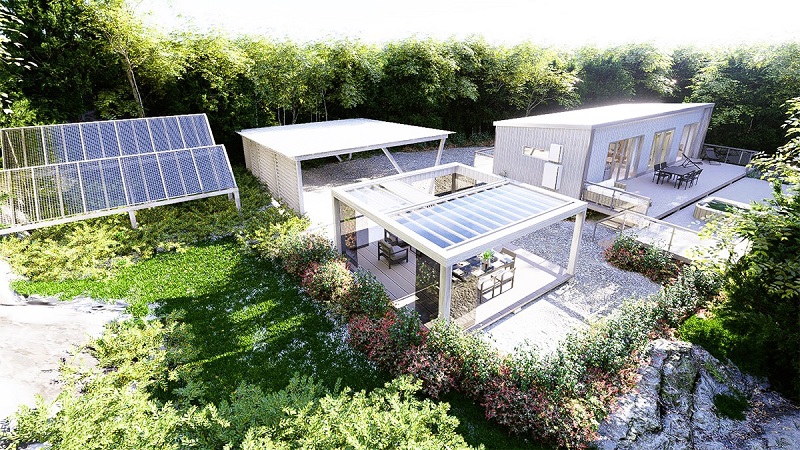
Spanning 67 hectares (165 acres) of pristine Laurentian forest, the Domaine Azimut eco-community is a master-planned development designed for complete off-grid resilience and minimal carbon footprint.
To power the estate without damaging the natural forest canopy with individual solar installations, a localized community solar model was developed:
The shared microgrid: A centralized, shared solar array is built on-site to generate clean, collective power for the entire community, functioning precisely like a localized community solar program.
On-site resilience via EcoFlow: To manage seasonal energy shifts and distribute power reliably, the community's high-efficiency Könek modular homes are equipped with the EcoFlow Ocean Pro.
Get Your Free Home Energy Consultation!
Which energy solution are you interested in?
Wrapping up
Community solar programs and how they work represent a major leap forward in democratic, affordable clean energy. They allow renters, urban dwellers, and budget-conscious homeowners to bypass the high cost of rooftop panel installations while lowering their carbon footprint and reducing monthly bills.
However, financial savings are only half the battle. True energy independence means pairing those digital bill credits with physical, on-site protection.
By combining the structural efficiency of a community solar subscription with a localized home battery system, you get the best of both worlds: utility-scale green discounts and absolute personal safety when the grid fails.
FAQs
Is there a downside to community solar?
The primary drawback is that community solar does not provide physical backup power during a grid blackout. Additionally, savings are indirect through monthly utility billing credits, and availability varies widely depending on state regulations and local utility participation.
How does a community solar subscription work?
You subscribe to a share of an off-site solar farm matching your monthly energy use. The utility tracks its generation, converts it into monetary credits, and applies them directly to your electric bill, lowering your net costs.
Can I combine a community solar program with a physical home battery backup system?
Yes. Your community solar subscription lowers your monthly utility bills through virtual credits, while a physical home battery backup like the EcoFlow Ocean Pro automatically keeps your critical household appliances running instantly during unexpected public grid blackouts.
Do I receive two bills when participating in community solar?
Typically, yes. You receive a standard utility bill showing your solar credit deduction and a separate bill from your solar provider for the subscription. However, the combined cost is almost always lower than your original utility bill.
What happens to my community solar subscription if I move?
If you move within the same utility territory, you can easily transfer your subscription to your new address. If moving out of the service area, you can cancel with a short notice period and minimal termination fees.

