
AFCI Breaker Tripping: Here's Why Your AFCI Breaker Keeps Tripping
AFCI breaker tripping can be frustrating, especially when it happens repeatedly without a clear cause. The issue often points to deeper, hidden electrical problems in your home's wiring. Modern electrical setups are complex and not always easy to diagnose at a glance. Understanding the root causes can help you fix the problem safely and prevent future disruptions. Keep reading this guide to uncover the common reasons behind AFCI breaker tripping, traditional approaches, and how a modern solution, home backup batteries, solves this from a new angle. Let's dive in.
What is an AFCI breaker
An AFCI (Arc Fault Circuit Interrupter) breaker is a safety device that protects your home from electrical fires. It works by detecting arc faults, which are dangerous electrical sparks that occur when wires are broken, loose, or aging. It then turns off the power before a fire can start. AFCI breakers are different from regular breakers because they can pick up small warning signs.
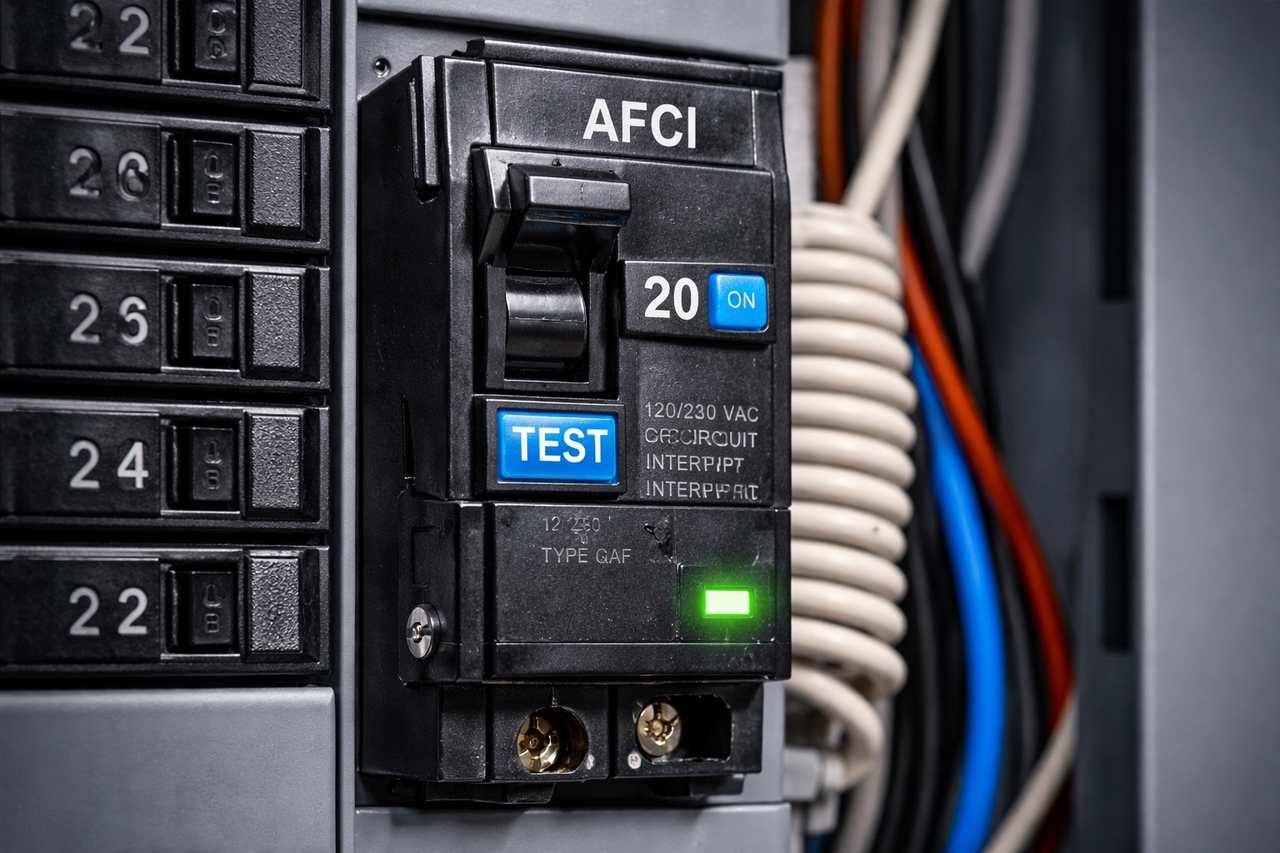
Standard breakers only trip when there is an overload or a short circuit. AFCI breakers, on the other hand, can find micro-arcing patterns, which are small, irregular sparks that standard breakers can't see.
In short, an AFCI breaker not only protects your circuits but also prevents electrical hazards from becoming serious problems before they do.
Common reasons your AFCI breaker keeps tripping
Loose or damaged wiring
Loose or damaged wiring is one of the most common reasons why AFCI breakers trip. When electrical connections get loose, they may make contact only intermittently, which can cause arcing. Damaged or worn insulation also exposes wires, making it more likely that dangerous sparks will occur. AFCI breakers are designed to detect these arc faults, so even small wiring problems can trip them.
Shared neutral wiring
Another reason why AFCI circuit breaker keeps tripping is shared neutral wiring. Shared neutral wiring is often found in older homes that use multi-wire branch circuits. In this setup, multiple circuits share a single neutral wire, which can lead to an imbalance in electrical current. Although this condition isn't always hazardous, AFCI breakers may interpret the imbalance as a fault and trip to prevent potential risks.
Ground-neutral faults
A ground-neutral fault happens when the neutral wire touches the ground at some point along the circuit. This creates an unintended path for electricity, which can confuse the AFCI breaker. The breaker stops the flow of electricity to keep people safe, even if the problem isn't clear right away, as the wiring might not be safe in this state.
Faulty or aging appliances
AFCI breakers can also trip when appliances are old or broken. Power strips, surge protectors, chargers, and vacuum cleaners are examples of devices that can make electrical noise or cause current to flow in strange ways. These patterns can look like the signature of arc faults, which can cause the AFCI breaker to trip even when there isn't a real wiring problem.
Overloaded circuits
When too many devices are plugged into one electrical line, the circuit becomes overloaded. This increases the demand for power, which can cause the current to change. Even if the total load is within acceptable limits, these quick changes can appear as arc-fault activity, which is why the AFCI breaker trips as a safety measure.
Why does my AFCI breaker keep tripping without a load
It can be especially confusing when your AFCI breaker trips even when nothing seems to be running. A lot of homeowners have this problem, and it shows that modern home electrical systems don't always distinguish between harmless and dangerous electrical signals. Because of this, you might have unexpected trips that don't seem to be caused by a clear problem, which can be frustrating and confusing.
This situation is often referred to as AFCI breaker nuisance tripping. AFCI breakers are very sensitive by design, but that sensitivity can sometimes work against you. They might think that normal electrical activity, like small changes or background noise, is an arc fault. This is often caused by electrical noise in the circuit or by interference from appliances, even when those appliances aren't in use.
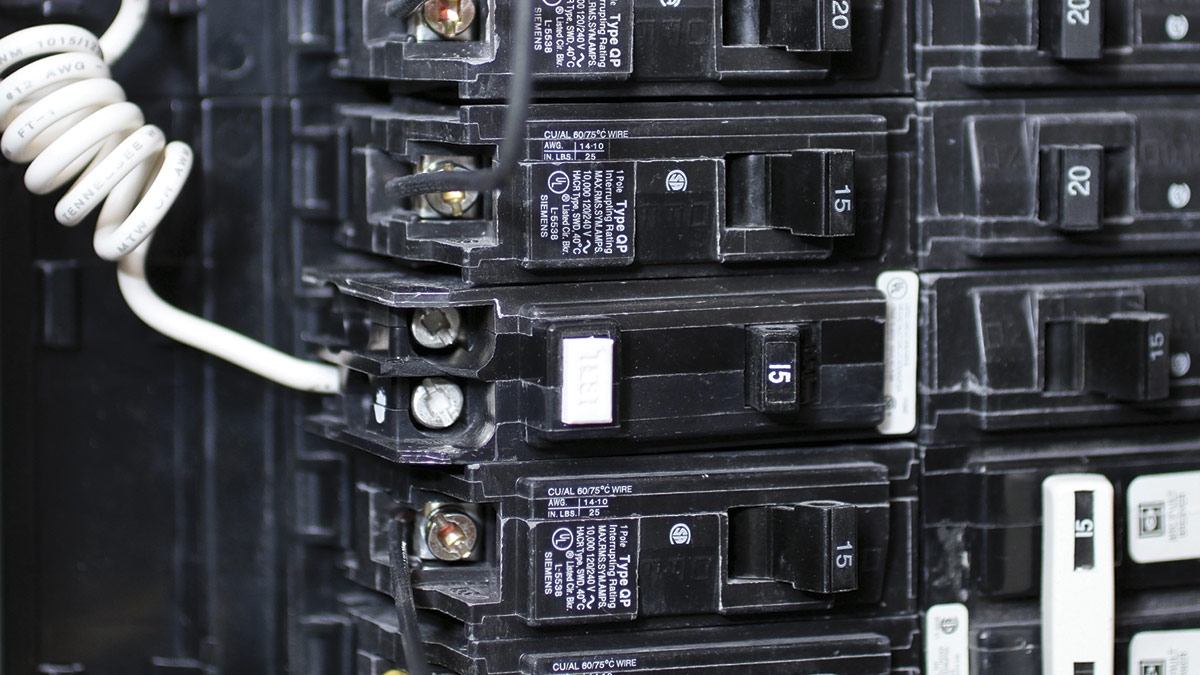
Signs of nuisance tripping:
Random tripping: AFCI breaker tripping randomly without any set pattern is a common sign of nuisance tripping
Tripped due to a specific device: The breaker trips only when a specific device is plugged in or connected, even if that device seems to be working fine.
Because of these problems, many homeowners are using more advanced energy-monitoring tools that provide more information about how their circuits and electricity are used. These systems can help distinguish normal activity from actual faults, making it easier to find and fix problems without guessing.
Traditional troubleshooting approaches & their limitations
Manual inspection of wiring
One of the first things you should do when an AFCI breaker trips is check the wiring for problems such as loose connections or broken insulation. While this can sometimes find clear problems, it has clear limits. Most of the time, electrical wiring is hidden behind walls or ceilings, so it's almost impossible to check it all without doing unnecessary work.
Trial-and-error unplugging devices
Another common method is to unplug each device one at a time to see if the breaker stops tripping. This method can be annoying and time-consuming, especially if the problem isn't with just one appliance. This trial-and-error process often makes things more confusing than clear if the tripping occurs at random times or is caused by multiple factors.
Replacing breaker
Some homeowners try replacing the AFCI breaker, assuming it might be defective. While this can occasionally fix the issue, it's not a reliable solution. This might work sometimes, but it's not a sure way to fix the problem. If the problem is with the wiring, circuit design, or connected devices, the new breaker will probably trip in the same way, which means this is more of a temporary guess than a real fix.
Hiring electrician
Hiring a professional electrician is often the best choice because they have the tools and knowledge to diagnose complex electrical problems. But this method can get expensive very quickly, especially if the problem is hard to reproduce during inspection or occurs only occasionally. You may need to go back several times, which will be more expensive and less convenient.
While these traditional approaches usually work, they are time-consuming, costly, and reactive rather than proactive. Instead of continuously monitoring your electrical system and catching issues early, they rely on identifying problems after they've already caused repeated AFCI breaker tripping, which can lead to ongoing frustration and uncertainty.
Smart solution: How Smart Electrical Panel 40 + Ocean Pro reduce AFCI tripping
A. What is Smart Electrical Panel 40?
The Smart Electrical Panel 40 is designed to give homeowners a clearer picture of what's happening inside their electrical system—something traditional panels simply can't do. Instead of relying on guesswork, it provides real-time circuit monitoring, allowing you to see how power is being used across different circuits at any moment. The 40-circuit monitoring capacity allows visibility across most standard residential loads in a single panel, while the real-time energy metering per circuit updates usage data continuously.
While it doesn't directly fix wiring issues, it plays a crucial role in energy behavior analysis. Tracking patterns over time improves visibility into electrical usage and can assist with troubleshooting AFCI breaker tripping.
B. How does Ocean Pro enhance it?
When paired with EcoFlow Ocean Pro, the system adds an intelligent layer that analyzes circuit-level energy data and provides actionable insights, helping identify circuits that may be experiencing abnormal loads or contributing to potential breaker trips. Ocean Pro is a whole-home energy system designed for high-capacity solar integration, backup power, and intelligent energy management. It significantly expands system capability with specifications, like 40kW solar input capacity, and offers 24kW continuous whole-home output for steady power backup.

Conclusion
People often think that AFCI breaker tripping is a problem, but it's actually a safety feature. These breakers are designed to protect your home from hidden electrical hazards, such as arc faults, that could start fires. But the problem today is that most home electrical systems still lack the intelligence and clarity needed to accurately understand what's happening behind the scenes. Advanced monitoring panels and other smart solutions help close this gap between safety and ease of use. They make it easier to understand what's really going on by giving you a better look at how electricity works and making patterns easier to see.
Want to get better insights? Schedule Your Free Consultation Today with us and keep your home safe from unnecessary tripping or faults.
Get Your Free Home Energy Consultation!
Which energy solution are you interested in?

FAQs
1. Is it common for arc fault breakers to fail?
AFCI breakers don't break very often, but like any other electrical part, they can wear out over time. Most of the time, problems that seem like "failure" are really caused by wiring issues, circuit conditions, or interference from other devices, not a broken breaker. Compared to nuisance tripping caused by outside factors, true breaker failure is pretty rare.
2. How can you tell if an AFCI breaker is bad?
A bad AFCI breaker might trip right after being reset, even if nothing is plugged in, or it might not reset at all. It may also act differently on circuits that are known to be stable in some cases. But because AFCI breakers are so sensitive, it's usually necessary to isolate the circuit or have an electrician test it before deciding that the breaker is bad.
3. Why does my AFCI breaker trip randomly?
Random AFCI tripping is often caused by intermittent electrical issues that are difficult to detect. These could include loose wiring, shared neutral configurations, small arc signatures, or electrical noise from appliances. Because AFCI technology is designed to detect even small problems, it may trip without a clear or consistent pattern when it senses something unusual.
4. Can a faulty appliance cause AFCI tripping?
Yes, faulty or aging appliances are a very common cause of AFCI tripping. Devices like vacuum cleaners, power strips, chargers, and older electronics can produce electrical noise or irregular current patterns that mimic arc faults. Even if the appliance still appears to work, its internal components may trigger the breaker's safety response.
5. Are nuisance trips normal with AFCI breakers?
Yes, nuisance tripping can happen with AFCI breakers, especially in older homes or circuits with mixed or aging devices. This occurs when the breaker interprets harmless electrical activity as a potential arc fault. While it can be frustrating, manufacturers acknowledge that AFCI sensitivity is intentionally high to prioritize safety, and ongoing improvements continue to reduce these false trips.

